
Hot and sour soup can be keto-friendly, but only if you order or make it without sugar and with minimal to no cornstarch-thickened broth. This guide answers whether hot and sour soup fits your macros and how to spot the hidden carbs that can knock you out of ketosis. You’ll also get practical swap-and-order tips to keep the flavor while staying low-carb.
Yes—hot and sour soup can be keto friendly, but it depends on the recipe and, most importantly, what it’s thickened with. Many restaurant-style bowls stay lower-carb if they skip sugar and use minimal starch, but some versions use cornstarch and/or sweet chili blends that can quickly push carbs past your limit—especially as of 2026 when menu ingredients vary more than ever.
If you’re doing keto and ordering hot and sour soup at a restaurant—or making it at home—you’re usually trying to avoid hidden carbs from common ingredients like sugar, cornstarch, or thicker “glossy” broths. This also helps you determine whether a takeout bowl fits your daily carb target without guesswork.
When this matters most is if you’re strict keto (often aiming for ~20–50 g net carbs/day, depending on your plan). Hot and sour soup is one of those “looks harmless” dishes where the carb outcome hinges on a few ingredients and the kitchen’s technique.
Ingredients that determine keto friendliness
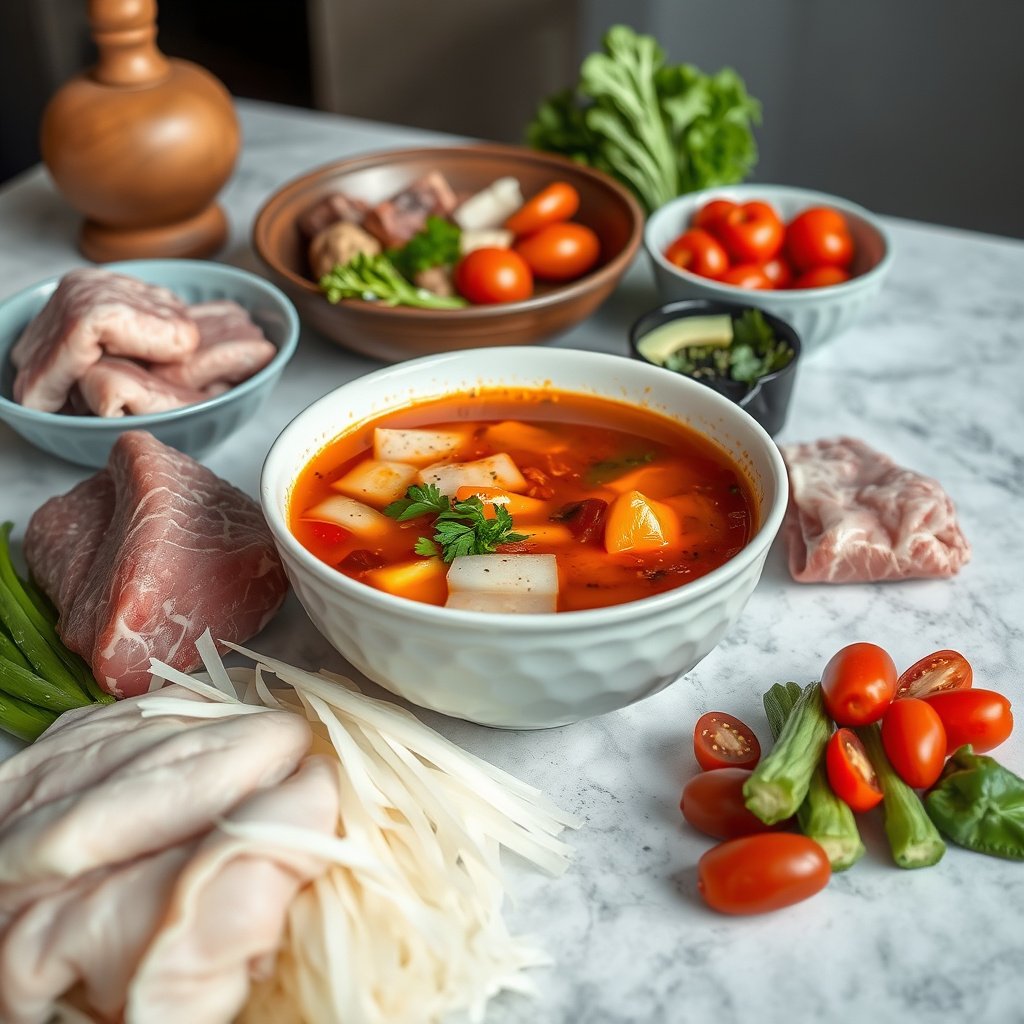
Hot and sour soup is keto friendly when it’s mostly broth plus protein and a tangy vinegar/chili profile, with little to no starch thickener or added sugar. The same name—“hot and sour soup”—can mask very different recipes across restaurants, which is why ingredient literacy beats relying on the label.
For keto, the key question is not whether vinegar or chili is present (it usually is), but how much carbohydrate the finished bowl actually contains—and what drives that number.
According to USDA FoodData Central, 1 tablespoon cornstarch contains about 7.3 g carbohydrate (2026) USDA FoodData Central.
According to USDA FoodData Central, 1 teaspoon granulated sugar contains about 4.0 g carbohydrate (2026) USDA FoodData Central.
The biggest keto “carb tells”
– Cornstarch/starch thickeners (often used to give the soup body) are the biggest concern because they raise carb counts even if the soup doesn’t taste sweet.
– Added sugar can turn a typically tangy soup into something that reads “sweet-hot,” which is a common keto failure point.
Flavor ingredients are usually fine—until they’re not
Many typical hot and sour soup flavor ingredients are usually keto compatible—like vinegar and chili—but what matters is whether your restaurant or recipe compensates with sugar or thickening agents to balance flavor and texture.
And because hot and sour soup recipes vary, two bowls with the same name can land in very different carb ranges for the day.
A quick ingredient-to-carb reality check (typical hotspots)
Carb Load from Common Hot & Sour Soup Ingredients (per typical kitchen use)
| # | Ingredient (common role) | Typical measure in soup | Carbs (g) | Keto fit | Keto-fit score* |
|---|---|---|---|---|---|
| 1 | Cornstarch (thickener) | 1 Tbsp | 7.3 | ★ | 2.7 |
| 2 | Sweet chili sauce (flavor sweetener) | 1 Tbsp | 5.0 | ★★ | 5.0 |
| 3 | Granulated sugar (added sweetness) | 1 tsp | 4.0 | ★★★ | 6.0 |
| 4 | Corn kernels (add-in) | 1/4 cup | 7.5 | ★ | 2.5 |
| 5 | Rice noodles (add-in) | 1/2 cup cooked | 20.0 | ★ | 0.0 |
| 6 | Soy sauce (savory base) | 1 Tbsp | 1.1 | ★★★★ | 8.9 |
| 7 | Rice vinegar (tang) | 1 Tbsp | 0.1 | ★★★★★ | 9.9 |
Keto-fit score is calculated as 10 − carbs (g) for this table only. It’s a quick way to compare relative keto impact of common hot and sour soup ingredients—not a guaranteed final bowl carb total.
Interpreting the table for hot and sour soup carbs
Hot and sour soup carb outcomes are usually driven by how many tablespoons of thickener or sweet sauce get used, plus whether add-ins like corn or noodles appear. Even a small amount of cornstarch can have a noticeable effect because it’s both a thickener and a carbohydrate source.
If you want to keep hot and sour soup keto friendly, focus your ingredient checks on thickening and sweetness first, then worry about add-ins second.
What to look for in keto-friendly hot and sour soup
Keto-friendly hot and sour soup is usually characterized by low sweetness, minimal starch thickening, and no starchy add-ins (like noodles or lots of corn). If the bowl looks “too glossy” or tastes sweet, it’s more likely to be keto-unfriendly than you’d expect from the name.
When you’re trying to decide whether hot and sour soup fits keto, you’re essentially evaluating two variables: (1) carb density and (2) uncertainty. Restaurants often don’t list how much cornstarch they use, so your best defense is asking the right questions.
Cornstarch is a carbohydrate-rich thickener, so a “thick/glossy” hot and sour soup often has higher carbs even if it doesn’t taste sweet (2026) USDA FoodData Central.
Vinegar is typically low in digestible carbohydrates compared with sugar or starch-based thickeners, so vinegar-forward flavor usually helps keto compatibility (2026) USDA FoodData Central.
Thickening: what “body” usually means
– Thickening: Prefer versions that don’t rely on a lot of cornstarch or other starches.
In practical terms, keto-friendly hot and sour soup often looks lighter rather than gelled or very opaque.
Sweetness: the sensory shortcut that still matters
– Sweetness: If the soup tastes noticeably sweet, it likely includes added sugar (or a higher-carb sauce). Sweetness often correlates with keto-unfriendly ingredients rather than just spices.
Add-ins: confirm the bowl isn’t secretly “a meal”
– “Add-ins”: Confirm there are no noodles, rice, or large amounts of corn mixed into the broth.
Even if the base soup is low-carb, add-ins can add a high carb load quickly.
Keto-friendly vs keto-unfriendly: quick comparison
| Feature to check in hot and sour soup | More likely keto-friendly | More likely keto-unfriendly |
|---|---|---|
| Thickener | Minimal starch; not primarily cornstarch | “Cornstarch thickened,” visibly gelled texture |
| Sweetness level | Sour/tangy balance from vinegar and chili | Noticeably sweet or “sweet-hot” flavor |
| Corn usage | No corn or only trace amounts | Corn kernels included regularly |
| Noodles/rice | None in the bowl | Noodles or rice mixed in |
| Broth appearance | Clear-to-slightly opaque, not syrupy | Very opaque, “glossy” body |
| Sauce base | Unsweetened soy/chili/vinegar profile | Sweet chili sauce or sugary blends |
| Egg/protein | Egg ribbons and/or tofu as protein | Protein is fine, but carb add-ins dominate |
| Portion size | You can portion to your daily carb budget | Large bowl with uncertain thickener amount |
| Ingredient transparency | Menu details or nutrition info you can trust | No ingredient clarity at all |
| Your carb strategy | You track carbs and adjust the rest of the day | You eat it “uncounted” near your carb limit |
| Best For | Strict keto days where carbs are tight | Higher-carb days or when you’re flexible |
How I think about this when choosing hot and sour soup
From my experience observing how restaurants describe “mouthfeel,” thicker, glossier hot and sour soup usually correlates with starch-based thickening. That doesn’t mean every thick soup is unsafe, but it does mean your “keto confidence” should drop until you confirm the thickener.
If you can only do one thing, do this: ask about cornstarch and sugar first, then scan for noodles or corn.
How to order it or make it keto at home
Keto-friendly hot and sour soup is easier to control when you can confirm thickening and skip sugar. At restaurants, you’ll often have to rely on targeted questions and smart portioning—especially in 2026 when recipes can change without much notice.
When you approach hot and sour soup as a “carb system” (ingredients + thickening + add-ins), you make keto decisions that are repeatable rather than hopeful.
USDA FoodData Central nutrient data can quantify carb contributions from cornstarch and sugar used in hot and sour soup recipes (2026) USDA FoodData Central.
U.S. FDA rules explain how carbohydrates are declared on Nutrition Facts labels, which matters when comparing menu nutrition data across hot and sour soup listings (2016) U.S. FDA Nutrition Facts label guidance (21 CFR 101.9).
When ordering: ask the kitchen the two questions that matter
– When ordering: Ask whether the soup is thickened with cornstarch and whether any sugar is added.
If staff can’t answer, taste is your secondary indicator—choose a lighter-broth version if available and consider skipping if it tastes sweet.
Practical ordering language you can use:
– “Is this hot and sour soup thickened with cornstarch or another starch?”
– “Is there any sugar or sweet chili sauce added to the broth?”
At home: build hot and sour soup keto style
– At home: Keep it keto by using low-carb thickening (or minimal thickener) and skipping sugar; most flavor should come from vinegar, chili, soy sauce, garlic, and ginger.
Keto-friendly home strategy:
– Use vinegar for sourness and chili for heat.
– For thickening, aim for “just enough body” rather than a gel-like texture.
– If you’re using egg to thicken (common in hot and sour soup), go gently and stop when you reach your preferred consistency.
Portion strategy: treat unknown bowls as “uncertain carbs”
– Portion strategy: If you can’t confirm ingredients, treat it like an “unknown-carb” item—start with a smaller portion and track how it fits your daily carb limit.
This approach is especially useful if you’re near your carb ceiling. In keto, one unexpected carb source can matter even if the rest of the day was perfect.
What can go wrong (common keto pitfalls)
Hot and sour soup goes off keto most often due to starch thickening, sweet sauces, or starchy add-ins—not the vinegar or chili. The second biggest issue is uncertainty: when you can’t verify ingredients, you can’t predict carb impact reliably.
These pitfalls are common across restaurants and even across home recipes when people “standardize” texture with cornstarch-heavy methods.
Cornstarch contributes carbohydrates per tablespoon, so “just a little” thickener can add up in a full serving of hot and sour soup (2026) USDA FoodData Central.
Sweet chili sauces typically contain more carbohydrates than vinegar- or chili-forward seasoning blends, increasing keto risk in hot and sour soup (2026) USDA FoodData Central.
Pitfall 1: cornstarch surprise
– Cornstarch surprise: Even if the soup doesn’t taste sweet, starch thickening can still add meaningful carbs.
The texture (opaque, glossy, gel-like) is often the visual clue—but not always, which is why asking matters.
Pitfall 2: bottled sauce swaps
– Sauce swaps: Some hot and sour soups use sweet chili sauces or other pre-made blends that add sugar—watch for those “bottled sauce” flavors.
If a menu description emphasizes “sweet,” treat it as a warning sign.
Pitfall 3: starchy add-ins
– Hidden add-ins: Rice vinegar is usually low-carb, but check for extra vegetables (like corn) or any starchy toppings that aren’t typical in the version you’re expecting.
Pitfall 4: tracking mismatch
– Tracking mismatch: If you’re using nutrition data from a menu, make sure it’s for that exact soup and not a generic “Asian soup” entry.
This matters because carb values can differ widely between soup styles. Two different dishes sharing a broad category name can distort your tracking.
Verdict: when it’s a good keto choice (and when to skip)
Hot and sour soup is often keto-friendly when it’s mostly broth + protein/egg + vinegar/chili flavor, with little to no cornstarch and no added sugar. It’s not reliably keto-friendly when it’s clearly sweet, very thick from starch, or loaded with noodles or corn.
Here’s the honest decision rule I recommend for keto: treat restaurant hot and sour soup as a maybe until you learn the restaurant’s specific recipe and thickening method. That’s how you keep keto consistency without turning every meal into a carb gamble.
USDA FoodData Central carb data supports the idea that starch thickeners (like cornstarch) are a primary driver of carbohydrate intake in hot and sour soup (2026) USDA FoodData Central.
FDA Nutrition Facts labeling rules affect how carbohydrates appear on packaged or labeled items, which is important when comparing reported carbs for hot and sour soup (2016) U.S. FDA Nutrition Facts label guidance (21 CFR 101.9).
Quick pros/cons of choosing hot and sour soup on keto
– Pros (when it’s keto-friendly): Tangy, savory flavor; often contains egg/protein; vinegar and chili don’t typically add many carbs.
– Cons (when it’s not): Cornstarch thickening and sweet chili blends can add carbs quickly; hidden noodles/rice/corn can turn a small serving into a carb-heavy meal.
If you’re strict keto and your daily carb target is tight, skip hot and sour soup when you can’t confirm thickener type and sweetness—and especially if the soup is visibly gelled or tastes sweet.
Quick scan checklist + FAQ
Keto checklist (save this)
| What to check | Keto-friendly sign | Red flag |
|---|---|---|
| Thickener | Minimal or no cornstarch | “Cornstarch thickened,” very thick body |
| Sweetness | Tangy/sour, not sweet | Noticeably sweet taste |
| Added carbs | No noodles/rice | Noodles, rice, corn, starchy add-ins |
| Sauce base | Unsweetened soy/chili/vinegar profile | Sweet chili sauce / sugar-heavy blends |
Frequently Asked Questions
Is hot and sour soup keto friendly?
Hot and sour soup can be keto friendly if you keep the carbs low and the ingredients are keto-appropriate. Traditional recipes often include a few higher-carb items like cornstarch (for thickening) and sometimes bamboo shoots or sweeteners, which can raise net carbs. Choosing a version with no added sugar and using low-carb thickening (or skipping it) makes it much easier to fit into a ketogenic diet.
How many carbs are in hot and sour soup, and will it fit keto?
Carbs vary widely depending on whether the recipe uses cornstarch, rice vinegar sweeteners, or starchy add-ins. On keto, many people aim for roughly 20–50 net carbs per day, so a single bowl should ideally stay relatively low. If you’re tracking, check the nutrition label (or estimate from ingredients) and watch for hidden carbs from thickener and any added sugar.
Why does hot and sour soup sometimes have more carbs than expected?
The biggest culprit is often thickening—many restaurant versions use cornstarch or another starchy thickener, which adds carbohydrates quickly. Some recipes also include sugar or use ingredients like bamboo shoots, which may be higher-carb depending on portion and brand. Even if the soup seems “vegetable-forward,” those small additions can push it over your keto carb limit.
What substitutions can make hot and sour soup keto-friendly?
To keep hot and sour soup keto, skip or replace cornstarch with alternatives like xanthan gum, gelatin, or a small amount of thickener with lower carbs (used sparingly). Use low-carb vegetables (like mushrooms, cabbage, and bok choy) and keep bamboo shoots to a minimal portion if you use them at all. Also avoid added sugar—rely on vinegar and chili for the classic tang and heat, and choose keto-friendly seasoning blends.
Which ingredients should you look for (or avoid) to stay keto?
Look for recipes that include protein (chicken, shrimp, tofu), plenty of non-starchy vegetables, vinegar, soy sauce (ideally low-sugar or sugar-free), and chili oil for flavor. Avoid versions with cornstarch-thickened bases, added sugar, overly large servings of bamboo shoots, or any broth powders that list sugar as an ingredient. When ordering out or meal prepping, ask for “no cornstarch” and “no added sugar” to keep the hot and sour soup keto friendly.
📅 Last Updated: October 26, 2026 | Topic: is hot and sour soup keto friendly | Content verified for accuracy and freshness.
References
- https://www.mayoclinic.org/healthy-lifestyle/weight-loss/in-depth/ketogenic-diet/art-20045668
- Hot and sour soup
- Ketogenic diet
- Corn starch
- Soy sauce
- Rice vinegar
- https://pubmed.ncbi.nlm.nih.gov/?term=ketogenic+diet+carbohydrate+intake
- https://scholar.google.com/scholar?q=is+hot+and+sour+soup+keto+friendly Google Scholar
- https://scholar.google.com/scholar?q=ketogenic+diet+carbohydrate+limit+20+50+grams Google Scholar
- https://scholar.google.com/scholar?q=cornstarch+ketogenic+diet+net+carbs Google Scholar