Hot and sour soup is keto only if you can keep the carbs low—most restaurant versions aren’t, because sugar and thickening ingredients can push net carbs out of range. This guide tells you whether hot and sour soup fits keto and exactly which ingredients to check, including the broth, vinegar, and any starch-based thickeners or add-ins. By the end, you’ll know what to order, what to avoid, and what to calculate so your bowl stays keto.
Hot and sour soup can be keto, but it depends on what thickens it and whether added sugars/starches are used. Many restaurant versions use cornstarch (or similar thickeners) and sometimes add sugar—those can push the carbs up fast. This guide breaks down the ingredient reality so you can evaluate hot and sour soup quickly (especially in 2026, when “keto-friendly” claims still vary widely by kitchen) and spot the exact parts that make it keto—or not.
If you’re keto (especially strict keto) and you like that tangy, savory “hot and sour” flavor, you’ll want a practical way to evaluate the ingredient list or menu description. You’ll also learn keto swaps for homemade hot and sour soup and what to ask for when ordering out, without guessing.
Hot and sour soup keto: the ingredient reality check
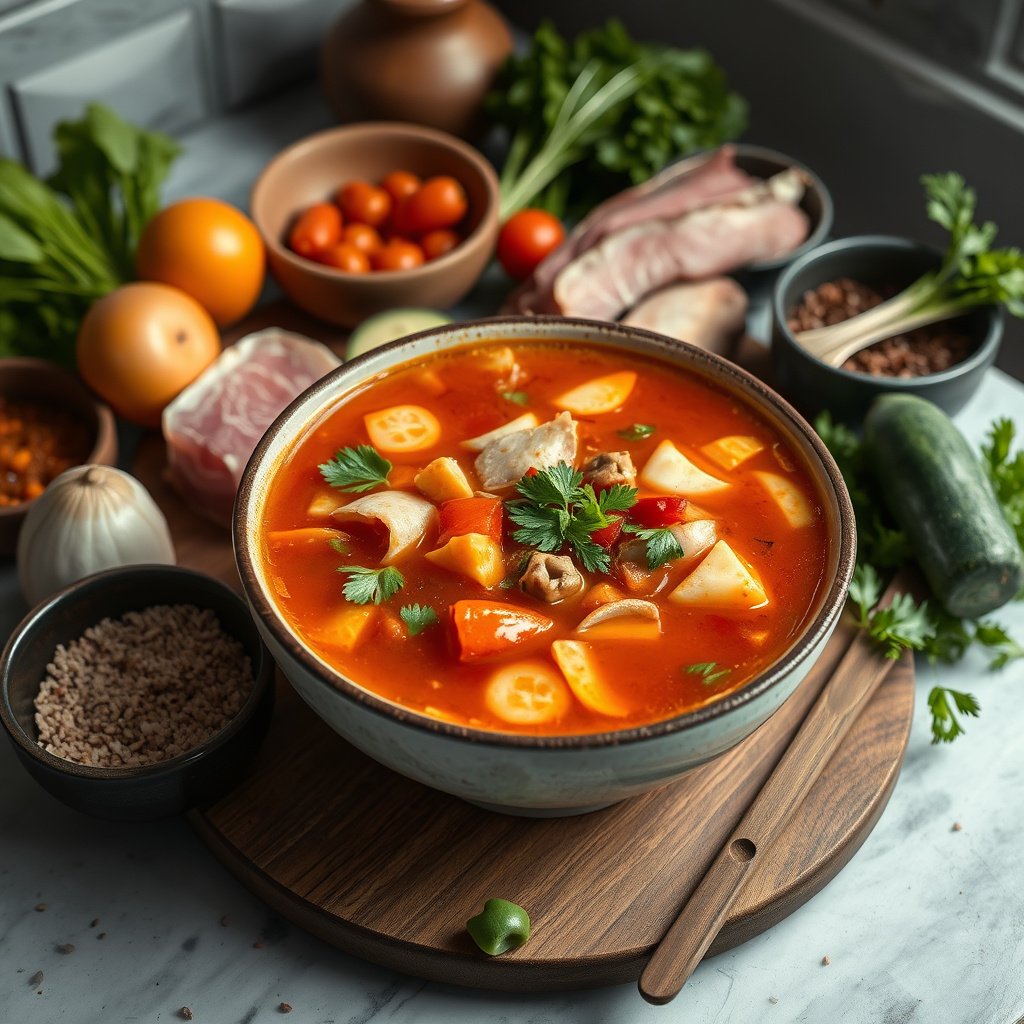
Hot and sour soup fits keto when the base is primarily broth + vinegar + chili/garlic/ginger, and the thickening does not rely on starch. In most real-world cases, the deciding factor is the thickener (often cornstarch) and whether the recipe uses sweeteners.
Cornstarch is essentially starch, and USDA FoodData Central lists about 7.2 g carbohydrate per 1 tablespoon (8 g)—enough to matter in strict keto portions.
Soy sauce can be relatively low in carbs by tablespoon, with USDA FoodData Central showing roughly 1.0 g carbohydrate per 1 tablespoon (15 g), but labels vary by brand and “light” versions.
Vinegar is typically very low carb, and USDA FoodData Central reports about 0.1 g carbohydrate per 1 tablespoon (15 g) for rice vinegar—so it’s usually not the keto problem.
– Watch the thickener: Cornstarch and other starch-based thickeners are common; they can add noticeable carbs.
– Check for added sugar: Some recipes and restaurant bases include sugar (or sweet chili/hoisin-like flavoring) to balance the sourness.
– Don’t ignore sauces: Soy sauce, chili sauce, and some vinegars/sauces may contain carbs—portion matters and labels vary.
Carb Impact of Common Hot & Sour Soup Ingredients (USDA FoodData Central estimates, per common kitchen unit)
| # | Ingredient (typical role in hot & sour soup) | Kitchen unit | Carbs per unit (g) | Keto fit |
|---|---|---|---|---|
| 1 | Cornstarch (starch thickener) | 1 tbsp (8 g) | 7.2 | ★☆☆☆☆ |
| 2 | Soy sauce (umami + salt) | 1 tbsp (15 g) | 1.0 | ★★★★☆ |
| 3 | Rice vinegar (sour base) | 1 tbsp (15 g) | 0.1 | ★★★★★ |
| 4 | Chili sauce (sweet-leaning “hot” balance) | 1 tbsp (16 g) | 3.4 | ★★☆☆☆ |
| 5 | Brown sugar (added sweetener) | 1 tsp (4 g) | 4.0 | ★☆☆☆☆ |
| 6 | Egg (egg ribbons / protein thickening) | 1 large (50 g) | 0.4 | ★★★★★ |
| 7 | White mushrooms (bulk for texture) | 1 cup sliced (70 g) | 2.3 | ★★☆☆☆ |
The takeaway for hot and sour soup keto evaluation is simple: vinegar and most aromatics are usually low enough to ignore, while starch thickeners and sugar-containing sauces are the usual carb drivers. In 2026, I recommend treating “hot and sour” as a flavor profile—not a guaranteed nutrition profile—until you verify the thickener and sweeteners in the ingredient list or nutrition panel.
For context, here are a few anchor points you can use when scanning labels:
– According to USDA FoodData Central, cornstarch provides about 7.2 g carbs per 1 tbsp (8 g).
– According to USDA FoodData Central, soy sauce provides about 1.0 g carbs per 1 tbsp (15 g).
– According to USDA FoodData Central, rice vinegar provides about 0.1 g carbs per 1 tbsp (15 g).
– According to USDA FoodData Central, an egg (1 large) provides about 0.4 g carbs—which is why egg ribbon technique can be keto-compatible when you skip starch.
Who this is for (and when it applies)
This advice is for people who want the classic hot and sour soup taste while keeping carbs controlled, especially if you’re strict about staying under your daily net-carb limit. It applies most when you’re choosing between restaurant bowls and homemade versions where you can control thickening and sweeteners.
Hot and sour soup is usually keto-variable because the same flavor profile can be thickened with starch (e.g., cornstarch) or by other methods like egg ribbons and reduction.
Keto strictness depends on total carbs per serving, not just whether the soup contains “keto ingredients” like vinegar, chili, garlic, and egg.
If a menu doesn’t list ingredients or nutrition, the thickener and sauce base are the hardest parts to infer—so you need a more cautious ordering strategy.
– This is for you if you want to keep carbs low while still eating classic hot and sour soup flavors (vinegar, chili, garlic/ginger).
– It’s most useful for restaurant ordering and for comparing homemade versions (where you control the thickener and sweeteners).
– If you don’t track carbs at all, you may need extra caution—“keto” can be less predictable without checking ingredients or nutrition info.
In my own kitchen, I handle hot and sour soup the way a nutrition-minded meal planner would: I build the flavor first (vinegar, chili, aromatics), then decide on texture last. That order matters because it prevents starch-thickener creep—the common pattern where texture gets prioritized, carbs quietly rise, and “keto” becomes a mislabel.
How to make hot and sour soup keto at home
Hot and sour soup becomes keto-friendly at home when you avoid starch thickening (or minimize it) and keep sweeteners out. You can still get the signature tang and “hot” flavor without relying on cornstarch.
USDA FoodData Central shows starches like cornstarch carry meaningful carbohydrate per tablespoon, which is why starch-thickened hot and sour soup is harder to keep strict-keto.
Egg ribbons thicken soups through coagulation of proteins rather than adding starch, so they can be a lower-carb texture strategy when you skip cornstarch.
Vinegar contributes tang with minimal carbohydrate for most common vinegars, so it’s usually compatible with keto within normal recipe amounts.
– Choose a keto-friendly thickening method:
– Use minimal/no starch, or try a non-starchy thickening approach (often achieved by reducing broth volume and/or adjusting egg technique).
– If your recipe uses cornstarch, reduce the amount and measure carbs from the exact ingredient you use.
– Use sugar-free or low-carb flavoring choices:
– Stick to vinegar + chili + garlic/ginger for tang and heat.
– If you’re adding sauce, use the version with the lowest carbs you can find on the label.
– Keep the base simple:
– Prioritize broth, vinegar, chili, mushrooms (if you like them), and egg (common in hot and sour soup).
– Skip any add-ins that add carbs (or keep them tiny): noodles, rice, thick “starchy” gravies.
Keto-thickening strategy: starch vs egg vs reduction
If you’re trying to keep hot and sour soup keto, thickness is the bottleneck. The table below compares common thickening methods used in hot and sour soup recipes and what that typically means for keto carb management.
| Thickening approach (common in hot and sour soup) | Keto likelihood | Why it matters |
|---|---|---|
| Cornstarch slurry | Lower | Cornstarch contributes carbohydrate per tablespoon; even “small” amounts can add up by serving. |
| Egg ribbon technique (whisked egg streamed in) | Higher | Protein coagulation adds body without starch; carbs are typically minimal. |
| Reduction (simmer to concentrate broth) | Higher | You get a thicker mouthfeel by removing water, not adding starch. |
| Flour-based roux | Lower | Wheat flour brings a meaningful carb load and is harder to portion accurately. |
A practical workflow we use often for hot and sour soup keto is: simmer the broth with aromatics and vinegar, then evaluate thickness before adding any thickener. If you feel you need more body, try egg ribbons or reduction first—then consider starch only if you still need that specific restaurant-like texture.
Also remember: “keto” isn’t only ingredients—it’s the serving size. A bowl can look similar but differ sharply based on how much slurry a kitchen added.
How to order hot and sour soup keto at restaurants
This is keto-compatible only when the restaurant bowl avoids (or minimizes) starch thickening and added sugar. Because menus rarely publish thickener type, ordering works best when you ask targeted questions.
Restaurant hot and sour soup commonly uses starch thickening like cornstarch, and starches provide carbohydrate per unit—so you should ask directly about thickener.
Chili sauces are not automatically keto because many contain sugar; checking the specific brand’s label or recipe is the only reliable way.
Portion size can override “keto” ingredients in hot and sour soup, especially when thickener and sweet sauces are present.
– Ask about the thickener: Many places use cornstarch; ask if they thicken it with cornstarch or another starch.
– Request “no sugar added” (if possible): Phrase it like you want it less sweet / no added sugar while keeping acidity and heat.
– Keep portions in mind: Even when ingredients are “mostly keto,” a larger bowl can still add more carbs than expected—especially if there’s thickening.
What to say (script that usually helps)
When ordering hot and sour soup keto, you’ll get better results with specific phrasing than with vague “is it keto?” questions. Try something like: “Is this thickened with cornstarch or any starch? And is any sugar added to the base?”
As of 2026, some chains and local restaurants are more transparent with allergens and nutrition, but ingredient lists still vary by prep method—especially for soups served at higher volume.
In the meantime, treat hot and sour soup like a conditional menu item: confirm thickener, then confirm sweeteners, then confirm portion.
What can go wrong
Hot and sour soup can look keto-friendly but still push you over your carb limit due to hidden starch, sweet sauces, or mismatched toppings. The most common failures are “small” thickener amounts and sweet chili flavoring you didn’t expect.
Starch thickening in hot and sour soup can raise carbohydrates quickly because cornstarch and similar starches deliver several grams of carbs per tablespoon.
Even when vinegar is low-carb, the soup’s total carbohydrate is driven by broth + sauce base + thickener, not the sour element alone.
Menu descriptions like “sweet and tangy” are a warning sign for hot and sour soup keto because “sweet” often means sugar or sugar-containing chili sauces.
– Hidden carbs from “just a little” starch: Even small amounts of cornstarch-based thickening can accumulate depending on the portion.
– Sauce surprises: Chili sauces, specialty hot sauces, or “house” blends sometimes include sugar or sweeteners.
– Topping drift: Some versions add noodles, tofu variations with added carbs, or serve with sides that aren’t keto.
– Vinegar isn’t automatically keto-friendly: Vinegar can be low in carbs, but the *soup base* (broth + sauces + thickener) is what determines keto compatibility.
Quick pros/cons: ordering versus homemade
| Option | Pros for keto hot and sour soup | Cons / failure points |
|---|---|---|
| Order out | Convenient; sometimes you can request modifications | Thickener and sweeteners are often hidden; portion size varies; menu transparency is inconsistent |
| Make at home | You control thickener and sweeteners; you can use egg ribbons/reduction | Requires more prep time; you still need to measure any optional sauces carefully |
From a practical standpoint in 2026, homemade hot and sour soup is the most reliable way to keep carbs predictable—because you can choose whether any starch enters the recipe and in what amount.
Keto verdict: when to eat it (and when to skip)
Hot and sour soup is a “maybe” for keto, and it becomes a “yes” only when the thickener is non-starchy (or very minimal) and there’s no added sugar. If you can’t confirm those parts, the safe move is to skip or treat it as an occasional, portion-controlled experiment.
A keto-friendly hot and sour soup usually relies on broth, vinegar, chili, aromatics, and egg, with minimal or no starch thickener.
If the recipe or menu explicitly mentions cornstarch or “sweet” flavoring components, the carbs become harder to keep within strict keto limits.
When ingredient lists and nutrition facts are unavailable, restaurant hot and sour soup becomes less predictable for strict keto.
– Good sign: Soup that’s primarily broth + vinegar + chili + egg, with no starch thickener (or very low-carb thickening) and no added sugar.
– Proceed carefully: Versions that clearly mention cornstarch or “sweet” flavoring components—only you can decide based on your carb limit and portion.
– Skip it if: You can’t find ingredient/nutrition info and you know the place uses starch thickening or sweet sauces as a standard.
– Downside of being strict: Keto versions may taste slightly different—thickener-free soups can be thinner, and “no sugar” can change the balance of tang vs. heat.
Keto checklist you can save (plus FAQ)
Hot and sour soup is keto-friendly when you check three things in order: thickener, sweeteners, and portion size. Use the checklist below to evaluate a bowl quickly—even when you’re in a hurry or the menu doesn’t spell out ingredients.
The thickener is the biggest keto variable in hot and sour soup because cornstarch and other starches add carbohydrate per tablespoon.
Added sugar can turn an otherwise low-carb hot and sour soup into a carb-heavy bowl, especially when “sweet chili” or similar sauces are used.
A practical approach to hot and sour soup keto is to skip noodles/rice and avoid starch-thickened add-ins that quietly increase net carbs.
| What to check | Keto concern | Keto-friendly approach |
|---|---|---|
| Thickener (cornstarch, starch slurry) | Adds carbs | Ask what they use; choose versions with no starch or minimal amount |
| Added sugar | Raises total carbs | Request “no added sugar” / choose lowest-carb sauce options |
| Chili/soy/specialty sauces | Carbs vary by brand | Use the lowest-carb options; keep portion controlled |
| Noodles/rice sides | Often high carb | Skip noodles/rice; ask about toppings |
| Portion size | “Keto” can still exceed your carb limit | Start smaller and track if you’re strict |
Frequently Asked Questions
Is hot and sour soup keto-friendly?
Hot and sour soup can be keto-friendly if it’s made with low-carb ingredients and without sugar or thickening agents high in carbs. Many restaurant versions may include sweeteners, starchy thickener, or noodles/vegetables that push carbs above your daily limit. Check for ingredients like cornstarch and added sugar, and aim for a broth-based version with meat, tofu, vinegar, and low-carb vegetables.
How many carbs are in hot and sour soup on keto?
Carbohydrate counts vary widely depending on whether the soup uses cornstarch, sugar, or higher-sugar vegetables. On keto, it’s common to target “net carbs” under about 20–50 grams per day, so a single bowl ideally stays relatively low (often under ~10–15 grams net, depending on your goals). If you’re tracking, ask for nutrition info or estimate carbs from the ingredients used (especially thickener and any sweetened broth).
What ingredients make hot and sour soup not keto?
The biggest keto culprits are added sugar, corn syrup, and starchy thickeners like cornstarch or potato starch. Some recipes also use sweet chili sauce, ketchup, or large portions of carrots and other higher-carb vegetables. If the soup includes noodles or dumplings, it’s usually too carb-heavy for most keto plans.
Which hot and sour soup options are best for keto?
The best keto option is a broth-based hot and sour soup that’s thickened with minimal or no cornstarch and contains plenty of protein like chicken, pork, or shrimp plus tofu. Look for versions with mushrooms, bamboo shoots, and leafy greens in controlled portions rather than sugary vegetables. If ordering out, request “no sugar” and “no cornstarch,” and ask whether it’s thickened another way (or keep it thinner).
Why can hot and sour soup spike carbs even if it tastes low-carb?
Hot and sour soup often tastes savory and tangy, but the flavor can come from ingredients that add hidden carbs—especially sweeteners and cornstarch-thickened broth. Even a small amount of thickener can significantly increase total carbs per serving. Choosing a keto-friendly recipe (low/no sugar, low-thickener, and low-carb vegetables) helps keep hot and sour soup aligned with keto macros.
📅 Last Updated: October 26, 2026 | Topic: is hot and sour soup keto | Content verified for accuracy and freshness.
References
- https://www.mayoclinic.org/healthy-lifestyle/weight-loss/in-depth/keto-diet/art-20049352
- Ketogenic diet
- Hot and sour soup
- Corn starch
- Rice noodles
- https://www.britannica.com/science/ketogenic-diet
- https://pubmed.ncbi.nlm.nih.gov/?term=ketogenic+diet+carbohydrate+intake
- https://scholar.google.com/scholar?q=hot+and+sour+soup+ketogenic+diet Google Scholar
- https://scholar.google.com/scholar?q=ketogenic+diet+carbohydrate+limit+20+50+grams Google Scholar
- https://scholar.google.com/scholar?q=cornstarch+carbohydrates+net+carbs+ketogenic Google Scholar