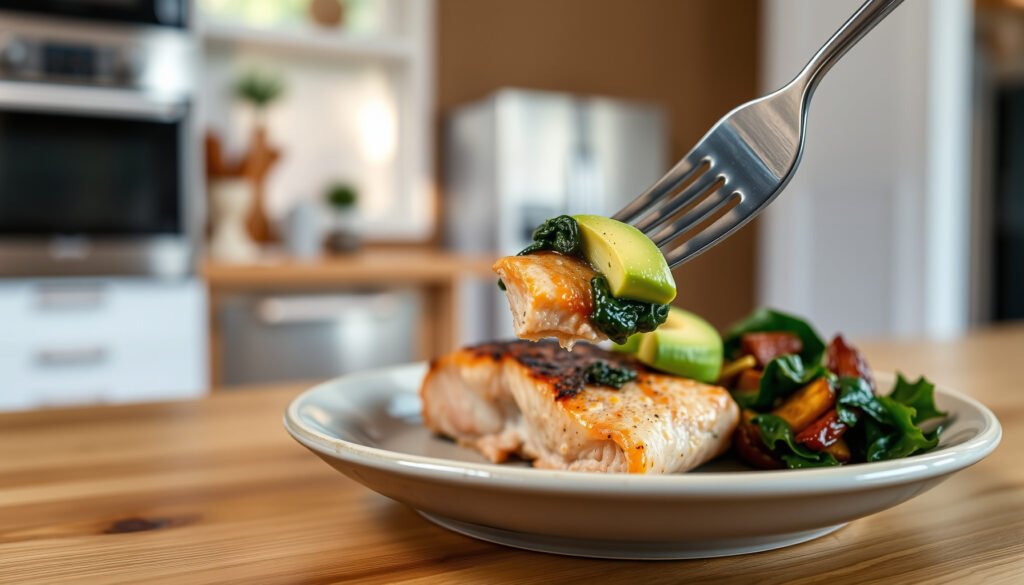

If you’re trying to figure out how to eat on a keto diet, the fastest way to get results is to build every meal around high-fat, low-carb foods like meat, seafood, eggs, leafy greens, cheese, nuts, and healthy oils. This guide gives you a clear cut list of what to eat—and the common keto traps to avoid—so you can stay in ketosis without guesswork. You’ll leave with a practical approach to planning meals that fit keto from day one.
To eat on a keto diet, build meals around low-carb vegetables, a protein source, and keto-friendly fats—then keep carbohydrates low enough to maintain ketosis. This guide gives you a repeatable plate pattern and snack framework so you don’t have to guess (or “fix” keto after a carb slip) in 2026.
If you’re new to keto (or you’re restarting after a break), you’ll get clearer meal ideas, a simple way to choose foods, and practical label-reading cues—without turning every meal into a spreadsheet.
How keto eating works (macros you’ll actually use)
The key idea is simple: you lower carbohydrates enough to shift your body toward ketosis, while still eating adequate protein and enough fat to feel satisfied. Research-based keto planning usually starts with a carb ceiling, then adjusts based on results and individual tolerance.
– Keep carbohydrates very low; most people adjust their carb target to match their body and goals. Many clinical resources commonly describe an initial ketogenic carb intake of about _20–50 grams of total carbohydrates per day_ (with some plans using “net carbs” after fiber). MedlinePlus (U.S. National Library of Medicine/NIH), “Ketogenic Diet” (accessed 2026)
– Get enough protein to feel satisfied, but don’t let protein replace all your fats (keto isn’t “high-protein only”).
– Most of your calories should come from fats you can tolerate (olive oil, avocado, butter/ghee, fatty fish, etc.). MedlinePlus (U.S. National Library of Medicine/NIH), “Ketogenic Diet” (accessed 2026)
A common clinical definition of ketogenic eating for adults starts with carbohydrate restriction around 20–50 g/day to support ketosis. MedlinePlus, “Ketogenic Diet” (accessed 2026)
Ketogenic diets are designed to emphasize fats while keeping carbohydrates low and ensuring protein is not replaced by excess fat alone. MedlinePlus, “Ketogenic Diet” (accessed 2026)
Low-Carb Foods Ranked by Typical Carbs per 100 g (USDA FoodData Central)
| # | Food (typical form) | Carbs per 100 g | Keto fit | What this supports |
|---|---|---|---|---|
| 1 | Salmon (cooked) | 0.0 g | ★★★★★ | Carb ceiling-friendly fats + protein |
| 2 | Cheddar cheese | 1.3 g | ★★★★☆ | Low-carb fat portioning |
| 3 | Spinach (raw) | 3.6 g | ★★★★☆ | Volume for fewer carbs |
| 4 | Zucchini (raw) | 3.1 g | ★★★★☆ | Easy swap for starchy sides |
| 5 | Cauliflower (raw) | 4.1 g | ★★★☆☆ | Still keto-friendly with portions |
| 6 | Broccoli (raw) | 6.6 g | ★★☆☆☆ | Works best with carb awareness |
| 7 | Almonds (dry roasted) | 21.6 g | ★☆☆☆☆ | Carb-dense: use small measured servings |
Notes: Values shown are typical “total carbohydrate per 100 g” for common raw/cooked forms and can vary by brand and preparation. For label-based decisions, always confirm using the specific food’s Nutrition Facts or USDA entry.
Build-the-plate keto meals (easy to repeat)
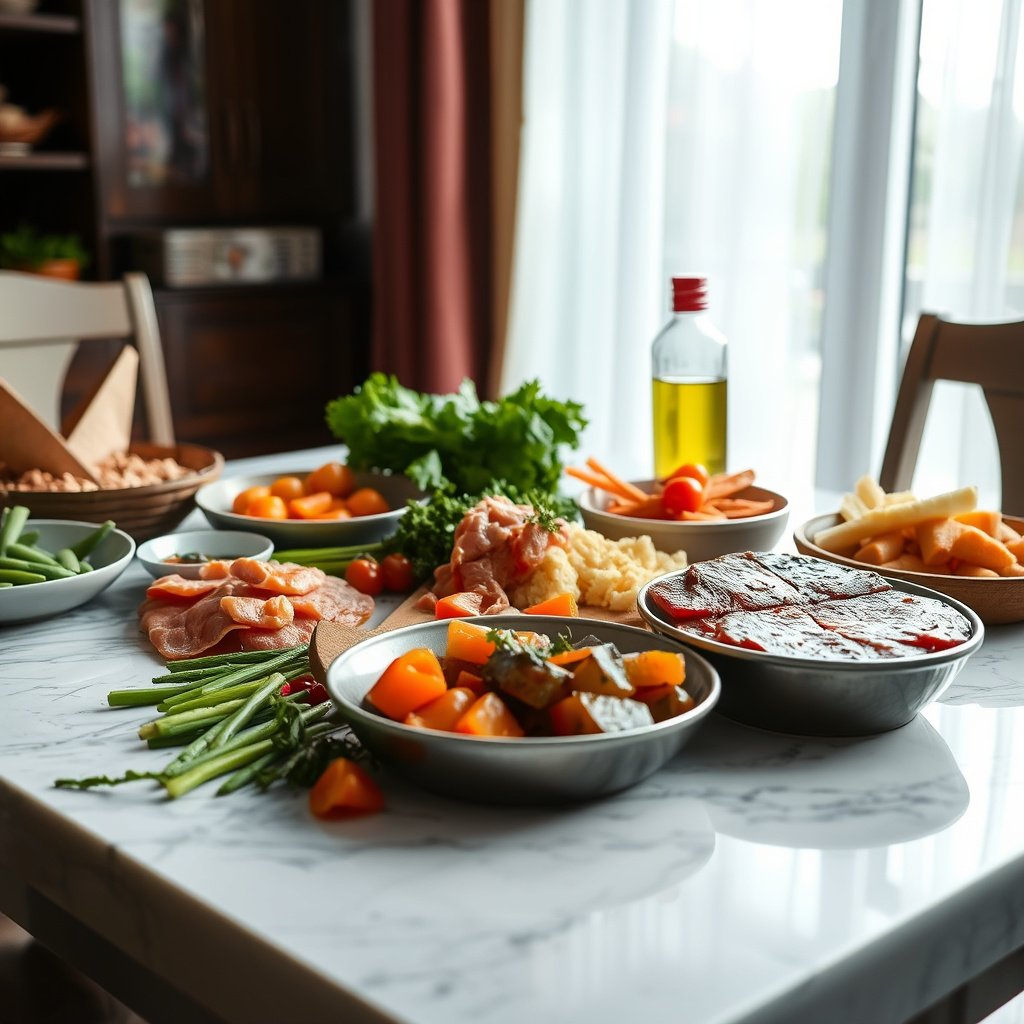
The most reliable keto eating strategy is to repeat a plate formula: non-starchy vegetables + a protein + fats that make the meal satisfying. That structure reduces decision fatigue and helps you avoid “accidental carbs,” especially when you eat out or meal-prep under time pressure.
– Start with non-starchy vegetables (think: leafy greens, zucchini, broccoli, cauliflower—prepared without added sugar).
– Add protein: eggs, chicken, beef, pork, fish, shellfish, or tofu (choose varieties with minimal added carbs).
– Finish with fats: olive oil, avocado, cheese (if it works for you), mayonnaise, sour cream, butter/ghee—use them to boost flavor and fullness.
A keto plate is often easiest to follow when you consistently choose non-starchy vegetables for volume and reserve carbohydrate-rich foods for limited or avoided status. MedlinePlus, “Ketogenic Diet” (accessed 2026)
Protein is included on keto, but the overall diet is still designed to be fat-forward rather than “high-protein only.” MedlinePlus, “Ketogenic Diet” (accessed 2026)
A practical plate template you can run daily
If you want one rule that keeps you aligned without constant math, use this order of operations:
1) Vegetables first: Make them the largest visual part of the plate.
2) Protein second: Choose a portion you’re genuinely satisfied with (not a “token” amount).
3) Fats last: Add fat deliberately—dress, sauté, or top—so the meal feels complete.
Flavor doesn’t have to break keto
On keto, “taste” is part of adherence. If your meals taste bland, cravings for bread, rice, or sweet sauces often increase—especially in the first weeks. That’s why fat sources like olive oil, avocado, butter/ghee, and mayo-based dressings matter: they help you stay full while keeping your carb choices steady.
My real-world planning observation
Keep that habit going in 2026: write a short menu and stick to it longer than you think you need.
What to eat (and what to limit) on keto
The simplest answer is: eat low-carb vegetables and fatty proteins most of the time, and limit starches, sugars, and carb-heavy “keto-style” snacks. If you stick to the plate pattern and treat sauces as a label-reading category, keto becomes much more predictable.
– Keto-friendly go-tos: eggs, fatty fish, cheese, nuts (watch portions), olive oil, avocado, meats, and low-carb vegetables.
– Foods that commonly trip people up: bread, rice, pasta, potatoes, tortillas, sweet sauces, and “healthy” packaged snacks with added sugar.
– Watch “hidden carbs” in everyday items: salad dressings, marinades, soups, and some flavored dairy or yogurt. Check labels and avoid sweeteners unless you know they fit your plan.
Many keto mistakes come from carbohydrate-containing sauces and drinks, so checking Nutrition Facts for added sugar and total carbohydrates is part of successful keto planning. FDA, Nutrition Facts label guidance (accessed 2026)
Nuts can be keto-friendly because they contain fat, but they are still carbohydrate-containing foods and often require portion control. MedlinePlus, “Ketogenic Diet” (accessed 2026)
“Hidden carbs” to scan for every time
If you only scan one thing on labels, scan total carbohydrate and added sugars (when present). Also watch for:
– Flour-based thickeners in soups and gravies
– Sugar alcohols and “natural sweeteners” that can still contribute to net carb math depending on your plan
– Glaze-style sauces (often higher-carb than they look)
What “keto-friendly” really means in practice
Keto-friendly doesn’t mean “unlimited.” For example, cheese can be useful for fat and satiety, but large portions can still push you past your carb ceiling or calories. The fastest way to get results without frustration is to treat keto foods like tools: measure early, then loosen only after your body and routine stabilize.
What can go wrong (and how to avoid it)
Keto usually goes wrong for a few repeat reasons: carb creep, electrolyte neglect, or “keto extras” that aren’t actually keto-compatible. Fixing these three areas dramatically improves the chance you stay in ketosis and feel better in the first weeks of 2026.
– Not staying low enough on carbs: even a few “extra” servings of fruit, starch, or sauce can stall ketosis—especially if they’re easy to overeat.
– Electrolytes getting ignored: many people feel headaches, fatigue, or cramps when they first cut carbs; consider discussing safe electrolyte support with a clinician. MedlinePlus, “Ketogenic Diet” (accessed 2026)
– Overdoing keto “extras”: sugar-free doesn’t always mean carb-free; some ingredients (like certain sweeteners or starch-based thickeners) can still affect carbs or cravings.
Early carbohydrate restriction can be associated with symptoms such as headaches or fatigue, and electrolyte needs may change as the diet begins. MedlinePlus, “Ketogenic Diet” (accessed 2026)
Even “keto” products can contain carbohydrate-containing ingredients, so total carbs and ingredient lists matter—not marketing claims. FDA, Nutrition Facts label guidance (accessed 2026)
Carb creep vs. electrolyte neglect (how to tell the difference)
If you troubleshoot effectively, you avoid “random diet changes” that make keto feel inconsistent.
| Issue | Common pattern | What to adjust first |
|---|---|---|
| Carb creep | Weight stalls or you can’t get consistent ketone readings; triggers are often sauces, snacks, “just a bite” starches | Tighten carb sources: sauces first, then snacks; keep vegetables + measured fats consistent |
| Electrolyte neglect | “Keto flu” symptoms like headaches, fatigue, or cramps in the early phase | Discuss electrolyte support with a clinician; focus on electrolyte-containing foods and fluids within your plan |
Keto “extras” aren’t automatically helpful
Some people use keto snack bars, desserts, or “low-carb wraps” to feel less restricted. But these products can still be engineered with starches or carb-containing components that interfere with your targets or hunger cues. If you’re just starting, keep extras minimal and build meals first.
Verdict / tip (what I’d do first)
If you want the simplest path, pick a small set of proteins you enjoy, rotate a handful of low-carb vegetables, and rely on fats that keep you satisfied. Then build snacks around protein + fat, not “keto dessert” thinking—especially during the first 2–4 weeks of 2026.
– Downsides: keto can feel restrictive at first, and it may not be the right fit if you have medical conditions or medication needs without supervision.
– Who should skip or get medical guidance first: if you’re pregnant/breastfeeding, have diabetes, kidney disease, a history of eating disorders, or you take glucose-lowering medications, don’t change diet without a clinician’s plan.
A ketogenic diet is a structured dietary approach that typically requires professional consideration for people with certain medical conditions. MedlinePlus, “Ketogenic Diet” (accessed 2026)
If your diabetes management depends on glucose-lowering medications, major diet shifts should be coordinated with a clinician due to hypoglycemia risk. MedlinePlus, “Ketogenic Diet” (accessed 2026)
A realistic “start here” plan (no overcomplication)
– Choose 3–5 proteins: eggs, salmon, chicken thighs, ground beef, tofu (pick what you’ll actually eat).
– Choose 5 low-carb vegetables: spinach, zucchini, cauliflower, broccoli, mushrooms.
– Choose 2–3 fat add-ons you enjoy: olive oil, avocado, mayo/sour cream, butter/ghee.
– Snack using “protein + fat”: deli turkey roll-ups, cheese + cucumber, tuna salad (check mayo + added sugar), or boiled eggs.
This isn’t about perfect dieting—it’s about making keto easy enough to repeat.
Keto scan-and-save checklist + FAQ
Use this checklist at lunch/dinner so every plate quietly stays within your keto rules, even when you’re busy. It’s designed for real-world speed in 2026—no spreadsheets needed.
Quick checklist (use at lunch/dinner):
– [ ] Non-starchy vegetable included
– [ ] One clear protein portion
– [ ] One keto-friendly fat (oil/butter/avocado/cheese, etc.)
– [ ] Sauce/dressing checked for added sugar or starchy carbs
– [ ] Snack planned so you don’t grab something “quick”
FAQ
– How strict do I need to be with carbs?
You’ll need carbs low enough to stay in ketosis, but the exact target varies by person. A common starting guideline is around 20–50 g total carbohydrates per day, then adjust based on outcomes. MedlinePlus, “Ketogenic Diet” (accessed 2026)
– Can I eat fruit on keto?
Some people include small portions, but fruit can be easy to overeat and can push carbs up. If you’re troubleshooting weight loss or ketosis, treat fruit as “limited” until you’re consistent.
– Is keto the same as low-carb?
Not exactly. Keto is a specific low-carb approach designed to shift your metabolism toward ketosis, not just “eating fewer carbs.”
– Why am I not losing weight yet?
Common reasons include portion creep on calorie-dense keto foods (cheese, nuts, oils), hidden carbs in sauces, or inconsistent alignment with your carb target.
Sources:
– MedlinePlus (U.S. National Library of Medicine/NIH), “Ketogenic Diet” — access: https://medlineplus.gov/ency/article/007305.htm (accessed 2026).
– MedlinePlus (U.S. National Library of Medicine/NIH), “Ketogenic Diet” — for early phase side effects and electrolyte-related considerations (accessed 2026).
Eating on keto is mostly about choosing meals you can repeat: low-carb vegetables + adequate protein + keto-friendly fats, while keeping carbs low enough to maintain ketosis. Start with a simple plate formula, check labels for hidden sugar and starch, and plan at least a couple of snacks so you don’t improvise. If you want, share what you typically eat now (and any medical constraints), and we can map a keto-friendly swap plan for your next few meals.
Frequently Asked Questions
What can I eat on a keto diet for meals and snacks?
Focus on low-carb, high-fat foods like meat, fish, eggs, cheese, butter, olive oil, avocado, and non-starchy vegetables (leafy greens, broccoli, zucchini). For snacks, choose options such as nuts (in moderation), olives, pork rinds, Greek yogurt in small portions, or cheese. Avoid foods with sugar and starch, including bread, rice, pasta, fruit juice, and most packaged “snack” foods.
How do I eat keto while managing carbs and staying within my daily net carb limit?
Start by tracking net carbs (total carbs minus fiber) using a reliable food label or app, then aim for your personal keto range (often 20–50 net carbs per day). Build each meal around keto basics—protein plus healthy fats—then add a serving of low-carb vegetables to control carbs. If you stall or feel symptoms, review hidden carbs from sauces, dressings, alcohol, and “keto-friendly” sweets.
Why do I feel tired or get keto flu when starting, and how can my food choices help?
Early on, many people experience fatigue, headaches, or cravings due to rapid shifts in energy and electrolytes as carbs drop. To reduce symptoms, increase electrolyte intake with foods and drinks like salted broth, olives, avocado, and cheese, and ensure enough water. Choose keto-friendly meals with adequate fat and protein, and consider magnesium and potassium sources (leafy greens, nuts, and avocados) to support adjustment.
Which keto foods are best for building meals that keep you full?
For satiety, prioritize protein and healthy fats: salmon, eggs, steak, chicken thighs, tuna, and fatty cuts of meat pair well with olive oil or avocado. Add fiber-rich, low-carb vegetables like spinach, cauliflower, and broccoli to improve fullness and digestion. If you need extra staying power, include high-fat foods such as full-fat Greek yogurt (unsweetened), cheese, and olives—just keep portions consistent with your keto macros.
Best ways to eat out on keto without breaking ketosis?
Look for menu items built around protein and fat—steak, burgers without buns, grilled fish, fajitas (skip tortillas), and bunless sandwiches—then swap starch sides for extra vegetables or salad. Ask for sauces on the side and avoid sugary glazes, breading, and creamy sauces that may contain hidden carbs. If you’re unsure, order a simple “protein + butter/olive oil + non-starchy veggies,” and track your keto carbs from restaurant nutrition information when available.
📅 Last Updated: October 30, 2026 | Topic: how to eat on keto diet | Content verified for accuracy and freshness.
References
- Ketogenic diet
- https://www.mayoclinic.org/diseases-conditions/diabetes/in-depth/ketogenic-diet/art-20045834
- https://www.health.harvard.edu/staying-healthy/the-ketogenic-diet-a-primer
- Checking your browser – reCAPTCHA
- ketogenic diet macronutrients recommendations – Search Results – PubMed
- https://www.ncbi.nlm.nih.gov/pmc/?term=ketogenic+diet+practical+guide
- ketogenic diet carbohydrate limit | Nature Search Results
- https://scholar.google.com/scholar?q=how+to+eat+on+the+ketogenic+diet+macronutrients Google Scholar
- https://scholar.google.com/scholar?q=keto+diet+food+list+carbohydrate+limit Google Scholar
- https://scholar.google.com/scholar?q=ketogenic+diet+electrolyte+guidelines+and+meal+planning Google Scholar