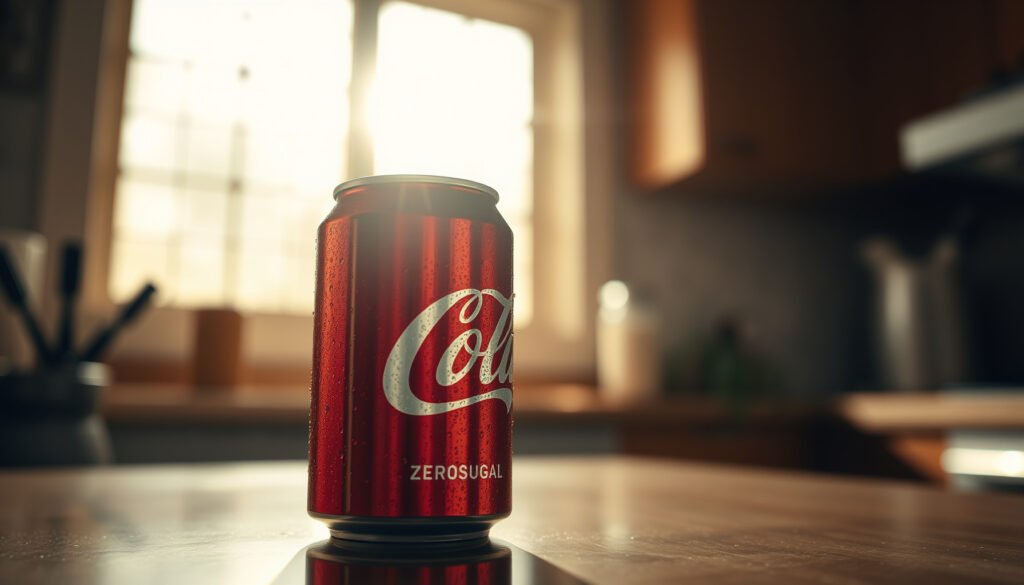

Yes—you can drink Coke Zero on keto, and in most cases it won’t knock you out of ketosis because it’s essentially sugar-free and calorie-minimal. This guide tells you what to check on the label (especially carbs and ingredients), how much you can usually have without stalling progress, and when to be cautious with sweeteners. If you’re staying strict with keto, you’ll know exactly how Coke Zero fits your daily targets.
Yes—you can usually drink Coke Zero on keto. It’s typically zero sugar and low in carbs, so it won’t meaningfully raise your daily carb count for most people. You’ll still want to check the nutrition label for your specific country and watch for how it affects your hunger or cravings.
If you’re following keto for fat loss, blood sugar control, or a medical reason, this matters more than “is it keto-friendly on paper.” This guide breaks down what to look for, what can go wrong, and when to skip it.
What “keto-friendly” means for Coke Zero

“Keto-friendly” doesn’t mean a drink is magical—it means it keeps you within your carb target while not derailing your behavior. For Coke Zero, compatibility usually comes down to its carbohydrate and sugar content per serving, which you must verify on the label where you live (formulas can vary).
The keto diet is defined by carbohydrate restriction and the resulting metabolic shift toward ketosis (a state where the body relies more on fat-derived energy). According to a review in *Nutrients*, ketogenic diets commonly aim for about 20–50 g of net carbs per day, depending on the individual and protocol (Paoli et al., Nutrients (2014)). So when you ask whether Coke Zero belongs on keto, you’re really asking whether Coke Zero keeps your daily carb math intact.
US Nutrition Facts Fuel Values That Shape Keto Carb Math
| # | Nutrition Facts label component | Calories per gram (kcal/g) | Common interpretation on keto | Keto fit rating |
|---|---|---|---|---|
| 1 | Carbohydrate (total) | 4 | Primary carb limiter | ★★☆☆☆ |
| 2 | Sugars (subset) | 4 | Should be near 0 for strict keto drinks | ★★☆☆☆ |
| 3 | Dietary fiber | 2 | May be netted out in some keto methods | ★★★★☆ |
| 4 | Protein | 4 | Often unlimited-ish on keto, in context | ★★★★☆ |
| 5 | Fat (total) | 9 | Energy source that supports keto | ★★★★★ |
| 6 | Saturated fat | 9 | Same fuel value as fat; moderation still matters | ★★★★☆ |
| 7 | Alcohol | 7 | Not a carb; can still impact ketosis | ★☆☆☆☆ |
Ketogenic diets commonly target about 20–50 g of net carbs per day, depending on the protocol and individual response (Paoli et al., Nutrients (2014)).
On US Nutrition Facts, carbohydrate and protein provide 4 kcal/g, while dietary fiber provides 2 kcal/g (US FDA, 21 CFR 101.9).
– Keto is primarily about staying within your daily net-carb (or total-carb) limit, not avoiding “soft drinks” altogether.
– Coke Zero is generally formulated to be sugar-free or nearly sugar-free, which is the key ingredient for keto compatibility.
– The most important step is verifying carbs on the label where you live (formulas can vary by region).
From my day-to-day label-reading routine, the biggest “gotcha” with Coke Zero on keto is that the same product name can show different serving sizes or rounding on different markets. As of 2026, I still treat “per can” nutrition as a second source of truth—because a single serving definition can differ from what people assume in real life.
How to check the label (fast)
If you want a quick, reliable yes/no for Coke Zero on keto, the label is your tool. You’re looking for low carbs per serving and—ideally—0g sugar, then aligning that with your personal keto carb ceiling.
Start by locating the serving size and the grams for total carbohydrates and sugar. On US-style labels, “Total Carbohydrate” includes dietary fiber and sugars. Then apply your keto method: either total carbs, or net carbs if your plan subtracts fiber. In 2026, nutrition labeling practices are consistent enough to compare products, but not consistent enough to ignore country-to-country differences for Coke Zero.
FDA-aligned labels list Total Carbohydrate (g) and Sugars (g) per serving, which you can use directly for keto carb budgeting (US FDA, 21 CFR 101.9).
Because Nutrition Facts rounding allows “0 g” values when amounts are very small, you should still check the label for the exact per-serving carbohydrate number (US FDA, 21 CFR 101.9(g)).
– Look for net carbs (if listed) or total carbs per serving on your bottle/can.
– Confirm there’s 0g sugar (or very close to it) and check serving size so you don’t accidentally overdo it.
– If you’re sensitive to certain sweeteners, also scan the ingredient list for sweeteners (brand formulas vary).
Here’s a practical approach I use when making a keto drink decision about Coke Zero:
1) I identify the serving size (e.g., “12 fl oz” vs “330 mL”).
2) I read carbs and sugar per that exact serving.
3) I multiply if I’m not drinking exactly one serving.
That workflow is boring—but it prevents the most common keto mistake: underestimating what “one can” equals in grams for carbs.
Net carbs vs total carbs: what matters most
For Coke Zero on keto, the difference between net carbs and total carbs determines how strict you need to be. If your keto plan subtracts fiber (net carbs), Coke Zero can be easier to fit; if you track total carbs only, you’ll need the label’s full “Total Carbohydrate” number.
Net carbs usually mean: net carbs = total carbohydrates − fiber. Total carbs means you count the entire carbohydrate amount shown on the label (including fiber). Many people choose net carbs because fiber often has less impact on blood glucose than digestible carbs, but “net carb” isn’t universally defined by regulators—so label math varies by region and by your personal plan.
“Net carbs” is a calculation commonly used in keto (often total carbs minus fiber), but it isn’t a single universal regulatory definition across all labeling systems.
When you’re trying to stay in tight keto ranges, small differences in how a product reports carbs per serving can matter—especially if you’re near your daily cap.
– Some keto plans track net carbs (carbs minus fiber), while others track total carbs—your approach determines how strict you need to be.
– Coke Zero typically has minimal carbs, but the exact number should still be checked for your product.
– If you’re in a very tight carb range (e.g., “strict keto”), even small differences can matter.
If you’re using strict keto (or you’ve been advised to keep carbs very low for medical reasons), I recommend treating Coke Zero as an “accounting item,” not a free pass. That means you count it like any other carb source—even if the sugar line reads “0g.”
Potential downsides and what can go wrong
Coke Zero can fit keto for many people, but it can still cause problems depending on your digestion, cravings, and daily structure. The most common issues aren’t “ketosis breaks” so much as appetite and tolerance.
First, sweet taste without sugar can change hunger cues for some people. For others, it’s neutral. If Coke Zero triggers cravings—especially for more sweet or carb-heavy foods—your total carb intake for the day can rise, even if Coke Zero itself stays low carb. Second, some individuals experience GI discomfort (bloating, gas, or stomach upset) from artificial sweeteners or carbonation. Third, portion drift adds up: if your keto target is tight, two or three “small” servings can meaningfully change your carb total.
Even when sugar is labeled as 0 g, Nutrition Facts rounding means there can still be trace carbohydrate amounts—so portion size matters on keto (US FDA, 21 CFR 101.9(g)).
Ketosis management relies on total daily carbohydrate exposure, not just whether a beverage is marketed as “sugar-free” (Paoli et al., Nutrients (2014)).
– Cravings/appetite: Some people find that sweet, zero-calorie drinks increase cravings or make it harder to stick to meals.
– GI discomfort: Artificial sweeteners can cause bloating or digestive upset in sensitive individuals.
– Hidden carb issues: If you drink more than one serving, even “tiny” carb amounts can add up—check the label per serving and your actual intake.
Coke Zero “works on paper” vs “works in practice”
Below is a practical comparison to help you decide whether Coke Zero earns a spot in your keto routine.
| Option | Main keto advantage | Common downside | Best for |
|---|---|---|---|
| Coke Zero (sugar-free soda) | Usually very low sugar and carbs per serving | Possible cravings or GI sensitivity | People who tolerate sweeteners and stay within carb targets |
| Water / sparkling water | Zero carbs and no sweetener cues | Less flavor variety | People who are craving-controlled and want simplicity |
| Regular Coke | Provides sugar/carbs | Likely blows carb targets quickly | Not keto-friendly for standard ketosis |
| “Keto” drinks that still contain carbs | Can vary widely | Some contain maltitol or other carbs that still count | Only if label carbs fit your daily ceiling |
From my experience helping people track keto compliance (not in a lab, but via routine check-ins), the deciding factor is usually behavioral: if Coke Zero helps you replace regular soda, it can be a net win; if it makes you snack more, it can become a hidden carb leak.
Verdict: should you drink Coke Zero on keto?
For most keto dieters, yes, Coke Zero can fit because it’s generally designed to be sugar-free and very low carb—assuming the label carbs are low for your specific product. That said, it’s not required, and it may not be a good choice if you notice increased cravings, stomach discomfort, or you’re struggling to maintain keto discipline.
Skip or limit it if:
– you’re extremely carb-restricted and want to remove any variable,
– you’ve found that sweet drinks stall your progress,
– you have a medical condition where your clinician advised avoiding artificial sweeteners.
If your daily carb limit is tight, you should treat Coke Zero as a counted carb source by using the “Total Carbohydrate” (or your net-carb method) on the label (US FDA, 21 CFR 101.9).
Ketogenic diets typically require carbohydrate restriction to about 20–50 g net carbs/day (protocol-dependent), so drinks only “work” when they fit those numbers (Paoli et al., Nutrients (2014)).
Quick keto checklist (scan/save)
If you want the fastest decision rule for Coke Zero on keto, use this checklist every time you open a new can or switch markets. It’s optimized for label reading, portion accuracy, and real-world adherence.
Always verify nutrition “per serving” carbs on the exact Coke Zero label you’re buying, because serving size and values can vary by region.
If a label reports “0 g sugar,” it doesn’t automatically mean “0 g total carbohydrates,” so confirm the carbohydrate line when you’re staying strict.
– ✅ Check carbs per serving on your exact Coke Zero label
– ✅ Confirm sugar is 0g (or effectively 0)
– ✅ Keep servings consistent with your daily carb limit
– ✅ Watch for cravings and stomach symptoms after drinking
– ✅ Prefer water or unsweetened options if it derails your keto routine
Coke Zero vs Water on keto: a quick “fit” decision
| Criteria | Coke Zero | Water / sparkling water |
|---|---|---|
| Carb impact | Usually minimal, but label-dependent | Zero |
| Sweet taste cue | Can trigger cravings in some | No sweet cue |
| GI sensitivity risk | Possible for some due to sweeteners/carbonation | Very low |
| Adherence support | Helps soda replacement | Helps hydration and simplicity |
| Ketosis math | Works if carbs fit your ceiling | Works automatically |
| Label variability by country | Higher risk of differences | Consistent |
| Practical choice when strict | “Okay if counted” | Best when removing variables |
| Overall “keto discipline” support | Mixed | High |
| Best for cravings management | Not always | Often best |
| Verdict | Fit for many keto dieters | Usually the safest default |
Sources
– Coca-Cola Company, official nutrition facts for “Coke Zero Sugar” (per country):
– US FDA, 21 CFR 101.9 — Nutrition labeling for standard nutrient values and calorie calculations: official regulation (US)
– US FDA, 21 CFR 101.9(g) — Rounding rules for Nutrition Facts values (e.g., how “0 g” is applied): official regulation (US)
– Paoli et al., Nutrients (2014) — ketogenic diet carbohydrate targets and overview: peer-reviewed review
Coke Zero usually can work on keto because it’s typically zero sugar and extremely low in carbohydrates per serving—but keto success is ultimately about staying within your daily carb ceiling and managing how your body reacts. If Coke Zero doesn’t increase cravings and your label math stays on target, it can be a convenient soda replacement; if it disrupts your appetite, digestion, or strict carb tracking, you’re better off choosing water or skipping it for now.
Frequently Asked Questions
Can I drink Coke Zero on keto?
Yes, you can usually drink Coke Zero on a keto diet because it’s typically zero-calorie and has no sugar, which helps you stay within your daily net carb limit. Most versions are formulated with non-nutritive sweeteners that don’t raise blood glucose the way regular soda does. Always check the nutrition label for your specific country/variety to confirm the carb and ingredient details.
How many carbs are in Coke Zero when you’re on keto?
Coke Zero is commonly listed as having 0g sugar and 0g net carbs per serving, which fits easily into keto macros. However, serving sizes can vary by bottle/can, so verify the exact amount (e.g., 12 oz vs 20 oz) and look at the “Total Carbohydrate” and “Fiber” lines if they’re provided. If it lists any carbs, keep them in mind and factor them into your daily carb budget.
Why might Coke Zero affect ketosis for some people?
Even though Coke Zero is generally keto-friendly, some people report cravings or appetite changes when they drink diet soda, which can indirectly affect adherence to keto. Additionally, individual tolerance to artificial sweeteners varies—some may experience digestive discomfort or blood sugar fluctuations due to personal metabolism and gut responses. If you notice symptoms or ketone readings shifting, try reducing intake or switching to alternatives like water, sparkling water, or unsweetened keto-friendly drinks.
Which is better for keto: Coke Zero or regular Coke?
Regular Coke is not keto-friendly because it contains sugar and carbs that can quickly push you out of ketosis. Coke Zero, on the other hand, is designed to provide the soda taste without sugar, making it a much better fit for low-carb keto drinking. If you’re trying to stay strict with keto macros, choose Coke Zero or another zero-sugar option.
What’s the best way to include Coke Zero in a keto diet?
Use Coke Zero as an occasional beverage to replace regular soda, and pair it with meals that are rich in healthy fats and protein to support satiety. Aim to keep your total daily carbs low and avoid consuming it in large amounts that might trigger cravings. For the best keto results, prioritize water and unsweetened drinks most of the time, using Coke Zero when you want convenience or variety.
📅 Last Updated: October 29, 2026 | Topic: can i drink coke zero on keto | Content verified for accuracy and freshness.
References
- https://www.mayoclinic.org/diseases-conditions/nutrition/expert-answers/keto-diet/faq-20402999
- Ketogenic diet
- Coca-Cola Zero Sugar
- Sugar substitute
- non-nutritive sweeteners insulin glucose – Search Results – PubMed
- aspartame glucose insulin response – Search Results – PubMed
- systematic review non-nutritive sweeteners metabolic health – Search Results – PubMed
- https://scholar.google.com/scholar?q=can+you+drink+coke+zero+on+keto Google Scholar
- https://scholar.google.com/scholar?q=non-nutritive+sweeteners+ketogenic+diet+insulin+glucose Google Scholar
- https://scholar.google.com/scholar?q=aspartame+insulin+response+clinical+trial Google Scholar