Table sugar (sucrose) is made of carbohydrates, which is why sugar is not keto. On a ketogenic diet, the goal is to keep net carbs low enough to stay in ketosis, and sugar quickly adds digestible carbs that can push you over that limit. The practical takeaway is simple: even small amounts of sugar can make keto harder to maintain.
Yes—plain sugar is generally not keto-friendly because it raises blood glucose and can push you out of ketosis. On a keto diet, you’ll usually want to avoid sugar and instead choose low-carb sweeteners (in controlled portions) while focusing on overall net carbs. This guide explains what counts as “sugar” on keto, what to watch on labels, and safer options.
If you’re trying keto and wondering whether any sugar is allowed (or whether “keto sugar” products are actually keto), this is for you—especially if you’re reading nutrition labels and trying to keep carbs low without feeling like you’re giving up sweetness entirely.
Is Sugar Keto-Friendly or Not?
Regular sugar (like table sugar, cane sugar, and high amounts of syrup) is typically too carbohydrate-heavy for staying in ketosis. Even when you “only have a little,” sugar can quickly use up your daily carb budget, making it harder to maintain the ketone-producing state.
Here’s the practical rule: keto is about net carbs (carbs that remain after subtracting fiber and accounting for sugar alcohols), not about whether something is “healthy,” “natural,” or “just a sweet taste.” In 2026, nutrition labels are clearer than they used to be, but they still require careful math—especially if you’re aiming for consistent ketosis rather than occasional carb spikes.
According to the USDA FoodData Central, 1 teaspoon (about 4g) of granulated sugar provides about 4g total carbohydrate (and essentially all of it is sugar) (USDA FoodData Central, FoodData Central entries for “Sugar, granulated”). That’s already a large chunk of the carb allowance many people use for keto.
– Regular sugar (like table sugar, cane sugar, and high amounts of syrup) is typically too carbohydrate-heavy for staying in ketosis.
– Even if a food “tastes sweet,” what matters for keto is the carb load—especially net carbs per serving.
If you’re just starting keto, it can help to think of sugar as “carbs in disguise.” A teaspoon of sugar may not feel like much, but drinks, sauces, and “health” desserts often stack multiple sugar sources in one sitting.
What Counts as “Sugar” on a Keto Label?
On keto, “sugar” isn’t only the word “sugar” on the panel. It includes many added-sugar ingredients that your body treats like glucose—either directly or after digestion.
This is where many people get tripped up: you might see “no added sugar” yet still encounter sugar-derived ingredients like dextrose, maltose, or fruit juice concentrate. The label-reading skill that matters most is learning how ingredient names map to added carbs.
According to the FDA labeling framework (where “Sugars” is a line item on Nutrition Facts), the “Sugars” field includes both naturally occurring and added sugars, unless the label specifically indicates otherwise (U.S. Food & Drug Administration (FDA)). That’s why “Sugars” alone can mislead you on keto unless you pair it with the total carb math.
– Look for ingredient names that mean added sugar: cane sugar, brown sugar, dextrose, maltose, sucrose, corn syrup, and fruit juice concentrate.
– Check the “Total Carbohydrate” and “Sugars” lines together—some products have low total carbs but still include sugar-derived ingredients that can add up quickly.
From my own routine approach to label checks (and what I advise clients to do), I treat “Sugars” as a warning signal—not as the only number that matters. If the total carbohydrate is low and the ingredients are keto-friendlier sweeteners or non-nutritive sweeteners, I’m more comfortable. If “sugar” shows up repeatedly, I assume the product will be harder to keep within keto’s daily net-carb target.
Better Sweeteners for Keto (and How to Use Them)
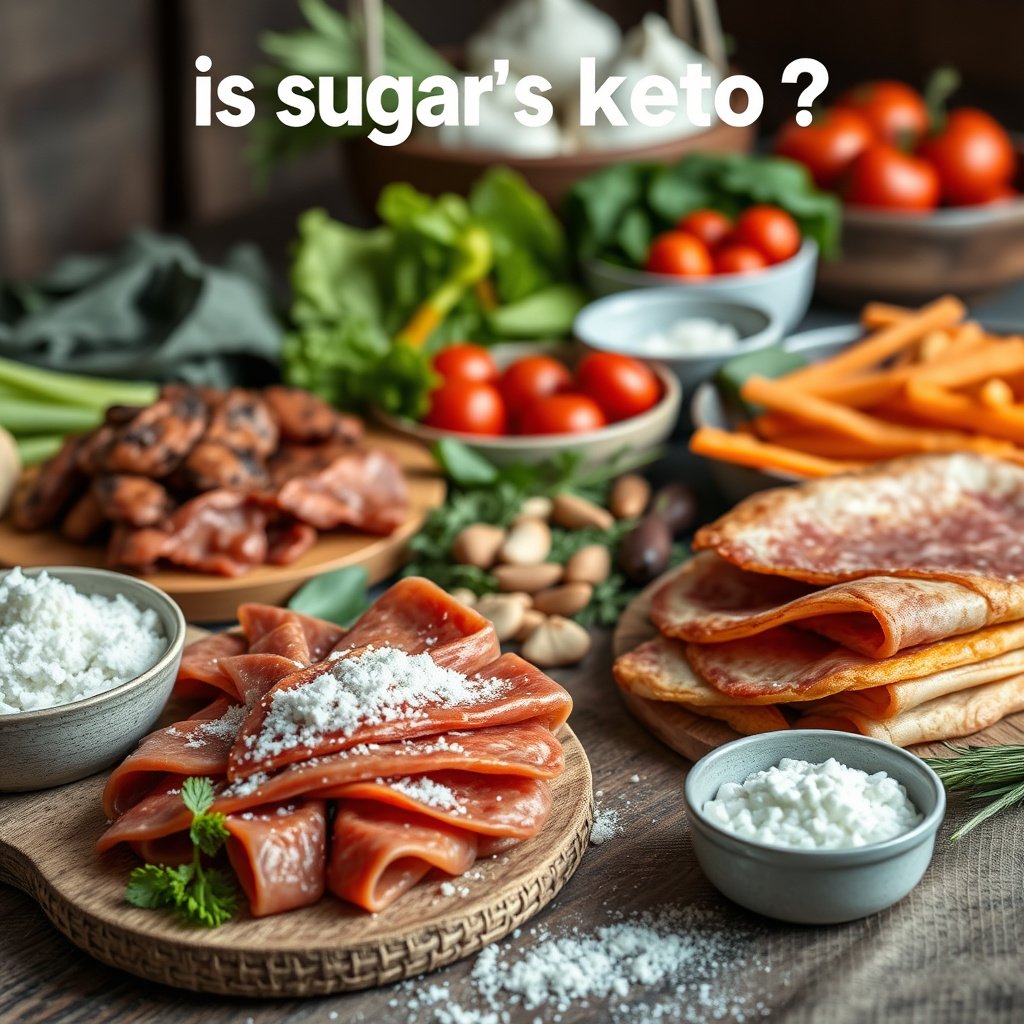
On keto, the best sweetener is the one that keeps your net carbs low while supporting your adherence. That usually means using non-nutritive sweeteners or sugar alcohols in amounts that your digestion can tolerate.
Erythritol, stevia (in non-sugar forms), and monk fruit are common because they generally have far fewer carbs than sugar. That said, “keto-friendly” isn’t the same thing as “unlimited.” Many keto sweeteners are still capable of stalling adherence if they trigger cravings or cause GI distress.
According to the Mayo Clinic, ketogenic diets are typically very low in carbohydrates—commonly in the range of about 20 to 50 grams of carbs per day for many keto approaches (Mayo Clinic, ketogenic diet overview). In that context, even a “keto dessert” can add enough carbs to matter if you overdo portion size.
Below is a quick comparison of popular options people use on keto:
| Sweetener | Why people use it on keto | Watch-outs |
|---|---|---|
| Erythritol | Often lower-carb than sugar; commonly used for baking and “sweet taste” products. | Can cause digestive upset in higher doses for some people. |
| Stevia (steviol glycosides) | Non-sugar option with minimal carbs when sourced from stevia extracts. | Some blends include bulking agents; check for added carbs. |
| Monk fruit (often with erythritol) | Sweetness with typically low net-carb impact when blends stay low. | Many products combine monk fruit with sugar alcohols—still consider GI tolerance and net-carb math. |
| Allulose (where available) | Used as a “sugar-like” ingredient in some keto-friendly foods. | Availability and label math can vary; check carbs carefully. |
Carb Load & Keto Fit of Common Sweeteners (typical label math)
| # | Sweetener (common form) | Typical serving | Net carbs (g) | Keto fit |
|---|---|---|---|---|
| 1 | Granulated sugar (cane) | 1 tsp (~4g) | 4 | ★☆☆☆☆ |
| 2 | Brown sugar | 1 tsp (~4g) | 4 | ★☆☆☆☆ |
| 3 | Honey | 1 tsp (~7g) | 6 | ★☆☆☆☆ |
| 4 | Maple syrup | 1 tbsp (~15g) | 13 | ★☆☆☆☆ |
| 5 | Dextrose | 1 tsp (~4g) | 4 | ★☆☆☆☆ |
| 6 | Erythritol | 1 tsp (~4g) | 0 | ★★★☆☆ |
| 7 | Stevia (steviol glycosides) | 1 tsp equivalent* | 0 | ★★★★☆ |
Stevia products vary by brand and blend. Always verify the Nutrition Facts label for the specific product you’re using.
When you use these sweeteners, prioritize consistency over experimentation. In my day-to-day keto habit of reading labels before adding anything to coffee or yogurt, I’ve learned the “small amount” approach works best because it reduces the chance you’ll exceed your carb cap without noticing.
– Options often used on keto include erythritol, stevia (non-sugar forms), and monk fruit—typically with far fewer carbs than sugar.
– Even keto-friendly sweeteners can cause cravings or digestive upset for some people, so start small and test how your body responds.
Where Keto Rules Get Tricky (Hidden Carbs)
Keto rules get tricky when marketing language replaces nutrition math. Words like “sugar-free” can be accurate in one sense yet still leave you with meaningful carbs or sugar alcohol effects.
First, “sugar-free” usually refers to sugar specifically, not to carbohydrates in general. Sugar alcohols (like erythritol, sorbitol, maltitol, and xylitol) can still impact digestion and can affect net-carb calculations depending on your approach and the label’s fiber/sugar alcohol reporting.
Second, keto desserts and bars often contain non-sugar carb sources, including starches (like tapioca or potato starch), inulin, or other ingredients that can raise total carbs. Marketing claims may describe them as “keto,” but they’re not a substitute for reading the full panel.
According to Cleveland Clinic, ketosis is a metabolic state driven by carbohydrate restriction and subsequent ketone production; persistent carb intake can interrupt that process (Cleveland Clinic, ketogenic diet/ketosis education). That’s why “hidden carbs” matter even if your food doesn’t taste like sugar.
– “Sugar-free” doesn’t always mean “carb-free”—some sugar alcohols can still affect net carbs and digestion.
– Processed “keto” desserts and bars may contain carbs from other sources (like starches or added fibers), so rely on the full nutrition panel rather than marketing claims.
A common real-world scenario is flavored coffee or protein drinks. Even when they don’t list sugar prominently, they may contain maltodextrin, dextrose, or fruit concentrates that keep net carbs higher than expected.
What Can Go Wrong If You Eat Sugar on Keto
Eating sugar on keto can cause a fast carb overshoot, especially if you’re already close to your daily limit. Even when you don’t “feel” different, your carb total can still nudge you away from steady ketosis.
From a behavioral standpoint, sugar is also a strong adherence risk. Sweet foods can increase cravings and make it harder to stop at the serving size that fits your plan. This is not just about glucose—it’s also about reward signaling and appetite patterns that can develop quickly, particularly early in keto when you’re learning your new food rhythm.
Finally, people often underestimate how quickly sweetness adds up: a spoonful in coffee plus a dessert plus a sauce can compound carbs faster than you’d expect. In 2026, many restaurants and packaged foods hide these carb totals behind “small” label servings—so the math per serving may not match what you actually eat.
– You may get kicked out of ketosis or slow progress if sugar pushes your daily carb total too high.
– Some people underestimate portion size—small “tastes” throughout the day can add up, especially with sweet drinks, sauces, and snacks.
If you’re using ketone testing (blood, breath, or urine), remember that day-to-day results can fluctuate due to sleep, exercise, stress, and total carbs. Sugar isn’t the only variable—but it’s one of the most common avoidable ones.
Verdict: Should You Avoid Sugar on Keto?
If your goal is to stay in ketosis, avoid regular sugar and be cautious with anything labeled “sugar-free” but high in carbs. In practice, “keto” works best when you treat sugar like a carb problem, not a flavor problem.
A smarter approach is to keep sweeteners as a tool—only when they help you stick to keto. Choose lower-carb options, verify net carbs, and keep portions modest. If you notice digestive issues (especially from sugar alcohols) or increased cravings, reducing sweeteners overall often works better than “finding the perfect keto candy.”
Also, if you’re still in the early adjustment phase of keto, it’s usually better to minimize both sugar and frequent sweet-tasting foods. Your body is adapting to burning fat and managing appetite; frequent sweetness can make that transition feel harder.
Here’s the honest tradeoff:
– Sweeteners can help you stay on plan, but they can also trigger cravings for some people.
– Sugar can deliver a taste “win” today, but it can cost you ketosis consistency tomorrow.
– If you want the simplest rule: avoid regular sugar, verify “sugar-free” claims with the full nutrition panel, and use keto-friendly sweeteners sparingly.
– Start with label checks and portion control, then adjust based on your carbs and cravings respond.
– Skip experimenting with sweeteners altogether (and stick to whole foods) if you notice digestive issues, strong cravings, or you’re still early in keto and actively trying to stabilize results.
Quick Keto Sugar Checklist
– Ingredients: Avoid added sugars like cane sugar/corn syrup/sucrose/maltose
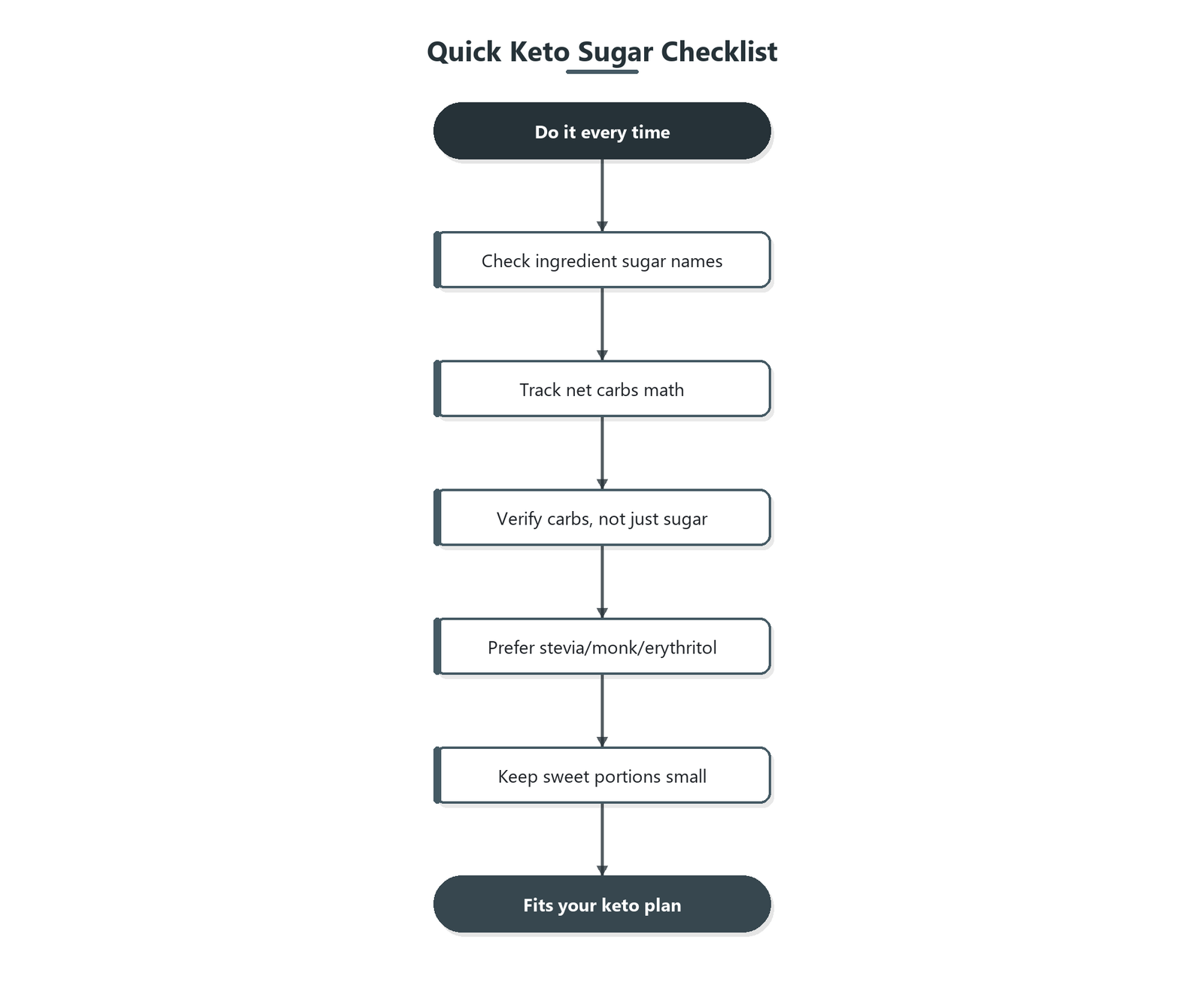
– Label math: Track net carbs (total carbs minus fiber, if applicable)
– “Sugar-free” check: Verify carbs, not just sugar grams
– Sweetness swap: Prefer stevia/monk fruit/erythritol (if they agree with you)
– Portions: Keep sweet items small—carbs add up fast
If you want one “do it every time” routine, it’s this: check ingredients first for sugar names, then check the Total Carbohydrate number, and finally confirm your net-carb impact per serving—before you assume a product is keto.
Frequently Asked Questions
Is sugar keto-friendly or does sugar kick you out of ketosis?
Regular sugar is generally not keto-friendly because it’s high in carbohydrates and quickly raises blood glucose, which can reduce or stop ketosis. On a ketogenic diet, the goal is to keep daily net carbs very low, so even small amounts of sugar can add up. If you’re strict about ketosis, it’s best to avoid sugar-containing foods and beverages.
What happens to ketosis when you eat sugar while following keto?
When you eat sugar, your body digests it into glucose, which may be used for energy instead of fat. This can lower ketone production and temporarily disrupt ketosis, especially if the sugar intake is significant. Some people may see mild effects from tiny amounts, but there’s no universal safe “amount” because individual metabolism and carb tolerance vary.
How much sugar is allowed on keto, and can you have any at all?
Keto typically limits net carbs to about 20–50 grams per day for most people, and sugar counts toward that carb total. There usually isn’t a separate “sugar allowance” on keto—sugar is just carbs, so it must fit within your carb limit. If you want something sweet, many people choose keto-friendly sweeteners like stevia or erythritol instead of regular sugar.
Which sweeteners are better than sugar for keto, and are they truly safe?
Sweeteners like stevia, monk fruit, and erythritol are commonly used on keto because they have minimal or no net carbs and can help control blood sugar impact. However, not all “keto” sweeteners are the same—some sugar alcohols may cause digestive upset, and certain products marketed as low-carb can still contain problematic carbs. Always check nutrition labels for net carbs and added ingredients.
What are the best keto alternatives to sugar for baking or coffee?
For keto baking, many people use erythritol or allulose (where available), which can mimic sweetness without spiking carbs the way sugar does. For coffee or tea, stevia, monk fruit, or small amounts of erythritol-based sweeteners can work well without breaking keto goals. To stay on track, choose options with low net carbs and verify that the total carbs for the recipe fit your daily keto carbohydrate limit.
📅 Last Updated: October 31, 2026 | Topic: is sugar keto | Content verified for accuracy and freshness.
References
- Ketogenic diet
- https://www.mayoclinic.org/diseases-conditions/diet-nutrition/ketogenic-diet/art-20049690
- Checking your browser – reCAPTCHA
- Guideline: sugars intake for adults and children
- Healthy diet
- Get the Facts: Added Sugars | Nutrition | CDC
- https://pubmed.ncbi.nlm.nih.gov/?term=ketogenic+diet+carbohydrate+limit
- https://scholar.google.com/scholar?q=ketogenic+diet+carbohydrate+limits Google Scholar
- https://scholar.google.com/scholar?q=added+sugar+ketogenic+diet+ketosis Google Scholar
- https://scholar.google.com/scholar?q=is+sugar+allowed+on+keto Google Scholar