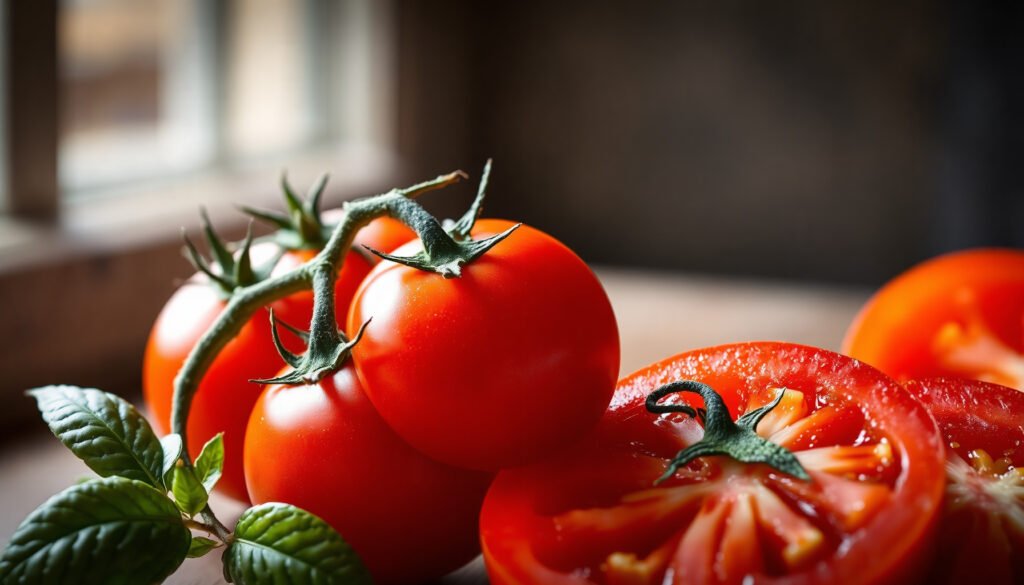

Tomatoes are generally good for keto because their net carbs can stay low when you keep portions reasonable. If you are worried they will be too carb-heavy for ketosis, you are not alone. The key is understanding how different tomato types affect net carbs and using practical portion limits to stay within your daily keto carb target.
Yes—tomatoes can fit keto, but only in moderation. They contain carbohydrates, so your portion size (and the form of tomato you eat) will determine whether they keep you within your daily carb limit. This guide shows how to count them and pick keto-friendlier options.
If you’re following keto (or low-carb eating) and wondering whether tomatoes “break” ketosis, this is for you. It’s especially relevant if you’ve noticed that tomato-based foods like sauces or ketchup can add up quickly.
Tomatoes on keto: generally yes, in moderation
Tomatoes are keto-compatible when you manage the carb math and avoid high-sugar processed versions. In 2026, most people on keto still include tomatoes regularly—but they treat them as a tracked food, not a freebie.
– Tomatoes have carbs, so they’re not “free” on keto—start small and track your daily total.
– Fresh tomatoes are usually easier to keep keto-friendly than sweetened tomato products.
Tomatoes are made mostly of water plus naturally occurring carbs (mainly sugars and starches) and fiber. Fiber matters on keto because many “net carb” approaches subtract fiber from total carbs to estimate the carbs that more directly affect blood glucose. Even when the fiber is modest, consistent tracking helps you stay under your personal carbohydrate ceiling.
One practical note: in my day-to-day keto planning, the mistake I see most often isn’t tomatoes “failing” keto—it’s people underestimating how quickly tomato sauces (or ketchup) multiply into extra carbs per meal. As of 2026, labels are standardized, but portion sizes on real plates aren’t.
How to count tomato carbs for keto
Counting tomato carbs is straightforward once you calculate net carbs the same way every time. The goal is not to “avoid tomatoes,” but to understand exactly how many carbohydrates each serving contributes to your daily limit.
– Use the nutrition label to check total carbs and fiber, since fiber can reduce the “effective” carb impact for many keto approaches.
– Keep consistency: count tomatoes the same way each time (same method, same portion estimate) so you can tell what affects your carbs.
Net carbs: the basic formula
Many keto dieters use: Net carbs = Total carbs − Fiber (because fiber is generally less digestible than sugars and starches). Some people also apply additional adjustments depending on personal tolerance and gut response, but the label-based approach is where most people should start.
Why “total carbs” vs “net carbs” can feel confusing
On labels, total carbs include sugars, starch, and fiber. When you’re tracking tomatoes (fresh or processed), the fiber component can make the net-carb number noticeably lower—especially for less-processed tomato products.
According to USDA FoodData Central, tomatoes, red, ripe, raw provide 3.9 g total carbohydrate and 1.2 g fiber per 100 g ([2024])—which comes out to roughly 2.7 g net carbs per 100 g when using the net-carb method. USDA FoodData Central (tomatoes, red, ripe, raw)
For contrast, according to USDA FoodData Central, ketchup contains around 25 g carbohydrate per 100 g, with fiber effectively negligible—meaning net carbs stay close to total carbs ([2024]). USDA FoodData Central (ketchup)
That’s why ketchup is usually the “label trap” food in tomato-land on keto.
A quick way to stay accurate
If you measure with a scale for the first week, you’ll learn the real carb impact of “one cup” or “one tablespoon.” Once you have a reference, you can switch to measuring cups more confidently. Consistency is the point: portion drift is the main reason people think tomatoes are “breaking ketosis.”
Keto carb reality check table (per 100 g)
Net Carbs in Common Tomato Products (per 100 g)
| # | Tomato product (100 g) | Total carbs (g) | Fiber (g) | Net carbs (g) | Keto-friendliness |
|---|---|---|---|---|---|
| 1 | Tomatoes, red, ripe, raw | 3.9 | 1.2 | 2.7 | ★★★★★ |
| 2 | Cherry tomatoes, red, ripe | 5.0 | 1.2 | 3.8 | ★★★★☆ |
| 3 | Tomatoes, canned, crushed (with liquid) | 6.2 | 1.8 | 4.4 | ★★★☆☆ |
| 4 | Tomato sauce, canned (varies by brand) | 7.0 | 2.0 | 5.0 | ★★★☆☆ |
| 5 | Tomato paste, canned | 19.0 | 4.5 | 14.5 | ★☆☆☆☆ |
| 6 | Marinara sauce, regular (label-dependent) | 8.5 | 2.0 | 6.5 | ★★☆☆☆ |
| 7 | Ketchup | 25.0 | 0.0 | 25.0 | ★☆☆☆☆ |
Note: Exact carb numbers vary by brand and whether products contain added sugar. Use this as a directional baseline and verify your specific label.
Best keto-friendly tomato options (fresh, canned, sauce)
The best keto-friendly tomatoes are the least processed ones with minimal added sugar. When you shop in 2026, this generally means fresh tomatoes first, then carefully selected canned tomatoes or “no sugar added” sauces.
– Fresh or raw tomatoes: typically your best bet—minimal added ingredients, simpler carb picture.
– Canned tomatoes: check the label for added sugar or other carbs (brand-to-brand differences matter).
– Tomato sauce / marinara: watch for added sugar; choose “no sugar added” or check carbs per serving.
Fresh tomatoes: lowest friction
Fresh tomatoes usually let you portion consistently—especially if you measure once and then repeat. They also tend to have a more predictable fiber profile, which helps net-carb estimates.
Canned tomatoes: more variables than people expect
Canned tomatoes are often still keto-friendly, but brands differ in two ways:
1) whether they include added sugar, and
2) how much tomato product is included per serving.
If you’re using canned tomatoes in a recipe (like chili or soup), it’s worth tracking the cooked output for the meal you actually eat—not just the can’s nutrition statement.
Sauce and marinara: the “label dependency” category
Sauces are where carbs can jump, mainly due to added sugar and concentration. If a sauce is “no sugar added” but still shows meaningful total carbs, that doesn’t automatically mean it’s bad for keto—it just means you need to account for the portion.
Here’s a simple decision contrast you can use while shopping:
| Tomato product type | Pros for keto | Cons / watch-outs | Best use on keto |
|---|---|---|---|
| Fresh tomatoes | Usually predictable carbs; fiber present | Portion size still matters | Salads, bowls, side dishes |
| Canned crushed (no added sugar) | Convenient; often still fiber-containing | Added sugar varies by brand | Cooking bases and stews |
| “No sugar added” tomato sauce | Often better carb profile than regular | Still concentrated; portions add up | Controlled servings over proteins |
| Regular marinara | Widely available; familiar flavor | Often contains added sugar; carbs can spike | Treat as occasional or measured |
| Ketchup | Easy to dose? (not always) | Frequently high sugar; fiber often near zero | If used, measure and track strictly |
What can go wrong (hidden sugar, portion size, label traps)
Tomatoes don’t inherently “ruin” keto—what derails people is usually added sugar or a portion that’s larger than they think. This is especially common with ketchup, sweetened marinara, and “keto-friendly” tomato products that still contain sugar alcohols or other carb contributors.
– Portion creep: even “keto vegetables” can push you over your limit if you eat a large amount.
– Hidden carbs in tomato products: ketchup, some sauces, and sweetened canned tomatoes can contain added sugar or starch.
– Misreading servings: nutrition labels are per serving—if you eat more, your carbs rise proportionally.
Portion creep: the stealth problem
When tomatoes are fresh, portion creep looks like “I’ll just have a handful.” With sauce, it looks like “I’ll add extra” during cooking. Tomato products are often concentrated, so extra servings compound quickly.
For example, even if raw tomatoes are relatively low in net carbs, a large serving can still add up. According to USDA FoodData Central, tomatoes, red, ripe, raw are 3.9 g total carbs and 1.2 g fiber per 100 g ([2024]). USDA FoodData Central (tomatoes, red, ripe, raw)
If you eat 300 g in a meal, you’re no longer talking about “a small carb impact.”
Hidden sugar: where ketchup and some sauces stand out
Processed tomato products may add sugar to balance acidity or improve flavor. Ketchup is a classic example because it’s designed to be sweet.
According to USDA FoodData Central, ketchup contains about 25 g carbohydrates per 100 g with essentially no fiber listed ([2024]). USDA FoodData Central (ketchup)
That means ketchup’s net carbs usually track total carbs closely, making it a high-limit risk on keto.
Label traps: serving sizes and “net” confusion
Nutrition facts are per serving; if the serving is 2 tablespoons and you eat 6, your carbs multiply. Also, be cautious with wording like “low sugar” versus “no sugar added.” Low sugar can still be high enough to matter on a tight keto plan.
Verdict: when tomatoes are worth it—and when to skip
Tomatoes are usually worth including on keto if you choose the least processed options and you track portions. The risk isn’t ketosis being “fragile”—it’s that certain tomato products (especially sweetened sauces and ketchup) can quietly push your daily carb total over your personal limit.
Skip or limit them more strictly if you’re very sensitive to carb increases, you’re using highly processed tomato products (like ketchup), or your keto plan is targeting a very tight carb ceiling.
In practice, I recommend thinking in tiers:
– Tier 1 (easiest): fresh tomatoes, measured
– Tier 2 (manageable): canned tomatoes without added sugar, controlled portions
– Tier 3 (highest risk): ketchup and regular sweetened sauces—count carefully and use sparingly
If you’re following keto under medical guidance (for example, a therapeutic ketogenic protocol), it’s especially important to align your carb counting approach with your clinician or dietitian.
Keto Tomato Scan Checklist
| Tomato choice | What to check on the label | Keto-friendly sign |
|---|---|---|
| Fresh tomatoes | Total carbs + fiber | Mostly whole-ingredient tomatoes |
| Canned tomatoes | Added sugar + total carbs | No/low added sugar |
| Tomato sauce/marinara | Added sugar + total carbs | “No sugar added” and lower carbs per serving |
| Ketchup | Total carbs + added sugar | Usually the biggest “limit risk” |
Frequently Asked Questions
Are tomatoes good for keto, and can they fit within a keto carb limit?
Yes, tomatoes can fit on a keto diet because they’re relatively low in net carbs compared with many other vegetables. In general, 1 cup of chopped tomatoes has roughly 4–6 grams of net carbs, but exact numbers vary by variety and how they’re measured. To stay keto, portion control matters—pair tomatoes with healthy fats like olive oil, avocado, or cheese to keep carbs under your daily limit.
How many carbs are in tomatoes, and how should I calculate net carbs for keto?
For keto tracking, use net carbs = total carbs minus fiber. Tomatoes typically contain a few grams of fiber per serving, which helps lower net carbs, but processed forms can change the nutrition label. For example, tomato sauce or canned tomatoes may have different carb counts depending on added sugar, so always check the label and measure your portion.
Why do tomatoes sometimes cause keto cravings or stall ketosis for some people?
Tomatoes are low-to-moderate carb, but they can add up quickly if you eat larger portions or combine them with other carb-containing foods (like bread, pasta, or sweet sauces). Some products—especially ketchup, sweetened marinara, or “tomato” sauces with added sugar—can significantly raise carbs. If you notice symptoms, try sticking to whole tomatoes, smaller portions, and unsweetened sauces to better maintain keto macros.
What are the best keto tomato options—fresh tomatoes, canned tomatoes, or tomato sauce?
Fresh tomatoes and unsweetened canned tomatoes are usually the best keto-friendly choices because they’re less likely to contain added sugars. Tomato sauce can work well on keto when it’s labeled “no sugar added” and you account for the serving size. If you’re using marinara, choose varieties with low net carbs per serving, since many popular brands can be higher due to added sugar.
Which keto meals work best with tomatoes without exceeding net carbs?
Tomatoes pair well with keto-friendly meals like olive-oil sautéed tomatoes with mozzarella, bunless burgers with tomato slices, or a big salad topped with feta and a low-carb dressing. You can also make a quick keto “shakshuka” using tomatoes for the base while keeping onions and peppers measured for carb control. For best results, choose low-carb tomato portions and balance the meal with fats and proteins to stay in your keto range.
📅 Last Updated: November 01, 2026 | Topic: are tomatoes good for keto | Content verified for accuracy and freshness.
References
- Tomato
- https://fdc.nal.usda.gov/search/?query=tomato
- Ketogenic diet
- https://www.mayoclinic.org/healthy-lifestyle/weight-loss/in-depth/keto-diet/art-20198065
- https://www.nccih.nih.gov/health/ketogenic-diet
- https://pubmed.ncbi.nlm.nih.gov/?term=ketogenic+diet+carbohydrate+intake
- https://scholar.google.com/scholar?q=tomatoes+ketogenic+diet+net+carbs Google Scholar
- https://scholar.google.com/scholar?q=keto+diet+nonstarchy+vegetables+carbohydrate Google Scholar
- https://scholar.google.com/scholar?q=tomato+glycemic+index+low+carbohydrate+diet Google Scholar