

No—barley is not keto, because pearl barley is a grain that contains a substantial amount of carbohydrates. On a ketogenic diet, the key requirement is keeping net carbs very low to maintain ketosis, and barley’s carb content can quickly make that target harder to reach.
Barley is usually not keto-friendly because it’s relatively high in carbohydrates. In most cases, even a small serving can raise your daily carb count enough to kick you out of ketosis; in practical terms, it’s hard to fit barley into most ketogenic targets. In this article, you’ll learn why barley doesn’t typically work on keto and what lower-carb swaps to consider instead.
If you’re following keto for weight loss, appetite control, or blood-sugar support, this matters because keto is driven by your carbs per day—not just “whole grain” labels. This is especially relevant if you’re trying to keep strict carbs and track foods closely, because barley’s carb load can erase your remaining “carb budget” fast (especially as of 2026, when tracking apps make carb creep more obvious).
Barley keto answer in plain terms
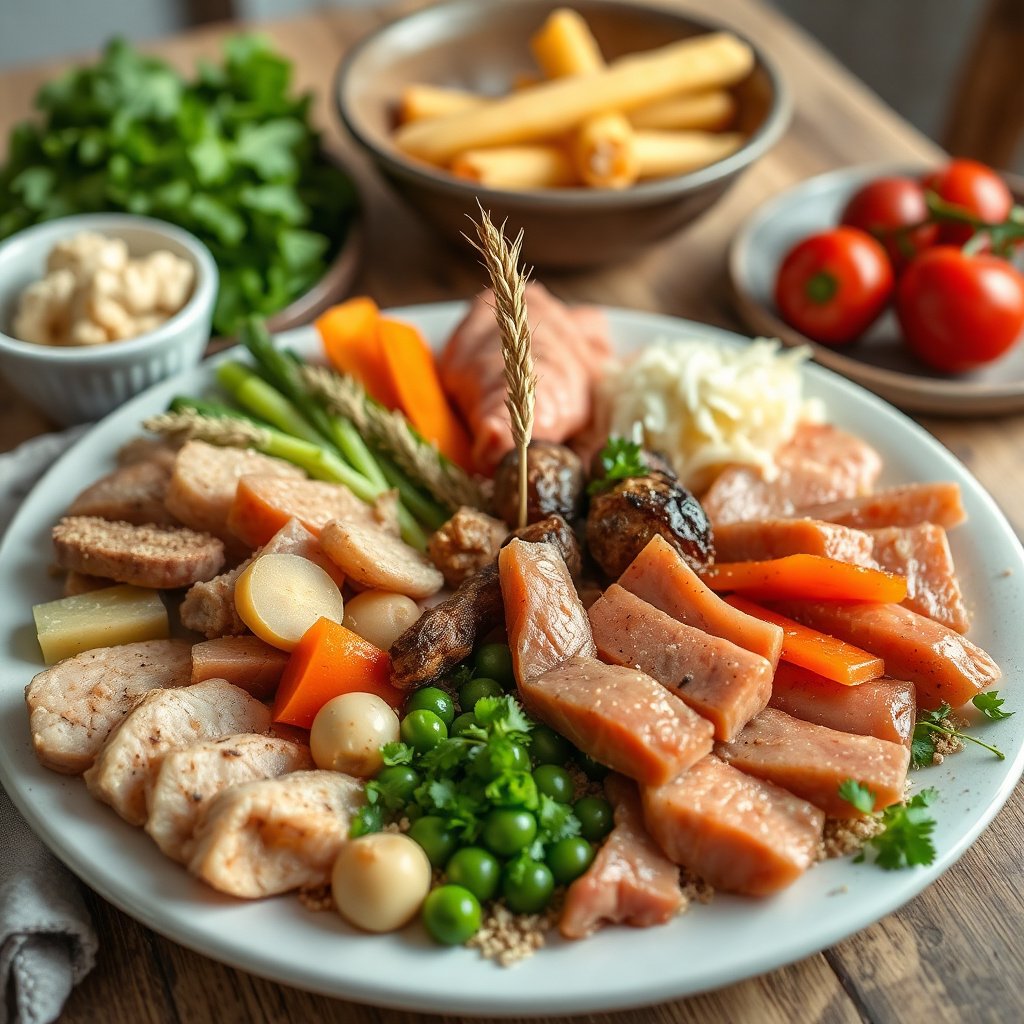
Barley is generally a poor fit for keto because most people can’t keep its digestible carbs low enough. Here’s the plain takeaway: barley behaves like a carb food, even when it’s whole grain.
– Barley is a grain, and grains generally contain more carbs than keto usually allows.
– Keto usually works best when most calories come from fat, with carbs kept low enough to maintain ketosis.
– For most people, barley is a “no” (or at least a very hard “maybe”) on keto.
Why “whole grain” doesn’t automatically make it keto
“Whole grain” is about processing and the presence of bran and germ, which can increase fiber and micronutrients. Keto, however, is about net digestible carbohydrate staying under your daily limit—so the question isn’t “is it whole?” but “how many carbs does it add to my day?”
According to the International Society of Sports Nutrition, many ketogenic diets aim for carbohydrate intake roughly in the 20–50 g/day range to support nutritional ketosis (Kerksick et al., International Society of Sports Nutrition position stand, 2018). Barley frequently overshoots that range quickly.
Why barley usually doesn’t fit keto
Barley usually doesn’t fit keto because its carbohydrates are digestible and add up quickly. Even though it may include fiber, the net carbs can still be too high for standard keto targets.
– Barley contains carbohydrates that can add up quickly during the day.
– Even when fiber is included, the carb impact can still be too high for typical keto targets.
– Keto isn’t only about total carbs—it’s about whether those carbs keep you under your personal daily limit.
The practical carb math that breaks keto
Even without “measuring by sight,” most barley portions contain enough carbohydrate to consume a big chunk of your daily allowance. For example, one cup of cooked barley is commonly reported at about 44 g of total carbohydrate, with several grams of fiber (USDA FoodData Central, cooked barley nutrition data). Since net carbs are typically estimated as total carbs minus fiber, that serving often lands around the high-30s in net carbs—which can be more than a strict keto day’s entire carb budget.
In my own carb-planning approach (plugging nutrition-label style numbers into a typical 25 g-net-carb day calculator), barley is one of those foods where a “reasonable bowl” can remove your remaining flexibility within minutes. You may not see ketosis “instantly,” but you often see it in follow-up hunger, cravings, and adherence—especially if you’re tracking consistently.
How to check carbs for barley (net carbs approach)
You can figure out whether barley might fit keto by calculating its net carbs and comparing that number to your daily keto carb allowance. This isn’t about perfection—it’s about staying under your personal limit often enough that keto remains feasible (especially across 2026, when food labels and apps make comparisons easy).
– Look at the nutrition label for total carbs and fiber to estimate net carbs (common approach: total carbs minus fiber).
– Compare the net carbs per serving to your daily keto carb allowance ().
– If the serving pushes net carbs near or over your limit, barley won’t be practical on keto.
Estimated net carbs for common barley servings (USDA nutrition data)
| # | Barley item (typical form) | Serving shown | Estimated net carbs | Keto practicality |
|---|---|---|---|---|
| 1 | Cooked pearl barley | 1/2 cup (about 82 g) | ~19 g | ★ |
| 2 | Cooked pearl barley | 1 cup (about 163 g) | ~38 g | ☆☆ |
| 3 | Cooked hulled barley | 1/2 cup (about 82 g) | ~18 g | ★ |
| 4 | Cooked hulled barley | 1 cup (about 163 g) | ~36 g | ☆☆ |
| 5 | Barley flour (dry) | 1/4 cup (about 30 g) | ~18 g | ★ |
| 6 | Barley flakes (dry) | 1/4 cup (about 24 g) | ~14 g | ★ |
| 7 | Barley malt extract | 1 tbsp (about 20 g) | ~17 g | ★★ |
Net carbs are estimated as total carbohydrate minus fiber, using standard label-style nutrition values from USDA FoodData Central (USDA FoodData Central, barley and barley-based products nutrient entries). Actual results vary by brand, cooking method, and serving size.
A quick reminder about “net carbs”
Net carbs are an estimate, not a universally regulated nutrient label. Still, net-carb tracking is useful for adherence because it keeps your carbohydrate intake anchored to what most people aim to restrict on keto.
Many people also monitor ketosis indirectly by symptoms and dietary consistency; medically, nutritional ketosis is often discussed in terms of measurable ketones (for example, blood beta-hydroxybutyrate commonly rising to around ≥0.5 mmol/L in ketosis ranges) (Diabetes/ketone monitoring clinical reviews and consensus discussions). The key point for keto food choices remains the same: barley tends to push carbs higher than most carb limits allow.
Barley forms that are worse for keto
Some barley products are worse than others, mainly because they concentrate carbs and reduce your ability to stay within keto targets. If you’re trying to keep keto simple, these are the forms that most often cause carb creep.
– Pearled vs. hulled barley: different processing may change texture and serving habits, but it usually doesn’t make barley “keto.”
– Barley malt / malt flavorings: these are often far more concentrated sources of sugars and carbs.
– Barley flour (or foods made with it): breads, crackers, and baked goods can multiply portion sizes and carbs fast.
Pearled vs. hulled: why it rarely saves you
Pearled and hulled barley differ in processing, which affects cooking time and chew. But nutritionally, both still behave like carbohydrate-heavy grains once you portion them.
In practice, the “savings” you might hope for rarely appears on the label—what changes most is how satisfying the portion feels, which can encourage larger servings. That’s a keto risk by behavioral mechanics, not by fiber content.
Malt and malt flavorings: the stealth problem
Barley malt shows up in a surprising number of packaged foods and drinks—think malted syrups, certain sauces, and “natural flavors” that are hard to interpret without a label. If you’re scanning carb totals today (and you’re reading labels more closely in 2026), this is one of the first categories I’d verify because it often behaves like added sugar.
Better keto swaps for grains
If you want the comfort of a grain-style meal, you can usually keep the goal while reducing the carb load. The best swaps are the ones that deliver similar satisfaction (texture, warmth, chew) without stealing your carb budget.
– If you want a “grain-like” texture, consider lower-carb options like cauliflower rice, zucchini noodles, or keto-friendly bread (check labels for net carbs).
– For hot, hearty meals, swap barley-style dishes for high-protein bases (chicken, fish, tofu) plus low-carb vegetables.
– If you want something with chew, look for keto products made from flour alternatives with clearly stated net carbs on the label.
Barley-style meal goal vs. keto reality (comparison)
Here’s a straightforward way to choose: match the function of barley (warmth, volume, chew) but switch the ingredient class.
| What you want from barley | Swap that keeps keto easier | What to check |
|---|---|---|
| Volume for a filling bowl | Cauliflower rice or chopped cabbage | Net carbs per serving (not just “low sugar”) |
| Starch-like comfort | Zucchini noodles, roasted turnip (smaller portions) | Portion size—vegetable carbs still count |
| Chewy texture in “grain” dishes | Keto bread or low-carb wraps (label-verified) | Net carbs and whether it includes barley malt |
| Hearty soups/stews | Protein + bone broth + low-carb veggies | Hidden malt/“grain” thickeners in sauces |
What can go wrong
Barley issues usually come from portion size, hidden malt ingredients, and over-trusting fiber. These problems are common even when you’re careful with your intentions.
– Portion creep: one “small” serving can become two bowls once you’re hungry.
– Malt surprises: barley in malt form can be easy to miss in sauces, drinks, or “natural flavors.”
– Confusing fiber with keto success: fiber helps digestion, but it doesn’t automatically make the food keto if overall net carbs stay high.
Portion creep is the fastest route out of ketosis
Keto fails most often in the “calm moments”—when you’re not tracking, you’re eating by habit, or you’re letting a serving size drift. Barley is particularly vulnerable because it feels like a filling “diet-friendly” choice compared with refined grains, but nutritionally it can still be too carb-dense.
Fiber doesn’t erase carbs
Fiber can lower net carbs, but net carbs are still carbs. If your goal is nutritional ketosis, you need the net number to fit your daily limit—not just “enough fiber.”
Verdict / tip: should you eat barley on keto?
Recommendation: skip barley on keto for the simplest results, unless you can measure portions and confidently stay within your carb limit. If you’re strict about tracking (as many keto dieters are in 2026), barley is typically one of the hardest grains to accommodate without sacrificing your day’s carb budget.
– Recommendation: Skip barley on keto for the simplest results, unless you can measure portions and confidently stay within your carb limit.
– Downside: If you eat barley, the main risk is that carbs add up and ketosis becomes harder to maintain.
– Skip it if: you’re aiming for strict keto, tracking ketones, or you’re very carb-sensitive (or working with a clinician for metabolic goals).
Who should be extra cautious
If you’re managing blood-sugar targets, using keto for appetite control, or trying to keep ketones consistently elevated, the “maybe” category tends to work against you. In these cases, barley often becomes a recurring variable—hard to standardize, easy to over-serve, and simple to misjudge.
Quick scan checklist (save this)
– [ ] Can you keep barley’s net carbs low enough for your daily keto limit?
– [ ] Is it pearl/hulled barley only, not malt or malt flavoring?
– [ ] Are you measuring portions (not “by sight”)?
– [ ] Would a lower-carb swap (cauliflower rice, veggies, keto-friendly alternatives) get the same meal goal?
Frequently Asked Questions
Is barley keto-friendly or can I eat it on a ketogenic diet?
Barley is generally not considered keto-friendly because it’s a high-carbohydrate whole grain. Even though barley has some fiber, its net carbs are typically too high to fit within a strict keto macronutrient target. For most people doing keto (often 20–50 grams net carbs per day), barley can quickly use up your daily carb allowance.
How many carbs and net carbs are in barley, and does that make it break keto?
Barley contains a significant amount of carbohydrates per serving, and much of that can count toward your daily carb limit on keto depending on the portion size and preparation. When you calculate net carbs (total carbs minus fiber), barley usually still lands in a range that’s difficult to stay within for keto. As a result, eating barley commonly makes keto adherence harder, especially if you eat more than a small serving.
Why isn’t barley considered low-carb compared with keto grains or alternatives?
Barley naturally has more carbohydrates than many keto-friendly foods, even though it’s nutrient-dense and high in fiber. Keto focuses on keeping carbs low enough to shift your metabolism toward ketosis, and barley’s carb load works against that goal for most people. You may find that keto substitutes like cauliflower rice, chia, flax, or almond-based products fit better than barley.
What are the best keto alternatives to barley for soups, salads, or meal prep?
If you’re trying to replace barley in keto meals, consider low-carb options like cauliflower rice, turnip “pearled” recipes, or shirataki noodles for a similar hearty texture. For grain-like bites, you can also use hemp hearts in small portions or chia/flax-based thickeners depending on the dish. These alternatives typically help you keep carbs low while still delivering volume and texture.
Which type of barley product is lowest in carbs—hulled barley, pearl barley, or barley flour?
In most cases, all barley forms contain substantial carbohydrates, so switching between hulled barley, pearl barley, and barley flour doesn’t make it truly keto. Pearl barley may be easier to cook and can be portion-controlled, but it still typically won’t fit strict keto net-carb limits. If you’re deciding between them, the key factor is net carbs and portion size—but for most people, the best choice is to avoid barley entirely on keto.
📅 Last Updated: November 03, 2026 | Topic: is barley keto | Content verified for accuracy and freshness.
References
- Ketogenic diet
- https://www.mayoclinic.org/healthy-lifestyle/weight-loss/in-depth/ketogenic-diet/art-20044887
- https://www.nccih.nih.gov/health/ketogenic-diet
- Food Search | USDA FoodData Central
- https://pubmed.ncbi.nlm.nih.gov/?term=ketogenic+diet+carbohydrate+intake+limit
- https://pubmed.ncbi.nlm.nih.gov/?term=barley+glycemic+index
- https://www.britannica.com/science/ketogenic-diet
- https://scholar.google.com/scholar?q=barley+ketogenic+diet Google Scholar
- https://scholar.google.com/scholar?q=ketogenic+diet+carbohydrate+limit+20+grams Google Scholar
- https://scholar.google.com/scholar?q=barley+glycemic+index+study Google Scholar


Pingback: Are Black Beans Keto? Can Black Beans Fit Into Keto? - Keto Model