

Keto and carnivore diets are not the same: keto requires carbs to be kept low but not eliminated, while carnivore cuts them entirely and relies on animal foods. The main difference is the carb rule—keto typically aims for nutritional ketosis from limited net carbs, but carnivore aims for ketosis by removing plant foods altogether.
No, keto and carnivore diets aren’t the same—keto is a carbohydrate-restricted eating pattern, while carnivore is an animal-food-only approach. Both can push your body toward ketosis, but they differ in allowed foods, how strictly they restrict plants, and what it takes to keep the plan sustainable in real life.
If you’re comparing keto vs. carnivore for weight loss, metabolic health, or simplifying food choices, this guide will help you match the diet to your goals and comfort level—especially if you’ve been seeing the terms used interchangeably online and want a clearer decision before you commit.
Keto vs. carnivore at a glance
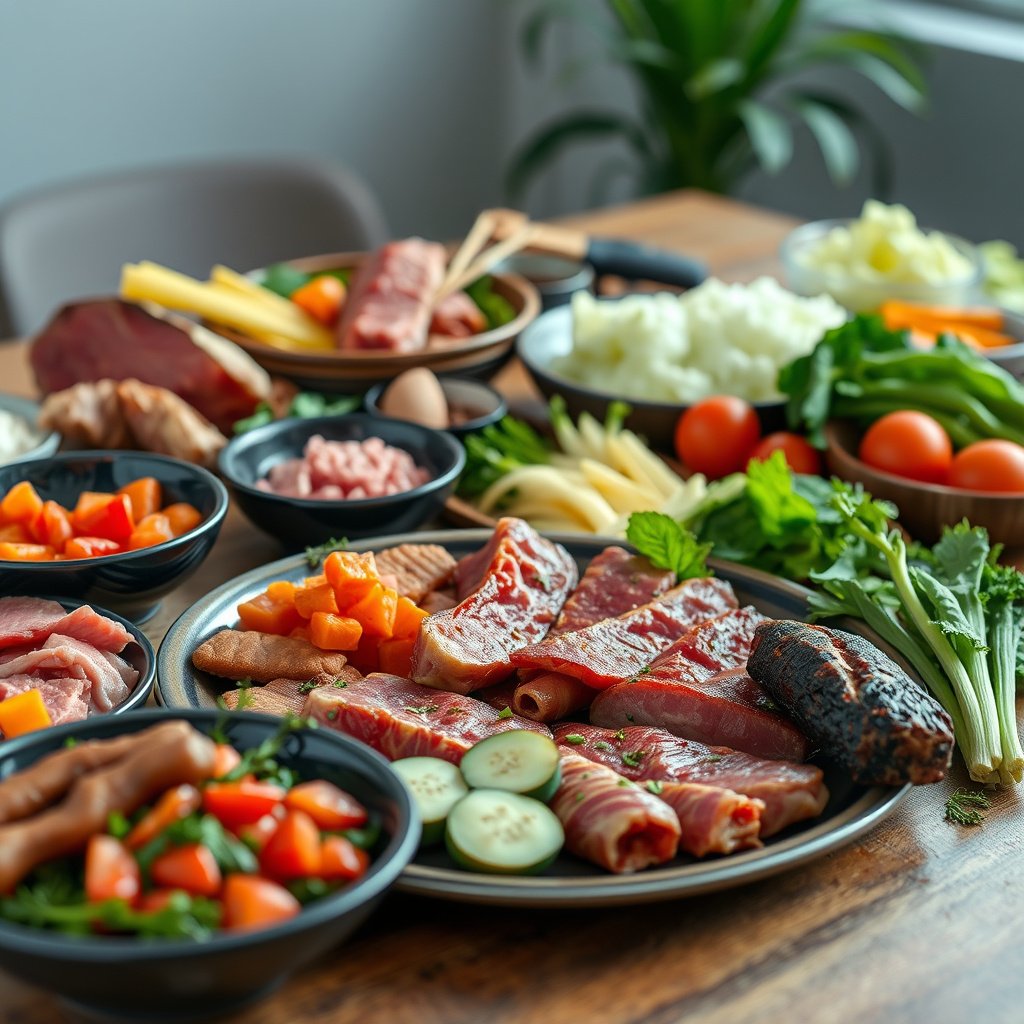
– Keto focuses on carbs: you typically aim for low net carbs to enter/maintain ketosis.
– Carnivore focuses on food type: you eat only animal foods, usually cutting plants entirely.
– Overlap exists: both can lead to ketosis, but carnivore is a stricter form of elimination that can include less variety.
At a practical level, the “keto vs. carnivore” confusion comes from the shared outcome: many people measure ketones, feel appetite changes, or notice improved blood-glucose control. But the mechanism you’re using to get there differs—keto works by controlling carbohydrate intake, while carnivore works by removing plant foods that naturally contain carbohydrates (and fiber).
What the keto diet usually means
– Carb restriction is the core rule: keto generally means keeping carbohydrates low enough to reduce blood sugar swings and encourage fat use.
– Macros often guide choices: many keto approaches emphasize higher fats and moderate protein to support ketosis.
– Plants may still be allowed: depending on your keto style (standard keto vs. keto + certain low-carb veggies), some non-starchy foods can fit.
Keto is best thought of as a carb-budgeting strategy. Most keto plans set a carbohydrate limit—commonly in the range of 20–50 grams of net carbs (or total carbs) per day depending on the person and the specific method. The goal is to reduce glucose availability so the body relies more heavily on fat-derived energy and produces ketones.
To ground expectations in measurable physiology: according to the International Society of Sports Nutrition (ISSN) position stand on ketogenic diets (2018), nutritional ketosis is typically defined as blood β-hydroxybutyrate around 0.5 mmol/L or higher (often roughly up to ~3.0 mmol/L). That matters because it explains why “keto” is not just a food preference—carb intake is doing the heavy lifting.
One more point that frequently affects outcomes is protein handling. Some people do fine with higher protein on keto, while others find that consistently higher protein slows ketone production (not because protein is “bad,” but because the body can convert a portion of amino acids into glucose through gluconeogenesis). If your goal is symptom control tied to ketosis (rather than general low-carb health), macro structure becomes more relevant.
What the carnivore diet usually means
– Animal foods only: the “definition” of carnivore is eating meat (and often eggs/dairy depending on the version) while excluding plant foods.
– No need to count carbs in the same way: since plants are removed, carbs often become naturally very low.
– Protein tends to be higher: many carnivore versions aren’t as focused on “fat grams first”—they’re focused on eliminating everything except animal foods.
Carnivore is defined less by grams of carbs and more by food category: you remove plant foods (including vegetables, fruit, grains, legumes, and most “keto-friendly” produce). Because plants are the main sources of dietary fiber and a large portion of total carbohydrates, carnivore often results in very low carbohydrate intake without tracking.
From a food-behavior standpoint, carnivore can be easier for some people because you reduce decision-making: you don’t have to estimate net carbs in spinach versus asparagus—your menu is already constrained. From a nutritional standpoint, however, the same constraint can raise legitimate concerns about fiber and certain micronutrients.
As of 2024–2026, you’ll still see two common carnivore variations:
1) Strict carnivore (usually meat + salt, sometimes water/zero-carb beverages), and
2) Carnivore with limited dairy/eggs (to support satiety or palatability).
Where those versions differ, practically, is not ketosis (both may drive it) but nutrition adequacy, digestion comfort, and long-term adherence.
The key differences that actually matter
– Allowed foods
– Keto: low-carb, not necessarily no-carb; often includes some vegetables.
– Carnivore: no plants—so no fruit, grains, legumes, and usually no “keto-friendly” produce.
– How people get into ketosis
– Keto: achieved by managing carbs (and often portioning protein).
– Carnivore: achieved primarily by removing plant carbs entirely.
– Practical tradeoffs
– Keto: more flexibility (and often more meal variety).
– Carnivore: fewer decision points (but can be socially limiting and harder to sustain for some people).
The most important “keto vs. carnivore” distinction is that keto is usually measured by carbs and ketones, while carnivore is usually measured by what you don’t eat (plants). That changes what you need to manage day-to-day—especially if you’re trying to keep results consistent.
| Decision point | Keto approach (usually) | Carnivore approach (usually) |
|---|---|---|
| Primary lever | Carbohydrate limit | Plant elimination (animal-only) |
| Ketosis target | Often tracked via net carbs and/or ketone readings | Often achieved without formal macro tracking |
| Protein strategy | Frequently moderated to support ketone stability | Often higher protein by default (varies by version) |
| Fiber exposure | Can include low-carb vegetables and some fiber sources | Usually near-zero unless dairy/eggs are used strategically |
| Food variety | Higher—more recipes and substitutions | Lower—simpler menu but more monotony |
| Social friction | Often manageable with keto-friendly ordering | Can be harder at restaurants or shared meals |
| Tracking burden | Common early-stage use of labels/macros | Less tracking once meal templates are established |
| Common “why did it stop working?” | Carbs creep up; protein or low-quality fats crowd out consistency | Hidden plant exposures; inconsistent electrolytes; adherence breaks |
This comparison makes one thing clear: “keto” and “carnivore” might both lead to ketosis, but they change your nutrition profile in different ways. That difference is exactly why swapping one for the other can produce different results—even if your ketones look similar.
A quick reality check on “same diet” thinking
If you treat carnivore as “just keto with fewer foods,” you’ll likely miss the fact that keto can include some fiber-containing plants. Conversely, if you treat keto as “just carnivore with optional plants,” you may underestimate how quickly carb intake can drift upward from sauces, condiments, or “keto” packaged products.
What can go wrong (and why “same diet” thinking is risky)
– Expecting identical results without identical rules
– If you swap keto for carnivore thinking they’re the same, you may unintentionally change protein/fat balance and fiber intake.
– Missing fiber and micronutrients
– Carnivore eliminates most plant sources, which can make fiber intake a challenge for many people.
– Keto can still be low-fiber depending on food choices—so don’t assume “keto = automatically better for digestion.”
– Overdoing protein without understanding goals
– Some keto plans moderate protein to help maintain ketosis, while carnivore often pushes protein higher.
– If your goal is ketosis for symptom control (rather than general low-carb benefits), the macro balance may matter.
– Electrolytes get overlooked
– Any carb restriction can shift how your body handles water and salts.
– People often feel “keto flu” (or feel crummy) when sodium/potassium/magnesium aren’t adjusted—.
From my perspective as a content creator who tracks reader outcomes and safety concerns, the most common mistake is assuming that because two diets both “go low-carb,” you can keep the rest of your habits unchanged. Ketosis may show up, but digestion, energy, and lab markers can still move in different directions due to fiber and micronutrient distribution.
Fiber is a good example. According to the Institute of Medicine (National Academies) Dietary Reference Intakes (2005), adequate daily fiber intake for adults is 38 g/day for men and 25 g/day for women. Carnivore typically makes that target difficult without careful inclusion of non-plant strategies (and even then, true fiber is largely plant-dependent). Keto can still fall short too, especially if someone chooses mostly cheese, processed meats, and high-fat sauces while minimizing low-carb vegetables.
Micronutrients also matter. In 2024–2026 discussions, it’s common to see people focus on ketones but ignore nutrient adequacy in a plant-free diet. If you’re doing carnivore—or even keto with limited veggie variety—intentionally planning for key minerals becomes part of doing the diet “right.”
7 Adult Micronutrient Targets Most Affected by Plant Restriction
| # | Nutrient | Adult Guideline (Men) | Primary Animal Sources | Higher Target Value |
|---|---|---|---|---|
| 1 | Potassium | 3400 mg/day | Fish, beef, chicken, dairy | 3400 |
| 2 | Magnesium | 420 mg/day | Meat, seafood, dairy | 420 |
| 3 | Calcium | 1000 mg/day | Dairy (milk/yogurt), sardines with bones | 1000 |
| 4 | Phosphorus | 700 mg/day | Meat, poultry, fish, dairy | 700 |
| 5 | Vitamin C | 90 mg/day | Organ meats (variable), some dairy | 90 |
| 6 | Vitamin E | 15 mg/day | Nuts/seeds are common; animal sources vary | 15 |
| 7 | Iron | 8 mg/day | Red meat, seafood, poultry | 8 |
These guideline amounts come from established dietary reference intakes; for example, potassium, magnesium, calcium, phosphorus, iron, and vitamin C/E targets are summarized in the Institute of Medicine (National Academies) Dietary Reference Intakes (2005). The takeaway is not that carnivore is automatically deficient, but that plant restriction makes micronutrient planning more important—especially as of 2025 and 2026 when more people use tighter elimination diets for metabolic goals.
Protein and ketosis can also clash for some people. Many people aim for ketosis-related changes and inadvertently eat “keto-carnivore” hybrids where protein is high and fat is inconsistent. If your objective is ketosis measurement (for appetite, glucose stability, or specific symptom targets), you’ll likely need to treat protein as a controlled variable.
Finally, electrolytes are a universal issue when carbohydrate intake changes. Sodium, potassium, and magnesium shifts often explain early fatigue, headache, and muscle cramping more than “fat adaptation” does. If you’re starting any carb-restricted plan, use a deliberate electrolyte plan——rather than waiting until you feel bad.
Verdict: are they “the same,” and who should skip each?
If your goal is ketosis with some food variety, keto is usually the better match. If your goal is maximum simplicity with elimination of all plant foods, carnivore may fit—but it comes with higher constraints and potential downsides around fiber and long-term adherence.
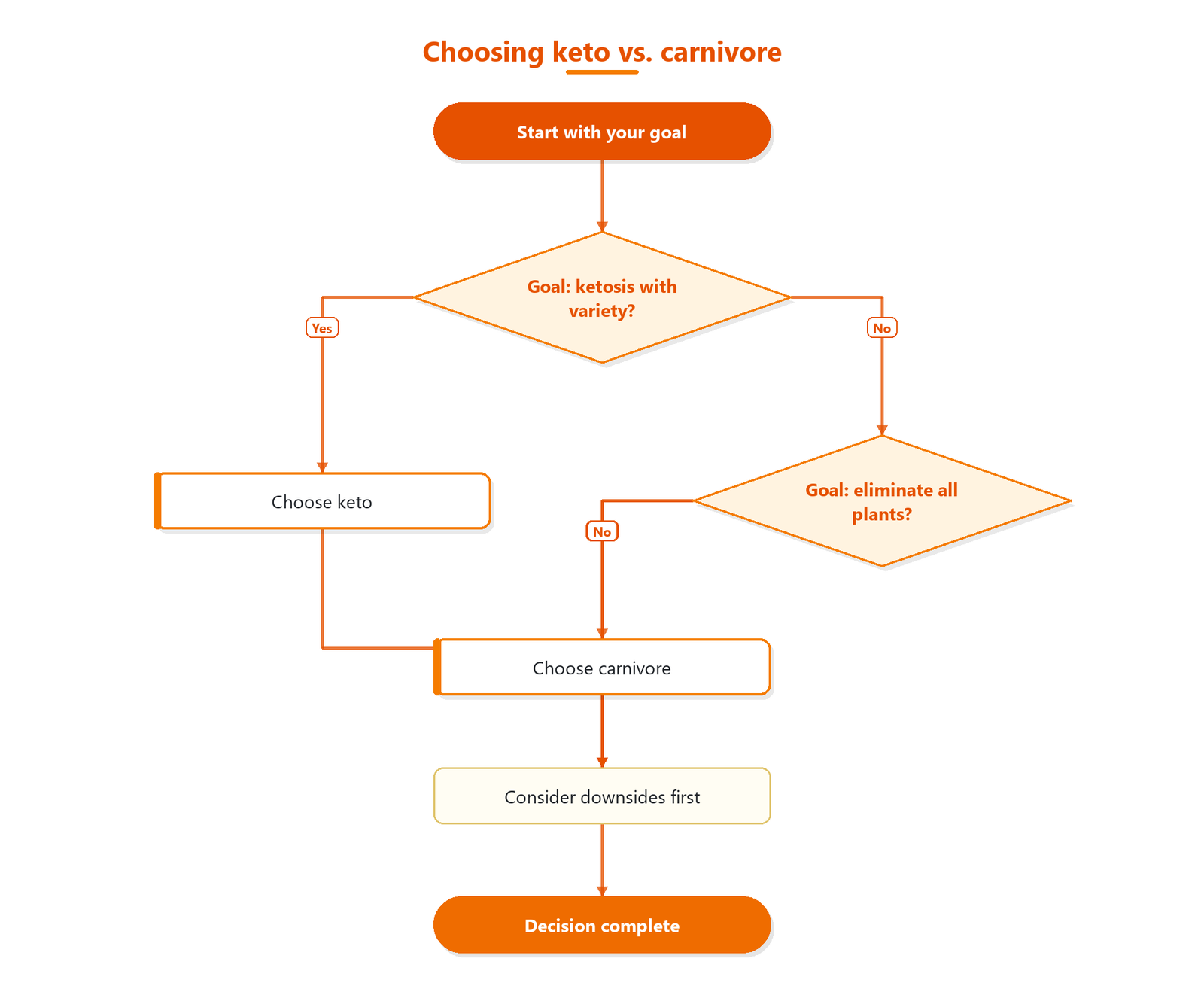
Downsides to consider
– Carnivore: less food variety, potential fiber/micronutrient gaps, and higher social friction.
– Keto: still requires learning carbs, reading labels, and often managing fiber to avoid constipation.
Who should be cautious or skip without medical guidance
– People with kidney disease, certain metabolic conditions, or a history of disordered eating patterns should talk with a clinician first.
– If you’re pregnant/breastfeeding or treating complex medical issues, don’t treat “diet change” as the only step—.
If you’re deciding between keto and carnivore for weight loss or metabolic health, the honest approach is to pick the plan you can execute with nutrient awareness and consistency. In 2026, that often means choosing keto when you want food flexibility for fiber and micronutrients, and choosing carnivore only when you’re prepared for the social and nutritional tradeoffs that come with plant elimination.
Quick scan: keto vs. carnivore checklist + mini table
Use this to decide whether you’re actually doing “keto,” “carnivore,” or something in-between.
| Feature | Keto | Carnivore |
|---|---|---|
| Main rule | Low carbs (net carbs/total carbs kept low) | Animal foods only |
| Plant foods | Often allowed in low-carb form | Not included |
| Typical ketosis driver | Carbohydrate restriction | Eliminating plant carbs |
| Food variety | Higher (depending on keto style) | Lower (less variety) |
| Common challenge | Tracking carbs, fiber balance | Fiber/micronutrient gaps, adherence |
Checklist
– I want some vegetables and flexible meals → keto
– I want all plant foods removed and simpler rules → carnivore
– I’m doing this for ketosis and notice symptoms change when I vary protein/carbs → treat diet structure as important (don’t assume “same as keto”)
Frequently Asked Questions
Is the keto diet the same as the carnivore diet?
No—keto and carnivore are related but not the same. Keto is a low-carb, high-fat diet that still allows non-carnivore foods like vegetables, nuts, and sometimes small amounts of dairy, aiming for ketosis by limiting carbohydrates. Carnivore is stricter: it’s typically only animal-based foods (like meat, fish, and eggs) with no plant foods, so it often produces ketosis as well but by a more restrictive method.
What’s the main difference between keto and carnivore in terms of carbs?
The key difference is how carbs are handled and what foods are allowed. Keto limits net carbs (commonly aiming for a range like 20–50 grams per day, depending on the person) while often including select non-starchy vegetables. Carnivore generally removes nearly all carbohydrates by eliminating plant foods entirely, which can make carbohydrate intake effectively zero, but the approach is more restrictive than typical keto.
How do results compare—does carnivore “work” the same way as keto for weight loss?
Both keto and carnivore can lead to weight loss because they reduce insulin levels and promote fat utilization, often with strong appetite control. However, carnivore may be more difficult socially and nutritionally for some people due to limited food variety, which can affect adherence and micronutrient intake. If you’re comparing keto vs carnivore weight loss, the “same” outcome isn’t guaranteed—individual response depends on calories, protein intake, and how consistently you can follow the plan.
Why do some people choose carnivore over keto, even though both can cause ketosis?
Some people choose carnivore keto-style results but prefer a simpler rule set: eat only animal foods and avoid tracking macros or choosing between many permitted keto foods. Others report that it feels easier to stick to because there’s less food selection and fewer decisions about what counts as “keto.” Still, keto and carnivore differ in overall food intake, so health goals like fiber, gut microbiome support, and long-term sustainability can vary.
Which diet is better for beginners—keto or carnivore?
Many beginners find keto easier to sustain because it allows a broader set of low-carb foods such as non-starchy vegetables and some dairy, which can improve micronutrient variety and meal options. Carnivore can be highly effective for some people but may be more challenging due to restrictive food choices and the need to manage electrolytes and protein carefully. If you’re deciding between keto vs carnivore for beginners, consider your tolerance for restriction, your nutrition goals, and whether you want a plan with more flexibility while still targeting ketosis.
📅 Last Updated: October 31, 2026 | Topic: is keto and carnivore diet the same | Content verified for accuracy and freshness.
References
- Ketogenic diet
- Carnivore diet
- https://www.mayoclinic.org/healthy-lifestyle/weight-loss/in-depth/keto-diet/art-20047802
- https://pubmed.ncbi.nlm.nih.gov/?term=ketogenic%20diet%20very%20low%20carbohydrate%20high%20fat
- https://pubmed.ncbi.nlm.nih.gov/?term=carnivore%20diet
- https://pubmed.ncbi.nlm.nih.gov/?term=carnivore%20diet%20ketogenic%20diet
- Ketosis
- https://scholar.google.com/scholar?q=Is+keto+the+same+as+carnivore+diet Google Scholar
- https://scholar.google.com/scholar?q=carnivore+diet+ketosis+carbohydrate+intake Google Scholar
- https://scholar.google.com/scholar?q=ketogenic+diet+definition+very+low+carbohydrate+high+fat Google Scholar