

Is Jif peanut butter keto-friendly? Yes, it can fit a ketogenic diet, but the deciding factor is the net carbs per serving from the nutrition label. Check total carbohydrates and fiber—if fiber is listed, subtract it to estimate net carbs, since added sugars can quickly push it out of range.
Yes—Jif peanut butter can fit keto, but only if the specific variety stays low in net carbs and has no added sugar. Check the nutrition label for carbs per serving and confirm the ingredient list doesn’t include added sugar (or other higher-carb sweeteners). In this guide, we’ll walk through exactly what to look for so you can decide quickly.
If you’re doing keto for weight loss, blood sugar control, or general low-carb eating—and you want a peanut butter you can use without derailing your macros—this is for you. It’s especially useful if you’ve seen mixed answers online because different Jif versions have different nutrition panels.
Who this is for (and when it applies)
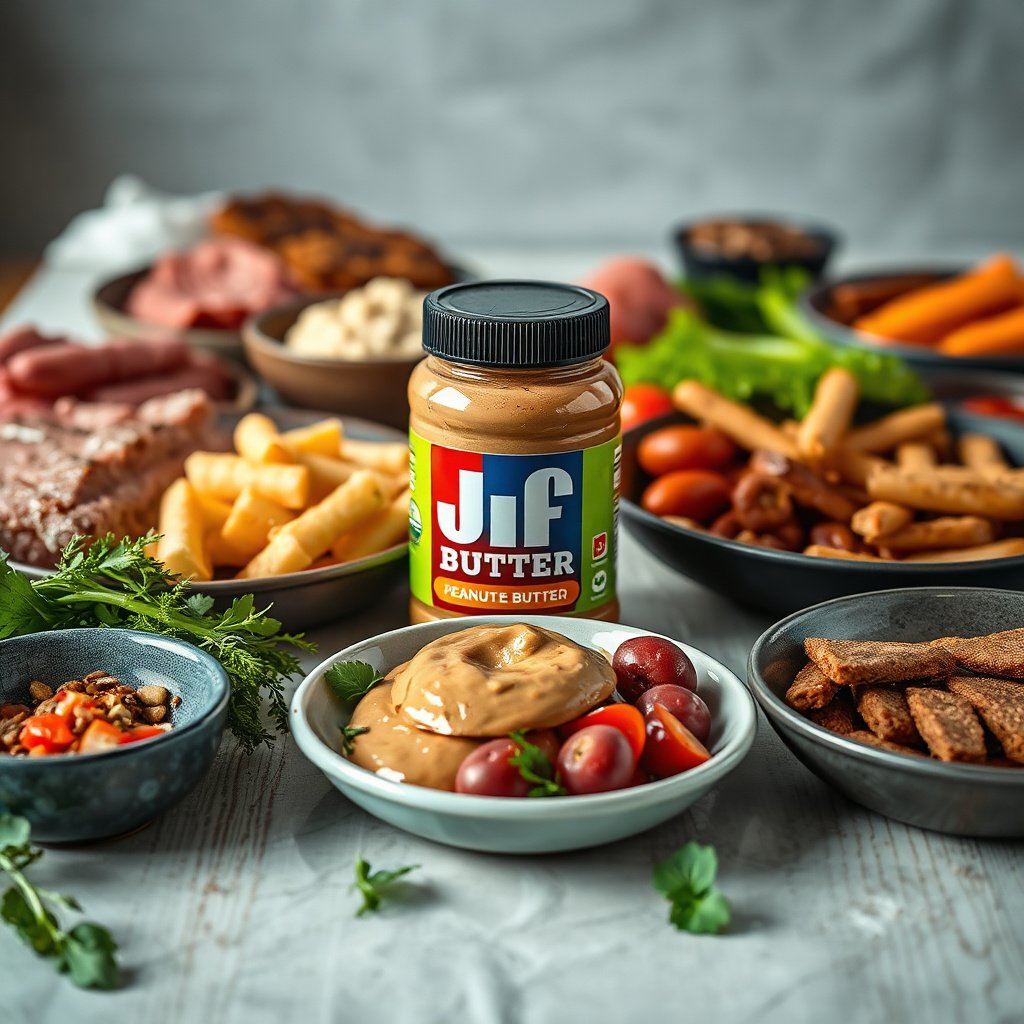
Yes—this label-check approach is most useful for keto eaters who want Jif peanut butter to reliably fit a daily carb limit. I’m outlining this for people who don’t want to guess, because “peanut butter” can be keto-friendly while a specific Jif formulation isn’t.
– You’re keto (or aiming for low-carb) and you want to know whether peanut butter like Jif will fit your daily carb target.
– You’re unsure because “peanut butter” sounds keto-friendly, but some products add sugar or use different formulations.
– You’re willing to read labels and portion your servings based on carbs—not just assumptions.
For people who are actively tracking net carbs (total carbs minus fiber, and often minus sugar alcohols if present), Jif peanut butter usually becomes a “yes/no” decision at the label level—not a brand-level decision.
What to look for on a Jif label
Yes—if you scan the right parts of the label, you can quickly tell whether Jif peanut butter is keto-compatible for your macros. For Jif, the difference usually comes down to net carbs per serving and whether added sugar (or equivalent sweeteners) show up in the ingredients.
Here’s the practical routine I use when evaluating Jif peanut butter in a grocery aisle (not a lab test—just a consistent label-reading workflow):
– Focus on net carbs, not just total carbs. Net carbs are usually calculated as: total carbs − fiber − sugar alcohols (if listed).
– If a Jif label lists fiber, that can lower your net-carb calculation. If it doesn’t list fiber clearly, don’t “assume” it will behave like a different jar.
– Look for added sugar or sweeteners in the ingredient list (common ones: sugar, honey, syrups, etc.). If those are present, it may push carbs higher than keto allows.
– Confirm the serving size on the label—many “keto-friendly” foods become less friendly when the serving is bigger than what you actually eat.
– Keto compatibility is about what you eat per day, not only the per-serving numbers on Jif peanut butter.
Added sugar thresholds that matter for keto
Even if Jif peanut butter looks “natural,” added sugar can still push carbs up and make portion control harder. These thresholds can help you sanity-check how “tight” your keto window is when comparing Jif varieties.
Added-Sugar Benchmarks That Influence Keto-Friendliness
| # | Benchmark | Daily cap (g) | Basis | Keto fit |
|---|---|---|---|---|
| 1 | AHA (most women) | 25 | Added sugars/day | ★★★★★ |
| 2 | WHO (strong recommendation) | 25 | <5% energy (2,000 kcal) | ★★★★★ |
| 3 | AHA (most men) | 36 | Added sugars/day | ★★★★☆ |
| 4 | 10% rule (1,600 kcal) | 40 | Derived from <10% calories | ★★★☆☆ |
| 5 | FDA Added Sugars DV | 50 | For 2,000 kcal/day | ★★☆☆☆ |
| 6 | 10% rule (2,400 kcal) | 60 | Derived from <10% calories | ★☆☆☆☆ |
| 7 | WHO (upper limit) | 50 | <10% energy (2,000 kcal) | ★★☆☆☆ |
These added-sugar limits don’t “automatically” decide keto—because keto math is net carbs—but they do help explain why Jif peanut butter with added sugar can be tougher to keep low-carb in 2026. For example: According to the U.S. FDA, the Daily Value (DV) for added sugars is 50 g for a 2,000-calorie diet (U.S. Food and Drug Administration). According to the American Heart Association, most women should limit added sugars to 25 g/day and most men to 36 g/day (American Heart Association). According to the WHO, a strong recommendation is limiting free sugars to less than 5% of total energy (World Health Organization).
Compare common Jif varieties (the keto difference is the label)
Not all Jif peanut butter varieties are equally keto-friendly, even when they look similar on the shelf. In most cases, the keto “tiebreaker” is whether the product adds sugar (or another higher-carb sweetener) and how that changes net carbs per serving.
– “Traditional” or “100% peanut” style formulas are more likely to be keto-friendly, but you still must verify the carbs per serving.
– “Reduced fat” or “creamy” can be keto-compatible too, but the nutrition panel may differ depending on how they’re formulated (sometimes the carbohydrate profile shifts even if the product still tastes similar).
– Flavored or sweetened versions are the biggest red flags—added sugar typically means higher net carbs.
Here’s the most important thing: if you compare Jif peanut butter versions without comparing the nutrition facts panel, you can easily reach the wrong conclusion. In 2026, brands and regional formulas can vary, so the safest approach is always: confirm the exact Jif variety you have, then compute your net carbs from the label.
How much Jif peanut butter fits keto
Jif peanut butter fits keto when your planned serving stays inside your daily net-carb limit. The label gives you the starting number; your portion size determines whether that number stays keto-friendly for your day.
– Keto usually works best when you stay within a daily carb limit (many people aim around 20–50g net carbs/day, depending on their plan). Your peanut butter has to fit inside that number.
– Use the label carbs to calculate your serving. Example method: multiply the net carbs per serving by how many servings you plan to eat.
– Start smaller if you’re new to keto or sensitive to carb creep—peanut butter is calorie-dense, so portion control matters for both carbs and total intake.
A practical way to avoid surprises with Jif peanut butter is to treat “snack amounts” as a variable, not a constant. If you measure 1 tablespoon once and then eyeball 2–3 tablespoons later, your net carbs can jump without you realizing it.
To keep Jif keto-friendly in 2026, many people do best with two steps: (1) measure the first portion to learn what their “one serving” looks like, and (2) log it at least once so their tracker matches reality.
What can go wrong (common keto mistakes)
Jif peanut butter commonly fails keto when people skip label details or overestimate portions. These mistakes are easy to make because peanut butter feels “healthy,” and Jif is designed to be appealing and snackable.
– Assuming all Jif is the same. Different versions can have different carbs and different ingredient lists.
– Using total carbs instead of net carbs. If fiber is present, net carbs can be meaningfully lower—ignoring fiber can make the food look “worse” than it is (or the reverse, if sugar alcohols/fiber aren’t handled correctly).
– Not checking the serving size. Keto isn’t just about “carbs per serving”—it’s about carbs per *day* based on *your* portions.
– Overeating because it’s “keto food.” Peanut butter can be easy to snack on straight from the jar, and the calories add up quickly.
– Salted/seasoned or “dessert-like” versions. Even if the base is peanuts, added sugar or other ingredients can change keto compatibility.
If you want an at-a-glance comparison of how Jif peanut butter usually helps vs. hurts keto, use this quick decision table.
| Pros (when the label supports keto) | Cons (why Jif can still derail keto) |
|---|---|
| Provides satiety, so some people snack less overall. | Added sugar or sweetened varieties can push net carbs higher. |
| Often includes fiber, which can reduce net carbs vs. total carbs. | Serving-size drift (from “1 serving” to “2–3 servings”) is common. |
| Works as a low-carb topping for keto-friendly foods (e.g., celery, zucchini, lettuce wraps). | Calories can still be high even when net carbs are low. |
Verdict / tip (what I’d recommend)
If you buy the specific Jif variety that has low net carbs per serving and no added sugar, it can work on keto and can be a practical staple (especially as a snack or with low-carb foods). The downside is that some Jif versions land higher-carb, and peanut butter can make it easy to overshoot portions because it’s nutrient-dense and satisfying.
What I’d recommend for most keto eaters: choose the Jif jar where the nutrition panel shows low net carbs per serving *and* the ingredient list doesn’t include added sugar or other higher-carb sweeteners. Then portion it intentionally—measure once, log it, and only then repeat.
Skip or be extra cautious if:
– Your version includes added sugar/syrups/honey or consistently lands too high on net carbs for your daily target.
– You’re extremely strict with keto macros (or you notice you stall when you add “healthy” snacks).
– You’re managing a condition where you need tighter dietary structure—then double-check carbs with your plan rather than relying on general food assumptions.
Quick keto scan checklist
Use this before you add Jif to your daily routine:
| Check | What to verify | Keto-friendly sign |
|---|---|---|
| Carbs | Net carbs per serving | Low net carbs: |
| Sweeteners | Ingredients list | No added sugar / higher-carb sweeteners |
| Serving size | How much “1 serving” is | You can realistically measure and portion |
| Fiber | Presence of fiber | Helps keep net carbs lower |
| Your daily limit | Your remaining carbs | Peanut butter fits without exceeding your target |
Frequently Asked Questions
Is Jif peanut butter keto-friendly?
Jif peanut butter can be keto-friendly depending on the specific product and serving size. Many regular Jif varieties contain added sugar, which can increase the net carbs and make it harder to stay under a keto daily carb limit. Check the nutrition label for total carbs and fiber to estimate net carbs, then compare that to your personal keto macro target.
How many net carbs are in Jif peanut butter for keto?
The net carbs depend on the exact Jif flavor, because ingredients and carb counts vary by product. Look for “Total Carbohydrate” and “Fiber” on the label, then subtract fiber from total carbs to estimate net carbs per serving. If your serving has a meaningful amount of added sugar, it may push your carb intake higher than expected for keto.
Why does Jif peanut butter sometimes fail on keto?
Some Jif peanut butter products contain added sugars or higher carbohydrate counts, which can affect ketosis if you eat more than a small portion. Even if peanut butter is relatively low carb compared with many snacks, keto is sensitive to daily carb limits, so the added carbs can add up quickly. Another factor is portion size—keto-friendly peanut butter can become keto-unfriendly when you exceed your planned serving.
Which Jif peanut butter varieties are best for keto?
For keto, you generally want the lowest-carb and lowest-sugar options within the Jif lineup, such as varieties with fewer added ingredients and minimal added sugars. Compare labels across “natural” and “no sugar added” options when available, since they often have fewer net carbs. Always prioritize net carbs per serving over marketing claims, and choose the version that fits your daily carbohydrate limit.
What’s the best way to use Jif peanut butter on keto?
Use Jif peanut butter in controlled portions and measure servings to keep your net carbs within your keto range. Pair it with low-carb foods like celery, cucumbers, or a keto-friendly smoothie to help you stay full without increasing carbs. If you’re tracking macros, calculate net carbs from the label each time you choose a flavor, and consider rotating to a truly low-carb peanut butter if your target carb count is tight.
📅 Last Updated: November 03, 2026 | Topic: is jif peanut butter keto | Content verified for accuracy and freshness.
References
- Ketogenic diet
- Peanut butter
- https://www.mayoclinic.org/diseases-conditions/diabetes/in-depth/ketogenic-diet/art-20461051
- https://www.cdc.gov/diabetes/healthy-eating/low-carb-high-protein.html
- https://fdc.nal.usda.gov/search/?query=Jif%20peanut%20butter
- Interactive Nutrition Facts Label
- https://pubmed.ncbi.nlm.nih.gov/?term=ketogenic+diet+carbohydrate+limit
- https://scholar.google.com/scholar?q=Jif+peanut+butter+keto Google Scholar
- https://scholar.google.com/scholar?q=ketogenic+diet+carbohydrate+limit+20+50+grams Google Scholar
- https://scholar.google.com/scholar?q=peanut+butter+net+carbs+carbohydrate+content Google Scholar


Pingback: Is Keto ACV Gummies Safe? What to Know Before You Take Them - Keto Model