Yes, you can have milk on a keto diet—but only certain types and in tight portions. This guide answers whether milk fits keto macros by breaking down the keto impact of whole milk versus lower-carb options like unsweetened almond or coconut milk. You’ll learn what to watch for (carbs and sugar) and how to decide if your milk choice keeps you in ketosis.
Yes, you can have milk on a keto diet, but it depends on the type and how many carbs you choose to fit into your daily limit. Unsweetened dairy like heavy cream is usually easier, while regular milk (especially skim/low-fat) can add carbs quickly—so portion size and label reading matter most. If you’re doing keto for fat loss or managing health markers, this matters because milk isn’t “keto” by default: it contains lactose, which is a form of sugar. The practical answer is to match the milk type to your carb budget and track consistently so milk doesn’t quietly push you over your limit.
If you’re new to keto, “carbs” is the only number that really decides whether milk fits—fat content alone doesn’t tell the full story. As of 2026, most keto meal plans still follow the same core approach: keep daily carbohydrate intake low enough to support ketosis, then let protein and calories do the rest.
Which milk works best on keto (and which usually doesn’t)
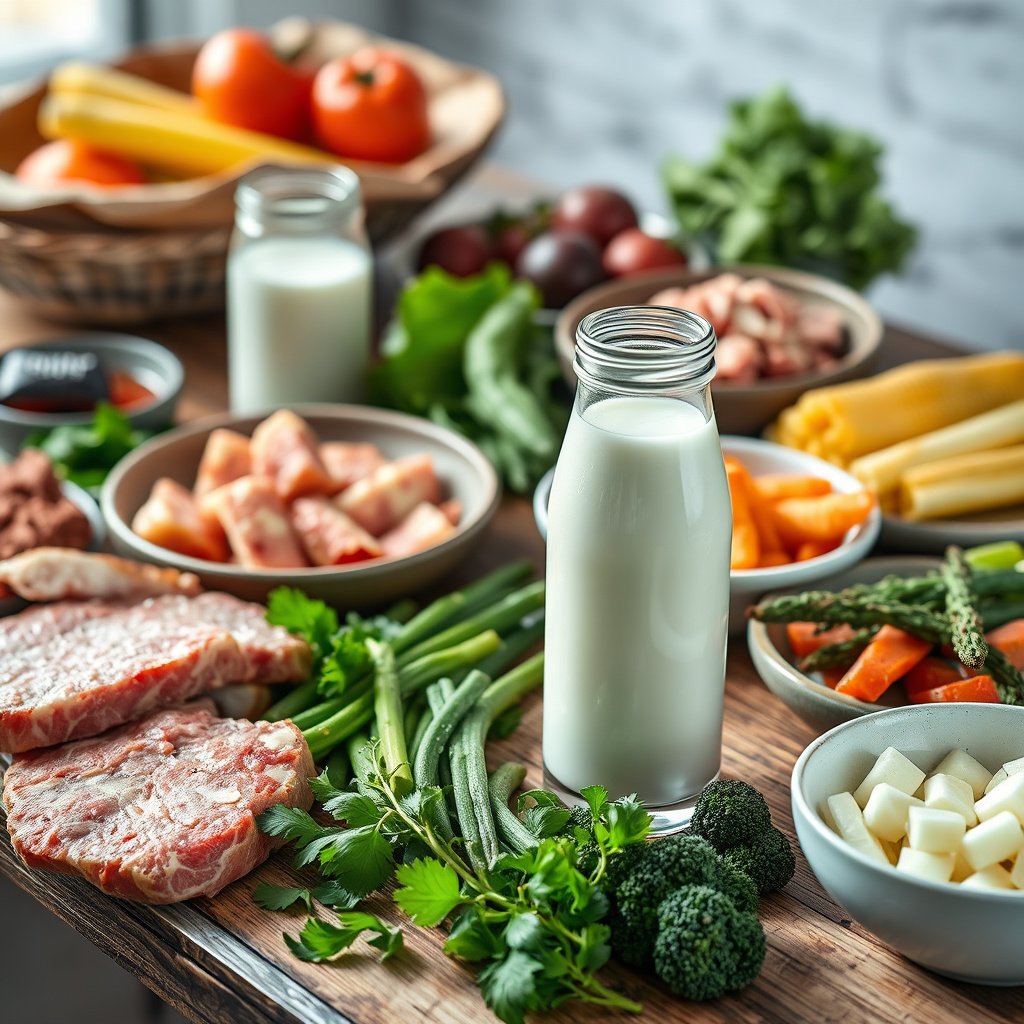
On keto, the best milk options are the ones with the fewest net carbs per serving—so you’ll typically do better with unsweetened, higher-fat dairy than with standard milk. The reason is straightforward: lactose turns milk into a carb source even when it’s “whole” or “natural,” so milk on keto is mostly a carb-management exercise.
USDA FoodData Central lists carbohydrates for each dairy product separately, so “fat-free” or “whole” does not automatically mean “keto.”
Heavy cream is typically much lower in carbohydrates than regular milk, which makes milk on keto easier to portion.
According to USDA FoodData Central, heavy cream is about 0.4 g carbs per tablespoon (2024), while whole milk is about 12 g carbs per cup (2024). That gap is why heavy cream often fits keto more easily than milk itself—milk on keto isn’t about avoiding dairy; it’s about choosing the dairy form that won’t blow through your carb ceiling.
Here’s the practical breakdown for milk on keto:
– Choose higher-fat, lower-sugar options first (e.g., heavy cream) because they typically have fewer carbs per serving than regular milk.
– Be cautious with whole/low-fat milk: they can be fine in small amounts for some people, but lactose adds up fast.
– Avoid sweetened milk products (added sugars) since they’re the easiest way to exceed your carb limit.
To make this more concrete, this table uses common serving sizes and carbohydrate figures from the USDA food composition database. Values are “carbohydrates,” which usually align closely with “total carbs” for plain dairy; flavored or sweetened products can be very different.
Carb Load of Common Milks on Keto (USDA FoodData Central, per typical serving)
| # | Milk / dairy product | Typical serving | Carbohydrates | Fit for milk on keto |
|---|---|---|---|---|
| 1 | Heavy cream (unsweetened) | 1 tbsp (15 g) | 0.4 g | ★★★★★ |
| 2 | Plain Greek yogurt, whole | 6 oz (170 g) | ~6 g | ★★★★☆ |
| 3 | Lactose-free whole milk | 1 cup (244 g) | ~12 g | ★★★☆☆ |
| 4 | Whole milk | 1 cup (244 g) | ~12 g | ★★★☆☆ |
| 5 | 2% reduced-fat milk | 1 cup (244 g) | ~12.5 g | ★★☆☆☆ |
| 6 | Skim milk | 1 cup (244 g) | ~12.7 g | ★★☆☆☆ |
| 7 | Plain kefir | 1 cup (240 g) | ~11 g | ★★☆☆☆ |
Note: “Milk on keto” outcomes depend on your daily carb target and your portion size; always verify your exact brand’s label because carbohydrates can vary.
How to portion milk without breaking keto
You can include milk on keto if you treat it like a measured ingredient—not a free-flow beverage. The quickest way to prevent keto creep is to decide your portion in advance, then confirm the grams of carbohydrates on the label.
Label “carbohydrate” grams are the number that matters for milk on keto, because lactose is a carbohydrate.
If your portion is larger than the label serving, your carbs scale up—tracking requires portion consistency, not just product choice.
Here’s the label-to-portion logic that keeps milk on keto predictable:
– Check the nutrition label for “carbohydrate” (and note how much is per serving).
– Use your keto carb allowance as the deciding factor, not the word “natural” or “low fat.”
– Keep serving sizes consistent so you can tell whether milk is supporting your goals or repeatedly pushing your carbs too high.
For context, many ketogenic protocols aim for carbohydrate restriction in the ballpark of 20–50 g/day. According to Foster et al., a ketogenic diet used in clinical research for adults with type 2 diabetes targeted ~20 g carbohydrate/day (2003). That kind of structure is one reason milk on keto can work for some people and fail for others: one cup of standard milk can be close to half (or more) of a strict daily limit.
A quick method we use for milk on keto (and you can replicate it immediately):
1. Pick your target carbs for the day (for example, your chosen protocol).
2. Reserve carbs for everything else first (vegetables, protein sides, sauces).
3. Only then allocate the remaining carbs to milk.
4. Measure the milk—don’t pour from memory.
A fast pros/cons contrast for milk on keto
| Option | Pros for milk on keto | Cons to watch |
|---|---|---|
| Heavy cream (unsweetened) | Usually lower carbs per serving; easy to portion in coffee | Still calorie-dense; flavored versions may contain added sugar |
| Whole milk | Commonly tolerated in small amounts | Lactose carbs add up quickly; can exceed remaining carb budget fast |
| Skim/low-fat milk | Easy to find; sometimes helps with digestion | Often similar or higher carbs than higher-fat milk per cup, making it harder to “fit” |
| Sweetened milk drinks | None for strict keto | Added sugars often push carbs beyond keto limits |
Placeholder note:
Keto-friendly ways to use milk
Milk on keto usually works best as a small, intentional component rather than the foundation of your meal. If you want creaminess, the most keto-compatible strategy is to use unsweetened dairy and manage carbs with the same discipline you’d use for any other carb source.
Milk on keto is most controllable when used as an ingredient (measured splash), not consumed by volume.
Sweetened milk products add carbohydrates from added sugars, which are typically the fastest way to exceed keto carb limits.
Use these practical approaches:
– Use milk as an ingredient, not the main volume (e.g., a splash in coffee) to keep carbs controlled.
– Prefer unsweetened dairy; if you want creaminess, add fat from dairy you tolerate instead of adding sweetened milk.
– Pair with low-carb foods (like eggs or nuts) so your meal stays more stable and filling.
Where milk fits best (and where it doesn’t)
Milk on keto tends to “behave” in these scenarios:
– Coffee/tea: a measured splash instead of replacing the drink base.
– Cooking: small amounts for sauce body, custards, or creamy textures.
– Yogurt bowls: only if you choose an unsweetened option and count carbs for the specific serving.
Milk on keto tends to cause problems when:
– It becomes a “background” carb source across the day (coffee + cereal + smoothie + dessert).
– You switch to skim milk believing “less fat means fewer carbs” (fat is not the limiting factor—lactose is).
Also remember that lactose intolerance can be separate from ketosis. If you get GI symptoms after milk on keto, lactose-free may help comfort, but it can still contain carbohydrates overall—so you still need to track.
What can go wrong (common keto milk mistakes)
Milk on keto fails most often due to portion creep and label misreads, not because milk is “forbidden.” The most common issues are treating all dairy as interchangeable and assuming lactose-free means carb-free.
Low-fat or skim milk can still contain enough carbohydrates to push your daily keto intake over target.
Milk carbs are listed per serving, so pouring more than the label portion increases carbs proportionally.
Here are the pitfalls to watch—these are especially common in 2025–2026 for people adopting keto with flexible food habits:
– Relying on fat content alone: “Low fat” milk may still be higher in carbs than you expect.
– Forgetting that “serving size” is key: the carbs listed are usually for a specific amount—pouring more can add carbs quickly.
– Assuming all dairy is interchangeable: yogurt, kefir, and milk aren’t equal—carb counts vary by product and added ingredients.
Edge case: lactose-free doesn’t equal “keto-free”
Lactose-free milk on keto often reduces lactose (which can help digestion), but the total carbohydrate number on the nutrition label can remain meaningful because other carbohydrate components still contribute. That’s why “milk on keto” is a tracking task first, a comfort strategy second.
Tracking method consistency matters
If you use “net carbs” (carbs minus fiber), keep the same rule every day. For plain milk products, fiber is typically minimal, so net vs total carbs often look similar—but flavored products and some yogurts can change the equation.
Verdict: should you have milk on keto?
Milk can fit keto if you track carbs and choose the right type and portion—but it’s easy to overshoot because of lactose. If you’re strict keto (or you notice you stall whenever you include milk), consider heavy cream or smaller “splash” amounts instead, or skip milk for now and reassess after a week or two with consistent tracking.
Milk on keto is generally “possible” but not automatic—carbohydrate grams and portion size determine fit.
If lactose-containing dairy worsens GI symptoms, removing milk on keto can improve adherence even if ketosis remains intact.
Here’s the honest downside: milk is one of the easiest foods to misjudge because it’s liquid, and people pour more than they think. For many, the fastest path is to reserve milk-like servings for situations where you’ve already budgeted the carbs.
Skip milk entirely if you’re currently struggling to stay within your carb limit or if your GI symptoms worsen with lactose-containing dairy.
Quick scan: keto milk checklist
Use this scan to decide whether milk on keto belongs in your day.
| Item | Keto-friendliness | What to do |
|---|---|---|
| Heavy cream (unsweetened) | Usually easier to fit | Use portion + label carbs as your guide |
| Whole milk | Sometimes workable | Keep servings small and track carbs closely |
| Skim/low-fat milk | Often harder | Likely higher carbs per serving—use extra caution |
| Sweetened milk drinks | Usually not keto | Avoid unless carbs are tightly controlled |
| Yogurt/kefir | Varies a lot | Choose unsweetened and check label carbs |
Checklist before you pour:
– [ ] What exact milk/product is it (brand + type)?
– [ ] How many grams of carbs are in the labeled serving?
– [ ] How much will I actually drink/use?
– [ ] Does this fit my daily carb target?
Sources
– USDA FoodData Central — primary database for nutrient/carb values of milk and other dairy products (use it to verify carb content by type and serving size).
– NIDDK (National Institute of Diabetes and Digestive and Kidney Diseases) — primary health organization resource on the ketogenic diet’s general approach and carbohydrate restriction principles.
Milk on keto is best treated as a measured, tracked ingredient. If you choose unsweetened, lower-carb dairy (often heavy cream) and keep your servings consistent with your daily carbohydrate limit, milk can fit—without undermining ketosis or fat-loss consistency. If you’re currently struggling or dairy worsens digestion, skipping milk for a short stretch and reassessing after tighter tracking is often the most reliable move.
Frequently Asked Questions
Can you have milk on a keto diet?
Yes, you can have milk on a keto diet, but it depends on the type and portion size because milk contains carbohydrates (lactose). Traditional cow’s milk is usually higher in carbs than many keto-friendly options, so it often pushes daily net carbs over your limit. Many people choose smaller servings or switch to lower-carb alternatives like unsweetened almond milk or coconut milk.
How much milk can you drink while staying in ketosis?
To stay in ketosis, you’ll need to track net carbs and keep them within your daily keto target (often 20–50 grams net carbs). If you include milk, start with a small portion (for example, a few ounces) and measure its net carbs based on the nutrition label. Because different brands vary, calculating the carb impact per serving is the safest way to prevent accidentally exceeding your keto macros.
Why is milk sometimes not keto-friendly?
Milk is not automatically “bad” for keto, but it can be difficult to fit into macros because lactose adds carbs. Compared with many non-dairy milks, most regular milk contains more carbohydrates per serving, which can make keto adherence harder. If you notice ketosis is harder to maintain after adding milk, the carb count is usually the reason.
Which milk is best for keto—whole milk, skim milk, or half-and-half?
For many people on keto, whole milk is typically lower in carbs than skim milk, but it still contains meaningful lactose. Half-and-half can be high in calories and carbs depending on the brand, so you still need to check labels carefully. The “best” option is often the one with the lowest net carbs in the amount you plan to drink, and unsweetened almond or macadamia milk is frequently easier to manage on keto.
What’s the best way to use milk on keto (coffee, smoothies, or recipes)?
If you want milk on keto, use it in measured amounts and pair it with high-fat foods to help keep you satisfied (for example, keto coffee with cream plus a small splash of milk). For smoothies or baking, consider replacing milk with unsweetened almond milk, coconut cream, or heavy cream to reduce net carbs. Always check “total carbs” and subtract fiber when available, since sugar content and serving sizes can vary widely.
📅 Last Updated: October 30, 2026 | Topic: can you have milk on a keto diet | Content verified for accuracy and freshness.
References
- Ketogenic diet
- https://www.mayoclinic.org/diseases-conditions/ketogenic-diet/about/pac-20358310
- Lactose
- https://fdc.nal.usda.gov/fdc-app.html#/food-search?query=whole%20milk
- https://fdc.nal.usda.gov/fdc-app.html#/food-search?query=nonfat%20milk
- https://www.ncbi.nlm.nih.gov/pmc/?term=ketogenic+diet+lactose
- https://my.clevelandclinic.org/health/articles/11861-ketogenic-diet
- https://scholar.google.com/scholar?q=ketogenic+diet+milk+carbohydrates+lactose Google Scholar
- https://scholar.google.com/scholar?q=keto+diet+dairy+intake+milk+vs+cheese Google Scholar
- https://scholar.google.com/scholar?q=ketogenic+diet+lactose+carbohydrate+limits Google Scholar