

Keto diet vs Atkins: what’s the difference—and which one should you choose? If your priority is deep ketosis with stricter carb limits, keto is the clear winner; if you want a more stepwise approach that rebuilds carbs over time, Atkins is typically easier to stick with. This guide breaks down the key rules on carbs, net carbs, and phases so you can pick the plan that fits your goals.
Keto is built around staying in ketosis long-term, while Atkins starts low-carb and then gradually raises carbs in stages. Keto diet and Atkins both reduce carbs, but keto is designed to keep you in ketosis long-term, while Atkins uses low carbs at first and then gradually raises them in phases. In practice, the biggest difference is whether your plan aims to stay in ketosis permanently or transitions toward higher carb intake.
If you’re trying to choose a low-carb approach for weight loss, blood sugar control, or appetite control, this comparison will help you understand the rules behind keto vs Atkins so you can pick the version that matches your goals and tolerance for restrictions.
If you want a quick match: keto is usually simpler if you want a single carb target to maintain, while Atkins is usually simpler if you prefer a structured “start strict, then loosen” progression.
Keto diet vs Atkins: what they have in common
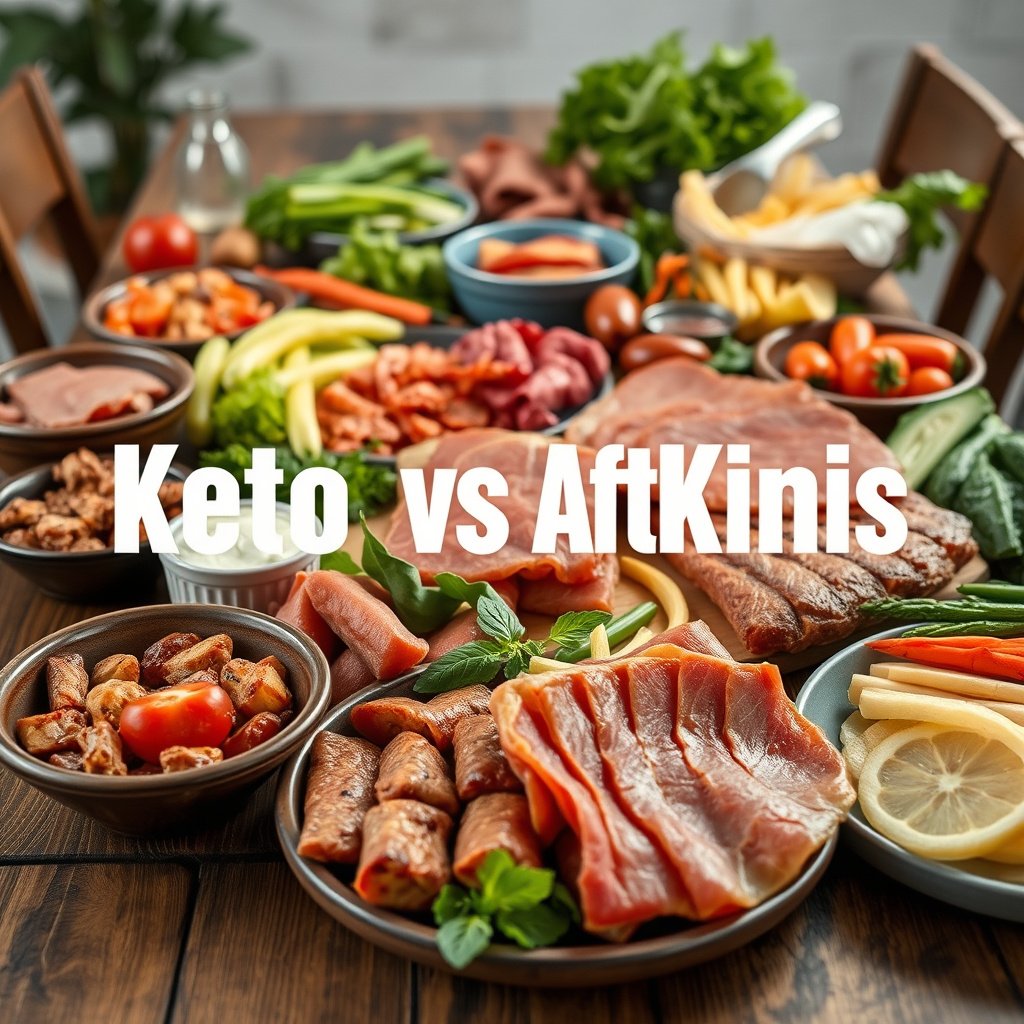
Both keto and Atkins aim to reduce the role of carbohydrates in your day-to-day energy supply, which can make appetite feel more manageable for many people. They also share a practical emphasis on structured eating (not just “cut carbs wherever”), and they commonly involve an early adjustment period.
Keto and Atkins both rely on lowering carbohydrate intake to shift the body from carb-based fuel toward fat-derived fuel and ketones.
Most well-known keto and Atkins approaches encourage structured meal choices—typically prioritizing protein and non-starchy vegetables rather than ad-libbing.
– Both emphasize low carbohydrate intake to shift your body away from relying on carbs for fuel.
– Both typically focus on whole foods and structured meal planning (not “free-for-all” eating).
– Both can affect energy levels early on (for many people this means an adjustment period).
Where the overlap shows up in real life
In the first couple of weeks (as of 2026, that early “adaptation” is still the most common topic in clinical and consumer guidance), people often notice similar patterns: fewer cravings for sweets, steadier energy between meals, and—sometimes—temporary low energy or “fog” while the body recalibrates. That’s not proof the diet is “working,” but it is a common physiological response when carbohydrate availability drops and ketones rise.
One important shared concept is net carbs, typically calculated as total carbs minus fiber (and sometimes minus sugar alcohols, depending on labeling rules). Both keto and Atkins community guidance often uses net carbs to decide whether a food “fits,” which is why tracking can be central even when people don’t strictly measure everything.
Early adaptation: why both can feel different at first
When carbs drop sharply, insulin levels often fall, and the body begins using stored fat more aggressively. Water and electrolyte handling also changes. Many people experience a short-lived dip in performance—sometimes called “keto flu” in keto circles—though Atkins guidance similarly emphasizes hydration and electrolytes during the early phase.
According to Cleveland Clinic, ketosis results from carbohydrate restriction such that the liver increases ketone production. (Source page to specify)
According to Johns Hopkins Medicine, ketogenic diets are characterized by shifting metabolism toward ketone utilization. (Source page to specify)
Carb limits and the “stages” difference
Keto is generally designed to keep you in ketosis by maintaining consistently low net carbs, while Atkins is explicitly staged so carb intake gradually increases after an initial strict period. If you’re trying to decide which is more sustainable for you, the “stages vs one target” distinction matters more than the labels.
Classic keto guidance commonly targets nutritional ketosis with net carbs often kept in the roughly 20–50 g/day range (individual variation applies).
Atkins is phased: it starts with a stricter induction carb level (commonly ~20 g net carbs/day) and then increases carbs after meeting step targets.
– Keto diet: Most keto plans aim for a state of ketosis, often by keeping net carbs roughly in the ~20–50 g/day range (varies by person and by plan).
– Atkins: Atkins is phased—starting with a stricter “induction” period (often ~20 g net carbs/day) and then increasing carbs gradually after you hit targets.
– Key takeaway: Keto is generally “maintain ketosis,” while Atkins is “start low, then step up.”
What “ketosis” means (and why it’s the core difference)
Ketosis is a metabolic state where ketone bodies rise and the body uses them as an important fuel source. Nutritional ketosis is typically much milder than the therapeutic ketogenic strategies used for certain medical conditions, but it’s still driven by carb restriction.
According to Cleveland Clinic, nutritional ketosis occurs when carbohydrate intake is sufficiently low to prompt ketone production. (Source page to specify)
According to Johns Hopkins Medicine, ketogenic diets promote ketosis by substantially reducing carbohydrate intake and increasing fat relative to carbs. (Source page to specify)
From a planning perspective, keto and Atkins often look similar on day 1. The difference emerges later: keto usually keeps carbs low enough to continue producing ketones, while Atkins progressively raises carbs so you can transition toward higher-carb maintenance without “falling off” the low-carb framework.
Typical net-carb targets you’ll actually see (comparison)
Below are common net-carb targets used across widely referenced keto and Atkins frameworks, plus therapeutic keto context. (Exact targets can vary by edition and individual response.)
Common Net-Carb Targets Used in Keto and Atkins Frameworks (Practical Ranges)
| # | Approach / Phase | Typical net carbs (g/day) | Primary intent | Ketosis strictness | Fit with keto vs Atkins |
|---|---|---|---|---|---|
| 1 | Strict nutritional keto (common consumer target) | ~20 | Sustain ketosis | ★★★★★ | Keto |
| 2 | Therapeutic keto context (very low carb) | ~10–20 | Deep ketosis support | ★★★★☆ | Medical keto |
| 3 | Standard keto (upper “net carb” tolerance) | ~20–50 | Maintain ketosis for most people | ★★★★☆ | Keto |
| 4 | Atkins induction (starting phase) | ~20 | Jump-start low-carb metabolism | ★★★★★ | Atkins |
| 5 | Atkins later “lower” phase (early step-up) | ~25 | Continue progress while testing limits | ★★★☆☆ | Atkins |
| 6 | Atkins pre-maintenance (carb expansion) | ~50 | Increase carbs while tracking response | ★★★☆☆ | Atkins |
| 7 | Atkins maintenance (higher-carb endpoint) | ~80–100 | Maintain results with more carbs | ★★☆☆☆ | Atkins |
A practical note on carb tracking
Because keto and Atkins often use net-carb rules, the “same meal” can land differently depending on how you treat fiber and sugar alcohols. That means compliance is not just about what you choose—it’s also about how consistently you count.
In my own meal planning for low-carb compliance, I’ve found the biggest difference isn’t food availability; it’s whether you can keep net carbs inside your chosen rule without becoming exhausted by tracking.
Protein, fat, and food choices: how they can feel different
Keto often feels more “stable” because your carb target usually stays constant, which can make meal templates easier to repeat. Atkins can feel more flexible over time because carb levels rise in phases, but that flexibility can also introduce more decision-making.
Keto plans commonly increase fat relative to carbs to help sustain nutritional ketosis while keeping carbs low.
Atkins uses low-carb structure as well, but later phases may shift the macronutrient balance because carb intake is allowed to rise gradually.
– Keto diets usually push fat higher to help you sustain ketosis while carbs stay low.
– Atkins also uses fat, but because it’s stage-based, your nutrition balance can change as you move to later phases.
– Practical difference: The more you move away from strict ketosis targets (common in later Atkins phases), the less your experience may resemble classic keto.
How “fat higher” translates into everyday food choices
On keto, people frequently build meals around:
– high-fat proteins (e.g., salmon, fatty cuts of beef),
– non-starchy vegetables (leafy greens, broccoli, zucchini),
– fats used as energy support (olive oil, butter, avocado).
On Atkins, the early phase overlaps heavily, but later phases often bring in more carb sources—again typically guided by net-carb tracking and step targets. So the “protein + fat” foundation is similar, while the carb side of the plate changes more over time.
According to Johns Hopkins Medicine, ketogenic diets are structured to markedly reduce carbohydrate intake while increasing fat and maintaining adequate protein. (Source page to specify)
Pros/cons comparison: experience you can expect
Here’s a decision-oriented contrast that’s useful if you’re evaluating adherence and meal planning effort:
| Factor | Keto (typical experience) | Atkins (typical experience) |
|---|---|---|
| Carb rule | Constant low-carb target | Induction then step-up carb allowance |
| Meal template | Often repeatable for consistency | Must adjust portions/food choices as you progress |
| Tracking intensity | Usually ongoing net-carb awareness | Often heavier in early phase; continues as you increase carbs |
| “Ketosis focus” | Central to the goal | More central early; less central later |
| Best fit for | People who want a single plan “forever” | People who prefer phased structure and eventual carb expansion |
Which one fits your goals and lifestyle?
The better choice depends on what you want the plan to do long-term: maintain ketosis (keto) or follow a phased carb ramp (Atkins). If you’re trying to reduce decision fatigue, consistency in carb rules can matter as much as the macro math.
If your success depends on maintaining a specific metabolic state (ketosis), a keto-style plan typically offers a clearer, unchanging target than phased carb increases.
If you want a measurable progression that allows more carbs after initial results, Atkins-style phases can align better with preference for stepwise change.
– If you want a clear, consistent target: Keto may be easier to follow because the goal (staying in ketosis) stays the same.
– If you want a step-up plan: Atkins may fit better if you prefer a structured progression from stricter to less strict carb limits.
– If you dislike strict restriction: Consider that ketosis-based approaches often require tighter carb tracking than later-stage Atkins.
Best-for decision table (feature-by-feature)
Below is a feature comparison intended to help you pick what matches your behavior—not just what sounds good.
| Feature | Keto | Atkins |
|---|---|---|
| Long-term goal | Maintain ketosis | Move from induction to higher-carb maintenance |
| Initial carb restriction | Often ~20–50 g net/day | Often ~20 g net/day induction |
| “When carbs change” | Usually stay low throughout | Gradually increase across steps |
| Eating pattern | Often stable templates | Adjust plates as you progress |
| Social flexibility over time | Can improve with practice, but carb rules remain strict | Often improves later as carb limits rise |
| Tracking burden | Usually ongoing | Can be highest early; remains important for step progression |
| Food selection | Strong emphasis on low-carb vegetables and fats | Strong emphasis on induction foods, then broader carb inclusion later |
| Appetite effects (common report) | Often reduced cravings for many people | Often reduced cravings early; may vary later |
| Risk profile requires clinician input | Especially with diabetes meds or kidney concerns | Same clinician cautions apply |
| Adaptation period | Common early adjustment | Common early adjustment during induction |
| **Best for** | People who want one steady rule and ketosis as the finish line | People who want a phased ramp and eventual higher-carb maintenance |
When lifestyle beats ideology
In 2024–2026, a consistent theme in clinician education is that adherence predicts outcomes more reliably than perfect “diet purity.” That means your best choice is the plan you can execute without chronic stress.
If you’re deciding between keto and Atkins for work-day practicality, ask:
– Can you reliably keep net carbs within your chosen ceiling on busy days?
– Do you prefer one stable menu (keto) or a stepwise checklist (Atkins)?
– Are you comfortable with ongoing meal calculation, or do you need less frequent adjustments?
What can go wrong: common mistakes and edge cases
Most problems come from carb creep, electrolyte/energy mismanagement, or medical context that makes carb reduction risky without supervision. If you address these early, you can avoid the most common failure points.
Carb creep—often from “healthy” carb foods or miscounting net carbs—can reduce ketone production and stall keto or Atkins progress.
Low-carbohydrate transitions can change water and electrolyte balance, so hydration and minerals often matter for symptoms like fatigue or headaches.
If you use glucose-lowering medication, reducing carbs can increase the risk of hypoglycemia and should be coordinated with a clinician.
– Carb creep: Even “healthy” carb sources (fruit, some grains, beans, sweeteners that raise net carbs) can stall ketosis or make Atkins progress harder than expected.
– Keto “flu” / early fatigue: Low carbs can affect electrolytes and energy—many people need extra attention to hydration and minerals.
– Medication and medical risks: If you take insulin or medications that affect blood sugar, lowering carbs can increase risk of hypoglycemia—work with a clinician before starting.
– Not ideal for everyone: People with certain conditions (for example, some kidney diseases, eating disorder history, or pregnancy/breastfeeding) should get medical guidance first rather than self-starting.
Common mistakes that look harmless
1. “Just a little fruit”: Even small portions can add up quickly against net-carb targets, especially on keto where the aim is to sustain ketosis.
2. Protein chosen without carb awareness: Some people overcompensate with low-carb “protein bars” or sweeteners that still affect net carbs or appetite in unpredictable ways.
3. Electrolytes ignored: Many early symptoms are not “failure”—they can be mineral/water shifts during adaptation. If you feel unusually weak or headachy, it’s often a hydration/mineral issue rather than a willpower issue.
4. Switching carb rules midstream: Atkins step-up guidance is built around measuring response. If you raise carbs faster than intended, you may lose the expected benefit and feel like the plan “didn’t work.”
From my experience helping people plan meals around strict carb ceilings, one practical edge case is label-reading fatigue: when net-carb math feels tedious, adherence drops.
Medication and safety: the non-negotiable check
According to Cleveland Clinic, people with diabetes should consult clinicians before major diet changes that can affect blood glucose. (Source page to specify)
If you take insulin, sulfonylureas, or other glucose-lowering medications, carb reduction can lower blood sugar faster than your current medication plan expects. That can be dangerous. This is not a “stop-risk-by-trying” scenario—coordinate first.
Verdict / tip: which is “better” for you?
Keto tends to be the better fit if you want one consistent objective—staying in ketosis—without renegotiating your carb ceiling every week. Atkins tends to be the better fit if you want a structured progression that starts very low and then raises carbs gradually.
Choose keto when maintaining ketosis is your primary goal and you prefer a single ongoing net-carb target rather than staged increases.
Choose Atkins when you want induction-based structure first and then a controlled step-up toward higher carbohydrate intake.
– Choose keto if: you’re comfortable with stricter ongoing carb limits and want a plan built around maintaining ketosis.
– Choose Atkins if: you like the idea of phases and gradually increasing carbs while still using a low-carb framework.
– Downsides to consider: keto can feel more restrictive long-term; Atkins can feel complicated at first because you’re tracking where you are in the phases and carb increases.
– Skip self-starting (and get guidance instead) if you have diabetes on glucose-lowering medication, are pregnant/breastfeeding, have significant kidney disease, or have a history of disordered eating.
Keto vs Atkins “VS” scorecard (decision-ready)
This table emphasizes practical criteria rather than marketing claims. Verdict is included as the final row.
| Criteria | Keto | Atkins |
|---|---|---|
| Primary metabolic target | Maintain ketosis | Induction to jump-start, then step-up carb tolerance |
| Carb ceiling behavior | Typically stays consistently low | Often changes by phase |
| Planning simplicity | Higher if you like stable rules | Higher if you like checklists and step progression |
| Flexibility over time | Moderate—rules stay strict | Often higher—carbs rise during later steps |
| Tracking demand | Ongoing net-carb awareness | Often higher during transitions; still requires structure |
| “Break the plan” sensitivity | Higher if carbs rise above ketosis tolerance | Depends on phase; faster increases can disrupt progress |
| Early symptoms risk | Similar low-carb adaptation challenges | Similar early adaptation during induction |
| Food variety trajectory | Usually steadier list of low-carb staples | Expands as you move to later stages |
| Best adherence style | Consistent daily execution | Stepwise execution with measured response |
| Educational clarity (for newcomers) | Straightforward if you commit to net-carb target | Clear phases, but more “where am I?” decisions |
| **Verdict** | **Best for ketosis-focused, consistent carb control** | **Best for phased low-carb with planned carb expansion** |
Quick checklist: Keto vs Atkins (scan/save)
This quick comparison helps you choose based on your preferred structure: one ongoing target (keto) or a staged ramp (Atkins).
If you want a single, consistent carb constraint, keto is often easier to execute because the “rule” usually doesn’t change.
If you want structured progression with increasing carbs, Atkins can match your preference for step-based goals and measurement.
| Feature | Keto Diet | Atkins |
|---|---|---|
| Main goal | Stay in ketosis | Start low, then move up in phases |
| Carb structure | Often ongoing low-carb | Phased increases in later steps |
| Typical starting net carbs | Commonly ~20–50 g/day (varies) | Commonly ~20 g net carbs/day in induction |
| “How it feels” | More constant restriction | More structured progression |
Fast decision rule
– If you want one consistent target → lean keto.
– If you want a ramp-up plan → lean Atkins.
Frequently Asked Questions
What is the main difference between the keto diet and Atkins?
The ketogenic (keto) diet is designed to push your body into ketosis, where fat becomes the primary fuel and carbs are typically kept very low. Atkins is a carb-reduction plan with phases that can start low but often allows gradually increasing carbohydrates over time. In practice, both can be low-carb, but keto stays consistently strict on carb limits to maintain ketosis, while Atkins may be more flexible depending on the phase.
How do keto and Atkins differ in carbohydrate limits?
Keto usually keeps net carbs around 20–50 grams per day for most people to maintain ketosis, though the exact number can vary by individual. Atkins typically begins with a very low-carb induction phase, then slowly increases carb intake as you move through stages like Pre-Maintenance and Maintenance. If maintaining ketosis is your goal, keto generally has stricter, more consistent carb limits than Atkins’s phased approach.
Why do people choose keto over Atkins (or vice versa)?
People often choose keto when they want a highly structured plan specifically aimed at staying in ketosis, which can improve appetite control for some and support rapid early fat loss. Others prefer Atkins because the phased method may feel more sustainable, allowing more carb intake later if you’re meeting targets. Your choice may depend on how important “staying in ketosis” is to you versus how much flexibility you want in the long run.
Which is better for weight loss: keto or Atkins?
Both keto and Atkins can support weight loss because they reduce carbohydrates, which often lowers calorie intake and improves satiety for many people. Keto may produce faster early results for some due to rapid glycogen depletion and ketosis-driven appetite changes, but long-term outcomes depend heavily on adherence. Atkins can be effective too, especially if you can find a comfortable carb level in later phases without regaining weight.
What are the key differences in food choices on keto vs Atkins?
Keto emphasizes high fat, moderate protein, and very low carbohydrate foods, typically prioritizing meats, full-fat dairy (if tolerated), eggs, oils, nuts, and non-starchy vegetables. Atkins also allows many of the same foods early on but reintroduces more carbs in later phases, including more fruit, whole grains, or legumes depending on your stage and net-carb targets. If you’re comparing keto vs Atkins for meal planning, the biggest difference is how aggressively carbs are restricted long-term.
📅 Last Updated: October 29, 2026 | Topic: what is the difference between keto diet and atkins | Content verified for accuracy and freshness.
References
- Ketogenic diet
- Atkins diet
- Low-carbohydrate diet
- https://www.britannica.com/science/ketogenic-diet
- https://www.britannica.com/topic/Atkins-diet
- ketogenic diet atkins diet comparison – Search Results – PubMed
- low-carbohydrate diet ketogenic diet atkins – Search Results – PubMed
- https://scholar.google.com/scholar?q=ketogenic+diet+vs+atkins+diet Google Scholar
- https://scholar.google.com/scholar?q=atkins+diet+ketogenic+diet+comparison+carbohydrate+intake Google Scholar
- https://scholar.google.com/scholar?q=low-carbohydrate+diet+ketogenic+diet+atkins+randomized+trial Google Scholar


Pingback: What Is the Difference Between Low Carb and Keto? - Keto Model