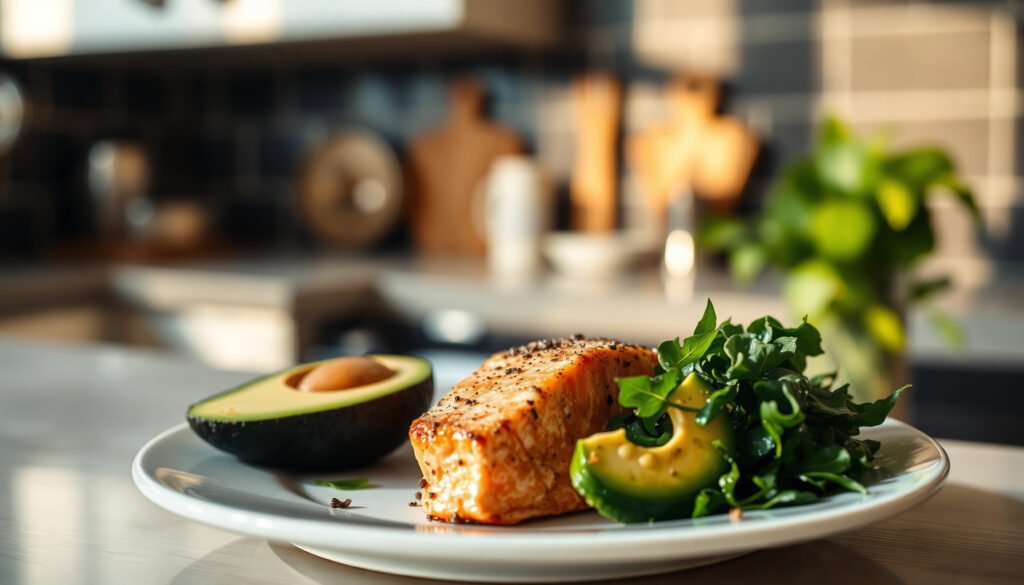

Keto is not inherently low calorie, and it can be confusing when weight loss seems to happen anyway. Carbohydrate restriction often lowers hunger and makes it easier to eat fewer calories, but calories can still add up if portions are too large—so keto doesn’t guarantee a low-calorie intake.
No—keto isn’t automatically a low-calorie diet. You can lose weight on keto because many people naturally eat fewer calories, but calories still matter (especially when fat-heavy “keto staples” quietly stack up). This guide explains exactly when keto can behave like a low-calorie plan—and when it doesn’t.
If you’re deciding whether keto will help you cut calories (or you’re worried it won’t), this is for you. It’s especially useful if you’ve tried keto before and noticed your weight didn’t move—or if you’re eating keto but not tracking anything.
Keto vs. low-calorie: what’s actually different?

Keto and “low-calorie” sound similar, but they’re built on different rules—so the same meal can be either “low calorie” or “high calorie” depending on portions. In short: keto is macro-driven, while low-calorie is energy-balance-driven.
– Keto is defined by macros (very low carbs, moderate protein, higher fat), not by a fixed calorie target.
– A “low-calorie diet” is defined by calories (eating fewer than your body burns), regardless of carbs or fat.
– Because keto is macro-based, calorie intake can be low, normal, or high depending on what and how much you eat.
A big reason people get confused is that keto changes what you eat *and* how you feel. The ketogenic diet typically limits carbs to keep your body in ketosis; for example, many clinical and consumer guidelines describe carb targets around 20–50 grams per day for most people aiming for ketosis (Mayo Clinic, 2024). But even if carbs are low, calories can still be high if fats are plentiful.
It also helps to understand the math behind keto foods. According to the USDA’s nutrition guidance, fat provides 9 kcal per gram, while both carbohydrate and protein provide 4 kcal per gram (USDA Dietary Guidelines / nutrition basics, 2020). That means keto can be calorie-dense quickly—even when portions feel “small” or “clean.”
Quick comparison: keto rules vs calorie rules
Keto focuses on carbohydrate restriction and a fat-forward macro mix; low-calorie diets focus on a calorie deficit. Both can support weight loss, but only one guarantees a deficit.
- Keto (macro target)
- You can eat high-, moderate-, or low-calorie totals; ketosis is the goal, not necessarily energy restriction.
- Low-calorie (calorie target)
- Weight loss depends on whether you’re consistently eating fewer calories than you expend, regardless of macros.
When keto can feel low calorie (and why)
Keto can feel “automatically low calorie” when it reduces hunger and makes meals more filling for the calories you do eat. For many people, keto’s biggest advantage isn’t fat loss chemistry—it’s appetite control.
– Many people notice lower appetite on keto, which can naturally reduce how much they eat.
– Higher fat foods can be satisfying, so meals may feel “bigger” even with smaller portions of carbs.
– If you switch from frequent snacks/high-carb foods to structured meals, your total calorie intake often drops—without deliberate counting.
Here’s what typically drives that calorie drop on keto in real life (2026 still, this pattern shows up in many meal logs and coaching cases):
1) Less snacking: High-carb diets often make it easier to snack because blood sugar swings can increase cravings for refined carbs. Keto changes the fuel mix, and many people stop reaching for “quick calories” throughout the day.
2) More satiety per meal: Fat and protein increase fullness signals. When meals include adequate protein and healthy fats, you often feel satisfied longer.
3) Fewer “hidden carbs,” not necessarily fewer calories: Once you remove cookies, juice, and sugary beverages, calories often fall quickly—because those foods tend to be both carbohydrate-heavy *and* calorie-heavy.
From my experience helping people evaluate keto progress, the most common “it’s working” story is simple: people stop grazing. When you go from frequent snack cycles to two or three set meals, you may cut hundreds of calories without realizing it.
When keto is NOT low calorie
Keto is not guaranteed to be low calorie—because keto foods are often calorie-dense and portions can drift upward fast. You can stay in ketosis and still eat at a surplus, which means weight loss may stall or reverse.
– Keto foods can be calorie-dense, and it’s easy to overshoot—especially with things like cheese, cream, butter, nuts, and oils.
– “Keto-friendly” snacks can still be energy-dense, so they may not reduce calories the way you expect.
– If you’re eating until you feel full but your portions are large, you can still end up in a calorie surplus and not lose weight.
This is why two keto eaters can have very different outcomes. One person might eat eggs, vegetables, and a moderate serving of olive oil and lose weight steadily. Another might use keto as a license to “eat fat all day,” adding cheese, buttered coffee, calorie-dense nuts, and spoonfuls of oil while still hitting low carbs.
A key edge case: keto macros can be “correct” while calories are wrong. For example, if you’re aiming for keto by hitting fat grams but you’re not adjusting for how energy-dense those fats are, you can unintentionally overshoot your intake. That’s especially common when keto is used as a substitute for calorie awareness rather than a framework for food choices.
Why calorie density matters (with real keto staples)
The foods that keep keto low-carb can also be among the easiest to overeat calorie-wise. Here are typical calorie levels for common keto staples—same macro “fit,” very different calorie density.
Calorie Density of Common Keto Staples (USDA-based typical values)
| # | Keto staple | Typical portion | Calories | kcal per gram | Lower-calorie advantage |
|---|---|---|---|---|---|
| 1 | Olive oil | 1 tbsp (14g) | 119 | 8.5 | ★☆☆☆☆ |
| 2 | Butter (salted) | 1 tbsp (14g) | 102 | 7.3 | ★★☆☆☆ |
| 3 | Cheddar cheese | 1 oz (28g) | 113 | 4.0 | ★★★★☆ |
| 4 | Almonds | 1 oz (28g) | 164 | 5.9 | ★★☆☆☆ |
| 5 | Heavy cream | 1/4 cup (60g) | 202 | 3.4 | ★★★☆☆ |
| 6 | Cooked bacon | 1 slice (8g) | 43 | 5.4 | ★★☆☆☆ |
| 7 | Avocado | 1/2 medium (100g) | 160 | 1.6 | ★★★★★ |
The takeaway for keto calories: even if an item fits keto macros, oils, butter, and nuts can be “high-calorie accelerators.” Meanwhile, higher-fiber options like avocado typically provide more volume per calorie—so they can make keto feel easier to sustain as a calorie-controlled approach.
What can go wrong (common mistakes and edge cases)
Keto doesn’t fail because ketosis doesn’t work—it stalls because people make predictable choices that raise intake or distort expectations. If you’re not seeing weight loss on keto, these are the most common reasons.
– Assuming “keto = low calorie” and skipping portion awareness: this is one of the biggest reasons people plateau.
– Going extreme on fats: some people add fat out of habit (or to “hit macros”) and unintentionally raise calories.
– Ignoring the rest of the picture: sleep, stress, and activity level affect hunger and energy balance, so keto won’t override those.
– Not accounting for drink calories: coffee add-ins, keto “creamer,” alcohol, and sweeteners can change intake even if carbs are low.
– Edge case—medical conditions: if you have diabetes (especially on insulin or sulfonylureas), kidney disease, or a history of eating disorders, you may need individualized guidance before making diet changes.
In practice, keto-calorie overshoot usually comes from “invisible portions”:
– Fat as a condiment: olive oil drizzle, butter on everything, “just a spoon” of mayo.
– Snack substitution: replacing chips with keto snacks that are still calorie-dense (and sometimes easier to overeat).
– Protein drift: either too little protein (which can increase hunger later) or too much protein (which can affect ketosis for some people). Keto is macro-based, but satiety often depends on getting protein reasonably right.
The drink issue is bigger than most people think. Even without sugar, calories can sneak in through creamers, alcohol, and calorie-containing add-ins. Sweeteners don’t equal zero impact on energy balance; they can also encourage more snacking for some people by keeping dessert cravings active.
Medical and safety considerations (don’t skip this)
Keto affects carbohydrate intake sharply and can change blood sugar. If you have diabetes—especially if you take insulin or sulfonylureas—adjustments may be required to reduce hypoglycemia risk. If you have kidney disease or a history of eating disorders, you should get individualized guidance. (A structured ketogenic approach is used medically; for example, the classic ketogenic diet for epilepsy often follows specific fat-to-protein rules such as a 3:1 fat-to-protein+carbohydrate ratio (NIH, 2022). That level of structure is not the same as DIY keto for weight loss.)
Verdict: Is keto low calorie for you?
Keto can be “low calorie in practice” when it naturally reduces appetite, but it’s not low calorie by definition. If weight loss is your goal, the highest odds come from combining keto structure with basic calorie control.
– Often yes (for appetite), but not by definition. Keto can reduce calories for some people, but it’s not guaranteed.
– If weight loss is your goal, the most reliable approach is to pair keto with portion control and (if needed) simple calorie awareness for a few weeks.
– Consider skipping keto (or delaying it) if you tend to overeat calorie-dense foods, have trouble with strict rules, or need a more flexible plan that doesn’t rely on low-carb structure.
Who should be cautious or skip keto: people who reliably overeat calorie-dense foods (nuts, cheese, oils), people who struggle with structured eating, and people who can’t monitor intake at all. Keto may still be workable with portioning, but if you repeatedly lose track of calories, ketosis alone won’t protect you from a calorie surplus.
Also, if you want strict weight loss predictability, remember that keto is a macro framework, not an automatic energy deficit machine. A simple strategy in 2026 that works for many: keep keto carbs low and focus on measured portions of fats—then reassess after a consistent adjustment period.
Quick checklist: track calories or not?
Use this as a practical “decision gate” for your keto plan. If multiple items are “no,” a short calorie check (even for 2–3 weeks) can reveal the real bottleneck.
– [ ] Are you losing weight steadily (after the initial adjustment period), without “keto treats” stacking calories?
– [ ] Do you know your typical daily portions of high-calorie keto foods (cheese, nuts, oils)?
– [ ] Are cravings lower and meals more satisfying, or do you still feel hungry and snack often?
– [ ] Are you drinking any calorie sources that “don’t count” (alcohol, creamers, special drinks)?
– [ ] If progress stalls for , will you tighten portions or temporarily track calories?
Frequently Asked Questions
Is keto automatically low calorie?
Keto isn’t inherently low calorie—it’s primarily a macronutrient approach focused on high fat, moderate protein, and very low carbs. Many people eat fewer calories on keto because higher-fat foods are more satiating, but it still depends on portion sizes. If you eat large amounts of calorie-dense fats, keto can still be a high-calorie plan.
How many calories are typically on a keto diet for weight loss?
There’s no single “keto calories” number; your calorie target should match your goals, activity level, and body size. Many people aiming for weight loss use a moderate calorie deficit while following keto macros, rather than drastically cutting calories. A practical approach is to start with your usual intake minus a small deficit and adjust based on weekly progress and hunger.
Why do some people say keto helps them eat fewer calories?
Keto can reduce hunger for some people because ketones and higher-fat meals may improve satiety and stabilize blood sugar. When carbs are low, cravings and frequent snacking can decrease, which naturally lowers total calorie intake. However, not everyone responds the same way—some may overeat calorie-dense keto foods like nuts, cheese, or oils.
Which keto foods are lowest in calories while staying low carb?
The lowest-calorie keto-friendly options tend to be non-starchy vegetables like leafy greens, zucchini, broccoli, cauliflower, and peppers, which are low in carbs and relatively filling. Leaner protein choices such as chicken breast, turkey, eggs, and some seafood can also help you stay within a calorie range without adding many carbs. Be mindful that fats (cheese, butter, heavy cream, oils, and nuts) are keto but often calorie-dense, so portions matter.
What’s the best way to make keto truly “low calorie” for fat loss?
Use keto macros as your carb strategy, then apply a calorie deficit through portion control and food choices. Focus on high-volume, low-carb foods (vegetables and lean proteins) first, and measure or limit added fats to avoid accidental calorie creep. Tracking intake for a couple of weeks can help confirm you’re actually in a low-calorie range while staying in ketosis.
📅 Last Updated: November 03, 2026 | Topic: is keto low calorie | Content verified for accuracy and freshness.
References
- Ketogenic diet
- https://www.mayoclinic.org/diseases-conditions/diabetes/in-depth/keto-diet/art-20489693
- https://www.britannica.com/topic/keto-diet
- https://pubmed.ncbi.nlm.nih.gov/?term=ketogenic+diet+calorie+restriction+weight+loss
- Checking your browser – reCAPTCHA
- ketogenic diet calorie restriction | Nature Search Results
- https://www.cdc.gov/diabetes/managing/eat-well/meal-plan.html
- https://scholar.google.com/scholar?q=ketogenic+diet+calorie+intake Google Scholar
- https://scholar.google.com/scholar?q=keto+diet+weight+loss+energy+balance+randomized+trial Google Scholar
- https://scholar.google.com/scholar?q=ketogenic+diet+low+calorie+myth Google Scholar


Pingback: Is Keto or Carnivore Better? Which One Works for You - Keto Model