
Salt is keto friendly, as long as you use it to meet your needs rather than avoid it. If you’re worried because keto can change your sodium levels, the most important point is that sodium supports hydration and helps prevent the “keto flu” feeling as your body adapts. Practically, salt is a keto-appropriate seasoning and electrolyte, not a carb or sugar, so it fits within a ketogenic way of eating.
Yes—salt is keto friendly. Plain salt has 0 carbs, so it won’t disrupt ketosis; the real question is whether you’re using it to cover sodium needs (a common keto priority) and whether you should limit sodium for health reasons.
If you’re starting keto, watching carbs, or trying to fix “keto flu” symptoms (like headaches or low energy), this is for you. It also applies if you’ve been told to watch your sodium intake for blood pressure or kidney-related concerns.
Salt vs. keto: does it affect carbs?

Plain salt doesn’t meaningfully affect your carb target, and it generally won’t interfere with ketosis. Salt is essentially sodium chloride, so it has no carbohydrate calories that would raise net carbs.
– Plain salt (table salt, sea salt, kosher salt) contains virtually no carbohydrates.
– Because it’s carb-free, salt typically doesn’t raise your net carbs or kick you out of ketosis.
– Some salt “blends” may include additives (like herbs or anti-caking agents), so it’s still smart to check labels if you’re strict.
From a ketosis standpoint, what matters is carbohydrate intake and total daily patterns—not sodium alone. Still, sodium can strongly influence how you feel on keto because it affects fluid balance and electrolyte signaling (more on that next).
Why sodium matters when you go keto
Sodium matters on keto because your body changes how it handles water and electrolytes, especially during the first 1–2 weeks. When carbs drop, insulin drops, and the kidneys excrete more sodium early on—so many people experience fatigue, headaches, or “keto flu” until electrolytes and fluids catch up.
– Keto can change how your body handles water and electrolytes, especially early on.
– Many people notice feeling better when they replace fluids and sodium (rather than chasing only “carb withdrawal”).
– Salt can help you reach a more consistent electrolyte routine alongside water intake.
A few anchor points help put this into perspective. According to the World Health Organization (WHO), recommended sodium limits for adults are below 2,000 mg/day (roughly 5 g of salt/day) (2012). According to the Institute of Medicine/National Academies, the Adequate Intake (AI) for sodium is about 1,500 mg/day (2004). And according to the U.S. Department of Agriculture (USDA), 1 teaspoon of table salt contains about 2,300 mg of sodium (as commonly reported across standard nutrition references).
Sodium from Common Amounts of Table Salt (NaCl)
| # | Table salt amount | Sodium (mg) | Net carbs | Keto “impact” |
|---|---|---|---|---|
| 1 | 1/8 teaspoon | ~288 | 0 g | No ketosis disruption |
| 2 | 1/4 teaspoon | ~575 | 0 g | Electrolytes only |
| 3 | 1/2 teaspoon | ~1,150 | 0 g | Often enough early adjustment |
| 4 | 1 teaspoon | ~2,300 | 0 g | High sodium day—still 0 carbs |
| 5 | 1 tablespoon | ~6,900 | 0 g | Usually above many medical limits |
| 6 | 5 grams | ~1,968 | 0 g | Mid-range sodium |
| 7 | 10 grams | ~3,936 | 0 g | Likely above common guidance |
How to use salt on keto (practical approach)
Salt is best used as a taste-and-electrolyte tool, not as a blind “more is better” strategy. Most people get the benefit by modestly salting meals while also paying attention to water and potassium/magnesium from keto foods.
– Start with salt in cooking and at the table—taste is a practical guide for many people.
– If you’re trying to address keto-related headaches or fatigue, focus on electrolytes overall (sodium first, but don’t ignore fluids).
– If you use electrolyte drinks or supplements, compare them to food sources so you’re not accidentally stacking high sodium from multiple places.
Here’s a practical way to think about it:
1) Get your baseline carbs right first. If your keto plan isn’t actually keeping carbs low, sodium won’t fix that.
2) Use modest sodium to support hydration. If you’re not peeing much or you’re getting early headaches, it’s often a sign you need fluids plus electrolytes—not sugary “energy.”
3) Balance with other electrolytes. Sodium is only part of the picture; potassium and magnesium come from foods like leafy greens, avocado, olives, and nuts (as long as they fit your carb target).
What can go wrong (common mistakes and limits)
Salt can be keto-friendly and still be a problem if you use it without context. Overloading sodium, or assuming salt alone fixes “keto flu,” is where many people get stuck.
– Overdoing sodium can be an issue if you already eat lots of processed foods (keto-friendly foods can still be very salty).
– If you have high blood pressure, heart failure, or kidney disease, “just add salt” may not be safe—ask your clinician first.
– Salt cravings can be misleading: sometimes you also need more fluids, overall calories, or a balanced electrolyte plan.
– Relying on only salt without checking other electrolyte needs can leave you still feeling off, especially in the first couple of weeks.
Salt strategy vs. symptom strategy (quick comparison)
Use this to separate “electrolyte support” from “guessing”:
| Approach | Potential pros | Potential cons | Best fit |
|---|---|---|---|
| Salt + water (modest) | Often reduces early headaches and low-energy feelings | May not address low calories or potassium/magnesium | Most keto starters |
| Electrolytes-only (no fluid focus) | Can correct sodium imbalance | Dehydration can persist if water is low | People who already hydrate well |
| Salt + processed keto foods | Easy to meet sodium intake | Sodium can overshoot quickly | People tracking intake |
| “Add salt” despite medical limits | Sometimes helpful | Can worsen hypertension or fluid retention | Usually **not recommended** without clinician guidance |
Also note: “keto flu” symptoms overlap with other issues—sleep disruption, caffeine withdrawal, insufficient calories, or constipation from dietary changes. If symptoms persist beyond the first couple of weeks, it’s worth troubleshooting the full routine (not only sodium).
Verdict: Is salt keto friendly—and should you add more?
Salt is keto friendly, and for many people it’s a helpful tool to maintain electrolyte balance. Still, “keto compatible” isn’t the same as “always increase sodium.” If you have sodium-sensitive conditions (like hypertension, kidney disease, or fluid retention issues), you should not treat salt as a blanket solution—use a clinician-approved plan instead.
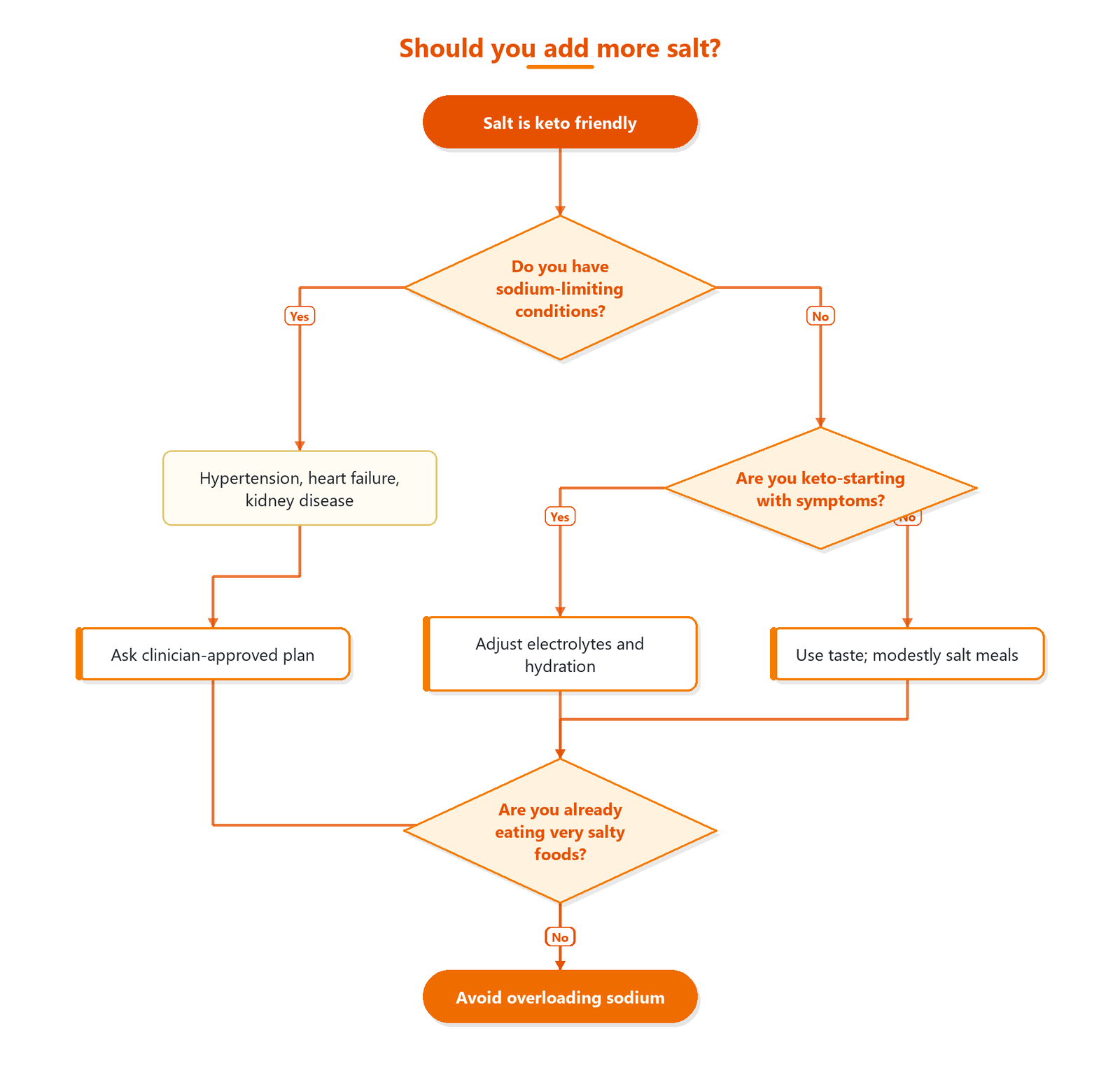
In 2025–2026, the most sensible approach is increasingly “electrolytes with guardrails”: modest sodium adjustments, attention to total daily sodium from all sources (including broth, cheese, bacon, and packaged keto snacks), and symptom-based refinement rather than extreme increases.
Quick scan: salt on keto checklist (save this)
| Question | If yes… | If no… |
|---|---|---|
| Are you using plain salt (or basic salts in food)? | It’s generally fine for keto carb goals | Check the label if you’re using a “salt blend” |
| Are you having keto-start headaches/low energy? | Consider an electrolyte-focused adjustment (including sodium) | Look at hydration, calories, and overall balance |
| Do you have a medical reason to limit sodium? | Skip the “add more salt” approach | Use taste + a reasonable routine, don’t overdo |
– Keep an eye on sodium from processed keto foods (cheese, bacon, packaged sauces, broth).
– Prefer simple sources first: food + basic salt, unless a supplement is specifically part of your plan.
Frequently Asked Questions
Is salt keto friendly?
Yes—salt (sodium chloride) is keto friendly because it has no carbohydrate content and does not raise blood sugar. On a ketogenic diet, you often need adequate sodium to help manage electrolyte balance, especially during the early “keto flu” transition. Just choose plain salt or keto-friendly seasonings and avoid salt blends with added sugar or high-carb fillers.
What types of salt are best for a keto diet?
Most common salts like table salt, sea salt, and Himalayan pink salt are keto friendly since they are essentially pure sodium chloride. The “best” option depends on taste and your needs, but pay attention to ingredient labels for flavored or “seasoning” salts that may include dextrose or other carbs. If you’re monitoring sodium, consider using potassium-sodium blends carefully and follow your healthcare provider’s guidance.
How much salt should I eat on keto?
Many keto dieters increase sodium intake to support hydration and reduce symptoms such as headaches or fatigue, particularly in the first week. A practical approach is to add salt to meals to taste and consider tracking electrolytes if you use keto products or fast. If you have high blood pressure, kidney disease, or are on diuretics, talk to a clinician before increasing sodium.
Why does salt matter on keto?
When you cut carbs on keto, your body releases more water and electrolytes, including sodium, which can lead to dizziness, cramps, or fatigue. Increasing sodium intake can help you feel better and maintain hydration while your body adapts to ketosis. Along with salt, many people also pay attention to other electrolytes like potassium and magnesium.
Which salty foods should I avoid while staying keto friendly?
Avoid salty foods that contain added sugars or carb-heavy ingredients, such as some BBQ sauces, sweet brines, seasoned snack mixes, and certain “low-sodium” products that use sugar substitutes with carbs. Also watch for breaded or battered salty snacks that add significant carbohydrates. Stick to keto-friendly sources like plain salt, salted meats, olives, cheese (in moderation), and low-carb broths where you can check the label for net carbs.
📅 Last Updated: October 31, 2026 | Topic: is salt keto friendly | Content verified for accuracy and freshness.
References
- Ketogenic diet
- https://www.mayoclinic.org/diseases-conditions/diabetes/in-depth/keto-diet/art-20483930
- https://www.cdc.gov/salt/index.html
- Sodium reduction
- https://pubmed.ncbi.nlm.nih.gov/?term=ketogenic+diet+sodium
- https://pubmed.ncbi.nlm.nih.gov/?term=ketogenic+diet+electrolytes+sodium
- https://www.sciencedirect.com/search?qs=ketogenic%20diet%20sodium%20electrolytes
- https://scholar.google.com/scholar?q=is+salt+keto+friendly Google Scholar
- https://scholar.google.com/scholar?q=ketogenic+diet+sodium+electrolytes Google Scholar
- https://scholar.google.com/scholar?q=ketogenic+diet+electrolyte+management Google Scholar