

Is the keto diet bad for your liver? For most healthy people, it is not inherently harmful, but it can become a problem when the diet triggers abnormal liver enzyme changes or worsens existing liver disease. The key risk is that rapid fat breakdown and ketone production can stress the liver, so anyone with known liver issues should get medical guidance and monitor labs, especially during the first weeks.
Keto is not automatically bad for your liver, but it can become risky for some people depending on baseline liver health, how fast weight loss happens, and what you eat alongside the low-carb macros. Many individuals tolerate a well-formulated ketogenic diet well, yet others can see liver enzyme changes, gallbladder symptoms, or worsening lab patterns—especially if they already have liver disease or stop keto abruptly without addressing overall diet quality.
If you’re considering keto for weight loss, insulin control, or fatty liver concerns, this is for you. It’s also for anyone who already started keto and wants a practical way to monitor symptoms and labs without guessing.
When Keto Is Usually Not Bad for Your Liver

– Many people tolerate keto without major liver issues, particularly if they maintain a nutrient-dense diet and avoid heavy alcohol use.
– Fatty liver may improve for some people when weight and insulin sensitivity improve (keto can help with that, but it’s not guaranteed).
– The main concern is individual risk, not keto in general—baseline liver health matters a lot.
In most otherwise healthy adults, keto’s biggest “liver impact” is indirect: improved insulin sensitivity and reduced fat accumulation in the liver (often discussed under the umbrella of NAFLD—nonalcoholic fatty liver disease, which is fat buildup not driven by alcohol). When weight loss is steady and diet quality stays high, liver fat often decreases. According to AASLD practice guidance (2023), losing about 3–5% of baseline body weight can improve liver steatosis (fat), and greater weight loss can improve more advanced liver disease stages—this is one reason keto can help some people, even though it is not a liver therapy by definition.
Still, “usually not bad” doesn’t mean “risk-free for everyone.” A person with normal baseline liver tests, minimal alcohol intake, and no history of gallbladder disease is generally in a lower-risk category than someone with cirrhosis, active hepatitis, or unexplained enzyme elevations. That’s why clinicians typically focus less on the diet label (“keto” versus “not keto”) and more on the starting point and monitoring plan—especially when you’re changing calories, carbohydrate intake, and fat intake at the same time.
What matters most: baseline liver health and alcohol exposure
Keto can be liver-friendly in practice when baseline labs (ALT, AST, bilirubin, and others) are normal and alcohol intake is minimal. By contrast, alcohol plus rapid weight loss plus high-fat intake can create a perfect storm: alcohol stresses liver metabolism, rapid weight loss increases bile concentration changes, and higher fat intake can amplify gallbladder workload in susceptible people. If you already have elevated enzymes, low albumin, high bilirubin, or signs of advanced liver disease, the “same diet” can lead to very different outcomes.
Potential Liver Risks on Keto
– Liver enzyme elevations (like ALT/AST) can happen in some cases, for reasons that may include rapid fat loss, medication interactions, or diet-related factors.
– Gallbladder problems (including gallstones) are a known risk when weight loss is fast—this can indirectly affect liver-related symptoms (like right-upper abdominal pain).
– Keto is harder to “protect” if your diet is low in fiber/micronutrients or very high in certain fat types, which can worsen overall metabolic stress.
For some people, keto coincides with changes in liver bloodwork—particularly ALT and AST (enzymes released when liver cells are stressed). A key point is that enzyme elevations do not automatically mean permanent liver damage; they can reflect temporary metabolic stress, medication effects, intercurrent illness, or changes in fat flux. However, persistent elevations, rising bilirubin, or abnormal coagulation markers deserve prompt clinical review.
A second major issue is the gallbladder. Gallstones and biliary colic (often experienced as crampy right-upper abdominal pain, sometimes after meals) can occur more often during periods of rapid weight loss. This is not unique to keto, but keto frequently triggers brisk weight loss early—especially if you started with a calorie deficit. According to clinical reviews in hepatology/gastroenterology literature, gallstones can develop in a meaningful minority of people during rapid weight loss, with estimates often cited as up to ~25% in certain high-risk weight-loss contexts. That risk matters because gallbladder symptoms can mimic “liver pain,” leading some people to assume their liver is failing when the gallbladder is the primary problem—or vice versa.
Why diet quality changes the risk
Keto is not one uniform diet. Two people can both “do keto” while eating very different foods: one may prioritize unsaturated fats, low-carb vegetables, and adequate hydration; the other may rely heavily on ultra-processed keto products and minimal vegetables. Low fiber can worsen constipation and alter gut signaling; micronutrient gaps may affect overall metabolic resilience; and excess saturated fat may worsen lipid patterns in some individuals. In other words, keto’s liver impact often depends on the diet beneath the macro label.
Keto risk red flags that should override “wait and see”
If you develop symptoms like jaundice (yellowing of eyes/skin), dark urine, pale stools, severe or persistent right-sided abdominal pain, or intense nausea/vomiting, don’t assume it’s “just keto flu.” Those symptoms can signal biliary obstruction, hepatitis, or other urgent conditions. If your labs show a continued rise in bilirubin, worsening coagulation (e.g., INR), or a pattern consistent with cholestasis (often elevated ALP/GGT), you should contact your clinician rather than adjusting macros alone.
Who Should Avoid Keto or Get Medical Clearance First
– People with cirrhosis, active hepatitis, or unexplained abnormal liver tests should not start keto without their clinician’s OK.
– Those with rare genetic/metabolic fatty-acid oxidation disorders should avoid keto unless a specialist directs it.
– Anyone taking liver-involved medications (or multiple meds with complex metabolism) should ask about safety and monitoring: .
Keto requires extra caution for anyone with advanced liver disease because the liver is already under reduced functional reserve. Cirrhosis changes how the body processes nutrients, drugs, and bile flow, meaning a diet that is “safe” for a healthy person can be poorly tolerated—or clinically misleading—in someone with established impairment. If you have ongoing viral hepatitis (active HBV/HCV), autoimmune hepatitis, or recent unexplained abnormal liver tests, starting keto without clinician clearance is a bad trade-off.
There are also rare metabolic conditions where ketogenic diets can be unsafe. For example, fatty-acid oxidation disorders can impair the body’s ability to break down fats for energy, which is central to ketogenic physiology. In those cases, medical guidance is essential because the “energy pathway” keto depends on may be impaired.
Medication complexity matters more than the diet label
Many medications are processed via hepatic pathways or can affect liver enzymes. If your medication list includes drugs known to carry liver-related risks—or multiple medications that interact metabolically—your clinician may want a more structured lab schedule and symptom plan. Common examples include:
– Antiseizure medicines (e.g., valproate)
– Antibiotics/antifungals with potential hepatotoxicity (varies by drug)
– Rheumatologic medications (e.g., methotrexate)
– Cardiac medications that can affect liver enzymes in certain cases (varies)
– Over-the-counter acetaminophen use, especially at higher or repeated doses
—but the practical takeaway is consistent: bring your full medication and supplement list to your clinician or pharmacist before starting keto, and ask whether any are likely to cause liver enzyme changes or interact with fasting/ketone production.
How to Do Keto More Liver-Friendly (Practical Steps)
– Start with a “liver-aware” baseline: get baseline labs (commonly liver enzymes and bilirubin) and plan follow-up monitoring with your clinician—.
– Avoid the combination that increases strain: no heavy alcohol, don’t “stack” supplements without checking with a professional, and keep hydration up.
– Aim for quality fats and enough fiber: prioritize unsaturated fats, vegetables, and fiber sources that fit keto (e.g., low-carb greens), rather than relying on processed keto foods.
If you want keto to be as liver-safe as possible, the highest-yield step is pre-start baseline testing and a monitoring cadence. A “liver-aware” baseline often includes not only ALT and AST, but also measures that help distinguish liver cell injury from bile flow problems. A practical panel many clinicians use includes:
– ALT, AST
– Alkaline phosphatase (ALP) and GGT (helps flag cholestasis/bile flow issues)
– Total and direct bilirubin
– Albumin
– INR (for liver synthetic function)
– Fasting lipid panel
– Fasting glucose and/or A1c (metabolic context for fatty liver risk)
– Often CBC and creatinine for broader safety context
For follow-up, a common approach is rechecking liver tests after starting (timing varies by risk level and symptoms). If you have baseline abnormalities, clinicians often shorten the interval to ensure any worsening is caught early rather than assumed “adaptation.”
Build a keto plan that reduces secondary triggers
“Liver-friendly keto” typically looks like this in practice:
– Avoid heavy alcohol entirely (and be honest about “weekend” intake). Even moderate alcohol can complicate fatty liver interpretation.
– Prevent crash-style weight loss. Keto can cause fast early water weight loss, but calorie deficits that are too aggressive can still raise gallstone risk.
– Prioritize fat quality. Emphasize unsaturated fats (olive oil, nuts/seeds, avocado) and include omega-3 sources when appropriate.
– Include fiber daily. Keto-friendly vegetables (leafy greens, non-starchy options) and low-carb fiber strategies help stool regularity and metabolic signaling.
– Don’t stack supplements blindly. Some supplements marketed as “liver support” can themselves affect liver enzymes or interact with medications.
Keto diet quality comparison (what tends to matter for liver outcomes)
Here’s a simple comparison that clinicians and dietitians often use when deciding whether a low-carb approach is likely to be supportive versus risky:
| Factor | More liver-supportive keto | Higher-risk keto pattern |
|---|---|---|
| Fiber | Daily low-carb vegetables/greens and a plan for constipation prevention | Minimal vegetables and reliance on “keto snacks” with low micronutrient density |
| Fat quality | Mostly unsaturated fats; limit excessive saturated fat density | Very high saturated fat intake with limited omega-3/vegetable intake |
| Pace of weight loss | Moderate deficit; avoids crash dieting | Aggressive calorie restriction and rapid early weight loss |
| Alcohol & meds | No heavy alcohol; meds/supplements reviewed for hepatic risk | Frequent alcohol or unreviewed supplement stacking |
What Can Go Wrong (Common Mistakes & Edge Cases)
– Switching too fast or losing weight too aggressively can increase the chance of gallbladder symptoms; if you notice pain after meals, don’t ignore it.
– Ignoring symptoms like jaundice (yellow eyes/skin), dark urine, severe fatigue, or persistent right-sided abdominal pain.
– Assuming “normal keto macros” override medical risk: if your liver tests are already abnormal, keto may be the wrong time to experiment.
One of the most common issues is confusing “normal adjustment” with “concerning change.” Early keto can cause fatigue, headaches, and GI changes—often from electrolyte shifts and carbohydrate withdrawal. But liver-specific warning signs are not part of typical adjustment. Jaundice, pale stools, dark urine, or sustained right-upper abdominal pain after meals should trigger medical evaluation rather than macro tinkering.
The gallstone mistake: interpreting pain incorrectly
Because gallbladder pain often occurs after meals (especially fatty meals), people may assume their liver is inflamed from keto itself. In reality, gallstones or biliary sludge can be the underlying issue, and the management path is different. If pain is recurrent, severe, or accompanied by fever or vomiting, urgent care is appropriate. This is also why “liver-friendly keto” includes avoiding crash-style weight loss.
Edge cases: advanced disease and “unexplained” lab changes
If your baseline labs are already abnormal—or if you have symptoms you can’t explain—don’t treat keto as an experiment. In people with advanced disease, changes in diet can alter labs in ways that obscure the real driver. Clinicians typically want a clear picture: what was happening before keto, what changes after starting, and whether any medication changes occurred at the same time.
Crash dieting can increase risk even if the diet is “clean”
Even a high-quality keto diet can become a problem when calorie restriction is too aggressive. The liver benefit from weight loss does not automatically scale linearly; some losses come with higher complication risk (gallbladder issues, dehydration-related lab confusion, and appetite rebound). If your clinician is aiming for fatty liver improvement, the target is usually sustainable weight loss—not maximal speed.
Weight-Loss Targets Used for NAFLD Improvement (AASLD guidance)
| # | Keto-relevant goal | Target weight loss vs baseline | Common liver outcome focus | Liver-benefit likelihood |
|---|---|---|---|---|
| 1 | Steatosis improvement (fat reduction) | 3–5% | Liver fat (steatosis) | ★★★☆☆ |
| 2 | Metabolic improvement (insulin sensitivity) | 5–7% | Steatosis + inflammatory signaling | ★★★★☆ |
| 3 | NASH activity improvement | 7–10% | NASH activity (inflammation/ballooning) | ★★★★★ |
| 4 | Fibrosis improvement (advanced risk) | >10% | Fibrosis stage (in selected patients) | ★★★★★ |
| 5 | Conservative target when risk is higher | 2–3% | Early fat reduction + tolerance building | ★★★☆☆ |
| 6 | Maintenance phase (avoid rebound) | 0–2% change | Stable liver fat reduction | ★★★★☆ |
| 7 | Avoiding unsafe “speed” | Avoid crash dieting | Lower gallbladder complication risk | ★★★★☆ |
Note: Weight-loss percentages reflect guideline targets commonly cited for NAFLD improvement; real outcomes depend on disease stage, medication use, alcohol intake, and pace of loss. For individualized targets, confirm with your clinician.
Verdict: Is Keto Worth It for Liver Health?
Keto isn’t automatically “bad for your liver,” but it’s not universally liver-friendly either. If you have known liver disease, abnormal liver tests, gallbladder history, or you’re on complex medications, you should skip keto for now (or only start under medical supervision). If you’re generally healthy and your clinician clears you, a careful, monitored approach is the safer path.
From practical experience answering questions from people who are worried about liver health, the pattern is consistent: the people who do best are the ones who treat keto as a structured nutrition plan with monitoring—not a “set macros and ignore labs” experiment. When someone develops symptoms or sees enzymes rise, the next step is usually not “stop eating fat,” but rather “identify what changed”: alcohol intake, medication timing, supplement additions, constipation/dehydration, and the rate of weight loss.
Who should skip or pause keto:
– anyone with jaundice, unexplained persistent liver-test abnormalities, severe abdominal pain, or signs of gallbladder trouble
– anyone with a known liver condition without specialist guidance
– anyone with rare metabolic disorders where keto can be unsafe
Quick Liver-Safety Checklist (Save This)
– [ ] Baseline liver labs done before starting: ALT, AST, ALP, GGT, total & direct bilirubin, albumin, INR
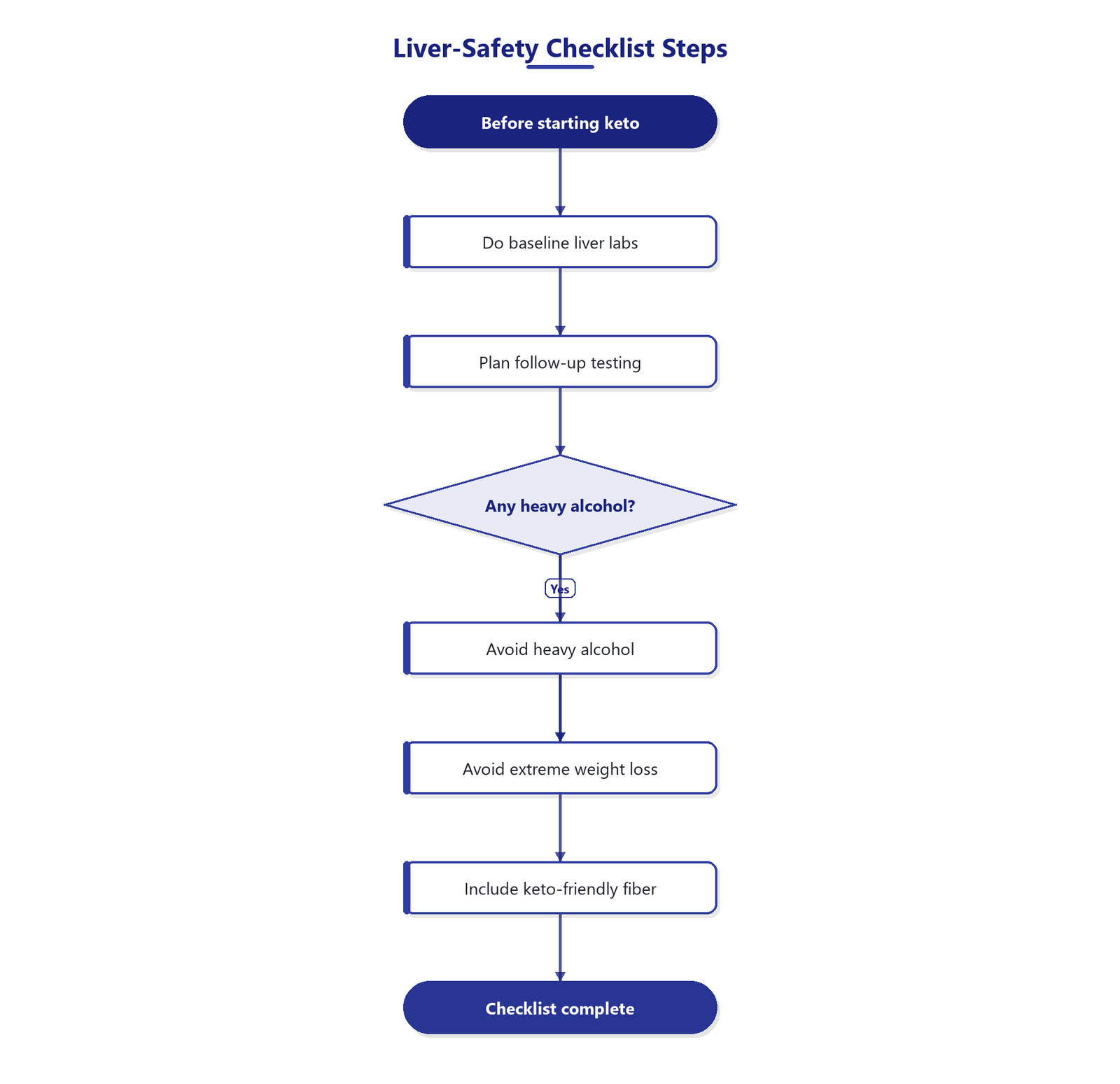
– [ ] Plan follow-up testing: recheck in ~4–12 weeks depending on baseline risk and whether symptoms occur (confirm the exact timeframe with your clinician)
– [ ] No heavy alcohol during keto
– [ ] Weight loss isn’t extreme (avoid crash diets; aim for a pace your clinician considers appropriate)
– [ ] Fiber included (keto-friendly vegetables/low-carb fiber)
– [ ] Watch symptoms: jaundice, dark urine, persistent abdominal pain (especially right-upper), intense nausea
– [ ] Review meds/supplements with a clinician/pharmacist if unsure (include prescription drugs, OTC acetaminophen use, and all supplements)
Frequently Asked Questions
Is a keto diet bad for your liver?
For most healthy people, a well-formulated ketogenic diet is not inherently “bad for your liver,” and studies on low-carbohydrate diets generally do not show consistent liver harm. However, in rare cases, very high fat intake, rapid weight loss, or underlying metabolic issues can contribute to abnormal liver enzymes or fat accumulation in the liver. If you have existing liver disease, high triglycerides, or elevated ALT/AST, it’s important to talk with a clinician and monitor labs.
How does keto affect liver fat and liver enzymes (ALT/AST)?
Keto can sometimes improve liver fat and insulin resistance because carb restriction may reduce blood glucose and triglyceride levels, which are closely linked to fatty liver. That said, some people experience temporary changes in ALT/AST or worsening markers—often related to how the diet is composed (e.g., high saturated fat) or how quickly weight changes occur. Regular monitoring of liver enzymes and metabolic labs can help you catch issues early.
Why do some people report liver problems while doing keto?
Reported concerns may come from factors such as high saturated fat intake, low fiber, micronutrient gaps, rapid weight loss, or dehydration, all of which can affect lipids and liver metabolism. In addition, “keto-like” diets that are actually very high in processed foods or alcohol can increase liver stress and confound cause-and-effect. People with pre-existing conditions like nonalcoholic fatty liver disease (NAFLD), hepatitis, or gallbladder disease are also more susceptible to complications.
Which keto foods are safest for liver health?
To support liver health on a keto diet, prioritize unsaturated fats such as olive oil, avocado, nuts, seeds, and fatty fish, and include plenty of non-starchy vegetables for fiber and micronutrients. Aim to limit saturated-fat-heavy choices like large amounts of butter, fatty processed meats, and full-fat processed dairy. Staying hydrated and including sources of choline (like eggs) and omega-3s can also help balance fat metabolism, but individual needs vary.
What’s the best way to do keto if you have fatty liver or elevated liver enzymes?
If you have NAFLD or elevated liver enzymes, the “best” approach is usually a medically supervised or dietitian-guided low-carb plan with emphasis on quality fats, adequate protein, and fiber-rich non-starchy vegetables. Avoid extreme, rapid weight loss and minimize alcohol and processed foods, which can worsen liver markers regardless of macronutrients. Ask your clinician about baseline and follow-up labs (ALT/AST, bilirubin, triglycerides) and whether a less aggressive low-carb approach is safer for your specific situation.
📅 Last Updated: October 31, 2026 | Topic: is keto diet bad for your liver | Content verified for accuracy and freshness.
References
- Ketogenic diet
- https://www.niddk.nih.gov/health-information/liver-disease/fatty-liver-disease/nafld-nonalcoholic-fatty-liver-disease
- ketogenic diet liver – Search Results – PMC
- ketogenic diet nonalcoholic fatty liver disease – Search Results – PMC
- https://pubmed.ncbi.nlm.nih.gov/?term=ketogenic+diet+liver+enzymes+ALT
- https://pubmed.ncbi.nlm.nih.gov/?term=ketogenic+diet+nonalcoholic+fatty+liver+disease
- https://pubmed.ncbi.nlm.nih.gov/?term=ketogenic+diet+hepatitis
- https://scholar.google.com/scholar?q=ketogenic+diet+bad+for+your+liver Google Scholar
- https://scholar.google.com/scholar?q=ketogenic+diet+nonalcoholic+fatty+liver+disease Google Scholar
- https://scholar.google.com/scholar?q=ketogenic+diet+liver+injury+hepatitis Google Scholar


Pingback: Can Keto Cause Fatty Liver? What to Know - Keto Model
Pingback: Are Keto Gummies Safe? Risks, Ingredients, and Who Should Avoid Them - Keto Model