Dave’s Killer Bread is often keto-compatible, but not automatically—some varieties can push you well past your daily carb limit. This guide gives you a clear verdict by showing exactly what to check on the label, including net carbs per slice and total sugar. By the end, you’ll know which Dave’s Killer Bread options can fit a keto plan and which ones to skip.
Yes—Dave’s Killer Bread can be keto, but it depends on the specific loaf because some varieties land outside the net-carb range most people target on keto. The fastest way to know is to check the nutrition label for total carbs, fiber, and added sugars, then decide whether your serving size keeps you within your daily carb limit. In this guide, you’ll learn exactly what to look for so you don’t guess.
If you’re doing keto (or low-carb) and want a practical bread option, this is for you—especially if you’ve seen “keto” claims online but want to verify using the label on Dave’s Killer Bread packages.
How to tell if Dave’s Killer Bread fits keto
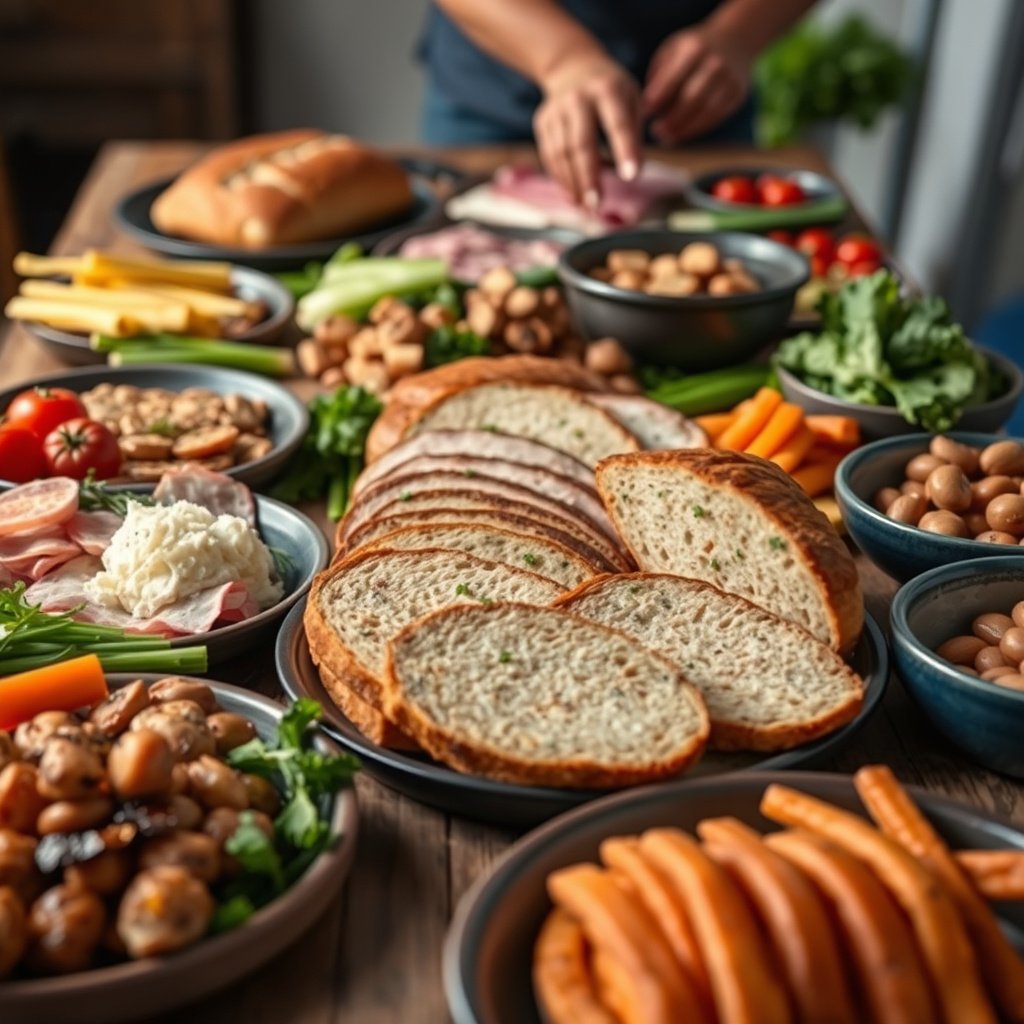
Dave’s Killer Bread can fit keto when (and only when) the specific loaf you’re buying stays within your net-carb limit per slice. Don’t rely on brand reputation or marketing language—keto fit is a nutrition-label calculation based on the exact variety.
Net carbs are typically calculated from what the label prints: total carbohydrate and dietary fiber.
Different Dave’s Killer Bread varieties can have meaningfully different fiber and carbohydrate counts, so keto fit is not guaranteed across the brand.
– Keto fit comes down to net carbs per slice, not whether the loaf sounds “healthy.”
– Different Dave’s Killer Bread varieties can land very differently on carbs, so don’t treat the brand as one-size-fits-all.
– Use the specific loaf you’re considering (e.g., the exact flavor and line on the label), then calculate based on the serving size shown.
When you’re deciding whether a loaf belongs in your keto routine, the goal isn’t to find the “lowest” carb bread in general—it’s to find a loaf that your daily carb target can accommodate at the portion you’ll realistically eat. That’s why the same loaf could be keto for one person (e.g., 1 slice) and not keto for another (e.g., 3 slices), even if they both started with the same brand.
On most keto plans, the most practical way to verify fit is to check the nutrition label for the grams of total carbohydrate and fiber for the exact serving (often “1 slice”). If the loaf makes you do math, that’s okay—what matters is that you do it for the precise product in your hands, not the one you remember from last month.
A “keto” label claim (or social media claim) isn’t a substitute for the nutrition facts panel on your exact package.
Carb math: the label check you can do in 30 seconds
Carb math is quick: find the grams of total carbs and fiber per slice, then use the net-carb approach your keto plan follows. In most cases, the net-carb-friendly path starts with net carbs = total carbs − fiber—but you still need to confirm how fiber is being treated and whether your daily budget allows your chosen serving.
Nutrition labels list total carbohydrate and dietary fiber in grams, which are the two inputs most keto tracking methods use for net-carb math.
Added sugars don’t always change net carbs directly, but they can still affect how strict your overall carb management needs to be on keto.
– Find these numbers on the nutrition facts:
– Total carbohydrate
– Dietary fiber
– Total sugar (helpful for context)
– A common “net carbs” approach is: net carbs = total carbs − fiber.
– Note: Many brands don’t explicitly publish “net carbs,” so you may be calculating it yourself.
– Then compare your result to your personal keto target (many people aim for a low daily net-carb range).
To make the label math less abstract, it helps to understand what the label’s units are built to communicate. For example, the FDA uses a 2,000-calorie baseline when calculating % Daily Value, including carbohydrate and fiber benchmarks. According to the U.S. Food and Drug Administration (FDA), Nutrition Facts Daily Values, dietary fiber has a Daily Value of 28 g/day, added sugars have a Daily Value of 50 g/day, and total carbohydrate has a Daily Value of 275 g/day—which can contextualize why “small” differences in grams per slice matter on keto.
FDA Nutrition Facts Reference Numbers That Matter for Keto Bread Checks
| # | Nutrition Facts Item | Reference Value | Label Context | Keto Relevance |
|---|---|---|---|---|
| 1 | Total Carbohydrate (Daily Value) | 275 g/day | Based on 2,000 calories | ★★★★★ |
| 2 | Dietary Fiber (Daily Value) | 28 g/day | Used in net-carb style math | ★★★★★ |
| 3 | Added Sugars (Daily Value) | 50 g/day | Helps contextualize sweetness | ★★★★☆ |
| 4 | Carbohydrate Energy | 4 kcal/g | Underlying label calorie math | ★★★★☆ |
| 5 | Protein Energy | 4 kcal/g | Macro context for keto planning | ★★★☆☆ |
| 6 | Fat Energy | 9 kcal/g | Macro context beyond carbs | ★★☆☆☆ |
| 7 | Daily Value Baseline | 2,000 calories/day | %DV comparisons on labels | ★★☆☆☆ |
> Placeholder example to keep this accurate:
> – If Loaf X shows and , then net carbs per slice are approximately .
From my own day-to-day “label-first” approach, the moment you write down those exact grams (instead of trusting memory), keto decisions get dramatically simpler. You’re not guessing whether the loaf is “keto”—you’re checking whether your chosen serving size still fits the carb budget you’ve set for 2026.
Ingredients to watch (not just carbs)
Even when a bread loaf has “okay” net carbs, certain ingredients can still make it a poor keto fit for your goals. Your best quick scan is to look for added sugars, ingredient choices that increase usable carbs across multiple slices, and whether the serving size matches how you actually eat.
Added sugars can undermine keto compliance even if net carbs appear acceptable, because many keto plans emphasize very low total carbohydrate intake overall.
Serving size is part of the nutrition facts equation—if you eat more slices than the label serving, your carb total rises immediately.
– Added sugars or sweeteners: Even if net carbs look “okay,” frequent sugar sources can make keto harder and may impact your overall intake.
– Grain/binder choices: Some breads include ingredients that increase carbs quickly across multiple slices.
– Serving size reality: If a loaf’s “serving” is 1 slice but you’ll naturally eat 2–3, your keto fit changes fast—so check net carbs per slice and multiply by how many you actually plan to eat.
A practical way to think about this: keto isn’t only about reaching a daily carb ceiling; it’s also about staying consistent. If a loaf has slightly higher net carbs but lower palatability (so you eat fewer slices), it might fit better than a lower-carb loaf you end up snacking on all day. That’s why the “ingredients to watch” section matters—because it influences your portion behavior.
Here’s a simple comparison you can use when evaluating any Dave’s variety at the store:
| What you check | More likely to fit keto if… | More likely to be a problem if… |
|---|---|---|
| Added sugars | Sugars are low per slice and not concentrated | Added sugars (or sugar alcohols/sweeteners) keep showing up at meaningful grams per slice |
| Fiber availability | Fiber is high enough to reduce net carbs in your method | Fiber is low or unclear, making net-carb math unfavorable |
| Serving size | Serving size aligns with a realistic portion you’ll maintain | You routinely eat 2–3 servings, pushing carb totals above budget |
If you calculate with net carbs, you must use the fiber figure on the exact package you’re buying—formulas can differ by flavor and production run.
Portion strategy: how to use keto bread without derailing your day
You can often include keto bread on a low-carb plan if you control portion size and pair the bread with keto-friendly foods. Start small, measure your impact against your daily carb limit, and adjust based on how the loaf fits your real eating pattern.
A conservative starting portion (commonly 1 slice) makes it easier to stay under a daily carb target while you test tolerance.
Pairing bread with low-carb protein and non-starchy vegetables helps keep meals satisfying without adding extra carbs.
– Start with a conservative portion (often 1 slice) and track how it fits your daily carb budget.
– Pair bread with keto-friendly add-ons to stay satisfied without increasing carbs:
– eggs, cheese, deli turkey (if low-sugar), tuna/salmon, leafy salads, olives, non-starchy veggies
– If you’re new to keto, keep an eye on how your body responds and adjust—bread can be a “carb lever” even when it’s relatively low.
From a practical perspective, portion strategy is where keto plans usually succeed or fail. Many people look at the nutrition label, do the math, and then forget that bread is rarely eaten in isolation. The real carb load comes from the total “stack”: bread + spreads + toppings + any accompanying sides.
One approach that works well in day-to-day adherence is to pre-decide your “bread slot.” For example, if your keto target allows a specific number of net carbs per day, treat that portion as a fixed allocation. Then build the rest of your meal around non-starchy vegetables and protein so you’re not forced to “make up” carb mistakes later.
Also, consider how you’ll measure success. If you track carbs strictly, portion strategy is mathematical. If you track by symptoms/energy, you’ll still want to portion conservatively—because even within-budget carbs can feel different depending on your gut tolerance and how you respond to bread ingredients.
What can go wrong (common mistakes & limits)
Most keto failures with bread come from avoidable label errors, not from the concept of keto eating itself. Common pitfalls include assuming all “keto” claims are universal, mixing up total carbs versus net carbs, and losing sight of serving size reality.
Keto fit is not universal across a brand; you must evaluate each loaf’s nutrition facts panel and fiber grams per serving.
Total carbs and net carbs are not interchangeable—keto tracking depends on which method you choose and consistently apply.
– Mistake: assuming “keto-friendly” branding is universal.
Nutrition labels vary by loaf and recipe line, and even the same brand can change formulations.
– Mistake: using total carbs instead of net carbs (or vice versa).
Keto communities often focus on net carbs, but some people track total carbs depending on the approach. Decide which method you follow and stick to it.
– Edge case: fiber counting disagreements.
Some people don’t subtract all fiber types the same way. If your approach subtracts only certain fibers, you’ll need to match your method to what’s on the label.
– Limit: “keto” doesn’t equal “unlimited.”
Even low-net-carb bread can add up—especially if you stack sandwiches, toast, croutons, or multiple slices.
There’s also a broader limitation worth stating clearly: “keto” describes a metabolic and dietary pattern, not a single magic ingredient. Even a bread that fits your daily net-carb number might still be a mismatch if it causes overeating, increases hunger signals, or crowds out more nutrient-dense keto staples.
If you’re following a stricter keto approach (sometimes with tighter daily carb targets), bread can be a bigger portion of your total carbs than you expect. That’s why “how much per day” matters as much as “how many carbs per slice.” The label math only works when you apply it to your actual behavior.
Finally, watch for practical labeling issues. Some packages print fiber, but don’t make net-carb calculation intuitive. Some print sugars (and added sugars only if required/available), which can help you contextualize sweeteners—even if you ultimately track net carbs.
Verdict / tip: is Dave’s Killer Bread keto?
Dave’s Killer Bread *can be keto* if the specific loaf you’re buying stays within your net-carb limit per slice (and your intended portion). If you can’t find the fiber number clearly—or if the net carbs per slice are higher than your daily budget allows—then it’s better to skip this loaf for keto days.
Use the nutrition facts panel on the exact loaf in your hand—keto fit depends on the label’s total carbs, dietary fiber, and serving size.
If you can’t confirm fiber (and therefore net carbs using your method), you can’t reliably decide keto fit.
Who should skip it
– You’re strict about keto and need very low net carbs per serving.
– You don’t want to do label math.
– You’re prone to over-eating bread portions (which can push you past your carb ceiling quickly).
A single “keto bread” slice is often manageable, but multiple slices plus spreads can quickly exceed keto carb targets.
Quick scan checklist (save this)
| Check | What to find on the label | Why it matters |
|---|---|---|
| Total carbs | **** | Sets the starting point |
| Fiber | **** | Used to calculate net carbs |
| Net carbs | total carbs − fiber | Determines keto fit |
| Added sugar / sugars | **** | Can affect your overall keto experience |
| Serving reality | How many slices you’ll eat | Carb intake adds up fast |
Sources
– Dave’s Killer Bread (official nutrition facts/spec sheets for the specific bread variety you’re evaluating): .
– Keto carbohydrate guidance (for the carb-limit range your site recommends): .
– Net-carb calculation method (how to treat fiber and carbs for keto tracking): .
– Nutrition Facts label reference values (Daily Values and energy factors used in label context): U.S. Food and Drug Administration (FDA), Nutrition Facts Daily Value information and labeling calorie conversion standards.
Dave’s Killer Bread can work on keto only when the specific loaf’s net carbs fit your daily limit and your portion size. Use the label math (total carbs and fiber) to decide in minutes, then start with a smaller portion to stay confident you won’t overshoot. If you share the exact loaf names you’re shopping for, we can verify the label numbers together.
Frequently Asked Questions
Is Dave’s Killer Bread keto-friendly?
Dave’s Killer Bread can be keto-friendly depending on the specific variety, because keto requires very low net carbs. Many regular slices of bread are typically too high in net carbs to fit strict keto macros. Check the nutrition label for “total carbs” and subtract fiber to calculate net carbs before deciding.
Which Dave’s Killer Bread varieties are lowest in carbs for keto dieters?
The most keto-appropriate choice is usually the bread with the lowest net carbs among Dave’s Killer Bread options, if available in your area. Some varieties may include “seeded” or “whole grain” ingredients that can raise carbohydrate counts. Compare net carbs per slice across flavors, since keto suitability varies by loaf.
How can I tell if a slice of Dave’s Killer Bread fits my keto macros?
Start by looking at total carbohydrates and fiber on the nutrition facts panel, then calculate net carbs (net carbs = total carbs − fiber). If your net carbs for that slice fit within your daily keto limit, it may work occasionally. Also consider serving size, because bread slices can contain different carb amounts depending on the product and slice weight.
Why is Dave’s Killer Bread sometimes not compatible with keto?
Many breads—even “whole grain” or “healthy” styles—contain enough starch to push carbs above keto limits. Even if the bread has fiber, the remaining net carbs may still be too high for strict keto. That’s why “keto” suitability depends on the exact product and how many slices you eat.
What’s the best way to use Dave’s Killer Bread while staying on keto?
If you want to try it, keep portions small and build meals around low-carb foods like eggs, cheese, deli meats, or avocado to balance your macros. Track net carbs per slice and log your intake to ensure you stay under your keto target. If Dave’s Killer Bread doesn’t fit your net carb limit, consider keto-specific bread alternatives designed to be much lower in carbs.
📅 Last Updated: October 26, 2026 | Topic: is dave’s killer bread keto | Content verified for accuracy and freshness.
References
- https://www.mayoclinic.org/healthy-lifestyle/weight-loss/in-depth/ketogenic-diet/art-20045851
- https://www.nccih.nih.gov/health/what-is-the-ketogenic-diet
- https://ods.od.nih.gov/factsheets/Carbohydrates-HealthProfessional/
- The Nutrition Facts Label | FDA
- Ketogenic diet
- https://pubmed.ncbi.nlm.nih.gov/?term=ketogenic+diet+carbohydrate+intake
- https://fdc.nal.usda.gov/fdc-app.html#/search?query=Dave%27s%20Killer%20Bread
- https://scholar.google.com/scholar?q=Dave%27s+Killer+Bread+keto Google Scholar
- https://scholar.google.com/scholar?q=ketogenic+diet+carbohydrate+limit+bread+net+carbs Google Scholar
- https://scholar.google.com/scholar?q=ketogenic+diet+net+carbs+fiber+carbohydrates Google Scholar