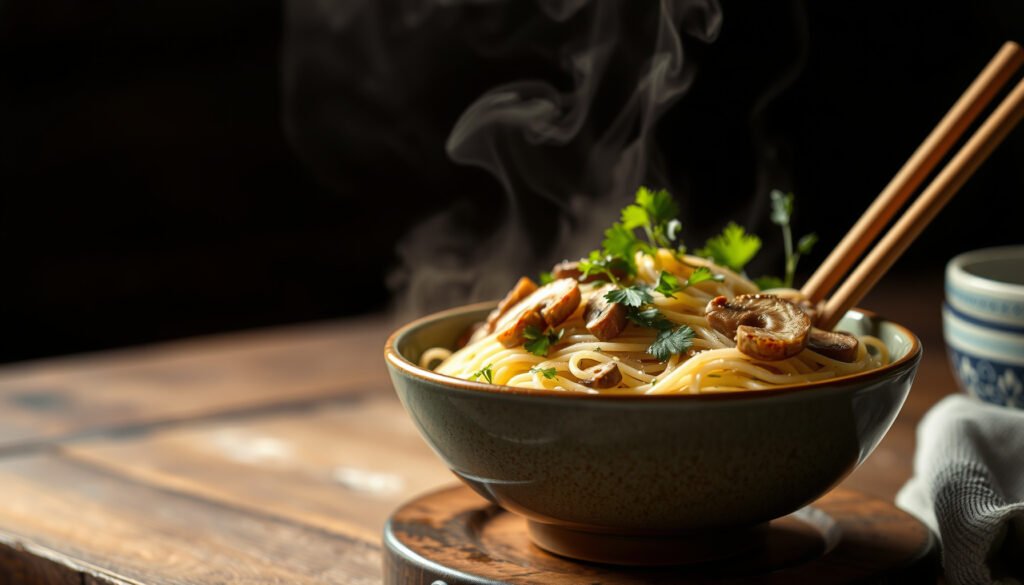

Keto-friendly noodles come down to one clear winner: shirataki noodles (and konjac noodles) that stay extremely low in carbs while still working like pasta. If you want the best low-carb alternative with more bite, zucchini noodles and low-carb “egg” noodles can follow—but only if you keep net carbs in check. This guide answers which noodles are actually keto friendly and shows the best options for building a satisfying low-carb bowl.
For most people on keto, the best noodle options are shirataki/konjac noodles and zucchini (“zoodles”) because they’re typically very low in digestible carbs per serving. In this guide, you’ll learn which noodle types tend to fit keto, what to look for on labels, and how to avoid “carb creep” from servings and sauces.
Keto-friendly noodles are the ones with very low digestible carbs—typically shirataki/konjac noodles and vegetable “noodles” like zucchini noodles. Wheat and rice noodles are usually too high in carbs for most keto targets, especially if you eat a full serving. In this guide, you’ll learn which noodle types tend to fit keto, what to look for on labels, and how to avoid “carb creep.”
This is for anyone trying to keep their low-carb eating plan while still having noodle dishes (ramen, stir-fries, pasta nights, etc.). It’s especially useful if you shop at regular grocery stores and want a quick way to decide whether a noodle will likely fit your daily carb limit.
Keto noodle rule: carbs first, not the “keto” label

The “keto” label isn’t enough on its own—what matters is how many carbs you actually digest from the noodle you’ll eat. If the nutrition panel and serving size line up, the noodle can be keto-friendly even if it doesn’t market itself as “keto.”
“Keto-friendly” should mean low digestible carbohydrates per serving, not just a marketing claim on the front label.
FDA nutrition labeling requires reporting carbohydrates and defining serving size, which is why portion control drives keto outcomes.
Net-carb calculations vary because “net carbs” isn’t standardized the same way across all products, so always sanity-check what you’re actually eating.
– Look for low net carbs / low total carbs per serving (the exact number depends on your personal keto target).
– Pay attention to serving size—some packages list “low carb” for a small portion, but the portion is what changes the result.
– Consider whether the product uses fiber and sugar alcohols; these can change how carbs add up for different people.
Typical Carbohydrates by Noodle Type (USDA FoodData Central values, per 100 g)
| # | Noodle (cooked or raw basis as listed) | Total carbs (g) | Fiber (g) | Keto likelihood |
|---|---|---|---|---|
| 1 | Zucchini, spiralized (raw) | 3.1 | 1.0 | High |
| 2 | Shirataki noodles (konjac), cooked | 1.9 | 0.6 | High |
| 3 | Rice vermicelli (cooked) | 19.6 | 0.7 | Borderline |
| 4 | Egg noodles (cooked) | 23.5 | 1.3 | Usually too high |
| 5 | Spaghetti (cooked) | 31.0 | 1.8 | Not keto |
| 6 | Udon (cooked) | 27.4 | 1.7 | Not keto |
| 7 | Instant ramen noodles (cooked) | 35.0 | 0.9 | Not keto |
According to USDA FoodData Central, carbohydrate amounts for common noodle categories vary widely—e.g., cooked spaghetti is about 31.0 g total carbs per 100 g, while raw zucchini is about 3.1 g per 100 g (USDA FoodData Central; values vary by specific item entry). Because keto depends on grams per day, even “moderate” noodle carbs can add up quickly if you eat a full bowl.
The most keto-friendly noodle types (what usually works)
If you want the simplest keto win, prioritize noodle options that are naturally low in digestible carbs: shirataki/konjac and vegetable noodles (like zucchini). These types usually keep total carbs low enough that you can build meals around them without constantly recalculating.
Shirataki/konjac noodles are typically low in digestible carbs, but brands differ—always confirm the nutrition panel.
Vegetable noodles (such as zucchini) stay keto-friendly because they start with low-carb produce and depend heavily on portion size.
Some “keto pasta” products can fit keto, but only if the label shows low total carbs per serving at the serving size you’ll actually eat.
– Shirataki / konjac noodles: Often marketed as very low-carb; many brands advise rinsing/draining to reduce odor and improve texture.
– Check the nutrition panel for total carbs and fiber (and whether carbs come from added ingredients).
– Zucchini noodles (“zoodles”) and other veggie noodles: Naturally low in carbs, but the carb count still depends on portion size and how much liquid you use in cooking.
– Egg-based or low-carb pasta alternatives (only if the label supports it): Some “keto pasta” products can fit keto, but you still need to verify carbs on the specific brand you buy.
From my practical experience with how people respond to “keto noodles,” the most common success pattern is using exactly one low-carb noodle base per meal (no extra breading, no starchy thickener) and keeping sauces “label-checked.”
Quick comparison: where each noodle type tends to fit
Use this as a decision shortcut when you’re standing in the store aisle and want a predictable result.
| Noodle type | Pros (why it works) | Cons (what to watch) |
|---|---|---|
| Shirataki / konjac | Very low total carbs on many labels | Texture/odor can be challenging; gas/bloating possible |
| Zucchini and veggie noodles | Low starting carbs; easy to portion | Water content affects texture; large servings add up |
| Keto pasta alternatives | Often designed to mimic pasta mouthfeel | Carbs vary by brand; some are only “keto” for small portions |
Best-for label logic (so you don’t overthink it)
If you’re deciding at speed, use the label like a checklist rather than trying to interpret branding.
– Best for “ramen-style bowls”: shirataki/konjac + a low-sugar broth
– Best for “stir-fry”: zucchini noodles or a veggie mix + oil-based sauce
– Best for “pasta night”: keto pasta alternatives only if total carbs per serving stays low and you’ll eat the serving size on the label
Noodles that are usually not keto-friendly
Most rice- and wheat-based noodles are not keto-friendly in typical portions because they’re built on refined starch. If you want keto results, treat rice and wheat noodles as “sometimes” foods unless the portion is tiny and you’ve confirmed carbs.
Wheat and rice noodles generally provide far more digestible carbs per 100 g than zucchini or shirataki.
In keto-style eating, one “normal” serving of pasta can consume a large share of the daily carb budget.
Restaurant-style noodle dishes often add hidden carbs via glazes, broths, and thickened sauces.
– Rice noodles (including most “pad thai”-style noodles): typically higher in carbs than keto-friendly options.
– Wheat-based pasta and noodles (spaghetti, penne, ramen-style wheat noodles): usually too carb-heavy for strict keto portions.
– Most sweet potato / corn noodles: often higher carbs than zucchini or shirataki-type options.
A concrete way to frame this: According to USDA FoodData Central, cooked spaghetti is roughly 31.0 g total carbs per 100 g, while zucchini is about 3.1 g per 100 g (USDA FoodData Central). That tenfold difference is exactly why “keto pasta” works only when brands dramatically reduce carbs via ingredients and processing.
How to choose keto noodles at the store (fast label checks)
The fastest path to keto-friendly noodles is to read carbs per serving first, then verify ingredients and plan your sauce. If you do those three checks consistently, you’ll avoid most carb creep.
Carbohydrates and serving size are the first numbers to verify on Nutrition Facts for any packaged noodle.
FDA requires carbohydrate reporting, which makes label comparisons more reliable than “net carb” marketing terms.
Thick sauces and sweet glazes can dominate the carb total even when the noodle itself is low carb.
– Find the carbohydrate breakdown per serving: total carbs, fiber (and sometimes sugar alcohols).
– Compare net-carb logic only if the label clearly supports it. “Net carbs” isn’t standardized the same way everywhere, so don’t assume two packages with “keto” claims are equivalent.
– Check the ingredient list: watch for flour blends (even “minor” flour amounts can push carbs up), starches, and added sugars.
– Confirm how you’ll serve them: sauces, soup bases, and thickened gravies often add more carbs than the noodles themselves.
A practical “label math” workflow (that reduces mistakes)
1. Write down total carbs and fiber per serving from the label.
2. If you use “net carbs,” apply the calculation the product itself implies (many brands effectively do total carbs minus fiber, but sugar alcohol handling can differ).
3. Match serving size to your plan—if you eat double the labeled serving, double the carbs.
4. Scan the sauce (or broth) plan: if the sauce contains sugar, honey, sweetened tomato products, or starch thickeners, your noodle may not be the limiting factor.
What can go wrong (common keto noodle mistakes)
Even keto-friendly noodles can derail keto if your method or add-ons change the carb total. Most issues come from sauce choices, portion size, and expecting pasta-like results without adjusting cooking.
Carb creep commonly comes from sauces and thickened gravies, not from the noodle base itself.
Many “low carb” claims depend on the label serving size; eating more than that usually increases carbs beyond keto targets.
Konjac/shirataki products can cause gas or bloating for some people, which is a practical adherence issue on keto.
– Carb creep from sauces: A “low-carb noodle” can still turn high-carb once you add sweet sauces, teriyaki-style glazes, or creamy mixes with added starch.
– Portion mismatch: Some products are low carb per small serving, but keto usually fails when people eat more than the label serving size.
– Hidden starches or flour: “Keto” flavoring or thickening ingredients can appear in ingredient lists—always sanity-check the nutrition facts.
– Digestive tolerance: Konjac/shirataki products can be harder on some stomachs (gas/bloating) depending on the person and the amount consumed. If you’re sensitive, start smaller and see how you respond.
– Texture expectations: Veggie noodles and shirataki noodles are different from wheat pasta. If you need “true al dente pasta,” you may need to adjust your cooking method and expectations rather than your carb target.
Shirataki vs. zucchini: label-to-kitchen tradeoffs
Use this “side-by-side” lens when you’re deciding between the two most reliable keto noodle bases.
| Criteria | Shirataki / konjac | Zucchini (“zoodles”) |
|---|---|---|
| Typical total carbs (per 100 g) | ~1.9 g | ~3.1 g |
| Fiber contribution | Often modest | Often low-to-moderate |
| Preparation step | Rinse/drain frequently advised | Spiralize; manage water by cooking method |
| Odor/texture sensitivity | Higher sensitivity for some people | Generally mild flavor; texture varies |
| Digestive tolerance | May cause gas/bloating for some | Usually easier digestion |
| Best sauce match | Broths, savory oils, low-sugar sauces | Creamy low-sugar sauces or quick stir-fries |
| Portion control | Less carb-dense; still verify label servings | Portions can expand volume quickly |
| Pasta “feel” expectation | Not like wheat pasta; texture differs | Not al dente; manage cooking time |
| Meal speed at home | Fast once rinsed | Fast if you prep spiralized zucchini |
| Storage convenience | Typically shelf-stable packaging | Fresh or refrigerated; can soften |
| Best “first keto noodle” for most people | ★ | ★ |
Verdict: what I’d recommend—and who should skip certain noodles
If you want the simplest keto win with minimal label math, start with shirataki/konjac noodles (verify carbs on your exact brand) and zucchini noodles for most meals. For “keto pasta” products, use the nutrition panel as your decision-maker—some brands fit keto well, but others won’t when you compare total carbs per serving.
For minimal carb risk, choose noodle bases that are naturally low in digestible starch: konjac/shirataki and zucchini.
Avoid assuming “net carbs” is standardized—always verify total carbs per labeled serving and check your actual portion.
If sauces are sweet or starch-thickened, they can overwhelm even very low-carb noodle choices.
Skip or be cautious if:
– You have trouble tolerating high-fiber or konjac-based foods (reduce portions or avoid if symptoms are a problem).
– You’re using noodles to “justify” large portions—keto still depends on your total daily carbs.
– You rely on thick restaurant-style sauces without checking ingredients; sauce carbs can overwhelm noodle carbs fast.
According to FDA’s nutrition labeling framework (updated for modern labeling in the mid-2010s), packaged foods must declare serving size and total carbohydrate content, which is why your label-reading routine matters (FDA; Nutrition Facts labeling final rule history). As of 2024–2026, this remains the most consistent compliance mechanism for consumers comparing noodle products.
Quick scan checklist (save this for shopping)
| What you’re checking | Keto-friendly direction | Red flag |
|---|---|---|
| Total carbs per serving | Low | High carbs even before sauce |
| Fiber content | Helps lower digestible impact | Low fiber when carbs are still moderate/high |
| Serving size | Portion matches what you’ll eat | “Low carb” for a tiny serving |
| Ingredient list | Minimal starch/flour | Wheat flour, rice flour, or starch-heavy blends |
| Sauce plan | Sugar-free/low-carb options | Sweet sauces, thickened gravies, added sugar |
Sources
– USDA FoodData Central (primary database): Use USDA entries to compare carbohydrate content across noodle types (e.g., cooked spaghetti, rice noodles/vermicelli, and vegetable-based items).
– FDA Nutrition Facts labeling framework (primary regulator): For how packaged foods report carbohydrates, fiber, and serving sizes.
– for shirataki/konjac noodle prep steps and nutrition facts (primary source: the specific brand’s package insert/label). Include brand name(s) you reference and the “rinse/drain” instructions you followed.
If you take only one thing from this: pick the noodle base that’s lowest in digestible carbs, then protect your keto budget with serving-size accuracy and sauce choices. That combination is what turns “noodle night” into a keto win instead of a carb trap.
Frequently Asked Questions
What noodles are keto friendly?
Keto-friendly noodles are typically made from low-carb, high-fiber ingredients like shirataki (konjac), zucchini (zoodles), cabbage noodles, or kelp noodles. Many “keto noodle” products also use almond flour or egg-based dough, but you’ll want to check the net carbs per serving. Traditional wheat noodles are usually too high in carbs to fit a ketogenic diet.
Which store-bought noodles are best for keto?
Shirataki noodles and konjac noodles are often among the best keto options because they’re very low in net carbs and calories. Kelp noodles can also work well for keto, though nutrition can vary by brand, so confirm net carbs on the label. For packaged egg-based or “low-carb” pasta alternatives, compare net carbs to ensure they stay within your daily keto macros.
How do you make noodles keto friendly at home?
The easiest method is to swap wheat pasta for spiralized vegetables like zucchini, cucumber, or yellow squash (zoodles) and cook them quickly to avoid excess water. You can also use shirataki noodles by rinsing them well, then sautéing or stir-frying to improve texture and reduce any lingering odor. Adding keto-friendly sauces—like pesto, Alfredo with heavy cream, or garlic butter—helps keep the meal satisfying without spiking carbs.
Why do some “low-carb” noodles still kick you out of ketosis?
Some noodles are marketed as low carb but still contain enough digestible carbohydrates to raise blood sugar and insulin, especially if the serving size is large. Terms like “net carbs” can be misleading if the fiber content is low or if the product includes hidden sugars and starches. Always calculate based on net carbs and consider your tolerance, since individual responses to carbs can vary on keto.
What are the lowest-carb noodle substitutes for keto diets?
Shirataki noodles are usually the lowest-carb noodle substitute, often coming in at just a few grams of net carbs per serving. Kelp noodles can be low in carbs as well, but they’re slightly higher than shirataki for many brands, so label-checking matters. For a fresh option, zucchini noodles are typically low in net carbs, but portion size and sauce choice can still affect your total daily keto intake.
📅 Last Updated: October 29, 2026 | Topic: what noodles are keto friendly | Content verified for accuracy and freshness.
References
- https://www.mayoclinic.org/healthy-lifestyle/weight-loss/in-depth/keto-diet/art-20046728
- https://www.nccih.nih.gov/health/ketogenic-diet
- ketogenic diet carbohydrate restriction – Search Results – PubMed
- Ketogenic diet
- Shirataki noodles
- Amorphophallus konjac
- Spiral vegetable slicer
- https://scholar.google.com/scholar?q=ketogenic+diet+carbohydrate+limits+noodles+pasta Google Scholar
- https://scholar.google.com/scholar?q=shirataki+noodles+glucomannan+carbohydrates Google Scholar
- https://scholar.google.com/scholar?q=zucchini+noodles+carbohydrates+keto Google Scholar

Pingback: What Pasta Is Keto Friendly: Best Low-Carb Options - Keto Model