On a keto diet, you can enjoy high-quality proteins like beef, poultry, and fish, along with healthy fats such as avocado oil and butter. Non-starchy vegetables like spinach and zucchini are excellent choices too. Don’t forget about snacking on nuts, seeds, or cucumber with guacamole. Dairy options, particularly full-fat varieties, can enhance your meals. Just be sure to keep an eye on carb counts in all foods. There’s plenty more to explore about maintaining a balanced keto lifestyle.
Understanding the Keto Diet Basics

While many diets promise quick results, the keto diet stands out for its unique approach to metabolism and energy use. By considerably reducing carbohydrate intake and increasing fats, your body enters a state called ketosis, where it burns fat for fuel instead of glucose. Despite its popularity, several keto misconceptions persist, such as the idea that it’s merely a fad diet. In reality, keto’s roots trace back to the 1920s as a treatment for epilepsy. Understanding these basics can empower you to make informed choices. It’s important to approach the keto diet with an open mind, recognizing its historical context and potential benefits, while also being aware of the challenges it may present. Embrace this journey toward a healthier lifestyle!
Protein Sources for Keto
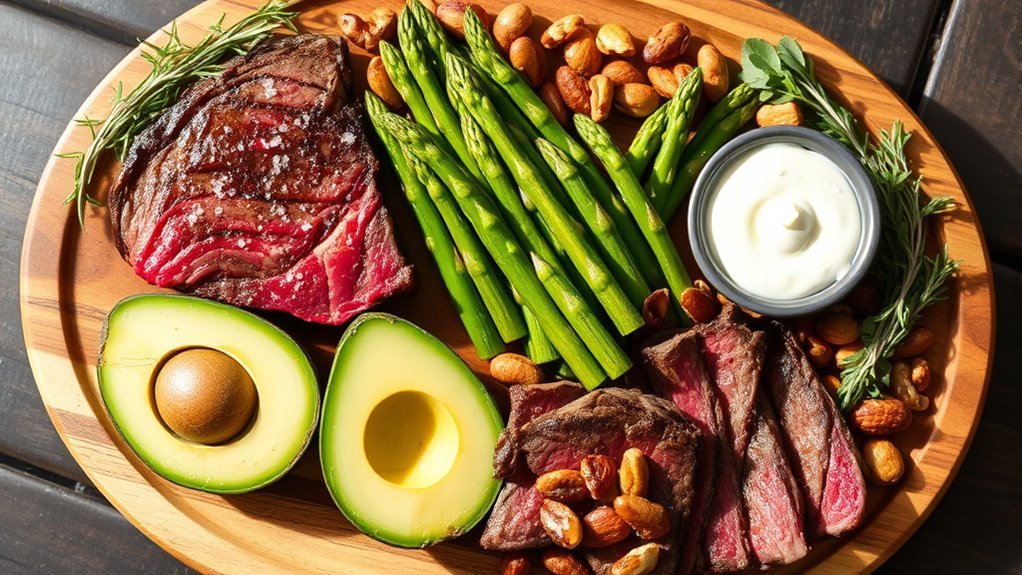
When following a keto diet, selecting the right protein sources is essential for maintaining your macronutrient balance. You’ll want to focus on high-quality animal proteins like beef, poultry, and fish, while also considering plant-based options such as tofu and tempeh for variety. Each protein source offers unique benefits, so it’s important to incorporate a mix that aligns with your dietary preferences and nutritional needs.
Best Animal Proteins
As you begin a keto diet, selecting the right animal proteins is essential for meeting your nutritional needs while maintaining ketosis. Here’s a list of some excellent options to evaluate:
| Protein Source | Benefits | Preparation Ideas |
|---|---|---|
| Grass Fed Beef | High in omega-3s, nutrient-rich | Grilled or stir-fried |
| Wild Caught Salmon | Packed with healthy fats | Baked or smoked |
| Organic Chicken | Lean protein, versatile | Roasted or sautéed |
| Pasture Raised Eggs | Rich in vitamins | Scrambled or boiled |
| Pork Belly | Flavorful, high in fats | Slow-cooked or fried |
| Lamb Chops | Nutrient-dense | Grilled or pan-seared |
| Turkey Breast | Lean, low-fat protein | Roasted or in salads |
| Bison Burgers | Low-fat, high in iron | Grilled or in patties |
Incorporating these choices can enhance your keto journey!
Plant-Based Options
For those following a keto diet, it’s not just animal proteins that can help you stay in ketosis; plant-based options also offer valuable protein sources to contemplate. You can include keto legumes like black soybeans and lentils, which are lower in carbs compared to their traditional counterparts. Other great plant-based proteins include hemp seeds, chia seeds, and nutritional yeast, providing essential amino acids without derailing your carb count. Remember to monitor your portion sizes, as some plant-based proteins can be higher in carbs. Incorporating these options allows you to enjoy a diverse diet while still maintaining your keto lifestyle. Embracing plant-based proteins not only enhances your meals but also supports a sustainable approach to eating.
Healthy Fats to Incorporate

Incorporating healthy fats into your keto diet is essential, especially since these fats serve as the primary source of energy in a low-carb lifestyle. Healthy fats not only keep you satisfied but also support overall health. Here are some great options to evaluate:
| Healthy Fats | Benefits | Usage Ideas |
|---|---|---|
| Avocado Oil | Rich in monounsaturated fats | Dressings, frying, baking |
| Coconut Butter | Provides medium-chain fats | Spreads, smoothies |
| Olive Oil | High in antioxidants | Dipping, sautéing |
Low-Carb Vegetables
When you’re following a keto diet, incorporating low-carb vegetables is essential for maintaining nutritional balance. These veggies not only provide vitamins and minerals but also offer a variety of cooking options to keep your meals interesting. Let’s explore the best low-carb choices, their nutritional benefits, and some useful preparation tips.
Best Low-Carb Choices
While following a keto diet, choosing the right low-carb vegetables can greatly impact your success and overall health. When you’re grocery shopping, focus on non-starchy options like spinach, kale, broccoli, and zucchini. These veggies are not only low in carbs but also packed with essential nutrients, making them excellent choices for keto meal planning. You might also consider cauliflower, which can be a versatile substitute for grains and rice. Remember, incorporating a variety of colors and types enhances your meals and keeps things interesting. By prioritizing these low-carb vegetables, you’ll enjoy delicious meals while staying within your carb limit, allowing you the freedom to thrive on your keto journey.
Nutritional Benefits Overview
Choosing low-carb vegetables not only supports your keto journey but also offers a range of nutritional benefits that can enhance your overall well-being. These veggies are packed with nutrient density, providing essential vitamins and minerals while keeping carbs low. Here are some key benefits:
- Low in Calories: They’re great for maintaining a calorie deficit.
- High in Fiber: Supports digestive health and helps you feel full longer.
- Rich in Antioxidants: Combat oxidative stress and promote cellular health.
- Metabolic Advantages: Help stabilize blood sugar levels, contributing to sustained energy.
Incorporating these low-carb options into your diet can empower you to make healthier choices while enjoying the freedom of a varied meal plan.
Cooking Preparation Tips
In order to make the most of low-carb vegetables in your meals, it’s essential to reflect on effective cooking techniques that preserve their taste and nutritional value. Utilizing proper methods during meal prep can enhance flavor while keeping carbs low. Here are some cooking techniques to evaluate:
| Cooking Technique | Description | Best Vegetables |
|---|---|---|
| Steaming | Retains nutrients well | Broccoli, Spinach |
| Sautéing | Quick and flavorful | Zucchini, Bell Peppers |
| Roasting | Brings out natural sweetness | Cauliflower, Asparagus |
| Blanching | Preserves color and crunch | Green Beans, Brussels Sprouts |
| Grilling | Adds smoky flavor | Eggplant, Mushrooms |
Experiment with these methods to enjoy your low-carb veggies, and you’ll find meal prep becomes more exciting and satisfying!
Keto-Friendly Snacks
What snacks can you enjoy on a keto diet without derailing your progress? Here are some keto snack ideas that are not only delicious but also keep you in ketosis:
- Nuts & Seeds: Almonds, walnuts, and chia seeds are packed with healthy fats and low in carbs.
- Veggies & Dip: Crunchy cucumber or bell pepper slices paired with guacamole or olive oil make a perfect snack.
- Beef Jerky: Look for sugar-free options that provide protein without the carbs.
- Healthy Fat Bombs: These are easy to make and can include ingredients like coconut oil, nut butter, and cocoa powder for a satisfying treat.
With these options, you can snack freely while staying true to your keto lifestyle!
Dairy Options on a Keto Diet
Dairy can be a nutritious and versatile component of a keto diet, offering a range of flavors and textures while keeping your carb intake low. When choosing cheese varieties, opt for hard cheeses like cheddar, gouda, or parmesan, as they typically have fewer carbs. Soft cheeses like cream cheese and brie can also fit well into your meals. For yogurt types, full-fat, unsweetened Greek yogurt is a great choice, as it’s higher in protein and lower in carbs compared to regular yogurt. Cottage cheese, enjoyed in moderation, can also be included. Always check labels for added sugars, as they can quickly increase carb counts. Enjoy these dairy options to enhance your keto journey while savoring delicious flavors!
Beverages to Enjoy on Keto
When it comes to beverages on a keto diet, you’ll find a variety of options that can keep you hydrated without derailing your carb intake. Here are some delicious choices to evaluate:
- Water: It’s essential for hydration and has zero carbs.
- Keto Smoothies: Blend low-carb fruits like berries with spinach and unsweetened almond milk for a nutritious treat.
- Herbal Teas: These are naturally caffeine-free and can be enjoyed hot or iced, with no carbs.
- Sparkling Water: A revitalizing alternative, just make sure it’s unsweetened.
Frequently Asked Questions about What Can I Eat on a Keto Diet
1. What foods are allowed on a keto diet?
On a keto diet, you should primarily focus on high-fat, low-carbohydrate foods. This includes:
- Meats: beef, pork, chicken, and lamb.
- Fish: fatty fish like salmon, tuna, and mackerel.
- Eggs: whole eggs are highly nutritious and versatile.
- Dairy: high-fat dairy such as cheese, heavy cream, and butter.
- Non-starchy vegetables: leafy greens, broccoli, cauliflower, and peppers.
- Healthy fats: olive oil, coconut oil, avocados, and nuts.
Avoid grains, sugars, and high-carb fruits to effectively maintain ketosis.
2. Can I eat fruits on a keto diet?
Yes, but with caution. Most fruits are high in carbohydrates and sugars, which can hinder your ability to stay in ketosis. However, you can enjoy small portions of low-carb fruits such as:
- Berries: strawberries, raspberries, and blackberries in moderation.
- Melons: cantaloupe and watermelon are lower in carbs compared to other fruits.
- Lemons and limes: great for flavoring drinks and dishes.
Always check the carb content and keep your portions small.
3. Are there any snacks I can enjoy on a keto diet?
Absolutely! There are plenty of keto-friendly snacks that can satisfy your cravings without kicking you out of ketosis. Some options include:
- Nuts and seeds: almonds, walnuts, and sunflower seeds.
- Cheese: string cheese or cheese crisps.
- Vegetable sticks: cucumbers and celery with cream cheese or guacamole.
- Hard-boiled eggs: a protein-rich, portable snack.
- Olives: a great source of healthy fats.
Just remember to monitor your portion sizes to maintain your carb limits.
4. Can I consume beverages on a keto diet?
Yes, you can enjoy various beverages while on a keto diet. Here are some options:
- Water: always the best choice, infused with lemon or cucumber for flavor.
- Tea and coffee: unsweetened varieties are keto-friendly; you can add heavy cream or coconut oil.
- Bone broth: a nutritious, low-carb drink that also helps with hydration.
- Sparkling water: a refreshing alternative to soda, just check for added sugars.
Avoid sugary drinks like soda, juices, and sweetened teas as they can increase your carb intake significantly.
5. How do I ensure I get enough nutrients on a keto diet?
To maintain a balanced nutrient intake on a keto diet, consider the following tips:
- Incorporate a variety of low-carb vegetables to ensure you get essential vitamins and minerals.
- Include different sources of protein, such as fish, poultry, and plant-based options like tofu.
- Utilize high-quality fats such as avocados and olive oil to provide essential fatty acids.
- Consider taking supplements for nutrients that may be lacking, such as magnesium, potassium, and omega-3 fatty acids.
- Stay hydrated and replenish electrolytes, especially during the transition to ketosis.
Regularly monitoring your health and consulting with a healthcare professional can help you stay on track.
References
- https://www.wikiwand.com/en/Ketogenic_diet
- https://www.ncbi.nlm.nih.gov/pmc/articles/PMC6462608/
- https://www.healthline.com/nutrition/ketogenic-diet-101
- https://www.cdc.gov/healthyweight/healthy_eating/what_is_a_healthy_diet.html
- https://www.mayoclinic.org/healthy-lifestyle/nutrition-and-healthy-eating/expert-answers/ketogenic-diet/faq-20451810
- https://www.heart.org/en/healthy-living/healthy-eating/eat-smart/nutrition-basics/the-ketogenic-diet
- https://www.nutrition.gov/topics/whats-food/food-labels-and-nutrition
- https://www.journalofnutrition.org/content/149/10/1740S