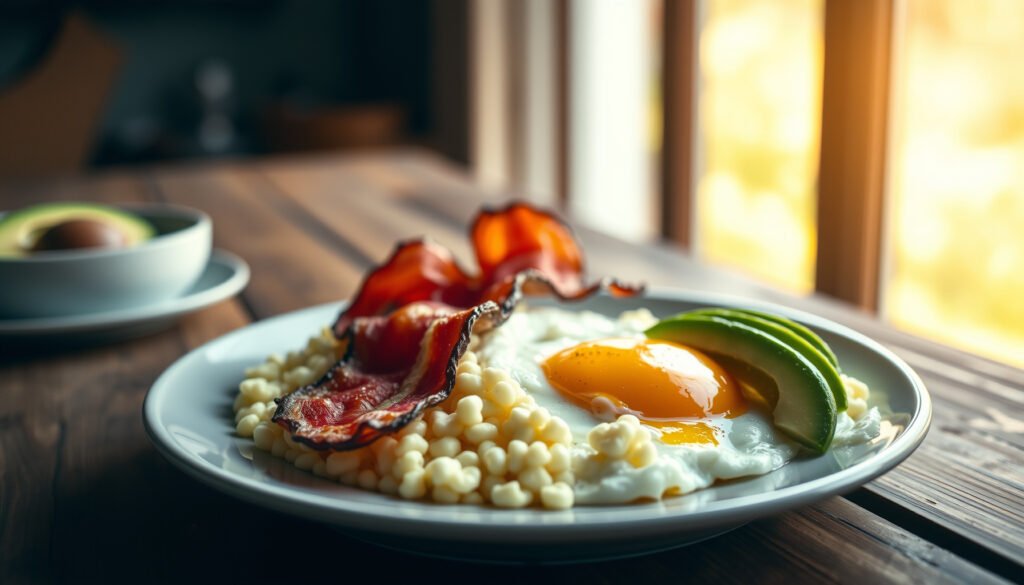

What to eat for breakfast on the keto diet is simple when you choose high-fat, low-carb options that keep you in ketosis—eggs top the list. This guide gives you easy keto breakfasts that are ready fast and hit the nutrition targets, with clear picks for busy mornings. By the time you’re done reading, you’ll know exactly which breakfast ideas are the best fit for staying keto.
Eat breakfast on keto by choosing high-fat, moderate-protein foods that stay low in net carbs—think eggs, cheese, bacon, avocado, and low-carb veggies. Build each meal around a protein (eggs or meat), add a fat source, and keep carb-heavy foods (bread, oats, fruit) out or strictly limited. This guide gives you practical breakfast options plus a quick way to assemble a keto plate without guessing.
If you’re new to keto (or restarting), breakfast is usually where people “accidentally” overshoot carbs—sweet spreads, cereal, yogurt with added sugar, or toast can add up fast. This is for anyone who wants simple, repeatable keto-friendly breakfasts that fit real mornings.
Keto breakfast rules (so it actually stays keto)
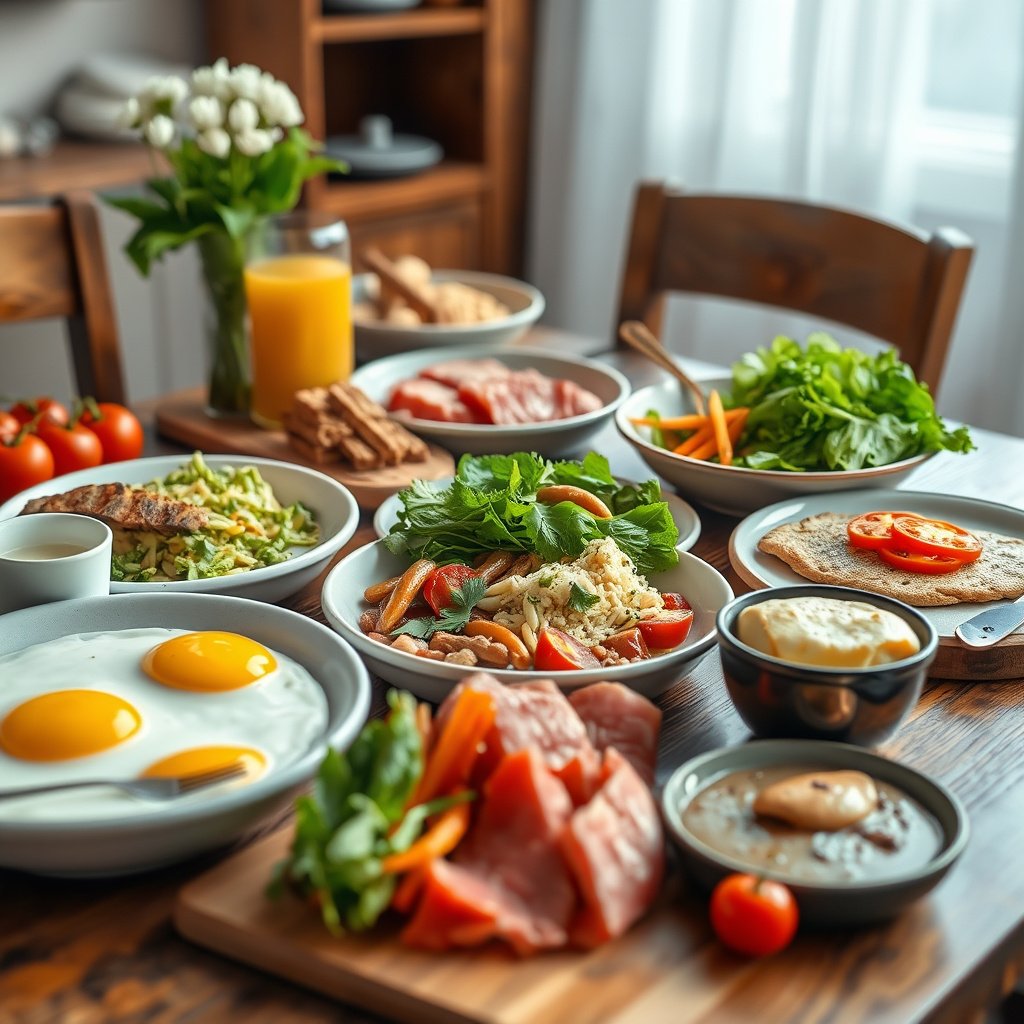
A keto breakfast stays keto when you control net carbs and ensure the meal has enough fat for satiety. In practice, that means tracking carbs from the foods you actually eat at breakfast—not just following the “keto label.”
Ketogenic diets are typically defined as restricting carbohydrate intake to about 20–50 grams per day for many people, which is why breakfast carb creep matters.
Net carbs are commonly managed by subtracting fiber from total carbohydrate grams, but you should confirm how you calculate net carbs on your own keto plan.
Here’s the rule set I recommend for a keto breakfast you can maintain day after day:
– Keep net carbs low: use nutrition labels and pay attention to total carbs, fiber, and added sugar. (If your plan targets net carbs, prioritize the label’s fiber and “total carbohydrate” fields; if it targets total carbs, watch total carbs only.)
– Favor fats and moderate protein: keto breakfasts typically work best when fats are present, not just “lean protein.” If your plate is mostly eggs without any added fat (or mostly meat with no cheese/avocado), many people feel hungry sooner and snack into carb territory later.
Anchor examples from real USDA nutrient data (to make the rule concrete):
According to USDA FoodData Central, one large whole egg (raw) contains 0.36 g total carbohydrate (fiber: 0 g), so net carbs are essentially ~0.36 g. According to USDA FoodData Central, one half of a medium avocado can contain about 8.53 g total carbs with 6.7 g fiber, which yields roughly 1.83 g net carbs. These small carb “building blocks” are what make a keto breakfast plate work—especially when you combine them thoughtfully.
As of 2026, many keto guidance sources still emphasize carb restriction and fat adequacy as the two most practical levers for breakfast consistency, which is why these rules keep showing up in clinician and public health summaries.
Best foods to eat for keto breakfast
The best foods for a keto breakfast are the ones that deliver fat + protein with minimal net carbs—especially eggs, cheese, avocado, and non-starchy vegetables. If you’re building a repeatable morning, these ingredients also cook quickly and handle variety without turning into a carb trap.
Eggs are a common keto breakfast base because they’re high in protein and fat while staying extremely low in carbohydrate.
Low-carb vegetables add fiber and micronutrients to a keto breakfast without typically driving carbohydrate totals too high.
– Eggs (scrambled, omelet, frittata): one of the easiest keto bases; add cheese and veggies if you want. Eggs make keto breakfasts “forgiving” because you can scale portions (more eggs, more fat, more greens) without reaching bread-level carbs.
– Meat & savory proteins: bacon, sausage, ham, deli meats—choose options with minimal sugar in the ingredient list. This is important: a “breakfast sausage” can quietly include sugar or bread-derived fillers.
– Cheese & dairy: cheddar, mozzarella, cream cheese, butter, heavy cream; unsweetened Greek yogurt can work for some people depending on the label. Cheese is useful because it boosts fat without adding significant carbs for most varieties.
– Avocado & healthy fats: avocado slices or guacamole (check added sugar), olive oil, olives, nuts in small portions. Avocado also brings fiber, which can help keep the keto breakfast feeling steady.
– Low-carb vegetables: spinach, mushrooms, zucchini, peppers—great for adding volume without spiking carbs. These vegetables also help you avoid “meat-only” mornings that can feel flat and less satisfying.
Keto breakfast carb reality check (USDA-based examples)
Typical Net-Carb Profile of Common Keto Breakfast Foods (USDA FoodData Central)
| # | Food (cooked/variant) | Serving | Total Carbs | Fiber | Net Carbs | Keto Fit |
|---|---|---|---|---|---|---|
| 1 | Egg, whole, raw | 1 large | 0.36 g | 0.00 g | 0.36 g | ★★★★★ |
| 2 | Cheddar cheese | 1 oz (28 g) | 0.24 g | 0.00 g | 0.24 g | ★★★★★ |
| 3 | Bacon, cooked (pan-fried) | 2 slices | 0.00 g | 0.00 g | 0.00 g | ★★★★☆ |
| 4 | Avocado, raw | 1/2 medium | 8.53 g | 6.70 g | 1.83 g | ★★★★☆ |
| 5 | Spinach, raw | 1 cup chopped | 1.09 g | 0.70 g | 0.39 g | ★★★☆☆ |
| 6 | Chia seeds | 1 tbsp (12 g) | 4.00 g | 3.00 g | 1.00 g | ★★★★☆ |
| 7 | Greek yogurt, plain (full-fat) | 1/2 cup (100 g) | 3.60 g | 0.00 g | 3.60 g | ★★★☆☆ |
Net carbs are shown as (total carbs − fiber). Values are taken from USDA FoodData Central nutrient entries for commonly listed raw/cooked forms and standard servings.
From a keto breakfast perspective, the key takeaway is that “low-carb” doesn’t mean “zero-carb,” and some foods (like avocado or yogurt) can be perfectly keto-friendly in portion—but not when you over-serve them.
Simple keto breakfast ideas you can rotate
The easiest keto breakfast rotation uses the same structure every time: protein base + fat + low-carb veg or fiber, with a carb check at the end. This approach reduces decision fatigue while keeping your breakfast consistent.
A keto breakfast works best when it includes fat as part of the plate, not just as an afterthought.
Swapping toast and cereal for egg, cheese, or chia-based options is one of the most effective ways to prevent morning carb creep.
– Egg scramble + cheese + spinach: cook eggs with butter or olive oil, add cheese and quick-cook greens. Finish with salt and pepper; if you like heat, add hot sauce in a sugar-aware way (watch the label).
– Bacon (or sausage) + avocado: pair with a side of sautéed mushrooms or a small salad. For sausage, choose one with minimal sugar and no breadcrumb-style fillers if possible.
– Cream cheese bagel “swap”: use cucumbers or egg-based “platforms,” then top with smoked salmon, cream cheese, and herbs. This keeps the “fancy breakfast” vibe while preserving keto breakfast carb control.
– Omelet with meat and low-carb veg: ham + cheese + peppers/mushrooms. Add extra fat with cheese or a side of olive oil–dressed greens.
– Keto chia pudding: chia seeds mixed with unsweetened coconut milk (avoid sweetened versions), plus cinnamon/vanilla if desired. Chia-based keto breakfasts often help with fullness because chia contributes fiber.
Quick comparison: eggs vs. chia for keto breakfast
Here’s a practical way to decide between two popular keto breakfast styles:
| Option | Best For | Pros | Cons |
|---|---|---|---|
| Egg-based keto breakfast | Speed and flexibility | Fast cook time, easy portion control, very low carbs | Can get repetitive without variety in toppings/sides |
| Chia pudding keto breakfast | Meal prep and steady fullness | Prep ahead, fiber supports satiety, grab-and-go friendly | Requires label checks for coconut milk sweeteners and careful serving sizes |
As of 2026, rotating keto breakfasts like this is a common strategy because it reduces the “random breakfast” problem—when you eat whatever is convenient and carbs sneak in.
How to build a keto breakfast plate (fast)
A keto breakfast plate is built by picking your protein first, then adding fat and non-starchy vegetables, and only then fine-tuning seasoning and portion. When you follow this sequence, you avoid the most common carb creep points.
The most repeatable keto breakfast pattern is protein first, then fat, then non-starchy vegetables for fiber and micronutrients.
Sauces are a frequent hidden source of sugar in keto breakfasts, so label-checking matters as much as food choice.
Here’s the plate method that works well on busy mornings:
– Step 1: Pick your protein base (eggs, bacon, sausage, leftover chicken, smoked salmon).
– Step 2: Add your fat (cheese, butter, olive oil, avocado). Keto breakfasts usually feel satisfying when fat is part of the plate—not an afterthought.
– Step 3: Add non-starchy veggies (spinach, mushrooms, peppers) for fiber and micronutrients.
– Step 4: Season smartly: use salt, pepper, garlic, hot sauce, and herbs; just be careful with sauces that can contain hidden sugar.
Portion guidance that prevents accidental carb overshoot
Most people do well starting simple and adjusting based on hunger and the rest of their day:
– Eggs: try 1–3 eggs depending on hunger and your planned fat intake.
– Cheese/meat: add until the plate feels satisfying (often 1–2 servings of cheese or 2–4 slices of bacon depending on brand and thickness).
– Avocado: start with ¼ to ½ avocado and adjust—portion size is where keto breakfast accuracy often improves fast.
What can go wrong with keto breakfast (common mistakes)
Keto breakfast mistakes usually come from hidden carbohydrates (especially in “healthy” add-ons) or from breakfasts that are too low in fat to keep you satisfied. Fixing these errors typically improves results within days, because breakfast is where most people “leak” carbs.
Jam, honey, granola, and most cereals can spike a keto breakfast’s carbohydrate total quickly, even if the portion seems small.
Even foods marketed as “keto” can vary widely in carbohydrate and ingredients, so checking the nutrition label still matters.
Common issues to watch:
– “Healthy” additions that aren’t keto: jam, honey, granola, toast, oatmeal, pancake mixes, and most cereals can add carbs quickly. Even “small” amounts add up once you combine them with yogurt or sweet coffee drinks.
– Deli and sausage traps: some breakfast meats contain added sugar or carb fillers—check the label instead of relying on the type of meat.
– Yogurt and “keto” snacks that don’t behave the same for everyone: some products include sugar alcohols that may cause bloating or discomfort for some people. If digestion is an issue, pivot to eggs or cheese-based keto breakfasts.
– Not balancing macros: if a breakfast is mostly protein with little fat, it may not feel keto-satisfying and can lead to cravings later. That’s not just comfort—it’s often a practical compliance issue.
Edge cases for keto breakfast success:
– Coffee/tea add-ins: coffee itself is usually keto-friendly, but flavored syrups and sweet creamers aren’t. Watch for added sugar and “carb-counting” ingredients (like maltodextrin).
– Net-carb confusion: some people subtract fiber aggressively; others track total carbs. If you’re unsure, choose one approach and stick to it consistently for your keto breakfast.
Verdict: the best keto breakfasts are simple (and here’s who should skip)
For most people, the easiest “works every time” keto breakfast is eggs + fat (cheese/butter) + low-carb veggies—because it’s flexible and usually easy to keep carbs low. The downside is that some keto breakfasts can get repetitive, and high intake of saturated fat isn’t ideal for everyone.
A simple keto breakfast built around eggs, cheese/butter, and low-carb vegetables is often the most reliable way to keep carbs low.
Some individuals may need professional guidance before making major carbohydrate changes, particularly when medical conditions or medications are involved.
You should skip (or get clinician guidance first) if you’re managing conditions where a drastic carb change could be risky—examples include pregnancy, breastfeeding, a history of eating disorders, or diabetes medication adjustments. Also be cautious if dairy causes digestive issues; you may need to lean more on eggs, fish, and non-dairy fats.
If you’re trying keto breakfast for the first time in 2026, start by making one change: replace a carb breakfast item (toast, cereal, sweet yogurt) with an eggs-and-fat option, then adjust based on tolerance and your daily carb target.
Quick keto breakfast checklist (scan this before you eat)
The fastest way to stay on keto is to run a quick pre-meal check: low net carbs, enough fat, and no hidden sugar sources. This mini-scan takes seconds and prevents most breakfast carb mistakes.
Checking net carbs (and not just “carb-free” marketing) is one of the most reliable ways to keep a keto breakfast aligned with your targets.
Reading sauce and creamer labels prevents many keto breakfast failures because added sugar often hides in liquid flavorings.
| Choice | Usually keto-friendly | Watch-outs |
|---|---|---|
| Eggs | Yes | Cook with butter/olive oil; avoid sugary glazes |
| Bacon/sausage | Often yes | Check ingredients for added sugar |
| Cheese/cream cheese/heavy cream | Yes | Added flavorings may include carbs |
| Greek yogurt | Sometimes | Choose plain/unsweetened; verify carbs on label |
| Avocado | Yes | Portion size matters; some guacamoles add sugar |
| Low-carb veggies | Yes | Sauces can hide sugar |
| Coffee/tea | Yes | Creamers and flavored syrups often contain sugar |
Before your first bite, double-check:
– Is the breakfast low in net carbs (based on the label)?
– Does it include enough fat to feel satisfying?
– Did you avoid toast, oats, cereal, fruit, or sweet spreads?
Frequently Asked Questions
What are the best keto breakfast foods that keep carbs low?
Great keto breakfast foods include eggs, bacon or sausage (check labels for sugar), full-fat Greek yogurt, cheese, avocado, and leafy greens. You can also use low-carb veggies like spinach, mushrooms, and zucchini in omelets or breakfast scrambles. Aim for meals built around healthy fats and protein, while keeping net carbs low (often 20–50 g per day, depending on your goal).
How can I build a simple keto breakfast meal in under 10 minutes?
Start with a protein base like eggs or plain full-fat Greek yogurt, then add high-fat options such as cheese, avocado, or olive oil. For example, make a quick egg scramble with spinach and feta, or blend yogurt with chia seeds and a few raspberries. To stay keto, avoid high-sugar add-ins and choose low-carb toppings like nuts, seeds, or cinnamon instead of fruit-heavy sauces.
Why do eggs work so well for a keto breakfast?
Eggs are naturally low in carbohydrates and high in protein and healthy fats, which helps you stay in ketosis. They’re also filling, making it easier to manage hunger and reduce the urge to snack. Plus, eggs are versatile—try omelets, frittatas, or boiled eggs with avocado for an easy, consistent keto breakfast.
Which keto breakfast should I choose if I want something sweet but not high-carb?
Look for keto-friendly “sweet” options like Greek yogurt with chia seeds, unsweetened coconut flakes, and a small amount of berries, or a fat-bomb style snack. You can also make keto pancakes using almond flour and eggs, then top with butter or whipped cream (unsweetened or low-sugar). Always check sugar alcohols and sweeteners, as some can affect your carb count or digestion even when they’re marketed as keto.
What keto breakfast should I eat if I’m trying to lose weight?
For weight loss on the keto diet, choose breakfast meals that are high in satiety—typically egg-based dishes, Greek yogurt, or cottage cheese (if it fits your carb target). Add healthy fats like avocado, olive oil, or nuts in controlled portions to support fullness without overeating. Keep portions of any keto-friendly carbs (like berries or nut flour) measured so you don’t unintentionally exceed your daily net carb or calorie goals.
📅 Last Updated: October 29, 2026 | Topic: what to eat for breakfast on the keto diet | Content verified for accuracy and freshness.
References
- Ketogenic diet
- https://www.mayoclinic.org/healthy-lifestyle/weight-loss/in-depth/keto-diet/art-20390051
- https://www.hsph.harvard.edu/nutritionsource/healthy-weight/diet-reviews/keto-diet/
- ketogenic diet breakfast – Search Results – PubMed
- Epilepsy Treatment Simplified through Mobile Ketogenic Diet Planning – PubMed
- https://www.britannica.com/topic/ketogenic-diet
- Ketosis
- https://scholar.google.com/scholar?q=what+to+eat+for+breakfast+on+the+keto+diet Google Scholar
- https://scholar.google.com/scholar?q=ketogenic+diet+breakfast+ideas+low+carbohydrate+high+fat Google Scholar
- https://scholar.google.com/scholar?q=keto+diet+carbohydrate+limits+and+food+choices Google Scholar

Pingback: What’s the Difference Between Atkins and Keto? - Keto Model