

Soup is keto-friendly only when it is low in net carbs. The carb count matters most because many soups are thickened with flour, potatoes, beans, or sweetened sauces that push them out of ketosis. Broth-based or cream-based soups with non-starchy vegetables typically work better, while avoid sugar additions and carbohydrate-heavy ingredients.
Yes—soup can be keto-friendly, but only if it stays low in carbs. In practice, that means you choose broth-based or creamy soups built on meat/fish and low-starch vegetables, and you avoid recipes thickened with flour or loaded with beans, noodles, or potatoes—because those ingredients can quietly push you over your daily carb limit.
If you’re following keto and you love a warm bowl of soup, this is for you—especially if you’ve noticed some soups stall your progress or don’t feel “keto enough.” It’s also helpful when you’re shopping from a menu or grocery shelf and need a quick way to judge carb content.
Which soups are keto-friendly?
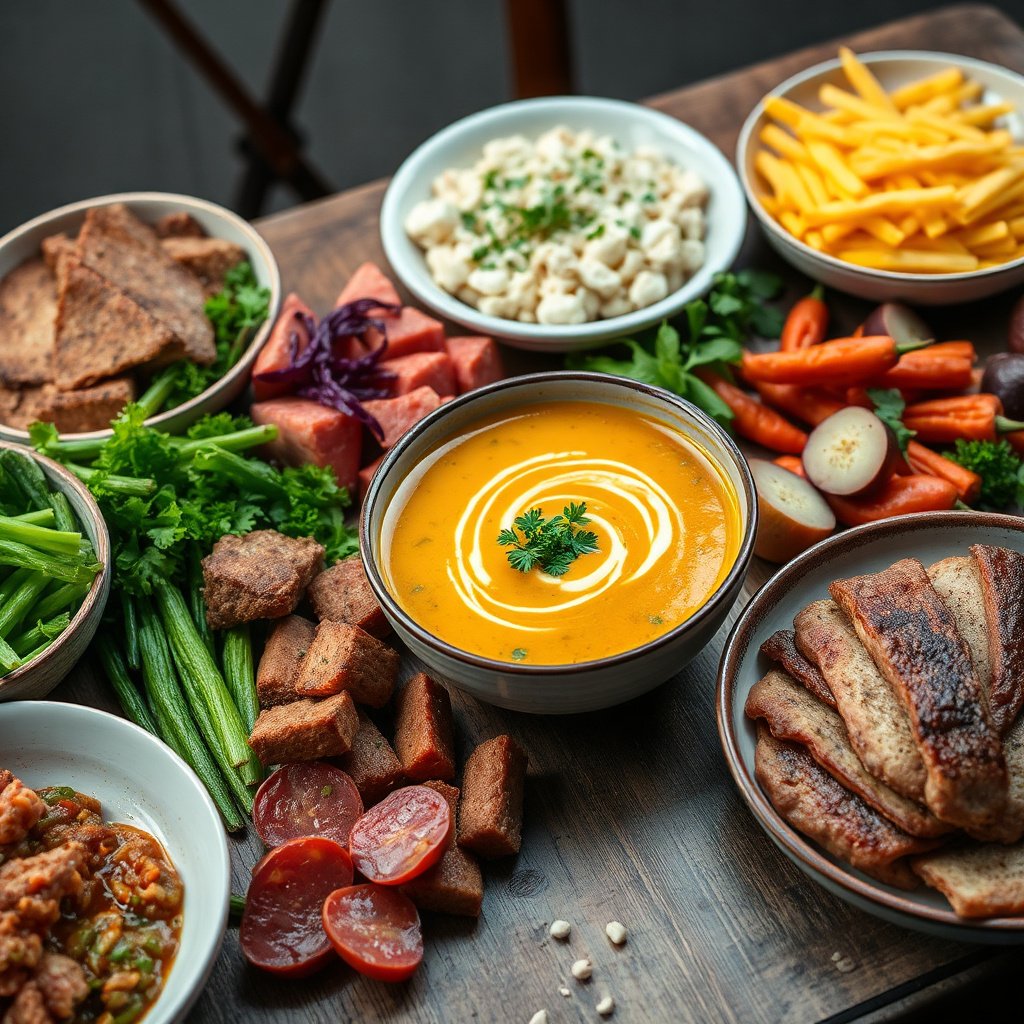
Keto works best with soups where most calories come from protein and fats—not starch. Here’s the shortcut: pick soups whose main ingredients are meat/fish and non-starchy vegetables, and verify that the broth isn’t sweetened or thickened with flour.
– Look for broth-based or creamy soups with simple, low-carb ingredients (like chicken, beef, pork, or seafood).
– Prefer vegetables that don’t spike carbs as much (think leafy greens or non-starchy options) over potatoes, corn, peas, or winter squash.
– Avoid soups that typically include high-carb add-ins like noodles, rice, dumplings, beans, or thickening blends made with flour/sugar.
– If you want “comfort” flavor, look for keto-friendly sources of richness such as butter, olive oil, heavy cream, coconut milk (unsweetened), and cheese—rather than starches.
– In my experience planning meals (and reviewing how common restaurant labels read), the biggest difference between “keto enough” and “keto fail” is whether the soup contains a hidden carb source like roux (flour + fat) or a sweetened stock; .
How to make soup keto (simple swaps)
Most soups can be keto-adjusted if you remove the carb anchors and replace the thickener/filler. The goal isn’t to “make it taste keto”—it’s to reduce net carbs (total carbs minus fiber, depending on your method) while keeping the texture satisfying.
– Swap starchy thickeners for keto-friendly options: heavy cream, cream cheese, or a fat-based thickening method (check labels for added carbs).
– Replace high-carb vegetables with lower-carb alternatives, or keep the starchy ones to a “taste” portion only—then bulk the soup with non-starchy veggies.
– If you’re ordering out, ask whether the soup includes any flour, sugar, beans, or starch-based thickeners; request no noodles/rice and extra protein instead.
– Practical veggie substitutions:
– Replace potatoes with cauliflower (especially in creamy soups) or turnips in small amounts.
– Replace corn with zucchini, mushrooms, or spinach.
– Replace peas with celery, bok choy, or extra leafy greens.
– If the soup is “thick” but not clearly labeled, assume it may use flour or cornstarch. Cornstarch isn’t automatically off-limits, but it can raise carbs and often affects net-carb tracking.
To make ordering decisions faster, this side-by-side helps you translate menu language into carb risk:
| What you see on the menu | What it usually means for keto | Keto-friendly swap request |
|---|---|---|
| “Thick and hearty” / “country-style” | Often roux or starchy vegetables | Ask: “Is it thickened with flour or starch? If yes, can you do it without?” |
| “Stock” / “signature broth” | Can include added sugar or sweet sauces | Ask: “Any added sugar? Can I get it without glaze/gravy?” |
| “Loaded” or “campfire” soup | Typically beans, potatoes, or corn | Ask: “No potatoes/corn/beans—extra chicken instead.” |
| “Creamy” | Good *only if* it’s cream/cheese-based (not flour) | Ask: “Is it made with cream or flour?” |
What nutrition to check before you eat
Soup becomes predictably keto (or predictably not) when you check the numbers, not just the ingredients. As of 2026, labels still vary widely by brand and restaurant, so your best system is: confirm carbs + confirm sugar + confirm thickener.
– Start with the label (or menu description) for carbs—especially “carbohydrate” and “sugar.” If the nutrition panel lists fiber, you can use it to estimate net carbs (but confirm how you calculate net carbs).
– Watch for hidden sweeteners: some broths, “signature” stocks, or restaurant gravies can contain added sugar or sweet sauces.
– Confirm the base: many keto-friendly soups are fine, but “comfort” versions often have starches or breaded ingredients mixed in.
A few anchoring facts to keep your decision-making sharp:
– According to the U.S. FDA, the daily value (DV) for added sugars is 50 grams/day (2016) FDA. Even “small” amounts of added sugar can add up quickly in soup-style meals.
– According to clinical guidance summarized by the U.S. National Institutes of Health (NIH), classic ketogenic approaches often target very low carbohydrate intake to maintain ketosis (commonly in the ~20–50 g/day range in nutrition contexts) (NIH, updated guidance ongoing) NIH.
– According to epilepsy ketogenic diet practice in medical nutrition, a widely used therapeutic pattern is the 4:1 fat-to-(carbohydrate+protein) ratio (carbohydrate and protein are tightly restricted) (commonly described in clinical protocols) Johns Hopkins Medicine / clinical ketogenic diet programs.
– According to USDA food composition data, 1 teaspoon of sugar is about 4 grams of carbohydrate (2019–2024 USDA updates) USDA FoodData Central. This matters because sweetened broth “flavoring” can quietly jump carbs.
Here’s a practical reference for how different soup types usually land on net carbs per bowl/serving. Use it to sanity-check what you’re served when nutrition details aren’t available.
Typical Net Carbs by Common Soup Styles (per 1 bowl, ~240–300 ml)
| # | Soup style | Typical net carbs (g) | Main carb source | Keto fit |
|---|---|---|---|---|
| 1 | Unsweetened chicken or beef broth | 0–2 | None/trace | ★★★★★ |
| 2 | Egg drop soup (no cornstarch) | 2–5 | Vegetables/seasoning | ★★★★☆ |
| 3 | Creamy chicken (cream/cheese base) | 4–8 | Dairy + low-starch veg | ★★★★☆ |
| 4 | Mushroom soup (no flour, cream base) | 5–10 | Dairy + mushrooms | ★★★☆☆ |
| 5 | Butternut squash soup | 10–16 | Winter squash | ★★☆☆☆ |
| 6 | Bean-based minestrone | 15–25 | Beans + starchy veg | ★☆☆☆☆ |
| 7 | Chicken noodle or pasta soup | 22–40 | Noodles/rice/pasta | ★☆☆☆☆ |
What can go wrong (common keto soup mistakes)
Most keto soup failures happen for predictable reasons: starch, sweeteners, and thickening tricks. If your soup “should be keto” but stalls progress, it’s usually because one hidden ingredient category is overpowering the rest.
– Thinking “it’s soup, so it must be healthy”—but finding out the carbs come from noodles, beans, potatoes, or a sweetened broth.
– Relying on taste alone: a soup can taste savory and still be high in sugar or starch depending on the recipe.
– Missing the portion issue: even keto-leaning ingredients (like certain veggies) can add up if the bowl is large or if the recipe includes multiple carb sources.
– Not accounting for garnish: croutons, bread on the side, tortilla strips, or shredded corn toppings can push carbs past your target.
– Assuming “cream” means “keto”: some creamy soups are thickened with flour or use sweet sauces—especially in the convenience/shelf-stable aisle.
– Using the wrong carb math: if you follow net carbs, you need to apply the same approach every day. Different people treat fiber differently, and you don’t want your method changing mid-week.
If you’ve been keto-focused in 2026, you’ve probably noticed more brands offering “low sugar” or “keto-friendly” claims—but those aren’t universal. Your safest habit remains checking carbs and ingredient order, not marketing language.
Verdict: is keto soup a good idea for you?
Soup can be keto, and it’s often an easy, satisfying meal—just don’t treat it as “automatically keto.” If you choose simple bases (protein + broth/cream + mostly non-starchy vegetables) and verify carbs when possible, it can fit well into most ketogenic schedules.
You should skip the “keto soup” idea (or be extra cautious) if you can’t check ingredients/nutrition, if your keto plan depends on strict carb tracking, or if the soup you’re choosing repeatedly contains starches/beans/noodles. When in doubt, choose a simpler protein + broth + low-starch veggies option, and keep portions consistent—especially in the first weeks of keto.
Here’s the quick trade-off: keto soup is great for satiety and variety, but it can quietly become high-carb if thickened with flour, sweetened in the stock, or served with “optional” sides that are not optional for your carb count.
Quick keto soup checklist (scan and save)
– [ ] No noodles, rice, beans, potatoes, or corn
– [ ] No added sugar in broth/stock (check label or ask)
– [ ] Thickened with cream/fat (or keto-safe method), not flour-based starch
– [ ] Plenty of protein (chicken, beef, pork, fish, shrimp)
– [ ] Low-starch vegetable mix (mostly non-starchy options)
– [ ] Nutrition facts reviewed (carbs and sugar), using your net-carb method
Is chicken soup keto?
It can be, if it’s made without noodles, rice, potatoes, or sweetened broth. Check for added sugar and starch-based thickeners, and choose versions with chicken, broth, and non-starchy vegetables when possible.
Are creamy soups always keto?
Not always. Some creamy soups include flour, sweet sauces, or starchy veggies—always verify the ingredient list or nutrition panel. If the thickener is roux (flour) rather than cream/cheese, the carbs can jump quickly.
Can I eat soup from a restaurant on keto?
Yes, but you may need to modify it (no noodles/rice/beans, ask about thickeners and sugar). If you can’t confirm ingredients, choose a simpler soup and ask questions—broth + protein + vegetables is usually the safest ordering pattern.
What’s the biggest carb trap in soup?
Usually starches (potatoes, noodles, rice), beans, or sweetened broth/gravy. Thickening methods (flour-based or sugary blends) can also add up fast, even when the soup tastes “savory.”
Can I make any soup keto?
You can often keto-ify many soups with swaps—removing high-carb add-ins and adjusting the thickener/vegetables—but some recipes are too carb-heavy to “fix” without major changes. If carbs come from the base (like beans or pasta), you’ll typically need a different starting recipe rather than minor tweaks.
Soup can absolutely be part of a ketogenic diet in 2026, but only when you treat it like a measured meal—not a free pass. Stick to protein + broth (or true cream/cheese bases), prioritize non-starchy vegetables, and verify carbs/sugar when you can. If you do that consistently, you’ll get the comfort of soup without sacrificing your ketosis goals.
Frequently Asked Questions
Is soup keto-friendly, and what makes it keto or not?
Soup can be keto-friendly if it’s low in carbs and made with keto-appropriate ingredients. Look for soups that are broth-based with meat, poultry, or low-carb vegetables like spinach, zucchini, and cauliflower. Soups become non-keto when they contain added sugar, thickened starches, or high-carb ingredients like potatoes, pasta, beans, and large amounts of carrots.
How can I make regular soup keto by swapping ingredients?
You can make soup keto by replacing high-carb thickeners and vegetables with low-carb alternatives. Use heavy cream, cream cheese, or cauliflower (or a keto flour blend) instead of flour-based roux or potato starch. For “thick and hearty” texture, try blending cooked cauliflower or adding zucchini noodles, and skip potatoes and pasta.
Why do some soups seem “keto” but still raise carbs or kick you out of ketosis?
Many soups are labeled “healthy” but still contain hidden carbohydrates from ingredients like starchy vegetables, added sugar, or flour-thickened broth. Even broth-based soups can exceed your carb limit if the recipe includes carrots, onions in large amounts, peas, or milk/cream in high quantities. Checking the total carbs (not just fiber) and portion size helps you stay within your keto macros.
Which soups are typically best for keto dieters?
The best keto soups are usually high in fat and protein with low total carbs, such as chicken soup made with shredded chicken, broth, and low-carb veggies (like spinach). Beef consommé, loaded bacon cheeseburger soup (without potatoes), and creamy soups thickened with cream or cheese are often keto-friendly. If you’re buying packaged soup, choose options with no noodles, no beans, and minimal starchy vegetables.
What keto soup carbs should I watch for, and how do I calculate them?
To stay keto, focus on total net carbs per serving—carbs minus fiber—especially if you’re strict about ketosis. When possible, calculate using nutrition labels or recipe nutrition tools, and pay attention to serving size since soup carb counts can change dramatically with portion. If a soup has potatoes, noodles, beans, or sugar, it’s usually easier to choose a different keto soup recipe to avoid exceeding your carb limit.
📅 Last Updated: November 03, 2026 | Topic: is soup keto | Content verified for accuracy and freshness.
References
- Ketogenic diet
- https://www.mayoclinic.org/diseases-conditions/diabetes/in-depth/ketogenic-diet/art-20048468
- https://www.nccih.nih.gov/health/ketogenic-diet
- https://www.britannica.com/topic/keto-diet
- https://pubmed.ncbi.nlm.nih.gov/?term=ketogenic+diet+carbohydrate+restriction
- USDA FoodData Central
- https://scholar.google.com/scholar?q=ketogenic+diet+carbohydrate+limit+20+grams+per+day Google Scholar
- https://scholar.google.com/scholar?q=keto+diet+nonstarchy+vegetables+carbohydrates Google Scholar
- https://scholar.google.com/scholar?q=keto+diet+soup+broth+carbohydrates Google Scholar
