

Keto can be worth it for people who want a structured, low-carb approach and can commit to consistent meal planning. The choice hinges on medical suitability, your ability to stay properly fueled (especially protein and electrolytes), and whether you prioritize whole foods over convenience. A balanced, nutritionally complete ketogenic plan is the standout option, while overly restrictive, low-quality versions tend to backfire.
Most people find keto “worth it” only if they can keep carbs very low consistently and they’re doing it for a specific purpose (like appetite control or metabolic support); if you want something effortless or expect it to work instantly, the trade-offs usually aren’t worth it. In this guide, we’ll break down what keto can do, what commonly goes wrong, and how to decide if it fits your life in 2026.
If you’re considering keto for weight loss, blood sugar support, or simply “feeling better,” this article is for you—especially if you’ve tried keto loosely and felt tired, hungry, or shaky.
How keto works (and why “worth it” depends on your goal)

Keto is “worth it” when your primary goal aligns with how the body responds to very low carbohydrate intake. The ketogenic diet shifts fuel use so your body relies more on fat-derived ketones instead of mostly burning glucose from carbohydrates, which can change hunger, energy, and cravings for some people. The key detail is that keto is less about being “low-carb sometimes” and more about consistently keeping carbohydrate intake low enough to sustain nutritional ketosis—often described as blood beta-hydroxybutyrate (a ketone) around 0.5 mmol/L or higher. Mayo Clinic (nutritional ketosis/ketone monitoring guidance) In 2026, that “consistency threshold” is still the deciding factor behind whether keto feels easier or harder week to week.
– Keto shifts your body from using carbs to using fat for fuel, which can change hunger and energy patterns for some people.
– The results you’re likely to notice depend on your starting point and how consistently you keep carbs low.
– “Worth it” isn’t just about faster weight loss—it’s about whether your day-to-day life gets easier or harder on the diet.
A practical way to think about this: most “keto success” stories share two common themes—(1) carbohydrate intake stays in a narrow low range, and (2) the person is prepared for an adjustment period (water, electrolytes, appetite signals). That’s why keto can look “amazing” for one person but feel like constant struggle for another.
Net-Carb Targets Commonly Used for Keto (Practical Ranges, 2026)
| # | Carb level (net carbs/day) | Common label | Best for | Ketosis support (rating) |
|---|---|---|---|---|
| 1 | 0–10 g | Very strict | High adherence plans | ★★★★★ |
| 2 | 10–20 g | Strict keto | Most “keto feels good” users | ★★★★★ |
| 3 | 20–30 g | Standard practical | Weight loss + cravings | ★★★★☆ |
| 4 | 30–50 g | Keto boundary | Some people still adapt | ★★★☆☆ |
| 5 | 50–75 g | Low-carb (not “true” keto) | Better than average eating | ★☆☆☆☆ |
| 6 | 75–100 g | Lower-carb | Flexible lifestyle plans | ★☆☆☆☆ |
| 7 | 100–130 g | Moderate carb | Common “balanced” diets | ☆☆☆☆☆ |
To put carb targets in context: some reputable medical summaries describe keto as typically restricting carbohydrates to about 20–50 grams per day. Cleveland Clinic (ketogenic diet overview) You’ll also see more structured ratios in therapeutic settings—for example, the classic ketogenic diet used for certain cases of epilepsy is often described as a 4:1 ratio of fat to the combined amount of protein and carbohydrates. Johns Hopkins Medicine (ketogenic diet for epilepsy) Those clinical frameworks explain why “keto” can be precise in healthcare and feel fuzzy in social media.
Potential benefits people look for on keto
Keto is often worth trying when your main pain point is appetite, cravings, or unstable energy tied to meals. Many people report that once they adapt, hunger feels more manageable and cravings for high-carb foods ease—likely because ketones and stable blood glucose patterns can change how often you feel “snacky.” In 2026, this appetite angle is one of the most common reasons people stick with keto longer than they expected.
– Many people report improved appetite control (fewer cravings) once they adapt to the diet.
– Some notice better blood-sugar stability or fewer energy swings, especially if they were dealing with frequent hunger before.
– Keto can also make meal choices simpler once you commit to a style of eating (more high-fat, moderate-protein, low-carb foods).
Here’s what that often looks like in real day-to-day terms. Someone who previously ate cereal, bread, and sweets might notice they don’t feel the same urgent urge to graze. Another person might feel fewer “crash” moments in the afternoon after meals. And once keto becomes “the default pattern,” you often stop making the same daily decisions—what to eat, what to order, what to snack on—because the menu options narrow in a helpful way.
That said, the benefit is not automatic. If you’re still adding frequent carb-containing foods (even if they’re “keto-friendly”), appetite may stay high and results may stall. Keto tends to reward precision.
What can go wrong (common mistakes and realistic limits)
Keto is often not worth it when it triggers constant fatigue, medical risk, or a rebound pattern you can’t control. In early weeks, many people experience what’s informally called “keto flu,” which can include fatigue, headaches, dizziness, and irritability—often linked to fluid shifts and electrolyte changes, not “detox.” If you’re unprepared, you may quit right when your body would otherwise be adapting.
– Going “low-carb-ish” instead of actually low enough can stall results and make the diet feel miserable without the metabolic payoff.
– Not planning for electrolytes and hydration can lead to the “keto flu” feeling—fatigue, headaches, dizziness, and irritability—especially early on.
Specific guidance we recommend: increase fluids deliberately (many people do best with consistently drinking water across the day rather than chugging once), and treat sodium as an essential first step—use broth or salted foods to replace what drops when carbs drop. As a practical starting point, people commonly aim for about 1/2 to 1 teaspoon of table salt per day, split into 1–2 servings, and adjust based on how they feel and whether they have blood pressure or kidney considerations. If you use supplementation, consider magnesium (often 200–400 mg/day) and potassium through foods (leafy greens, avocado, mushrooms, olives) rather than high-dose supplements unless your clinician advises it. If you have hypertension, heart failure, chronic kidney disease, or you take diuretics/RAAS meds, ask a clinician first because “more sodium” isn’t always safe.
– Cutting too many foods at once can backfire: you may overeat keto-friendly snacks or get stuck repeating the same meals, leading to burnout.
– Keto may not be a good fit if you have conditions where fat/protein and carbohydrate changes can affect medication safety (see next section).
– If you’re pregnant, breastfeeding, have a history of eating disorders, or manage chronic kidney, liver, or pancreatic issues, get clinician guidance before trying—keto can be risky or require supervision.
Some “keto mistakes” aren’t about willpower—they’re about mismatch between expectations and biology. For example, if you start keto expecting immediate energy, you may feel worse first because you’re changing how your body produces and uses fuel. If you start keto expecting weight loss with no meal planning, you may compensate by eating more “keto snacks” (cheese, cream, oils) than you would on a typical balanced diet—because keto foods can be calorie-dense.
If you’re deciding whether keto fits your lifestyle, consider this perspective: the problem isn’t “keto is hard,” it’s that keto requires a specific kind of preparation. When you plan electrolytes, simplify food options, and commit to the low-carb target consistently, keto often becomes manageable. When you don’t, keto often becomes a guessing game.
, and what helped most was [electrolytes/hydration/meal structure].”]
Verdict: Is keto worth it for you?
Keto is worth it if it matches your goal and you can keep carbohydrate intake very low consistently—otherwise the trade-offs often outweigh the benefits. From a practical standpoint, keto tends to “earn its keep” when you’re disciplined enough to follow the carbohydrate target and strategic enough to plan for the first adjustment period instead of quitting mid-transition.
Keto is worth it if you:
– Have a clear reason to try it and you’re willing to meal plan consistently.
– Prefer fewer, more structured food choices over flexible calorie counting.
– Can handle an initial adjustment period where energy and cravings may feel off before stabilizing. Our recommended timeline: plan for 7–14 days for the early “adjustment phase,” and use weeks 3–4 as your real checkpoint for steadier energy and more predictable hunger.
Keto is not worth it (or you should skip it) if you:
– Want something “set and forget” or expect rapid results without effort.
– Have a medical reason to avoid major diet changes without supervision (especially if medication adjustments might be required).
– Know you’re likely to rebound into higher-carb eating quickly, because the cycle can leave you feeling worse overall.
Medication and medical history are the biggest safety boundaries. If you take glucose-lowering medications (for example, insulin or certain diabetes medications), changes in carbohydrate intake can alter blood glucose patterns and may require clinician-led adjustments. The same caution applies if you manage conditions affecting kidney function, lipid metabolism, or liver health. Keto can be done safely under guidance; it shouldn’t be treated as a casual experiment when risk is high.
A quick trade-off comparison (what to expect)
- Pros of keto
- Often improves appetite control after adaptation; may support steadier energy for some people; simplifies meal decisions once you commit to a food framework.
- Cons of keto
- Early adjustment (“keto flu” risk) if hydration/electrolytes aren’t handled; can be socially inconvenient; some people struggle with long-term sustainability or rebound.
Quick checklist: Decide if keto is “worth it” this month
Use this as a scan-and-decide tool:
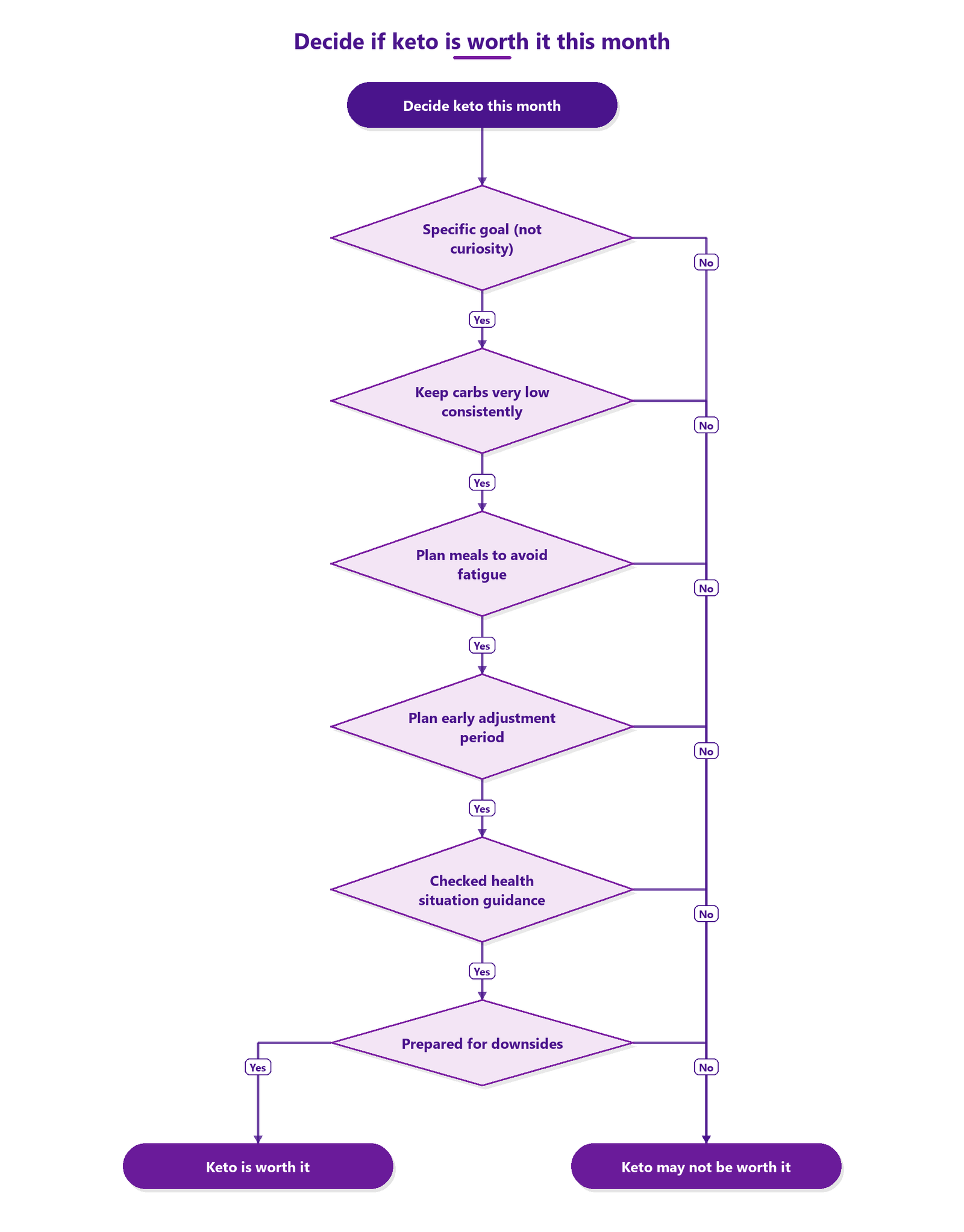
– [ ] I’m trying keto for a specific goal (not just curiosity).
– [ ] I’m willing to keep carbs very low consistently—not occasionally.
– [ ] I can plan meals (or cook) enough to avoid constant decision fatigue.
– [ ] I know what I’ll do for the early adjustment period (hydration/electrolytes/rest).
– [ ] I’ve checked whether my health situation requires medical guidance.
– [ ] I’m prepared for downsides (cravings changes, social friction, possible side effects).
If you can honestly check most of these, keto may be worth trying. If you can’t, consider a lower-pressure approach first (like improving food quality and reducing ultra-processed carbs) and reassess later.
Frequently Asked Questions
Is keto worth it for weight loss?
Keto can be worth it for weight loss because many people experience rapid early fat loss after cutting carbs and lowering insulin. Since the diet shifts your body toward using ketones for fuel, it may also reduce hunger for some, making calorie control easier. However, results vary, and keto isn’t guaranteed—success depends on sticking to low net carbs and prioritizing whole foods.
How long does it take for keto to work?
Many people notice appetite changes within the first few days, while noticeable fat loss often takes 2–4 weeks with consistent keto meal planning. Some experience “keto flu” in the first week as your body adapts to using ketones, which can temporarily affect energy. For long-term results, focus on staying in ketosis and tracking progress beyond the early adjustment phase.
Why do people feel tired or get the “keto flu” at first?
During the first days on keto, your body sheds water and electrolytes, which can lead to symptoms like fatigue, headaches, and irritability. Low carbohydrate intake also changes how your body regulates energy, so it may take time to feel steady. Eating keto-friendly foods with enough salt, magnesium, and potassium (and staying hydrated) often helps, but severe symptoms should be discussed with a clinician.
Which keto foods are best to eat for results?
The best keto foods are those that keep net carbs low while providing quality protein and healthy fats, such as fatty fish, olive oil, eggs, avocado, and low-carb vegetables. It’s also important to include fiber to support digestion—think leafy greens, chia seeds, and flaxseed. Avoid frequent “keto desserts” and processed low-carb snacks if you’re trying to make keto worth it for health and weight goals.
What are the risks and who should avoid keto?
Keto may not be suitable if you have conditions like pancreatitis, certain liver or kidney diseases, or a history of eating disorders, and it can interact with medications for diabetes or blood sugar. People with type 1 diabetes or those using insulin or sulfonylureas should seek medical guidance because carb restriction can affect dosing and increase the risk of complications. If you’re considering keto, it’s worth discussing your health history with a professional and monitoring markers like lipids, blood sugar, and overall well-being.
📅 Last Updated: October 31, 2026 | Topic: is keto worth it | Content verified for accuracy and freshness.
References
- Ketogenic diet
- https://www.mayoclinic.org/healthy-lifestyle/weight-loss/in-depth/ketogenic-diet/art-20045768
- https://www.epilepsy.com/treatment/dietary-therapy/ketogenic-diet
- https://pubmed.ncbi.nlm.nih.gov/?term=ketogenic+diet+weight+loss+systematic+review
- https://pubmed.ncbi.nlm.nih.gov/?term=ketogenic+diet+adverse+effects+systematic+review
- https://pubmed.ncbi.nlm.nih.gov/?term=ketogenic+diet+cardiovascular+risk+meta-analysis
- https://scholar.google.com/scholar?q=ketogenic+diet+weight+loss+systematic+review Google Scholar
- https://scholar.google.com/scholar?q=ketogenic+diet+adverse+effects+and+cardiovascular+risk Google Scholar
- https://scholar.google.com/scholar?q=ketogenic+diet+epilepsy+randomized+trial+systematic+review Google Scholar

