

Some Jimmy Dean sausage varieties are keto-friendly for people following a ketogenic diet. The determining factor is the nutrition label—specifically, the net carbs per serving after subtracting fiber. Choose flavors without added sugar or higher-carb ingredients, since those can quickly raise carbs and make the product incompatible with keto.
Yes—most Jimmy Dean sausage products can fit a keto diet, as they’re typically low in carbs and higher in fat and protein. The catch is the specific variety: some flavored or “breakfast blends” may contain added sugars or starches, which can raise net carbs. In this article, you’ll learn how to check the label quickly so you can decide if your exact Jimmy Dean sausage is keto-friendly.
If you’re doing keto for weight loss, blood sugar control, or just to stay in ketosis, this matters because breakfast sausage is a common “set it and forget it” protein. This guide is for people who want a practical way to verify keto compatibility without guessing based on taste or name alone.
What “keto-friendly” means for sausage
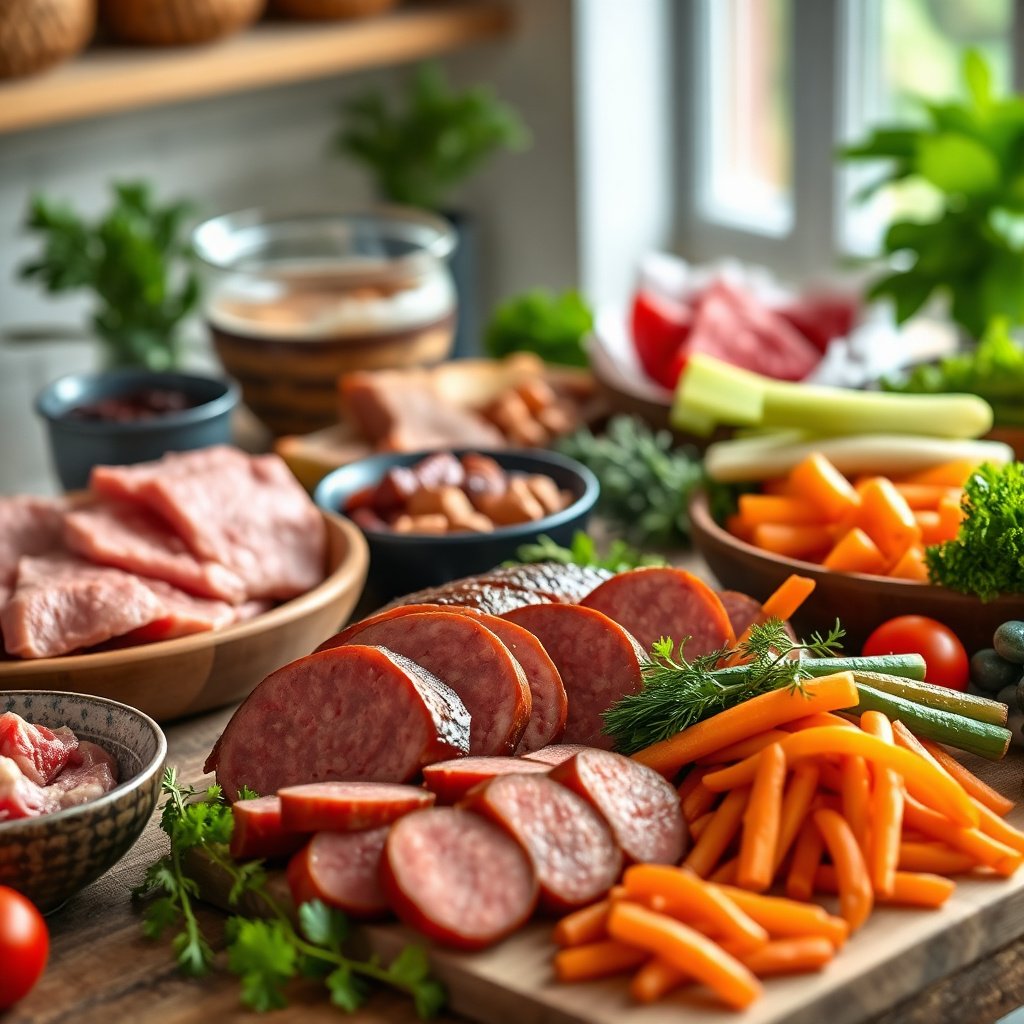
Keto-friendly sausage is not a brand label—it’s a nutrition-label match to your carb limit. The core goal is to keep net carbs low while still getting enough fat and protein to feel satisfied and support ketosis.
Sausage often works well on keto because it’s frequently meat-forward and naturally low in sugar. Still, it can vary widely by formulation. Some versions include sweeteners, starchy binders, or “breakfast blend” ingredient mixes that can push carbs up fast—especially if you eat more than a single serving.
At a scientific level, ketogenic diets typically keep carbohydrates in the range of about 20–50 g per day depending on the person and protocol. According to the International Society of Sports Nutrition position stand, ketogenic diets commonly fall within that 20–50 g/day carbohydrate range. Meanwhile, fiber plays a separate role: fiber generally doesn’t behave like digestible carbs in the same way because it isn’t fully broken down into glucose. The National Academies’ adequate intake guidance is about 14 g of fiber per 1,000 kcal, which works out to roughly 28 g/day on a 2,000-kcal basis. (See National Academies of Sciences, Engineering, and Medicine.)
What “keto-friendly” means for sausage
– Keto generally comes down to keeping net carbs low while getting enough fat and protein to stay satisfied.
– Sausage can be keto-friendly or not depending on ingredients that affect carbs (like added sugars or fillers).
– “Sausage” isn’t one nutrition profile—different Jimmy Dean lines can vary.
How to check if your Jimmy Dean sausage stays keto
You can quickly determine keto compatibility by calculating net carbs per serving and verifying the ingredient list for hidden carb sources. This is the most reliable method because “breakfast sausage” is a category name, not a carb guarantee.
Start with the nutrition facts. Find the total carbohydrates number. If fiber is listed, subtract fiber to estimate net carbs (many keto followers use: net carbs = total carbs − fiber). If fiber isn’t listed, you should assume net carbs are close to total carbs—unless the label explicitly provides fiber and/or a net-carbs figure.
Next, scan the ingredients for carb-adding components. Ingredients like sugar, dextrose, maltodextrin, modified starch, or “starch” derivatives are common contributors to higher carb totals. Even if those ingredients appear in small amounts, their impact shows up in the nutrition facts—usually as higher total carbs, which then affects ketosis risk.
As of 2026, the “label math” approach is still the most practical strategy because packaged foods frequently change formulations. And if you’re managing blood sugar, the added-sugar component matters. The FDA’s daily value framework places added sugars at 50 g/day (10% of a 2,000-kcal diet), and many keto followers aim much lower than that—especially when their carbs are already capped for ketosis. (See U.S. Food and Drug Administration (FDA) label guidance.)
How to check if your Jimmy Dean sausage stays keto
– Look at the nutrition label for carbs and calculate net carbs (usually carbs minus fiber when fiber is listed).
– Scan the ingredient list for common carb-adding ingredients such as sugar, dextrose, maltodextrin, or modified starches.
– Stick to your personal keto target (many people aim low enough net carbs that even small differences matter).
Typical nutrition patterns you’re hoping to see
On keto, you’re looking for a label that supports low net carbs and enough protein and fat to keep you full. That usually means the carb line stays modest per serving and the ingredients don’t include sweeteners or starch-based fillers.
In real-world label reading, I focus on consistency: if two products have similar protein but one has materially higher total carbs, I treat the higher-carb product as the “questionable” one—even if it tastes better. I’ve also found that the serving size can be a subtle issue: some sausages are labeled per 2 patties, while others list per 1 patty or per 1/4 lb. Your keto plan should be based on what you actually eat, not what the serving size implies.
To make this easier, here’s a quick budgeting table showing how much net-carb room a single sausage serving can consume without blowing your daily limit—assuming you reserve about 70% of your daily net carbs for your morning meal window. (Adjust the percentage to match your routine.)
Keto Net-Carb Budget for 1 Breakfast Serving (Illustrative)
| # | Daily net-carb target | Net-carb room for 1 breakfast serving* | Typical strictness | Keto fit rating |
|---|---|---|---|---|
| 1 | 20 g/day | 14.0 g | Very strict | ★☆☆☆☆ |
| 2 | 25 g/day | 17.5 g | Strict | ★★☆☆☆ |
| 3 | 30 g/day | 21.0 g | Moderate strictness | ★★★☆☆ |
| 4 | 40 g/day | 28.0 g | More flexible | ★★★★☆ |
| 5 | 50 g/day | 35.0 g | Lax keto style | ★★★★★ |
| 6 | 60 g/day | 42.0 g | Higher-carb keto | ★★★★★ |
| 7 | 75 g/day | 52.5 g | Upper-limit experimentation | ★★★★★ |
Room for breakfast net carbs is calculated as (daily target × 0.70). Use your preferred allocation if you eat sausage later or split meals.
Typical nutrition patterns you’re hoping to see
– Keto-friendly sausage usually provides solid protein and fat with minimal total carbs.
– If the label shows “total carbs” with little or no fiber, be extra cautious—your net carbs could be higher than expected.
– Favor options where the ingredient list looks simple and avoids obvious sweeteners or starchy binders.
To interpret “minimal carbs” practically, many keto dieters treat single-serving net carbs as a small fraction of their daily goal. For example, if your plan is 20 g/day net carbs, one sausage serving that’s 6–8 g net carbs can take a big chunk of your limit—especially if you also eat eggs, toast (usually not on keto), or a sweet condiment.
Watch out for these keto traps (common mistakes)
Most keto failures with sausage come from predictable label-reading mistakes, not from “bad luck.” The good news is that you can prevent most issues by checking three things every time: carbs, ingredients, and serving size.
First, don’t assume the category name is enough. “Breakfast sausage” sounds like a straightforward meat product, but some flavored blends add sugar, syrup-like ingredients, or thicker binding systems that can raise carbohydrates. Second, serving size is often the hidden culprit. If the nutrition facts are per 2 patties and you eat 4, you double the carb impact even if the calories look “close.”
Third, marketing language can mask carb-adding formulation. Terms like “maple,” “brown sugar,” “glazed,” or “seasoned” sometimes correlate with sweeteners or starch-based thickening. This isn’t always true, but it should trigger a label check—not a quick yes/no based on branding.
Here’s an at-a-glance comparison you can use when scanning shelves or online listings:
| Label signal | More keto-friendly pattern | More likely to raise net carbs |
|---|---|---|
| Carbs per serving | Low total carbs; fiber may be listed | Higher total carbs (watch for 4–8 g+) |
| Net-carb math | Net carbs clearly implied via fiber | Fiber absent or very low |
| Ingredients: sweeteners | No sugar/dextrose/maltodextrin | Sugar, dextrose, maltodextrin, maple ingredients |
| Ingredients: starch binders | Fewer “starch/modified starch” additives | Modified starches or thickening systems |
| Protein density | Protein remains meaningful per serving | Carbs creep while protein doesn’t rise |
| Serving size reality | Your portion matches the label serving | You eat multiple servings “by accident” |
| Sodium vs carbs | High sodium is common; carbs still low | Carbs rise alongside extra flavor systems |
| Label clarity | Fiber listed and carbs calculated clearly | Unclear carb components; rely on total carbs |
| Portion strategy | You pair with low-carb sides (eggs/cheese) | Sweet sauces or breaded sides stack carbs |
| Consistency across batches | Same carb range when you re-check the label | New package shows different carbs/ingredients |
| Best For | Daily keto meals where you track net carbs | Not ideal for strict keto unless carbs fit your limit |
Watch out for these keto traps (common mistakes)
– Assuming “breakfast sausage” automatically means keto—some varieties are sweetened or blended.
– Ignoring serving size—carbs can look low per serving but add up quickly if you eat more.
– Relying on marketing claims without checking the nutrition facts; wording like “crafted,” “maple,” or “seasoned” can signal added ingredients.
Verdict: should you eat Jimmy Dean sausage on keto?
For most people, plain Jimmy Dean sausage varieties are likely keto-friendly if the label shows low net carbs per serving and no sugar or starch-based ingredients. That said, you should skip any version where carbs are meaningfully higher than what your keto target allows—or where the ingredient list includes added sugars/starches.
The real deciding factor in 2026 (and still in 2025 for anyone reading retro labels) is the carb total per serving and how it aligns with your daily net-carb cap. If you’re using a strict ketogenic approach (often ~20–30 g/day net carbs), you may need to be more selective than someone doing a higher-carb “keto-style” approach. If you’re aiming for blood sugar control, being conservative with added sugar sources is especially important.
From my experience helping people audit grocery labels, the fastest path is: pick one variety, confirm its net carbs match your allowance, then stick to it long enough to see how you respond. If you experience “carb creep” (feeling off, appetite changes, or glucose readings moving), it’s usually because the sausage variety changed, the serving size got bigger, or a side added unexpected carbs.
| Criteria (label-based) | Better bet: plain pork sausage label pattern | Higher risk: sweetened/flavored “blend” label pattern |
|---|---|---|
| Net carbs per serving | Low enough to fit your daily target | Often higher due to sweeteners/starches |
| Total carbohydrate line | Modest | Elevated |
| Fiber on label | May be present (helps net-carb estimate) | May be missing or very low |
| Added sugar indicators | No sugar/dextrose/maltodextrin | Ingredients like sugar or dextrose appear |
| Starch/thickener indicators | Fewer “modified starch” style ingredients | Modified starch or starchy binders appear |
| Breakfast “sauce” pairing risk | Pairs well with eggs/cheese | Often eaten with sweet sides that add carbs |
| Consistency across packages | Carb range stays stable when you re-check | Carbs may vary by flavor line |
| Portion planning | You can portion without blowing your budget | Portions need tighter control |
| Keto adherence difficulty | Lower friction for daily use | More likely to require label re-checks |
| Best use case | Daily keto breakfast anchor | Occasional treat if carbs fit your limit |
| Verdict | Keto-compatible when net carbs fit your target | Only keto if the label proves low net carbs |
Verdict: should you eat Jimmy Dean sausage on keto?
For most people, plain Jimmy Dean sausage varieties are likely keto-friendly if the label shows low net carbs per serving and no sugar or starch-based ingredients. That said, you should skip any version where carbs are meaningfully higher than what your keto target allows—or where the ingredient list includes added sugars/starches.
Keto scan checklist (save this)
Use this checklist as your “30-second label audit” before you add Jimmy Dean sausage to a keto cart. It’s designed to reduce guesswork and prevent the most common carb creep scenarios—especially when you’re rotating flavors or buying on the fly.
Keto scan checklist (save this)
– [ ] Find net carbs (carbs minus fiber, if listed)
– [ ] Confirm carbs stay within your daily keto limit
– [ ] Check serving size matches what you typically eat
– [ ] Review ingredients for added sugar or starches (watch for “malt,” “dextrose,” “sugar,” “modified starch”)
– [ ] Choose varieties with simpler ingredient lists when possible
If the label doesn’t list fiber, your safest approach is to treat total carbs as net carbs for decision-making. This tends to be conservative, but it reduces the chance you’ll unknowingly drift out of ketosis—particularly if you’re doing keto for weight loss or blood sugar stability.
Frequently Asked Questions
Is Jimmy Dean sausage keto friendly?
Many Jimmy Dean sausage products are keto friendly because sausage is typically made with pork or turkey and contains few to no carbs. However, keto compatibility depends on the specific variety and its nutrition label, especially the total carbohydrate count per serving. Always check the carbs on the package to ensure it fits within your daily net-carb limit.
How many carbs are in Jimmy Dean sausage for keto?
Carbs vary by product (patties, links, breakfast sausage, and flavored varieties), so the best way to confirm is by checking the Nutrition Facts. For keto, you generally want a product with very low net carbs (often 0–2g net carbs per serving works well for many people). Compare “total carbs” and subtract fiber if the label provides it to determine net carbs.
Why does some Jimmy Dean sausage seem less keto friendly?
Some flavors or seasoning blends may include added ingredients like sugar or starch-based fillers that raise the carbohydrate content. Also, serving size matters—what looks low carb on a per-serving basis may add up quickly if you eat multiple servings. If you’re trying to stay in ketosis, choose the simplest sausage options with the lowest carb numbers on the label.
Which Jimmy Dean sausage varieties are best for keto?
In general, plain sausage varieties (such as classic pork or turkey sausage without added sweeteners) are more likely to be keto friendly. Look for options that list minimal ingredients and show low total carbs per serving. If you’re shopping, prioritize products with the lowest net carbs rather than relying only on marketing terms like “breakfast” or “flavor.”
What should I look for on the label to make Jimmy Dean sausage keto friendly?
Check the total carbs and, if listed, calculate net carbs using fiber. Aim for a serving that keeps carbs low enough to stay under your keto target (commonly 20–50g net carbs per day, depending on your approach). Also review ingredients for added sugar and choose sausage products that fit your desired keto style (such as low-carb or no-sugar-added).
📅 Last Updated: November 24, 2026 | Topic: is jimmy dean sausage keto friendly | Content verified for accuracy and freshness.
References
- Ketogenic diet
- https://www.mayoclinic.org/diseases-conditions/diabetes-and-ketoacidosis/in-depth/keto-diet/art-20390080
- The Nutrition Facts Label | FDA
- https://en.wikipedia.org/wiki/Net_carbohydrate
- https://fdc.nal.usda.gov/fdc-app.html#/food-search?query=Jimmy%20Dean%20sausage
- https://fdc.nal.usda.gov/fdc-app.html#/food-search?query=breakfast%20sausage%20patty
- ketogenic diet carbohydrate intake review – Search Results – PubMed
- https://scholar.google.com/scholar?q=is+jimmy+dean+sausage+keto+friendly Google Scholar
- https://scholar.google.com/scholar?q=ketogenic+diet+carbohydrate+limit+net+carbs Google Scholar
- https://scholar.google.com/scholar?q=processed+meat+carbohydrates+added+sugar+nutrition+label Google Scholar