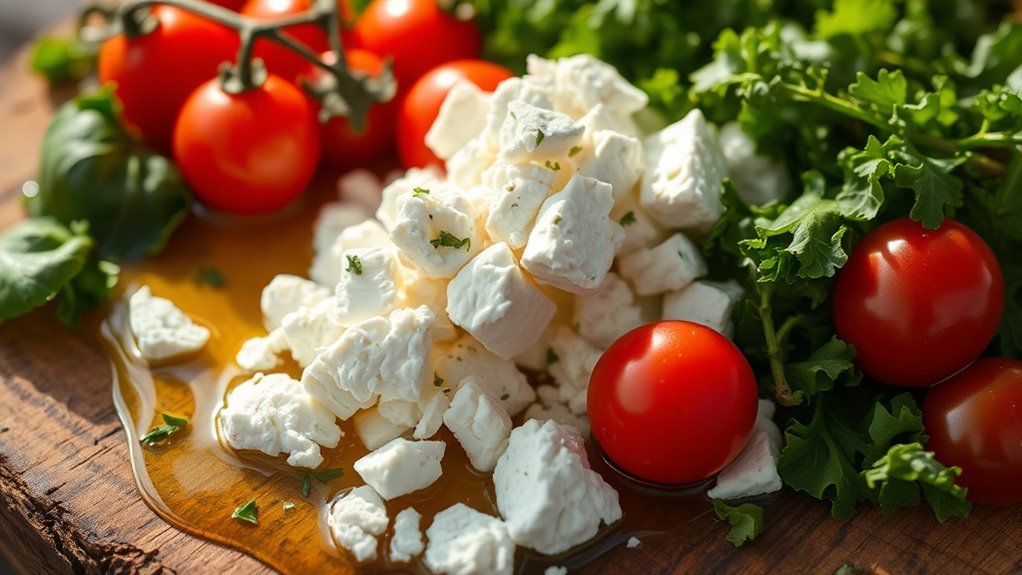

Yes, feta cheese is keto-friendly. It’s low in carbs, with about 1.2 grams per ounce, and provides essential nutrients like calcium and protein. The healthy fats in feta can help with appetite control, supporting your dietary goals. However, be mindful of its high salt content, which could affect blood pressure. If you’re curious about creative ways to incorporate feta into your meals or other cheese alternatives, there’s more to explore.
Nutritional Profile of Feta Cheese

Feta cheese, with its crumbly texture and tangy flavor, is a popular choice among cheese lovers, but how does it fit into a keto diet? Feta is relatively low in calories, with about 75 calories per ounce, making it a smart option for those watching their intake. It’s also packed with essential nutrients, including calcium, protein, and vitamins A and K, which support overall health. The fat content in feta, primarily from sheep or goat milk, provides a satisfying source of energy while keeping carb counts low. With roughly 6 grams of fat and only 1.2 grams of carbs per ounce, feta can seamlessly integrate into your keto lifestyle, allowing you to enjoy its distinct flavor without compromising your dietary goals.
Health Benefits of Feta Cheese on a Keto Diet
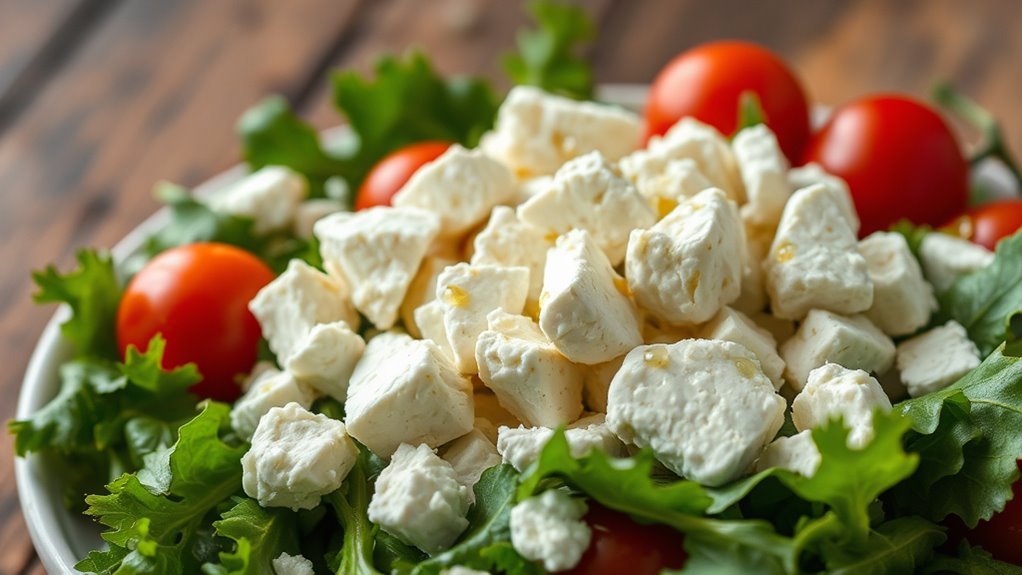
When you’re following a keto diet, incorporating feta cheese can offer several health benefits that align with your nutritional goals. This tangy cheese is not just flavorful; it’s also nutrient-dense. Here are some key health benefits of feta cheese on a keto diet:
- Low in Carbs: Feta cheese typically contains fewer carbs, making it keto-friendly.
- Rich in Protein: It provides a good protein source, essential for muscle maintenance.
- Calcium Source: Feta is high in calcium, supporting bone health, which is vital on a low-carb diet.
- Healthy Fats: The fats in feta can help keep you satiated, aiding in appetite control.
Potential Drawbacks of Feta Cheese
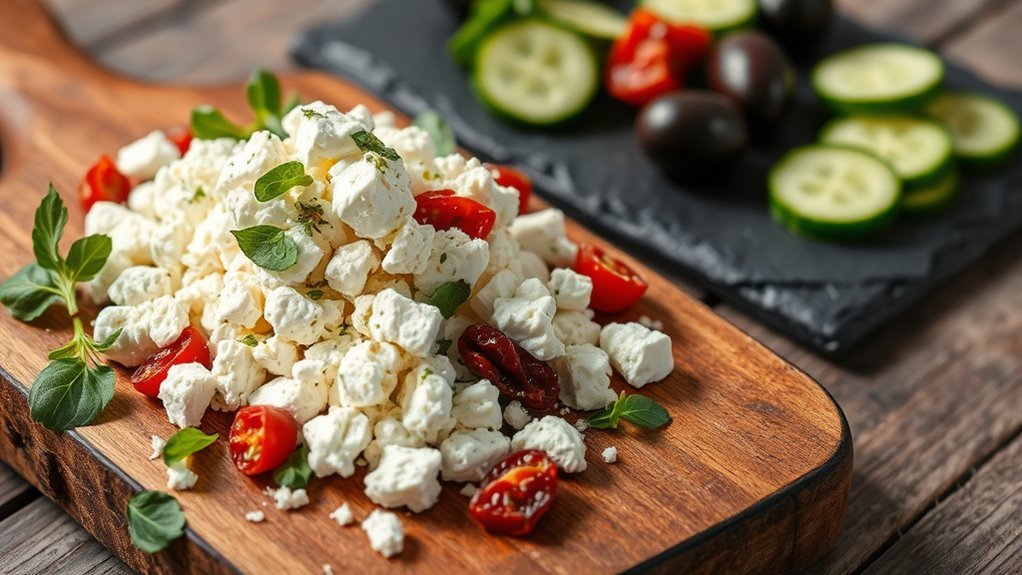
While feta cheese can be a delicious addition to a keto diet, it’s important to take into account some potential drawbacks. One significant concern is its high salt content, which can lead to increased blood pressure or dehydration if consumed excessively. If you’re watching your sodium intake, moderation is key. Additionally, if you’re lactose intolerant, feta might pose a problem. Although it has lower lactose levels than many other cheeses, it can still cause discomfort for some individuals. Pay attention to how your body reacts, as the last thing you want is to compromise your well-being for a tasty topping. Balancing your feta intake with these considerations will help you enjoy its benefits while minimizing risks.
How to Incorporate Feta Into Your Keto Meals
Incorporating feta cheese into your keto meals can enhance flavor and provide nutritional benefits, especially when you’re seeking low-carb options. Here are some effective ways to include feta in your diet:
- Salads: Crumble feta over leafy greens, paired with olives and a low-carb dressing for a revitalizing meal.
- Egg Dishes: Add feta to scrambled eggs or omelets, mixing in spinach and tomatoes for a nutrient-packed breakfast.
- Stuffed Vegetables: Use feta as a filling for zucchini or bell peppers, combined with herbs and spices for a satisfying dish.
- Keto Dips: Blend feta with Greek yogurt, garlic, and herbs for a creamy, low-carb dip that pairs well with veggies.
These feta recipes and pairings can elevate your keto culinary experience while keeping carb counts low.
Alternatives to Feta Cheese on a Keto Diet
If you’re looking for alternatives to feta cheese on a keto diet, there are several options that can provide similar flavors and textures without compromising your low-carb goals. Goat cheese is a fantastic keto cheese alternative, offering tanginess and creaminess. Another option is ricotta, which can be flavored with herbs to mimic feta’s unique taste. For a dairy alternative, consider nutritional yeast; it adds a cheesy flavor without the carbs. Cotija cheese also works well, providing a crumbly texture similar to feta. Finally, almond or cashew cheese can be great dairy alternatives, especially if you prefer plant-based options. Each of these substitutes can help you enjoy your meals while staying aligned with your keto lifestyle.
Frequently Asked Questions about Feta and Keto
1. Is feta cheese keto-friendly?
Yes, feta cheese is considered keto-friendly. It is low in carbohydrates and high in fat, making it a suitable option for those following a ketogenic diet. A typical serving of feta cheese contains about 1.2 grams of carbohydrates, allowing you to enjoy it without significantly impacting your daily carb limit.
2. How many carbs are in feta cheese?
Feta cheese is relatively low in carbohydrates, with approximately 1.2 grams of carbs per ounce (28 grams). This low carb content makes it an ideal ingredient for keto recipes and meals, as it allows you to stay within your daily carbohydrate goals while adding flavor and richness.
3. What are the health benefits of feta cheese on a keto diet?
Feta cheese offers several health benefits when included in a keto diet. It is a good source of protein, calcium, and healthy fats. The probiotics present in feta can aid digestion and support gut health. Additionally, feta cheese is lower in calories compared to many other cheeses, which can help with weight management while still providing essential nutrients.
4. Can I eat feta cheese on a dairy-free keto diet?
If you are following a dairy-free keto diet, traditional feta cheese would not be suitable as it is a dairy product. However, there are dairy-free alternatives available that mimic the taste and texture of feta, often made from nuts or soy. Always check the nutritional information to ensure these alternatives fit within your keto guidelines.
5. How can I incorporate feta cheese into my keto meals?
Feta cheese can be easily incorporated into a variety of keto meals. You can crumble it over salads, mix it into omelets, or use it as a topping for grilled vegetables and meats. It also works well in keto-friendly dips and spreads. The creamy texture and tangy flavor of feta can enhance many dishes while keeping your meals low in carbs.
References
- https://www.healthline.com/nutrition/feta-cheese-keto
- https://www.medicalnewstoday.com/articles/324008
- https://www.eatright.org/health/wellness/healthy-eating/what-is-feta-cheese
- https://www.ncbi.nlm.nih.gov/pmc/articles/PMC6470861/
- https://www.wisewell.com/blogs/wellness/is-feta-cheese-keto-friendly
- https://www.health.harvard.edu/blog/the-keto-diet-and-its-health-benefits-2019081317630
- https://www.webmd.com/diet/obesity/what-is-the-keto-diet
- https://www.verywellfit.com/what-is-feta-cheese-4788106