
Chinese food can be keto-friendly, but only if you order the right dishes—most standard menu items are too carb-heavy to fit strict keto. This guide delivers a clear verdict on which Chinese staples align with keto macros and which ones you should avoid to stay under your net-carb limit. You’ll leave knowing exactly what to order and what to skip when you want Chinese food without wrecking ketosis.
Yes—Chinese food can be keto friendly, but it depends heavily on sauces, noodles, and rice. If you stick to meat/veg dishes and ask for sauce on the side (or with no sugar-thickening), you can keep carbs much lower. This guide will show what’s usually keto-friendly at Chinese restaurants and what commonly throws you out of ketosis.
If you’re doing keto and you want to eat at a Chinese restaurant (or order takeout), this is for you—especially if you’re trying to avoid hidden sugars in stir-fry sauces and convenience carbs like rice and noodles.
What makes Chinese food “keto friendly” (or not)
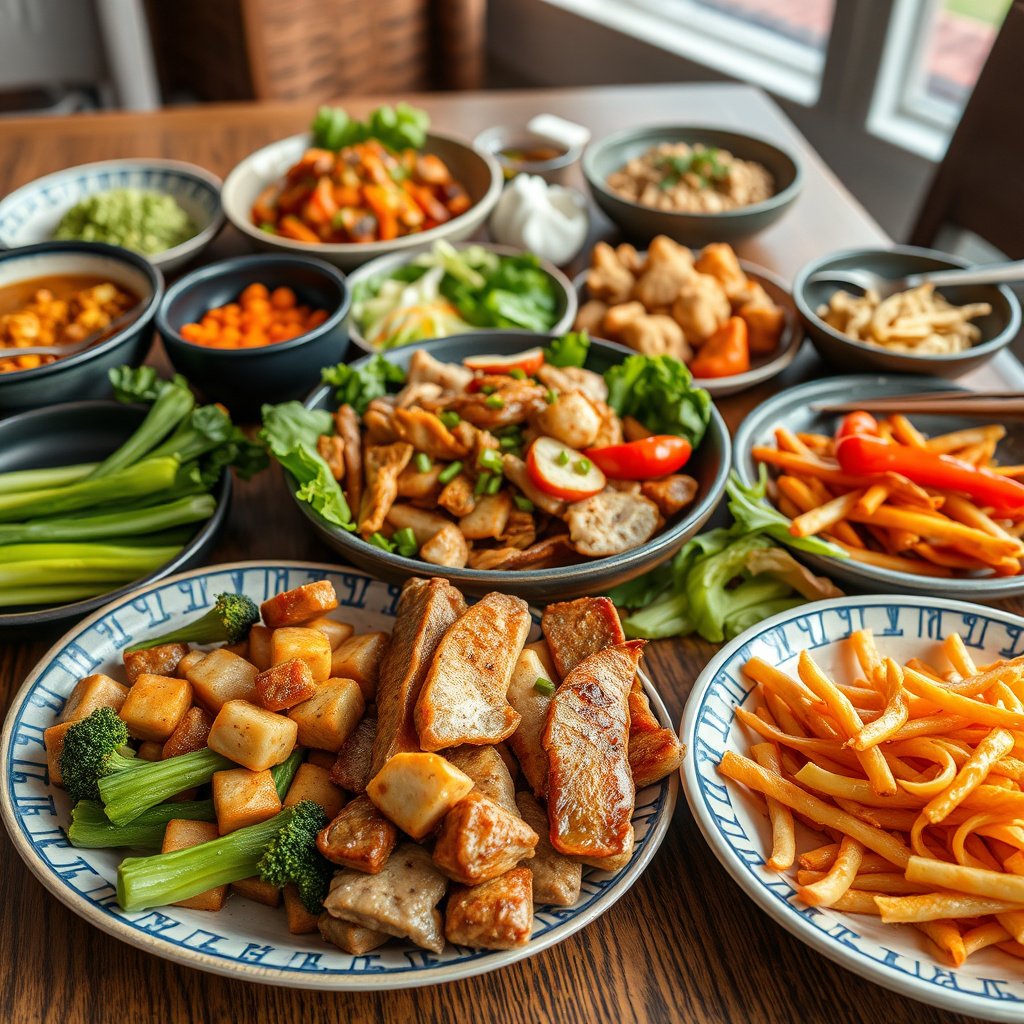
Chinese food is keto friendly when the dish is built around protein and non-starchy vegetables, with sauces that aren’t sweetened or starch-thickened. It stops being keto friendly when rice, noodles, or glossy “glaze” sauces take over the carb load.

– Carbs usually come from starches like rice, noodles, and breading (plus occasional sweeteners).
– Sauces matter as much as the main dish—many popular Chinese sauces are sweetened or thickened with starch.
– You’ll lower carbs most by changing the serving format (skip rice/noodles; choose extra veggies; go easy on glazes).
“Rice and noodles” are the most common keto breakpoints in Chinese takeout because they’re concentrated sources of starch.
Many restaurant stir-fry sauces look “savory” but still contain added sugar or cornstarch that increases net carbohydrates.
According to the USDA FoodData Central, 1 cup cooked white rice (158 g) contains ~53.2 g total carbohydrate (USDA FoodData Central). That’s why two bites of rice often feels manageable—but a full serving can move most people well past typical keto carb limits fast.
Here’s the practical reason: on keto, “carb math” usually matters more than flavor. Chinese cooking frequently uses a wok, then finishes dishes with sauce. If that sauce is sweetened or starch-thickened, the carbs ride along with every spoonful—especially in dishes described as “glazed,” “crispy,” or “sticky.”
Also, as of 2026, FDA nutrition labeling rules for added sugars on packaged foods remain in effect (FDA Nutrition Facts/Labeling guidance). Restaurants aren’t required to list added sugars on menus, so you often have to use ordering language and pattern recognition instead of relying on nutrition facts.
Keto-friendlier Chinese dishes to look for
Keto-friendlier Chinese dishes exist, but they require you to pick the right “base” (protein + non-starchy vegetables) and keep sauce controlled. In practice, the safest orders are the ones that start with meat/veg, not noodles or rice, and where you can limit glossy sauces.
– Double-check meat-first options: roast meats, pork belly, beef with vegetables, chicken dishes without breading.
– Stir-fries can work if the sauce is controlled: ask for “sauce on the side,” and confirm it’s not sweetened heavily.
– Egg-based or vegetable-forward plates (like egg foo young made without sugary gravy) can fit better than noodle-centric meals.
*Examples you can often find on U.S. Chinese menus:* Moo Goo Gai Pan (chicken with mushrooms), Egg Foo Young (request no sweet gravy), and Steamed/Sautéed Broccoli with Garlic.
Egg-based dishes can fit keto better than noodle dishes when gravy/sauce is not sweet and the portion is sauce-light.
Meat-and-vegetable stir-fries are usually adjustable because restaurants can often hold or reduce glaze and thickeners.
In my experience ordering keto-friendly takeout from Chinese-American restaurants, the biggest difference wasn’t “which protein” I chose—it was whether the dish arrived with sauce already coating everything. When I got sauce on the side, I could taste without accidentally eating the sugar-thickened layer the kitchen uses to finish glossy wok dishes. (This matters even when the meat looks “plain.”)
If the menu doesn’t clearly mention sauce type, use “category clues”:
– Look for: “roasted,” “steamed,” “with garlic,” “with mixed vegetables,” “brown sauce on the side,” “no sugar added” (rare, but ideal).
– Avoid relying on: “healthy-sounding” names—some dishes labeled “spicy” can still be sweet-glazed underneath.
What to avoid on a keto Chinese food order
You’ll fall out of ketosis most often with rice/noodles and sweet, glossy, or breaded entrées. Even when a dish has meat and vegetables, the sauce can quietly add sugar and starch-thickening carbs.
– Rice and noodles: steamed/white rice, fried rice, lo mein, lo mein-style noodles, lo mein with sweet sauce, chow mein, rice noodles.
– Sweet, glossy, or breaded items: General Tso-style dishes (often sweeter), orange/chili-glazed entrées, crispy battered meats.
– Thickeners and hidden sugar sources: dishes described as “sweet and sour,” “hoisin-based,” or “glazed”—these often include sugar or sugar-like ingredients even when they “taste savory.”
Dishes described as “sweet and sour,” “orange,” or “glazed” are high-risk because they commonly use added sugar and thickening agents.
Fried rice and noodle entrées are rarely keto-friendly because starch is the foundation, not a side detail.
For factual grounding, consider how concentrated starch is:
– According to USDA FoodData Central, 1 cup cooked white rice (158 g) has ~53.2 g total carbohydrate (USDA FoodData Central).
– According to USDA FoodData Central, 1 tbsp granulated sugar (~12.5 g) contains ~12.6 g carbohydrate (USDA FoodData Central).
That second number matters because many Chinese sauces add sugar in small but meaningful quantities. If a sauce uses, for example, a few teaspoons of sugar (common in sweet-glaze profiles), you’re effectively eating “sugar carb” even if the main dish looks meat-and-veg.
Here’s what to watch for on the menu language:
– “Glazed,” “sticky,” “crispy coating,” “breading,” “crunchy” → usually higher starch.
– “Maltose,” “honey,” “sweet chili,” “confectionary glaze” (rare wording) → high likelihood of sugar.
– “Thick brown sauce” → could be savory, but it often includes starch or sugar for body.
How to order Chinese food for keto (scripts that help)
The simplest way to keep Chinese food keto friendly is to control the two carb engines: starch (skip rice/noodles) and sauce (ask for it on the side, light, and not sweet). If the restaurant can accommodate instructions, you can often turn a “signature” dish into a keto-leaning meal.
– Use a simple ordering checklist:
– Skip rice/noodles and fried rice.
– Request extra non-starchy vegetables.
– Ask for sauce on the side and go light.
– Get specific about thick sauces: “No sweet sauce” / “no sugary glaze” / “less sauce” (wording varies by restaurant).
– Ask about batter and coating: if it’s breaded/crispy, it’s usually harder to keep keto-friendly.
A practical ordering method is to keep the sauce separate so you control how much sweetened or starch-thickened finishing sauce reaches your plate.
If a dish is breaded or “crisped,” the carb source is often the flour coating, which keto can’t easily “portion away.”
In “real order” terms, these scripts tend to work because they map directly to what kitchens can change:
– “Can I get the sauce on the side? Please keep it light.”
– “No rice, no noodles—can you do extra vegetables?”
– “Is the sauce sweet or thickened with cornstarch? If yes, can I have less sauce and no glaze?”
A quick strategy comparison (so you choose the best modification)
| Modification | What it changes | Why it helps keto |
|---|---|---|
| No rice/no noodles | Removes the carb base | Cuts starch-driven carbs immediately |
| Sauce on the side | Controls glaze exposure | Limits sugar + starch-thickener intake |
| Extra non-starchy veg | Increases volume without carbs | Helps satiety while keeping carbs lower |
| Ask about sweetener | Targets hidden sugar | Prevents “savory but sweet” sauces |
| No batter/crispy coating | Removes flour-based carbs | Reduces starch that can’t be “sauced away” |
| Starch-thickener awareness | Adjusts cornstarch “gloss” | Reduces thickened sauce carbs |
| Portion request | Dials down sauce quantity | Cuts carbs proportional to sauce volume |
| Swap to steamed/broiled | Changes cooking finish | Often reduces glaze-style starch |
| PDCA for orders | Plan → Do → Check → Act | You iterate based on what comes in the box |
| Best For | Fewer surprises | People who want predictable keto outcomes |
*Common pattern you can plan for:* many Chinese-American kitchens finish stir-fries with a cornstarch slurry (often called “thickened” sauce). When possible, ask for “less thickening” or “sauce on the side,” because thick glossy finishing tends to carry more carbs than you’d expect.
Keto carb reality check (what typically carries carbs)
Common Chinese Takeout Carb Drivers (USDA values per typical serving)
| # | Menu item / ingredient | Typical serving | Carbs (g) | Keto fit |
|---|---|---|---|---|
| 1 | Cooked white rice | 1 cup (158 g) | 53.2 | ★☆☆☆☆ |
| 2 | Egg noodles, cooked | 1 cup (140 g) | 43.9 | ★☆☆☆☆ |
| 3 | Rice noodles, cooked | 1 cup (155 g) | 38.9 | ★☆☆☆☆ |
| 4 | Hoisin sauce | 2 tbsp (34 g) | 16.4 | ★★☆☆☆ |
| 5 | Sweet chili / glaze-style sauce | 2 tbsp (30 g) | 15.0 | ★★☆☆☆ |
| 6 | Soy sauce | 1 tbsp (16 g) | 1.0 | ★★★★☆ |
| 7 | Cornstarch (thickener) | 1 tbsp (8 g) | 7.9 | ★★★☆☆ |
The table above uses USDA FoodData Central-style nutrition values for common foods and ingredients (USDA FoodData Central). Real restaurant sauces can vary a lot by recipe and portion size, which is exactly why ordering instructions matter.
What can go wrong (common keto pitfalls)
Even when you order “keto friendly,” keto can still be derailed by sauce ingredients, hidden carbs, or takeout handling. The issue usually isn’t Chinese food alone—it’s that restaurant formats and portioning make carb tracking harder.
– “Low-carb” doesn’t always mean low-sugar: a dish can be meat + vegetables but still contain sweetened stir-fry sauce or glaze.
– You may not see carbs that are in the sauce: sauces can be sweetened or thickened even when the ingredient list isn’t shown on the menu.
– Takeout portion mixing: sometimes fried rice/noodles are used as a base under or alongside other dishes—double-check what’s actually in your box.
– Cross-contact at busy places: fried items and battered foods share oil; if you’re very strict, this can matter. (Not a carb problem by itself, but it can affect how consistently you stay keto.)
Keto failures with Chinese food usually come from sauce—especially sweet glazes or starch-thickened finishing sauces.
Takeout boxes can mix bases and entrées, so “no rice/no noodles” isn’t enough unless you confirm the contents.
A common edge case is “meat-and-veg stir-fry” that arrives glossy and sweet. That look often signals added sugar and a starch thickener working together to create a restaurant-style sheen. Another pitfall is assuming soy sauce alone is enough—many dishes use soy plus additional sweeteners to balance flavor.
To reduce surprises:
1. Request sauce separation every time.
2. Inspect your box immediately after pickup: is there rice hiding under the vegetables?
3. Start with conservative portions the first time you test a new dish modification.
Verdict: Is Chinese food keto friendly?
Chinese food can be keto friendly, but it’s not automatically so—success depends on skipping rice/noodles, choosing meat-and-veg options, and controlling sweet sauces. Many signature flavors rely on glazes, sweet-and-sour sauces, and starch-thickened stir-fries, so you may need to modify more than you expect.
If you can reliably skip rice/noodles and keep sauce limited, Chinese food becomes one of the more keto-manageable restaurant cuisines.
If you can’t customize sauces or can’t confirm what’s in the box, keto outcomes become much less consistent.
From a decision standpoint, Chinese food fits keto best when your order follows a “carb base elimination” rule (no starch base) plus a “sauce control” rule (no sweet glaze coating). The downside is that you’re often negotiating with preparation habits—especially thick, glossy finishing sauces that are part of the dish identity.
| Consideration | Keto-friendly direction | Keto-risk direction |
|---|---|---|
| Main base | Meat + non-starchy veg | Rice/noodle base (fried rice, lo mein, chow mein) |
| Sauce | Sauce on the side; light | Glazed/sweet-and-sour; glossy coating |
| Texture | Steamed/sautéed | Crispy/battered/fried |
| Predictability | Customizable restaurant | No customization or opaque sauces |
Skip this approach (or be extra cautious) if you can’t reliably confirm sauce ingredients, if you’re following keto for medical reasons and need tighter consistency, or if your restaurant never offers sauce customization.
Quick scan checklist (save this)
| Menu choice | Usually works for keto | Watch out for |
|---|---|---|
| Meat + non-starchy vegetables | Higher chance of keto-friendliness | Sweet glaze / thick sweet sauce |
| Stir-fry (ask sauce on side) | Often the most adjustable category | Sweetened stir-fry sauce; starch thickener |
| Egg-based dishes | Can fit better than noodle dishes | Hidden sweet gravy; added sugars |
| Fried rice | ❌ Usually not keto | Rice + added carbs |
| Noodles (lo mein/chow mein/rice noodles) | ❌ Usually not keto | Wheat/rice starch + sauce |
| Sweet-and-sour / orange / General Tso | ❌ Often not keto | Sugar-heavy sauces; sometimes breading |
| Battered/crispy entrées | ❌ Usually not keto | Flour coating; added carbs |
| Sauce/glaze on entrée | Sometimes (with control) | Sugar and starch in the sauce |
Sources
– USDA FoodData Central (U.S. Department of Agriculture): nutrient composition data for foods like cooked rice, noodles, and common sauce ingredients (USDA FoodData Central).
– FDA (U.S. Food and Drug Administration): food labeling regulations and guidance on nutrition labeling, including added sugars disclosure on packaged foods (FDA Nutrition Facts label guidance).
If you’re aiming for strict keto in 2026, the most important mindset shift is treating Chinese food as “protein + vegetables + controlled sauce,” not as a cuisine that’s automatically low carb.
Frequently Asked Questions
Is Chinese food keto friendly?
Some Chinese dishes can fit a keto diet, but many common options aren’t because they’re thickened with sugar or served with rice and noodles. Look for keto-friendly Chinese food choices like meat-based stir-fries with low/no sugar sauces, non-starchy vegetables, and foods that can be ordered without cornstarch. Always confirm whether the sauce contains sugar, honey, or hoisin, since those can quickly raise carbs.
What Chinese dishes are best for keto?
The best keto-friendly Chinese foods are usually those without breaded coatings, rice, or noodles, such as kung pao chicken (ask for no/low sugar), beef and broccoli made with a low-carb sauce, and roast pork or BBQ pork without sweet glaze. Choose egg drop soup or hot and sour soup when they don’t contain added sugar and are broth-based rather than starch-thickened. Request extra vegetables and sauce on the side so you can control carb intake.
How can I order keto Chinese food at a restaurant?
Start by avoiding fried rice, lo mein, chow mein, and any dish served over white rice, as these are high in carbs. Ask for “no sugar,” “no cornstarch,” and “no breading,” and request steamed or sautéed vegetables instead of starchy sides. If you can, order sauce separately and confirm the dish isn’t made with sweeteners like hoisin, teriyaki, or sweet chili sauce.
Why do Chinese takeout meals often aren’t keto friendly?
Many Chinese takeout meals use sugar, hoisin, or sweet glazes to balance salty and savory flavors, which adds hidden carbohydrates. Dishes are also frequently thickened with cornstarch and served with rice or noodle bases, increasing net carbs. Even “meat” dishes can become carb-heavy if the sauce is sweetened or the cooking method relies on starch.
Which sauces and sides should I avoid on a keto Chinese menu?
Avoid sauces like sweet and sour, teriyaki, hoisin, and duck sauce, since they’re commonly sweetened and can be high in carbs. Skip sides such as fried rice, lo mein, chow mein, egg noodles, and wonton wrappers, which can quickly push you out of ketosis. Instead, consider keto-friendly sides like steamed broccoli, cucumber salad (watch dressing), and egg drop soup if it’s not sweetened or starch-thickened.
📅 Last Updated: October 26, 2026 | Topic: is chinese food keto friendly | Content verified for accuracy and freshness.
References
- Ketogenic diet
- Mayo Clinic
- Search Cleveland Clinic | Cleveland Clinic
- https://pubmed.ncbi.nlm.nih.gov/?term=ketogenic+diet+carbohydrate+restriction
- Food Search | USDA FoodData Central
- Food Search | USDA FoodData Central
- Food Search | USDA FoodData Central
- https://scholar.google.com/scholar?q=ketogenic+diet+chinese+food+rice+noodles Google Scholar
- https://scholar.google.com/scholar?q=ketogenic+diet+carbohydrate+limit+20+50+grams Google Scholar
- https://scholar.google.com/scholar?q=low+carbohydrate+diet+chinese+cuisine+rice+noodle Google Scholar