
You notice chia seeds in a grocery aisle and wonder if they belong on your keto plan. Yes—chia seeds are keto-diet friendly for most people because they’re very low in net carbs and high in fiber, which helps you stay within your daily carbohydrate limit. The main caution is portion size and total carb counting, since some brands’ nutrition labels and added ingredients can shift the carb count.
Chia seeds are generally keto diet friendly because they’re low in net carbs and high in fiber, which can help you stay full without spiking glucose. The main caveat is that keto still isn’t “unlimited”—your portion size and your net-carb math (total carbs minus fiber) determine whether chia supports or disrupts ketosis.
If you’re considering chia seeds to add fiber, omega-3s, or a keto-friendly thickener to meals, this is for you—especially if you’re tracking carbs and trying to stay in ketosis. It’s also useful if you’ve noticed digestive side effects from fiber-heavy foods.
Are Chia Seeds Keto-Friendly?

Chia seeds are typically a good fit for keto, mainly because most of their carbohydrate content is dietary fiber (which many people don’t treat as fully “net-digestible” carbs). For keto eaters, that distinction matters because keto success depends on keeping your daily net-carb intake low—not on whether a food is simply “healthy.”
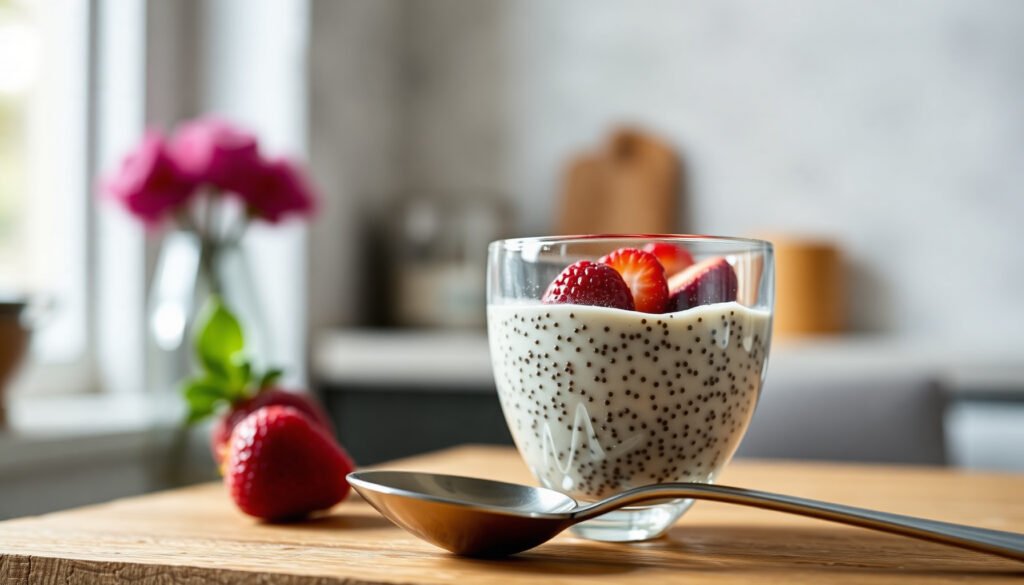
Chia seeds are also commonly used for texture: when chia is hydrated, it forms a gel that can replace sugar-heavy thickeners. In practical keto cooking, chia can help you build dessert-like textures (pudding, “overnight oats” swaps, or creamy bowls) while keeping added sugars out—an approach many meal planners use to stay consistent during the week.
From a nutrition standpoint, chia seeds provide fiber plus plant omega-3 fats (ALA—alpha-linolenic acid). According to the USDA FoodData Central (accessed 2026), 1 ounce (28 g) of chia seeds contains about 12 g total carbohydrate and 10 g fiber, which works out to roughly 2 g net carbs for many labels. That same serving also provides about 4.9 g of ALA omega-3s (USDA FoodData Central (accessed 2026)), so you get both satiety support and nutrient density in a small portion.
Net Carbs: How to Count Chia on Keto
Chia seeds can fit neatly into keto when you count net carbs correctly, because the fiber component is what keeps the “net” number low. Your process should be consistent: use the nutrition label for the specific brand you buy, then subtract fiber from total carbohydrates to estimate net carbs (total carbs − fiber).
This is especially important because chia labels can vary slightly between brands, and small differences can matter when you’re staying under a strict daily carb target. As a baseline, many clinicians and keto references describe nutritional ketosis as occurring when carbohydrates are limited to roughly 20–50 g per day for most people (Cleveland Clinic (accessed 2026)). Whether you’re aiming for the lower end or higher end, chia will only help if it doesn’t quietly push your net-carb total over your limit.
Here’s the nutrition reality many people overlook: chia is calorie-dense for its volume, so overeating it can raise both calories and total carbohydrates even when “net” looks small. For most keto plans, the net-carb calculation is the gatekeeper; the calories are the follow-up. If you track everything, you’ll see chia is not “free”—it’s just often “efficient.”
Net-Carb Impact of Common Chia Seed Portions (USDA-based)
| # | Chia Serving (g) | Total Carbs (g) | Fiber (g) | Net Carbs (g) | Calories | ALA Omega-3 (g) | Keto-Fit |
|---|---|---|---|---|---|---|---|
| 1 | 5 | 2.1 | 1.8 | 0.4 | 25 | 0.9 | ★★★★★ |
| 2 | 10 | 4.3 | 3.6 | 0.7 | 49 | 1.8 | ★★★★★ |
| 3 | 15 | 6.4 | 5.4 | 1.1 | 74 | 2.6 | ★★★★☆ |
| 4 | 20 | 8.6 | 7.1 | 1.4 | 99 | 3.5 | ★★★★☆ |
| 5 | 25 | 10.7 | 8.9 | 1.8 | 123 | 4.4 | ★★★☆☆ |
| 6 | 30 | 12.9 | 10.7 | 2.1 | 148 | 5.3 | ★★★☆☆ |
| 7 | 40 | 17.1 | 14.3 | 2.9 | 197 | 7.0 | ★★☆☆☆ |
Net-carb estimates are calculated using total carbs and fiber from USDA FoodData Central for 1 oz (28 g) chia seeds; ALA and calories are scaled proportionally. USDA FoodData Central (accessed 2026)
Best Ways to Eat Chia on Keto
Chia seeds work well on keto when you use them in low-sugar, high-control preparations—especially chia pudding and chia gel. The hydration process is more than a culinary trick: it helps chia reach a texture that many people find easier to tolerate than dry seeds.
A simple keto-friendly approach is chia pudding using unsweetened milk or a cream alternative that fits your daily carb target. Since added sweeteners are the most common “hidden carb” in chia desserts, choose a plan where any sweetness comes from non-sugar options you already count in your macros. Then focus on portion consistency—many keto followers standardize servings so net carbs don’t drift upward across the week.
Another practical use: chia gel as a thickener for sauces or keto desserts. This lets you reduce reliance on sugar-heavy ingredients (like thickened syrups), while still getting a satisfying mouthfeel. In my own cooking process, I’ve learned that how you introduce chia matters for tolerance—but .
Finally, you can add small amounts to yogurt or smoothies, but treat it like a measured ingredient rather than a “free add.” Smoothies are notorious for carbohydrate creep because fruit and flavored dairy stack quickly. If you’re counting, calculate chia’s net carbs first, then build the rest of the drink around what’s left of your carb budget.
What Can Go Wrong (Common Mistakes)
Chia seeds can cause problems on keto mostly when portion sizes, hydration, or carb counting get sloppy. The “net carbs are low” message is true in many cases, but it doesn’t mean chia is harmless in unlimited amounts.
First, overdoing the portion can quietly raise both calories and total carbohydrates. Keto success depends on staying under your daily net-carb limit, which means chia is one input among many. If you’re already eating other higher-fiber or higher-carb foods, chia can become the tipping point even if it still looks “keto-friendly” on its own.
Second, ignoring fiber-to-water needs can lead to discomfort. Dry chia expands as it absorbs liquid, which is why many people do better when chia is hydrated into gel or pudding. If you’re prone to constipation or digestive sensitivity, start with a smaller dose and build up slowly so your gut adapts.
Third, some people assume “keto” means “no limits.” Chia seeds can still push you over your daily net carbs—particularly if you combine them with other carb-containing foods (like certain dairy products, nut flours, or sweetened beverages). Also remember that keto isn’t just carbohydrate math; overall food quality and satiety still affect adherence.
Verdict: Should You Add Chia Seeds to Keto?
Chia seeds are generally a solid keto-friendly option for most people, especially if you use them as a measured fiber boost and thickener. The key advantage is that chia often delivers meaningful fiber with relatively low estimated net carbs, which can help you stay satisfied while keeping your daily carb total on target.
That said, chia isn’t universally ideal. The downsides are (1) portion creep because chia is calorie-dense, and (2) digestive effects like bloating or cramps in sensitive individuals, especially when chia is increased too quickly or consumed dry. Some people are also cautious due to swallowing comfort—dry chia can feel stuck for some—so choosing chia gel or pudding can be more practical.
If you’re taking medications that interact with blood clotting or you’re managing a medical condition where clinicians advised specific dietary fiber guidance, ask your clinician before increasing chia intake. Omega-3 fats are beneficial for many diets, but high intakes aren’t the same as medication guidance.
To frame the decision clearly, here’s a quick comparison of trade-offs:
- Pros (why chia fits keto)
-
- Low estimated net carbs for many labels due to high fiber content.
- Gel texture can reduce the need for sugar-based thickeners.
- Provides ALA (plant omega-3) alongside fiber.
- Cons (what to watch)
-
- Can cause bloating/cramps if you increase fiber too fast or don’t hydrate.
- Calories add up if portions creep—especially in “dessert” servings.
- Net-carb math differs by label and by individual tolerance, so tracking still matters.
Quick Keto Chia Checklist (Scan-Save)
– Check the label: total carbs and fiber
– Calculate net carbs (total carbs − fiber)
– Start with a small portion and increase only if you feel good
– Prefer chia gel/pudding over dry chia
– Keep an eye on total daily net carbs, not just chia’s “keto-friendly” status
Frequently Asked Questions
Are chia seeds keto diet friendly, and how many carbs do they contain?
Yes—chia seeds are generally keto diet friendly because they’re low in digestible net carbs and high in fiber. Per 1 tablespoon (about 12–13 g), chia seeds typically have around 4–5 g of total carbs and about 2–3 g of net carbs (varies by brand and serving size). This makes them a practical keto ingredient for many people aiming to stay under their daily net-carb limit.
What is the best way to eat chia seeds on a keto diet to stay within your macros?
The easiest keto approach is to measure a serving (for example, 1–2 tablespoons) and track the net carbs rather than total carbs. Many people use chia seeds as a topping for Greek yogurt or keto smoothies, or mix them into water or almond milk for a quick chia pudding. Because chia can absorb liquid and expand, starting with smaller amounts can help you dial in tolerance and portion size.
How many tablespoons of chia seeds can I have per day on keto?
A common keto-friendly range is about 1–2 tablespoons per day, depending on your personal carbohydrate target and how the seeds fit into your overall meal plan. If you’re more sensitive to fiber or you’re new to chia, start with 1 tablespoon and monitor your digestion and blood sugar response. Always calculate your net carbs from the label to ensure you’re staying within your keto goals.
Why do chia seeds work well for keto dieters, beyond their carb content?
Chia seeds are rich in healthy fats, fiber, and micronutrients, which can support satiety and help reduce cravings—two common keto pain points. Their fiber can slow digestion, and many keto eaters find chia helps them feel fuller between meals. They also provide minerals like calcium and magnesium, which may be helpful when adjusting to a lower-carb way of eating.
Which keto recipes include chia seeds that are easy to make and control net carbs?
Popular keto chia seed options include chia pudding made with unsweetened almond milk and a keto-friendly sweetener, and overnight chia cups with heavy cream or coconut milk. You can also add chia seeds to plain Greek yogurt or use them as an egg-free thickener for smoothies and sauces. For the most carb control, choose no-sugar-added ingredients, portion the chia by tablespoons, and confirm net carbs using your specific chia seed nutrition label.
📅 Last Updated: November 24, 2026 | Topic: is chia seed keto diet friendly | Content verified for accuracy and freshness.
References
- Ketogenic diet
- Chia seed
- https://www.mayoclinic.org/healthy-lifestyle/recipes/diet/ketogenic-diet/diet-recipes/rcs-20078088
- Checking your browser – reCAPTCHA
- chia seeds ketogenic diet – Search Results – PubMed
- ketogenic diet carbohydrate intake – Search Results – PubMed
- https://my.clevelandclinic.org/health/articles/17577-ketogenic-diet
- https://scholar.google.com/scholar?q=chia+seeds+ketogenic+diet Google Scholar
- https://scholar.google.com/scholar?q=chia+seed+net+carbohydrates+fiber+ketogenic Google Scholar
- https://scholar.google.com/scholar?q=ketogenic+diet+carbohydrate+intake+guidelines+review Google Scholar