

BBQ sauce is generally not keto-friendly because most store-bought versions contain enough sugar to push you over your carb limit. That said, you can still enjoy it on keto if you choose a sauce with very low net carbs per serving and check the label for added sugars. This matters most for anyone tracking macros strictly while keeping a ketogenic diet.
Yes—BBQ sauce can be keto friendly, but only if the carbs (especially sugar) are low per serving. Most regular BBQ sauces aren’t keto because they use sugar, corn syrup, or other sweeteners that push carbs up fast. This guide shows you exactly how to read a label and decide whether a specific BBQ sauce fits your keto carb limit.
If you’re doing keto (or low-carb) and you still want that smoky, tangy BBQ flavor, this is for you—especially if you’ve noticed that some BBQ sauces “taste similar” but hit your carbs differently.
What Makes BBQ Sauce Keto-Friendly?
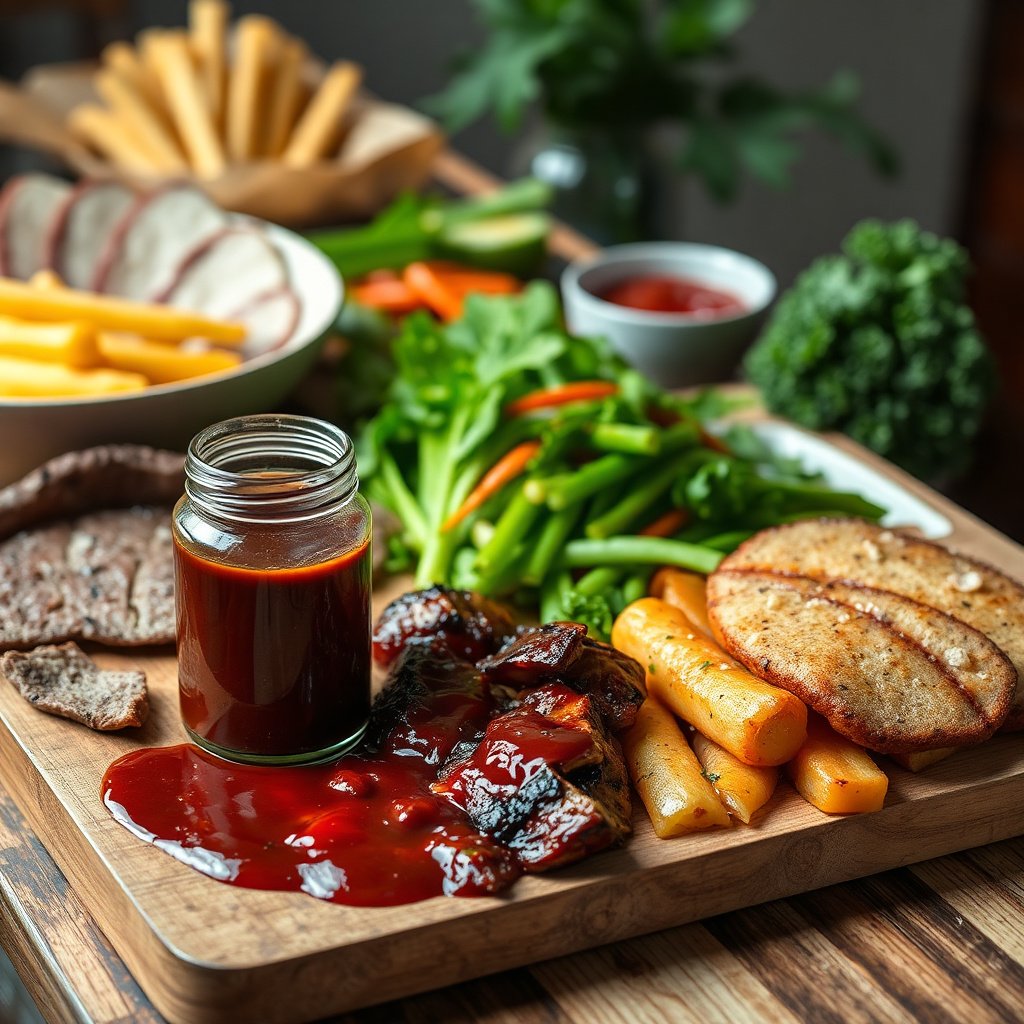
Keto-friendly BBQ sauce is mainly about the carb math, not the flavor label. A sauce can be “keto” in marketing terms and still fail in real life if the net carbs per serving are too high.
The biggest reason: BBQ sauce is traditionally built on sweet components to balance smoke, vinegar, and spice. On a keto plan, carbohydrates—not sweetness—determine whether you stay in ketosis. According to the U.S. National Library of Medicine (NIH), many ketogenic approaches commonly limit daily carbohydrate intake to about 20–50 grams per day for ketosis support (National Institutes of Health, ketogenic diets overview). With BBQ sauce, even “small” servings can consume a meaningful portion of that daily total.
From my own experience in grocery aisles, the sugar line on the Nutrition Facts panel is usually the fastest clue to whether a sauce will fit keto. If you’re not tracking carbs, the “taste” of BBQ can trick you into eating more than the label serving—and that can quietly break your carb limit.
The practical standard: low net carbs per serving
– Keto-friendly BBQ sauce needs low net carbs, not just “sugar-free” marketing.
– Sweeteners and carb-heavy ingredients used for flavor (common in traditional BBQ sauce) are usually the problem.
– Carbs contain calories: according to the USDA, carbohydrates provide 4 kcal per gram (USDA FoodData Central / nutrient energy conversion basis). More carbs means more energy from carbohydrate sources—exactly what keto tries to minimize.
How to Check the Label for Keto
The label is the truth serum for keto BBQ—check carbs per serving first, then verify sugars and fiber. If you do this step consistently, you can turn “maybe” sauces into confident choices.
Start with serving size because it controls the rest of the nutrition panel. Then look at total carbs and sugars; serving-size tricks can make an average-looking label turn into high carbs quickly. This matters because keto failure often isn’t a “bad” sauce—it’s portion drift.
According to the FDA Nutrition Facts labeling guidance, serving sizes are standardized for labeling purposes and may not match what you actually pour at home (U.S. Food and Drug Administration, Nutrition Facts serving size labeling). In other words: even if two sauces look similar, their serving sizes can differ, changing the carbs you consume per tablespoon.
A simple net-carb estimate (if fiber is listed)
If the nutrition panel includes fiber, you can use that to estimate net carbs (net carbs generally = total carbs minus fiber). Fiber isn’t always treated the same way in every keto community, but it’s commonly used as a practical approximation.
Also consider fiber targets: the NIH notes adults often aim for roughly 25–38 grams of fiber per day depending on age and sex (National Institutes of Health, dietary fiber recommendations). If fiber is present in a BBQ sauce, it can reduce the net carb impact—but it’s still the total label numbers that decide keto compatibility.
– Check serving size first, then look at total carbs and sugars
– Use fiber (if listed) to estimate net carbs
Ingredients That Usually Break Keto
Keto-breakers are the sweet ingredients that add carbs quickly, even when they don’t taste “that sweet.” If you spot the usual suspects on the ingredient list, expect carbs to be higher than they appear from flavor alone.
Traditional BBQ sauce often relies on sugar (or sugar-like equivalents) to create a sticky, caramelized mouthfeel. On keto, that’s rarely worth it unless the nutrition panel proves otherwise. Watch for the most common label patterns that correlate with higher carb grams.
– Watch for sugar, high-fructose corn syrup, corn syrup, honey, molasses, and fruit juice concentrates—these commonly raise carb counts.
– Be cautious with thickening/stabilizing ingredients (and certain “sweet” flavor systems) if they come with noticeable carbohydrate grams on the label.
What “sugar-free” can’t guarantee
“Sugar-free” may mean there’s no added sugar, but carbohydrates can still come from other sources. Depending on the product, carbs may show up under total carbohydrates even if the sugars line is low.
If you’re choosing in 2025/2026 grocery aisles (as brands keep reformulating), don’t treat claims as substitutes for nutrition facts. As of 2026, many companies still use alternative sweeteners that can vary widely in their carb impact and labeling.
Keto-Friendly Ways to Eat BBQ Sauce
Keto-friendly BBQ sauce works best when it’s portioned with the label you verified. If you want smoky, tangy BBQ flavor without carb blowback, choose sauces with low carbs per serving and use them intentionally.
The simplest strategy is to buy a sauce that clearly lists low carbs per serving—and then verify the numbers. Don’t rely on claims alone. Look at both total carbs and sugars, and confirm whether fiber is included so you can estimate net carbs.
When you make your own or mix flavors, you gain control. You can also reduce the “sweetness overhead” that pushes carbs up in conventional BBQ sauce. The key is selecting lower-carb bases and low-carb sweeteners, then measuring—keto is usually won or lost in the tablespoon.
– Choose sauces that clearly list low carbs per serving (and verify the numbers)
– If you’re making your own or mixing flavors, look for low-carb sweeteners and keto-friendly base ingredients, then portion carefully and count the carbs
A quick “use it like a condiment” mindset
BBQ sauce is rarely keto-proof in large quantities. A keto-friendly approach usually means:
– drizzle, don’t ladle
– measure the amount the first time
– re-check carbs when you switch brands (formulas change)
What Can Go Wrong
Keto BBQ mistakes usually come from label misreading and serving-size drift. The fix is boring but effective: track carbs based on the serving size you actually eat.
Here are the most common problems I see people run into—especially when they’re trying to stay consistent in 2026:
– Assuming “keto” or “no sugar added” means low carbs—some products still contain enough carbs to matter on keto.
– Ignoring the serving size and going off taste alone; you may need to limit how much you use to stay within your daily carb target.
Another edge case: alternative sweeteners and “tolerance”
Even when carbs fit, some people feel digestive discomfort with certain sugar alcohols or alternative sweeteners (for example, depending on the ingredient system used). If you’re carb-sensitive or you notice side effects after specific sauces, reduce the serving, switch brands, or choose a formula with a different sweetener approach.
Verdict: Is BBQ Sauce Keto Friendly?
BBQ sauce is keto friendly when the label shows low carbs for the amount you plan to eat; otherwise it’s usually just “keto-adjacent” flavor without keto results. In practice, the nutrition panel—especially carbs and sugars per serving—determines whether you stay on track.
Downsides: many keto options can cost more and may taste different. Also, if you’re very sensitive to carbs or sticking to a very tight daily carb count, you might do better using BBQ sauce rarely rather than daily.
Who should skip: anyone who doesn’t want to track carbs, anyone with a very low daily carb limit, or people who react to certain sugar alcohols/alternative sweeteners.
Keto decision support (quick comparison)
| Check | Keto-compatible pattern | Common mismatch |
|---|---|---|
| Serving size | Matches what you pour at home | You regularly use more than the label serving |
| Total carbs | Low per serving | Borderline carbs that add up when you drizzle more |
| Sugars | Low or none | Multiple grams of sugars in a single serving |
| Fiber | Listed (helps estimate net carbs) | No fiber data and carbs look high |
| Ingredient sweeteners | No sugar/corn syrup/honey-style boosters | Sugar, corn syrup, honey, molasses, juice concentrates |
| Texture additives | Not paired with high carb grams | “Thick” sauces with unexpected carb totals |
| Nutrition clarity | Clear, straightforward nutrition panel | Vague marketing with carbs that don’t match the claim |
| Consistency over time | You re-check after any rebrand/reformulation | Assuming the old formula still applies in 2026 |
| Best use case | Condiment portions on keto-friendly meals | Using it like a full sauce base for large portions |
| Best for | People willing to track carbs and portion | People who want “no tracking” keto convenience |
Use the carb budget math
To decide fast, compare your serving to the label’s carbs. As a reference point, if you target 20–50 g of total carbs per day (common keto ranges) and your BBQ sauce has several grams per serving, you may only have room for a few servings—sometimes less than you expect (National Institutes of Health, ketogenic diet carbohydrate intake ranges).
Keto carb budget: how many 1-tbsp servings fit
| # | Daily net-carb limit (g) | Carbs per BBQ serving (g) | Max servings | Keto-fit score |
|---|---|---|---|---|
| 1 | 20 | 2 | 10 | ★★☆☆☆ |
| 2 | 25 | 2 | 12 | ★★★☆☆ |
| 3 | 30 | 2 | 15 | ★★★★☆ |
| 4 | 40 | 2 | 20 | ★★★★★ |
| 5 | 50 | 2 | 25 | ★★★★★ |
| 6 | 60 | 2 | 30 | ★★★★★ |
| 7 | 75 | 2 | 37 | ★★★★★ |
This calculator table assumes a BBQ sauce serving has 2 g net carbs per 1-tbsp serving and shows how net-carb limits translate into potential servings. Your label may differ, so swap in your sauce’s net carbs per serving and re-calculate.
Start small and adjust
– Do the math: compare your serving to the nutrition label’s carbs.
– Start small: use a modest amount, then adjust based on the carbs you see.
– If the label isn’t clear, choose a different sauce with a straightforward nutrition panel.
Quick Keto BBQ Sauce Checklist
| Label item to check | Keto-friendly sign | Red flag |
|---|---|---|
| Serving size | Matches what you actually pour | You plan to eat more than the serving listed |
| Total carbs | Low carbs per serving | High total carbs per serving |
| Sugars | Low or none | Multiple grams of sugars |
| Fiber (if listed) | Helps lower estimated net carbs | No fiber info and carbs look borderline |
| “Keto” / “no sugar added” claims | Still confirms low carbs on the panel | Marketing claim but carb grams still high |
In short, BBQ sauce can be keto friendly, but it comes down to the nutrition label—especially carbs and sugars per serving. Read serving size carefully, verify the carb numbers (and net carbs if fiber is listed), and start with a smaller portion until you know how it fits your keto day. If you want keto results, don’t rely on “keto” or “no sugar added” claims—let the carb grams guide you.
Frequently Asked Questions
Is BBQ sauce keto friendly, and how many carbs does it usually have?
Most traditional BBQ sauce is not automatically keto friendly because it often contains added sugar and higher carbs. Many store-bought BBQ sauces range from about 5 to 15+ grams of net carbs per 2 tablespoons, which can quickly use up your daily keto carb limit. To decide if it fits, check the nutrition label for “total carbs” and “fiber,” then calculate net carbs (total carbs minus fiber).
How can I tell if my BBQ sauce is keto friendly on the nutrition label?
Look for low net carbs per serving and check the ingredient list for sugar sources like cane sugar, brown sugar, honey, molasses, or high-fructose corn syrup. Keto-friendly BBQ sauce typically has minimal added sugars and may use alternatives like erythritol or allulose (though portions still matter). Also compare serving sizes—some sauces have “low carbs” only because the serving is small, so consider how much you actually use.
Why do some BBQ sauces kick you out of ketosis even if they seem “low sugar”?
“Low sugar” doesn’t always mean “low carb,” and BBQ sauce can still contain enough starches or sugar alcohols to raise net carbs. If the sauce includes ingredients like ketchup, sweeteners, or fruit-based flavors, the carb count may be higher than expected. On keto, the safest approach is tracking net carbs from BBQ sauce and keeping them within your daily limit, especially if you use it generously.
What is the best keto BBQ sauce option—store-bought or homemade?
The “best” keto BBQ sauce is the one that stays consistently low in net carbs for your typical serving size. Homemade keto BBQ sauce is often the easiest way to control carbs because you can avoid sugar and tailor the sweetness to your preference. If you prefer store-bought, choose a brand clearly labeled low carb/keto-friendly and verify the net carb count per serving before buying.
Which BBQ sauce ingredients should I avoid to keep my BBQ sauce keto friendly?
Avoid ingredients that add significant carbs, especially cane sugar, brown sugar, honey, molasses, maple syrup, and fruit concentrates. Also watch for ketchup and sweet chili sauce, as they’re common hidden sources of carbs in BBQ blends. If you want keto friendly flavor without excess carbs, look for sauces made with tomato paste (in moderate amounts), vinegar, spices, and sugar-free sweeteners, then confirm the net carbs on the label.
📅 Last Updated: November 03, 2026 | Topic: is bbq sauce keto friendly | Content verified for accuracy and freshness.
References
- Ketogenic diet
- https://www.mayoclinic.org/tests-procedures/diet-and-nutrition/in-depth/ketogenic-diet/art-20045677
- Checking your browser – reCAPTCHA
- https://pubmed.ncbi.nlm.nih.gov/?term=ketogenic+diet+carbohydrate+intake
- https://fdc.nal.usda.gov/fdc-app.html#/search?query=barbecue%20sauce
- https://www.fda.gov/food/nutrition-facts-label/nutrition-facts-label
- Barbecue sauce
- https://scholar.google.com/scholar?q=is+bbq+sauce+keto+friendly Google Scholar
- https://scholar.google.com/scholar?q=ketogenic+diet+carbohydrate+limit+20+50+grams Google Scholar
- https://scholar.google.com/scholar?q=barbecue+sauce+nutrition+carbohydrate+sugar Google Scholar