Keto chili comes together by browning seasoned ground meat, simmering it with low-carb peppers and onions, then thickening the sauce until it tastes like classic chili. You’ll need ground beef or turkey, olive oil, bell pepper (or poblano), garlic, chili spices, beef broth, and a low-carb thickener such as tomato paste or extra simmer time. Follow the steps and you’ll have a hearty keto-friendly bowl ready in under an hour.
Make keto chili by browning your meat, building a rich tomato-and-spice base, then simmering until it thickens—without sugary beans. This guide walks you through the exact order of steps so you get bold chili flavor while keeping it low-carb. You’ll also get swap ideas (like bean-free thickening) and troubleshooting tips for when it turns out too watery or too bland.
If you’re cutting carbs but still want a classic comfort-food chili, this is for you. It’s especially helpful if you’ve tried “keto” recipes that tasted off because the seasonings or add-ins weren’t actually low-carb.
Keto chili ingredients (and smart swaps)
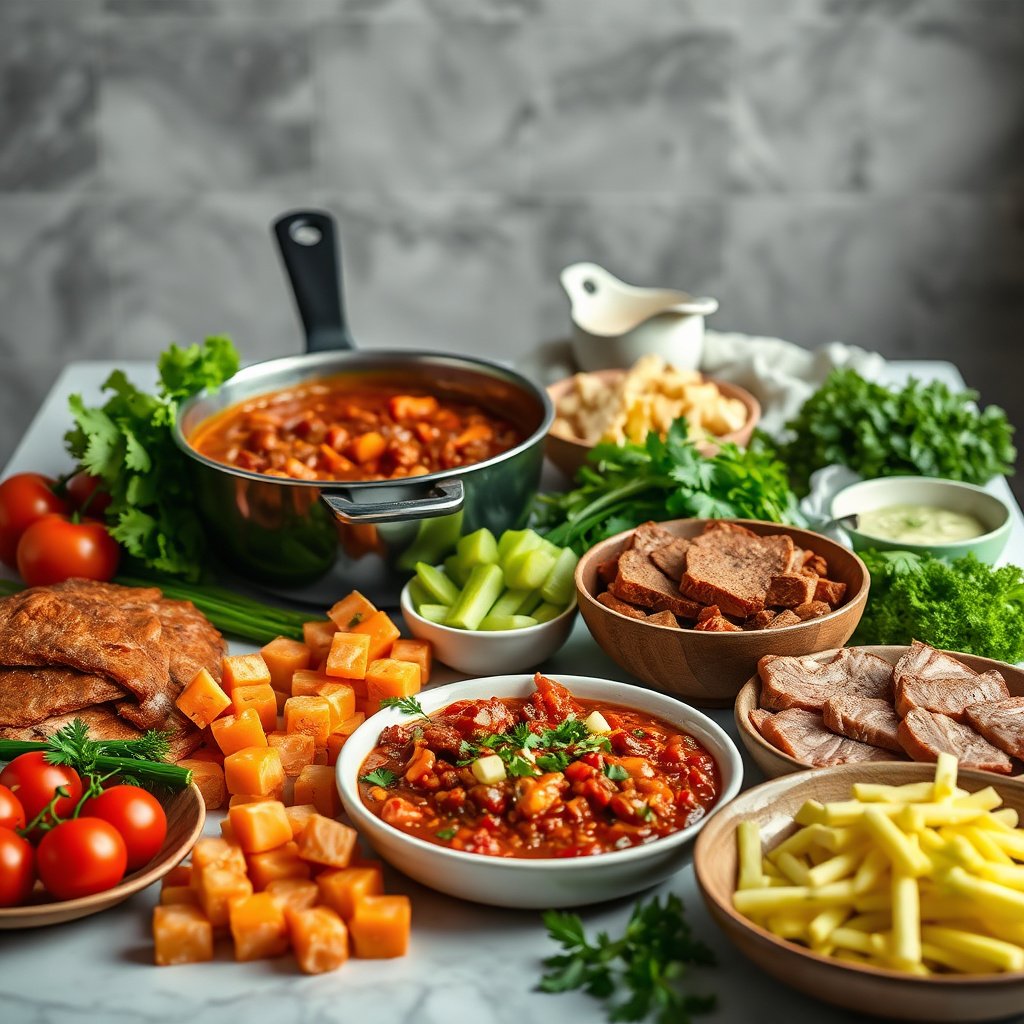
The fastest way to make keto chili taste “real” is to start with low-carb building blocks and treat thickening as a technique, not a bean replacement. If you choose the right ingredients up front, you won’t need sugary shortcuts—or guesswork later.
What to use (and what to skip)
Keto chili works best when the ingredient list matches how chili gets its flavor: browned meat, aromatics, a tomato-spice foundation, then time. Traditional chili ingredients like beans and corn add texture, but they also bring a lot of carbohydrates and can shift the dish away from keto goals.
– Start with a meat base (ground beef or turkey) and choose toppings you actually like (cheddar, sour cream, avocado—optional).
– Skip traditional chili add-ins that add carbs, especially beans and corn; aim for bean-free thickening instead.
– Use keto-friendly chili seasoning: read labels for added sugar, and consider adding extra spices (like cumin or smoked paprika) if your blend is mild.
Ingredient choices that protect low-carb goals
Most “keto chili” disappointments come from one of two places: (1) seasoning blends with added sugar, or (2) ingredient swaps that look low-carb but add hidden carbs in meaningful amounts.
A helpful way to think about it is carbs per “impact moment”:
– Beans/corn are high-impact carbs because they add both volume and carbohydrates.
– Tomato products bring flavor and body with controllable carb amounts.
– Cheese or fat finishes the dish by improving mouthfeel (that rich, satisfying thickness people miss without beans).
According to the International Society of Sports Nutrition, many ketogenic diets commonly keep daily carbohydrate intake in the ~20–50 g/day range (2018) (International Society of Sports Nutrition, 2018). That’s why chili components that seem small on a label can matter in a whole-day context.
Total Carbohydrates in Common Chili Ingredients (per 100 g, USDA FoodData Central)
| # | Ingredient | Total carbs (g) | Typical chili role | Keto suitability |
|---|---|---|---|---|
| 1 | Chickpeas (cooked) | 27.4 | Protein/volume | ★ ★ |
| 2 | Black beans (cooked) | 23.7 | Texture/heartiness | ★ ★ ★ |
| 3 | Kidney beans (cooked) | 22.8 | Texture/heartiness | ★ ★ ★ |
| 4 | Corn kernels (cooked) | 19.0 | Sweet crunch | ★ ★ ★ |
| 5 | Tomato paste (canned) | 19.0 | Flavor concentration | ★ ★ ★ |
| 6 | Tomato sauce (canned) | 9.0 | Sauce base | ★ ★ ★ ★ |
| 7 | Cheddar cheese | 1.3 | Finish/texture | ★ ★ ★ ★ ★ |
Step-by-step: build flavor, then simmer
The best keto chili comes from the correct cooking order: brown first, build the tomato-spice foundation next, and simmer long enough to thicken. If you change the order, flavor compounds don’t develop the same way, and the final texture can stay thin.
Step order that matches how chili tastes “right”
Think of this as a mise en place approach (having elements ready) plus a classic sauce workflow: Maillard browning → deglaze → spice bloom → reduction. That workflow is what creates chili’s deep, savory character.
– Brown the meat in a hot pan and break it up well so you get browned edges (that’s where a lot of chili flavor comes from).
– Sauté aromatics (onion/garlic if you use them) and bloom your spices with tomato paste so the seasoning tastes stronger.
– Add liquid (broth or unsweetened tomato products), stir to scrape up browned bits, then simmer until the chili smells “chili-hot” and cohesive.
Why this order matters (not just “because recipes say so”)
When ground beef or turkey browns, surface proteins and sugars react, producing the savory “browned edge” notes people associate with chili. Then the deglazing step—stirring and scraping the pan—pulls those browned bits into your sauce base.
Spices also behave differently when they’re bloomed (briefly cooked) rather than dumped in at the end. Blooming helps oils and aroma compounds distribute evenly through the tomato base, so the final chili tastes layered instead of one-dimensional.
As a practical guideline, you’re aiming for a base that looks cohesive before you add all the liquid, and a sauce that visibly thickens during simmering rather than staying watery.
Make it keto-friendly: thicken without beans
If you want bean-free keto chili, your goal is to replace “body” with reduction and fat/cheese finishing, not with sugary fillers. The good news is that tomato paste concentration plus careful simmering can get you very close to the hearty feel.
– If it’s thin, reduce it by simmering longer; keto chili often thickens as the flavors concentrate.
– For thickness, rely on keto-friendly methods like extra tomato paste reduction and/or cheese melted at the end (instead of beans).
– Taste and adjust: salt and acid (a splash of vinegar or a squeeze of lime) can make a big difference in keto chili that tastes “missing something.”
Bean-free thickening options (what to do and why)
Here’s the key trade-off: beans naturally contribute starch and fiber to thicken, but they also add carbohydrates fast. For example, cooked black beans are roughly ~20 g of total carbohydrate per 1/2 cup serving (USDA FoodData Central, accessed 2026). That’s a meaningful chunk in the context of typical ketogenic carb ranges (International Society of Sports Nutrition, 2018).
So instead, thickening in keto chili usually comes from:
– Tomato paste concentration (more flavor per spoonful)
– Longer simmer time (water evaporates; sauce coats a spoon)
– Cheese finish (adds emulsified fat and protein for mouthfeel)
Keto-friendly thickening comparison (quick pros/cons)
| Thickening method | Pros (keto benefit) | Cons / watch-outs |
|---|---|---|
| Extra tomato paste + simmer | Deepens chili flavor and thickens without beans | Can taste “metallic” if overcooked—bloom briefly, then simmer |
| Uncovered reduction | Most reliable way to fix watery chili | Requires monitoring to prevent scorching |
| Cheese melted at the end | Improves thickness and richness immediately | Add off-heat to avoid graininess |
Seasoning finish: salt and acid do more than you think
Many low-carb chili failures taste “flat” rather than plainly under-spiced. That’s often a salt/acid balance problem, not a cumin problem.
– Salt makes flavors read clearly.
– Acid (vinegar or lime) brightens the tomato-spice base so it tastes complete.
If you’re building flavor in 2026 kitchens where “sugar-free” doesn’t always mean “no sweetness,” finishing with acid helps counter any lingering mellow notes from tomato products or fat.
Variations you can make without changing the plan
You can customize keto chili (spice level, protein, cooking vessel) without breaking the core order: brown → bloom → simmer → thicken. Keep the method steady, and your variations will still taste like chili rather than a different dish wearing chili seasoning.
– Spicier version: add jalapeño or hot sauce during simmer, then top with cooling fat (cheese or sour cream) if it gets too hot.
– Chicken chili: swap meat for shredded chicken; simmer to blend flavors, then thicken using the same bean-free approach.
– Slow cooker option: follow the same build (brown meat + sauté aromatics if you can), then use so it thickens properly.
Practical variation guidance
If you want a spicier outcome, add heat during simmer, not only at the end. That lets chili heat integrate with tomato and spice rather than sitting on top.
For chicken chili, shredded chicken can release less fat than ground beef, so you may need a slightly richer finish (for example, a cheese melt) to replicate the mouthfeel you’d get from browned ground meat.
Slow cookers can be great for keto chili, but thickening is the real constraint. Without enough reduction time, the chili stays “soup-like,” which is exactly what you’re trying to avoid.
What can go wrong (and how to fix it)
Keto chili usually goes wrong because of hidden sugar, insufficient simmer/reduction, or missing layered seasoning. Fixing it is often less about adding more spices and more about correcting the process.
– Using chili seasoning with hidden sugar: if your chili tastes sweet or “off,” check the label and switch blends or add spices yourself.
– Adding beans (even “small” amounts): beans push carbs up fast, and the texture becomes less “keto chili.”
– Watery chili: tomatoes and broth vary—reduce longer, or add more tomato paste and simmer until it coats a spoon.
– Bland flavor: chili needs seasoning layering—spices should cook briefly with tomato paste, not just dumped in at the end.
Troubleshooting logic that works in real kitchens
1) Taste the seasoning first. If your spice blend lists sugar (or comes across sweet), it will affect the whole pot. In 2026, many store blends are “tomato-forward,” but sweetness can still sneak in.
2) Check thickening visually. “Cooked” doesn’t always mean “thick.” A practical test is whether it coats a spoon and holds a line when you swipe a finger through it.
3) Balance with salt + acid at the end. If it tastes dull, try a small adjustment rather than a large spice rescue. Brightening the base often fixes “bland” faster than adding more cumin.
4) Re-thicken without beans. If you overshot and ended up too thin, reduce uncovered. If it’s still loose, simmer tomato paste a bit longer or finish with cheese off-heat.
Verdict / tip + scanable checklist
Keto chili is worth it if you want chili flavor without beans and you’re okay with a different texture than classic bean chili. The downside is that the “hearty” thickness beans provide isn’t there—so you’ll need to reduce, thicken with tomato paste/cheese, and season well. Skip this approach if you specifically want bean-based chili for fiber and the authentic texture.
Quick keto chili checklist
| Step | Do this | If it fails, try this |
|---|---|---|
| Brown meat | Cook until browned, stir well | Drain excess grease; keep flavor from the browned bits |
| Spice layer | Bloom spices with tomato paste | Add a little more cumin/smoked paprika; taste and adjust |
| Beans | Keep it bean-free | Replace with reduction/thickening (tomato paste/cheese) |
| Simmer to thicken | Reduce until it coats a spoon | Simmer longer; add more tomato paste |
| Finish | Top or melt cheese at the end | Add acid (lime/vinegar) and salt if flat |
Frequently Asked Questions
How do you make keto chili without beans?
To make keto chili without beans, use diced onions and bell peppers in smaller amounts and rely on ground beef or turkey for body. Brown your meat first, then simmer with keto-friendly chili seasoning, crushed tomatoes (use sparingly), and low-sugar broth until thick. For extra richness, add tomato paste in moderation and let the chili reduce, which helps you keep it keto while avoiding beans’ carbs.
What are the best low-carb ingredients for keto chili?
The best low-carb ingredients for keto chili include ground beef (80/20 or fattier cuts), pork, or chicken, plus onions and peppers in controlled portions. Choose spices like cumin, chili powder, smoked paprika, and garlic powder, and use low-sugar tomato products if you include them at all. To thicken keto chili without flour, rely on reduced simmering, extra fat from the meat, or add a small amount of xanthan gum as needed.
How can you thicken keto chili while keeping it low carb?
The simplest way to thicken keto chili is to simmer it uncovered so excess liquid evaporates and the sauce reduces naturally. If you need a faster fix, use keto-friendly thickeners like xanthan gum (start with a tiny pinch) or an immersion blender to puree part of the chili. You can also add more ground meat or a bit of cream cheese during the last few minutes for a creamy, keto-friendly texture—just keep an eye on portion sizes.
Why does keto chili sometimes taste bland or watery?
Keto chili can taste bland when the spices aren’t given enough time to bloom or when the seasoning is too mild for the amount of meat. Watery chili usually happens when the simmer time is too short or the liquid-to-meat ratio is off—especially if you’re using higher-carb canned tomato products. Fix it by seasoning generously, simmering longer to reduce, and using enough fat (from the meat) to carry flavor.
Which chili toppings work best for a keto diet?
Keto-friendly toppings for chili include shredded cheddar, sour cream, chopped green onions, diced avocado, and cilantro. If you want crunch, try crushed pork rinds instead of tortilla chips, or serve it over cauliflower rice for a low-carb base. Avoid high-sugar toppings like baked beans, regular ketchup, and sugary barbecue sauces; instead choose salsa or hot sauce that’s labeled low sugar.
📅 Last Updated: November 24, 2026 | Topic: how to make keto chili | Content verified for accuracy and freshness.
References
- Ketogenic diet
- Chili con carne
- https://www.mayoclinic.org/diseases-conditions/diabetes/in-depth/keto-diet/art-20390051
- https://www.britannica.com/topic/keto-diet
- https://www.niddk.nih.gov/health-information/weight-management/adult-overweight-obesity/dieting/ketogenic-diets
- ketogenic diet – Search Results – PubMed
- Checking your browser – reCAPTCHA
- https://scholar.google.com/scholar?q=keto+chili+recipe+low+carb Google Scholar
- https://scholar.google.com/scholar?q=ketogenic+diet+carbohydrate+restriction+review Google Scholar
- https://scholar.google.com/scholar?q=ketogenic+diet+safety+adverse+effects Google Scholar