

Getting enough fiber on a keto diet is crucial for digestive health and overall well-being. Fortunately, there are plenty of low-carb, high-fiber foods you can incorporate into your meals. In this article, you’ll learn practical ways to boost your fiber intake while staying within your keto limits. Emphasizing the right sources of fiber can enhance your diet, improve digestion, and maintain a balanced nutritional profile without compromising your low-carb goals.
Understanding Fiber and Its Importance
Fiber is a type of carbohydrate that the body cannot digest. Unlike other carbohydrates that the body breaks down into sugar molecules, fiber passes through the digestive system undigested, promoting important health benefits. There are two main types of fiber: soluble and insoluble. Soluble fiber dissolves in water and can help lower blood cholesterol and glucose levels, while insoluble fiber adds bulk to the stool and aids in digestion. Both types are essential for maintaining gut health, regulating blood sugar levels, and promoting satiety, which is particularly beneficial for those on a ketogenic diet aiming for weight management.
In a keto diet, where carbohydrate intake is typically limited to induce a state of ketosis, incorporating sufficient fiber becomes critical. Low fiber intake can lead to digestive issues, including constipation, which is a common concern among those following a high-fat, low-carb regimen. Thus, understanding the role of fiber and its two types is imperative for anyone looking to optimize their health while adhering to the keto lifestyle.
Low-Carb, High-Fiber Foods to Include
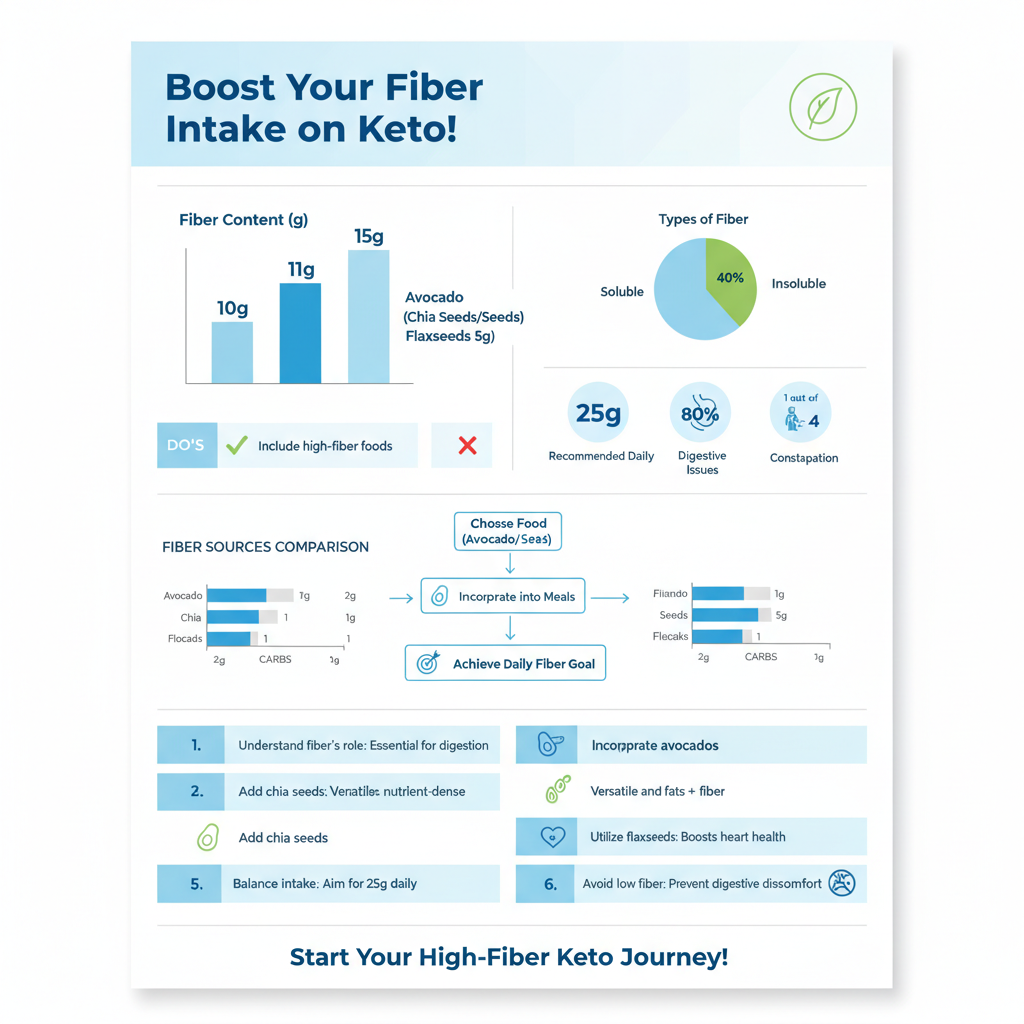

To ensure you are getting enough fiber on keto, it is essential to include low-carb, high-fiber foods in your diet. Avocados are an excellent choice, providing around 10 grams of fiber per medium fruit while packing healthy monounsaturated fats that support heart health. They can be enjoyed in salads, smoothies, or simply sliced and seasoned for a quick snack.
Chia seeds are another powerhouse of fiber, containing about 11 grams of fiber per ounce. These tiny seeds can absorb water and expand, making them perfect for adding to smoothies, puddings, or even as an egg substitute in keto baking. Their versatility and nutrient density make them a staple for anyone seeking to increase fiber intake without exceeding carbohydrate limits.
Other notable mentions include flaxseeds, which are also high in both soluble and insoluble fiber, and provide omega-3 fatty acids that offer additional heart health benefits. Incorporating these foods into your keto meal plan not only boosts fiber but also enhances the overall nutritional profile.
Incorporating Vegetables into Your Diet
Vegetables are a cornerstone of a high-fiber diet, and there are several low-carb options that fit perfectly within the ketogenic framework. Leafy greens such as spinach, kale, and arugula are not only rich in fiber but also low in calories, making them ideal for salads, sautés, and smoothies. For example, a cup of cooked spinach contains about 4 grams of fiber and is packed with vitamins A, C, and K.
Cruciferous vegetables like broccoli and cauliflower are also excellent choices for those on a keto diet. Broccoli offers about 5 grams of fiber per cup when cooked, and cauliflower provides around 2 grams per cup. Both can be roasted, steamed, or turned into rice alternatives, allowing for creative and fiber-rich meal options. These vegetables not only provide fiber but also contain antioxidants and important phytonutrients that support overall health.
Incorporating a variety of these vegetables into your meals not only enhances the fiber content but also adds flavor, texture, and essential vitamins and minerals, all while keeping carbohydrates in check.
Snack Ideas to Increase Fiber Intake
Snacking can often derail a keto diet if you’re not careful with your choices. However, there are plenty of fiber-rich, keto-friendly snacks that can keep you satisfied between meals. Nuts and seeds are among the best options. For instance, a one-ounce serving of almonds contains approximately 3.5 grams of fiber, while flaxseeds offer about 7.6 grams per ounce. These snacks can be eaten alone or added to yogurt or salads for an extra crunch and nutritional boost.
Keto-friendly bars are another convenient option; however, it is essential to choose those specifically designed to be low-carb and high-fiber. Look for bars that contain ingredients such as nuts, seeds, and fiber supplements like inulin or chicory root. These bars can provide a balanced source of fiber and protein, making them an excellent on-the-go snack.
By incorporating these fiber-rich snacks into your diet, you can effectively manage hunger, maintain energy levels, and support digestive health without compromising your macronutrient goals.
Utilizing Supplements for Fiber
For some individuals, it may be challenging to meet fiber needs solely through food sources, especially on a restrictive diet like keto. This is where fiber supplements can play a vital role. Psyllium husk is one of the most popular fiber supplements available. It is rich in soluble fiber and can help regulate bowel movements and improve overall gut health. Adding a tablespoon of psyllium husk to smoothies, soups, or baked goods can significantly increase fiber content without adding excessive carbohydrates.
Plant-based fiber supplements, such as inulin, are also excellent options. Inulin is a type of prebiotic fiber that nourishes beneficial gut bacteria, promoting a healthy microbiome. It can be easily added to smoothies, coffee, or used as a thickening agent in recipes. When using supplements, it is essential to stay hydrated, as fiber absorbs water and can cause digestive discomfort if not consumed with adequate fluids.
By strategically incorporating fiber supplements into your diet, you can ensure you are meeting your daily fiber requirements while adhering to keto guidelines.
Meal Planning for Fiber on Keto
Meal planning is crucial for successfully integrating fiber into your keto diet. Begin by creating balanced meals that combine fiber-rich foods with protein and healthy fats. For example, consider a meal of grilled chicken served over a bed of sautéed spinach and topped with avocado. This meal not only provides quality protein and healthy fats but also delivers an ample amount of fiber.
Keeping a food diary can also be beneficial. Tracking your fiber intake can help you identify patterns and areas for improvement. Apps and online tools can simplify this process, allowing you to log meals and monitor your daily fiber consumption. Aim for a fiber intake of at least 25 grams per day, adjusting based on individual needs and dietary responses.
Additionally, preparing meals in advance can help you avoid the temptation of unhealthy snacks or meals that lack fiber. Batch cooking or meal prepping can ensure you have fiber-rich options readily available, making it easier to stick to your dietary goals.
Incorporating enough fiber into your keto diet doesn’t have to be a challenge. By focusing on low-carb vegetables, seeds, nuts, and possibly supplements, you can achieve a healthy balance. Start implementing these tips today to optimize your keto journey and support your digestive health!
Frequently Asked Questions
What are the best low-carb sources of fiber for a keto diet?
On a keto diet, it’s essential to choose low-carb sources of fiber to maintain your carbohydrate limit. Some of the best options include avocados, chia seeds, flaxseeds, leafy greens like spinach and kale, broccoli, and cauliflower. Incorporating these foods not only helps you meet your fiber needs but also provides essential nutrients that support overall health.
How can I increase my fiber intake while staying within my keto macros?
To increase your fiber intake on a keto diet without exceeding your carbohydrate limits, focus on high-fiber, low-carb foods. Incorporating a variety of non-starchy vegetables, nuts, and seeds can help. Additionally, consider using fiber supplements like psyllium husk or inulin powder, which can easily be added to smoothies or baked goods to boost fiber content without adding significant carbs.
Why is fiber important on a keto diet?
Fiber is crucial on a keto diet because it aids digestion, promotes satiety, and helps maintain regular bowel movements, which can sometimes be disrupted due to the lower intake of carbohydrates. Moreover, fiber can help stabilize blood sugar levels, making it easier to adhere to the keto lifestyle and reducing cravings for high-carb foods. Ensuring adequate fiber intake is essential for overall gut health and metabolic function.
Which keto-friendly foods are high in fiber?
Several keto-friendly foods are high in fiber, including avocados, which provide about 10 grams of fiber per medium fruit, and chia seeds, which offer around 11 grams per ounce. Other high-fiber options include flaxseeds, mushrooms, and artichokes. By incorporating these foods into your meals, you can significantly boost your fiber intake while keeping your carb count low.
What are some tips for meal planning to ensure adequate fiber on a keto diet?
When meal planning for a keto diet, prioritize foods that are both low in carbs and high in fiber. Start by including a variety of non-starchy vegetables in your meals, such as zucchini, bell peppers, and leafy greens. Additionally, consider preparing snacks that combine nuts or seeds with nut butters or yogurt to enrich your fiber intake. Planning meals around high-fiber foods will help you meet your daily requirements while enjoying delicious and satisfying meals.
References
- https://www.healthline.com/nutrition/fiber-on-keto
- https://www.ncbi.nlm.nih.gov/pmc/articles/PMC6331118/
- https://www.webmd.com/diet/ss/slideshow-fiber-foods
- https://www.cdc.gov/nutrition/data-statistics/fiber.html
- https://www.mayoclinic.org/healthy-lifestyle/nutrition-and-healthy-eating/in-depth/fiber/art-20043982

