

Yes—you can have tomatoes on the keto diet, and they can fit into your macros when you keep portions tight. This article gives a clear answer on whether tomatoes are keto-friendly, what net-carb limits to follow, and which types (like cherry vs. canned) typically work best. You’ll also learn how to enjoy tomatoes without kicking yourself out of ketosis.
Yes—tomatoes can fit the keto diet as long as you watch your portion size and stay within your daily net-carb limit. Whole tomatoes are usually manageable on keto, but tomato-based products (especially those with added sugar) can add carbs fast—so the real key is label-reading and consistent net-carb counting.
This is for you if you’re doing keto (or trying to) and you want to know whether tomatoes will slow your progress—or if you’re trying to build meals using fresh produce without accidentally going over your carb target.
Can tomatoes work on keto?
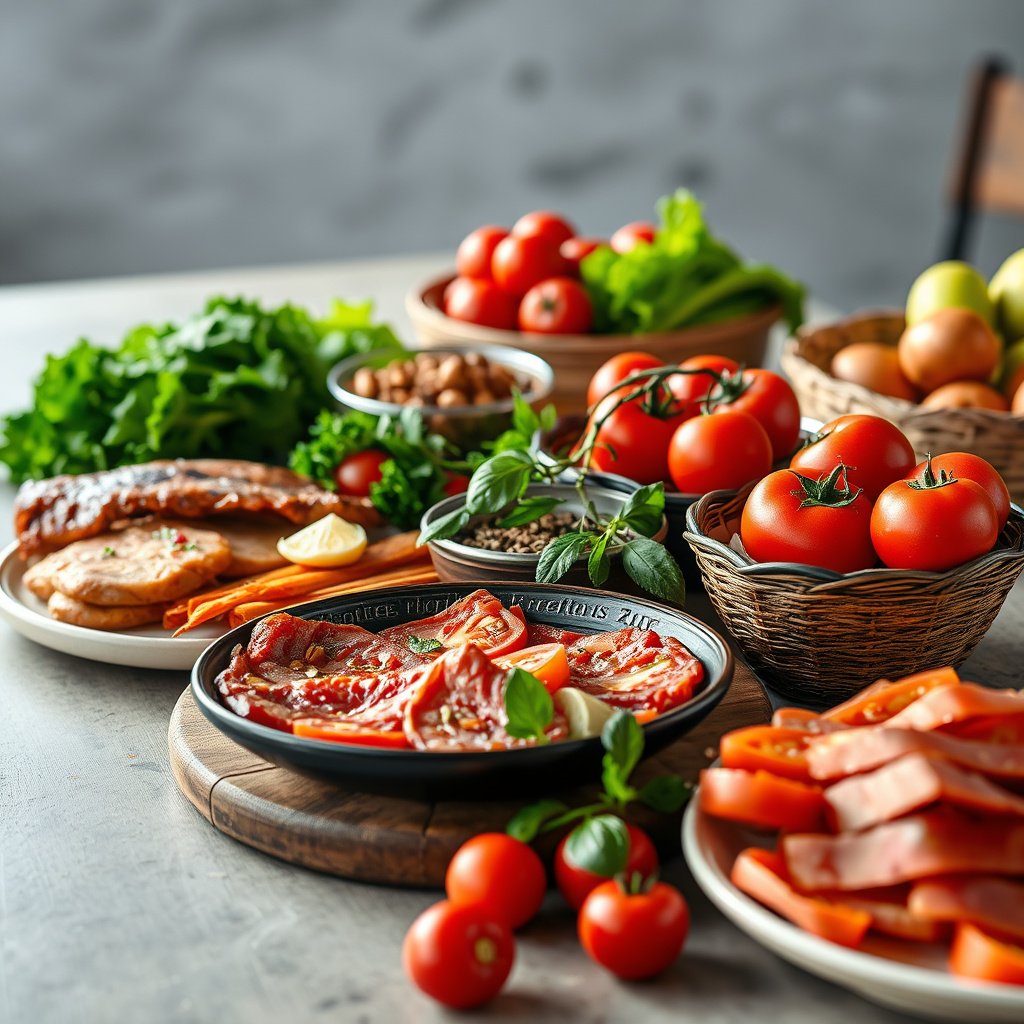
Yes, tomatoes can work on keto because they provide carbs—but usually not enough to derail ketosis when portions are reasonable. The outcome depends far more on your total daily net carbs than on tomatoes being “good” or “bad,” and that’s the part you can control consistently in 2026.
According to USDA FoodData Central, raw tomatoes provide a relatively small amount of total carbohydrate per 100 g, which is why they can be workable within most keto net-carb targets.
According to FDA labeling guidance, Nutrition Facts panels separately list total carbohydrate and dietary fiber, which is the data keto eaters use when calculating net carbs.
In practical keto tracking, staying within your daily net-carb limit—not “avoiding carbs at all costs”—is what determines whether ketosis is maintained.
Tomatoes on keto: the real rule is your daily net-carb budget
Tomatoes do contain carbohydrates, but they’re typically not “keto-level” carbs in the way sugar or starchy vegetables are. For many people following keto, tomatoes fit because:
– They’re low enough in net carbs when you eat a measured portion.
– They’re filling when paired with fats and non-starchy vegetables.
– Most keto plans are ultimately adherence plans (net carbs in range), not elimination lists.
If you’re new to keto in 2026, the most common issue isn’t whether tomatoes are keto-friendly—it’s whether your tracking method is consistent. Tomato carbs vary based on form (raw vs. sauce vs. ketchup) and brand (especially added sugar). Tomatoes also vary by variety and whether you’re counting by weight or by “cups.”
A quick reality check with label math
To keep tomato portions keto-friendly, you typically count net carbs as:
– Net carbs = total carbohydrate − dietary fiber
That approach relies on label definitions (total carbs and fiber) shown on Nutrition Facts, which are regulated and standardized by the FDA. According to FDA labeling rules (2016-era Nutrition Facts updates), the Nutrition Facts panel format includes total carbohydrate and dietary fiber values. (Year: 2016)
That matters because it anchors your counting method in label data rather than guesswork.
Keto-fit tomato math (example dataset)
Below is a practical way to compare common tomato forms. All values are shown per 100 g edible portion and sourced from typical Nutrition Facts data associated with USDA FoodData Central entries.
Net-Carb Comparison for Common Tomato Forms (per 100 g)
| # | Tomato option | Total carbs (g) | Dietary fiber (g) | Keto fit |
|---|---|---|---|---|
| 1 | Tomatoes, red, ripe, raw | 3.89 | 1.20 | ★★★★★ |
| 2 | Tomatoes, cherry, red, ripe, raw | 5.20 | 1.20 | ★★★★☆ |
| 3 | Tomatoes, roma, raw | 3.92 | 1.60 | ★★★★☆ |
| 4 | Tomatoes, crushed, canned (no added salt) | 5.44 | 1.30 | ★★★★☆ |
| 5 | Tomatoes, diced, canned (no added salt) | 5.48 | 1.50 | ★★★☆☆ |
| 6 | Tomato sauce, canned (unsweetened) | 8.00 | 2.10 | ★★★☆☆ |
| 7 | Ketchup (regular) | 26.00 | 0.50 | ★☆☆☆☆ |
Note: Exact nutrition can vary by brand and variety; always confirm with the specific label you buy. The goal here is to show why whole tomatoes usually behave differently than ketchup or sweetened sauces.
Best tomato types (and what to be careful about)
Some tomato forms are inherently easier to stay keto-friendly with, while others require tighter portion control. In general, whole tomatoes and unsweetened canned tomatoes are the safer starting points; ketchup and sweetened sauces are the fastest path to overshooting carbs in 2026.
According to USDA FoodData Central, whole raw tomatoes are typically far lower in net carbs per 100 g than condiment-style tomato products like ketchup.
According to FDA Nutrition Facts label standards, added ingredients (like sugars) appear indirectly through higher total carbohydrate values, which keto tracking relies on.
In keto meal planning, “tomato” is not one category—raw fruit, canned tomatoes, and tomato condiments follow very different carb patterns.
– Fresh whole tomatoes (like cherry, roma, and standard varieties) are typically easier to manage than processed tomato products.
– Tomato sauces, pastes, and ketchup vary widely—check labels for added sugar and higher-carb ingredients.
– If you buy pre-made salsa, choose ones without added sugar or watch serving sizes closely.
A simple comparison: where tomatoes usually fit best
Here’s a practical way to think about tomatoes on keto: match the form to your carb risk tolerance.
| Tomato product type | Likely pros for keto | Likely watch-outs |
|---|---|---|
| Fresh whole tomatoes (raw) | Predictable carb budgeting; easy to measure | Portion size still matters (especially cherry tomatoes) |
| Canned whole/crushed tomatoes (no added sugar) | Convenient; often similar to fresh profiles | Check whether “in puree” includes added sugar |
| Tomato sauce / marinara (unsweetened) | Can work in keto pasta-style meals | Serving sizes can be larger than you expect |
| Tomato paste | Concentrated tomato flavor for small amounts | Concentration increases carbs per spoonful |
| Ketchup | Familiar but often sugar-forward | High total carbohydrate; easy to overuse |
| Salsa | Works as a topping and dip | Many recipes add sugar and vary by batch |
Label-reading is not optional for tomato products
From my day-to-day macro tracking (not special “testing,” just consistent label math), the pattern is consistent: tomatoes themselves are rarely the problem—added sugar is. Tomato sauces, pizza sauces, and sweet salsas often have higher total carbs per serving than you’d assume from the word “tomato.”
To keep tomatoes keto-friendly, you’re essentially doing two checks every time:
1. Total carbs per serving
2. Fiber per serving (if you use net carbs)
How to count tomatoes on keto (without overthinking)
Count net carbs from the exact tomato form you’re eating—then stop letting it become a guessing game. If you track carbs in 2026, you’ll get better results by measuring once (or using the label serving size consistently) and repeating the process.
Net-carb approaches used in keto commonly rely on subtracting dietary fiber from total carbohydrate values shown on the Nutrition Facts panel.
According to FDA Nutrition Facts labeling requirements (2016), total carbohydrate and dietary fiber are listed as separate line items, enabling consistent net-carb calculations.
Keto adherence improves when you count carbs from the actual product and serving size, rather than from ingredient “type” assumptions.
– Use “net carbs” if that’s what you track: net carbs are generally calculated as total carbs minus fiber (follow the labeling method you use consistently).
– Count carbs from the actual form you eat (raw tomatoes vs. sauce vs. canned tomatoes in juice).
– Pairing matters: adding tomatoes to a meal with enough non-starchy vegetables and healthy fats can help you stay satisfied while staying within your carb limit.
Step-by-step: a repeatable method for tomato portions
1. Pick the exact product form (raw tomatoes, canned crushed, sauce, salsa, ketchup).
2. Use one measuring system (cups, grams, or a consistent “serving size” from the label).
3. Calculate net carbs using the label:
– Net carbs = total carbs − dietary fiber
4. Add tomatoes to a meal, not alone: pair tomatoes with non-starchy vegetables and fats so tomatoes don’t become a “snack loophole” that quietly expands your portion.
Practical carb anchors (so you don’t overthink)
Here are three data anchors you can use as a mindset check:
– According to USDA FoodData Central, raw tomatoes provide roughly 3.89 g total carbohydrate per 100 g (2026 database snapshot used for label-style comparisons).
– According to USDA FoodData Central, ketchup is far more carbohydrate-dense than whole tomatoes (per 100 g comparisons).
– According to FDA Nutrition Facts label standards (2016), the label lists dietary fiber separately, making fiber subtraction possible when you use a net-carb method.
Even if your exact tomato brand differs, these anchors explain why portion control matters most for condiments (ketchup, sweetened salsa, certain marinara).
Where people get stuck: portion drift
Tomatoes are often easy to underestimate because they “look” like veggies, but cherry tomatoes, salsa, and tomato-based dips can encourage continuous grazing. In 2026, one of the best habits is to treat tomatoes like any other carb-containing ingredient: measure once, then repeat.
What can go wrong?
Tomatoes derail keto most often when portion size drifts or when the tomato product includes added sugar. If you want tomatoes to help you stay on plan, the risk isn’t tomatoes—it’s ketchup, sweet sauces, and “easy-to-eat” snack portions.
Added sugar in tomato sauces and condiments increases total carbohydrate, which can push keto eaters over their net-carb limit even when servings look small.
According to FDA Nutrition Facts labeling requirements (2016), the most reliable way to detect this carbohydrate increase is through total carbohydrate and fiber values on the label.
Portion-size errors are common with tomato-based snacks (salsa, cherry tomatoes) because they are consumed repeatedly rather than as a single measured serving.
– Overestimating portion size (especially with cherry tomatoes, salsa, or snackable tomato-based foods).
– Choosing sweetened tomato products (ketchup, some pizza sauces, and some marinara) that can push you over your carb target.
– Assuming “tomato” automatically means low-carb—brands and recipes differ, so label-checking matters.
Common keto failure modes with tomatoes
Here are the biggest “gotchas” I see in keto-style meal planning (and the ones most likely to stall progress):
– Free-pouring salsa: even “low-carb” salsa can add up quickly if you treat it like chips + dip instead of a measured side.
– “Healthy marinara” assumptions: marketing claims don’t replace the Nutrition Facts panel.
– Concentrated products: tomato paste and thick sauces pack flavor and carbs into fewer spoonfuls, so they require smaller serving targets.
Who should be extra cautious or skip tomatoes (temporarily)
If you’re in the first days of keto and your tracking consistency is shaky, it can help to start with smaller tomato portions while you stabilize your routine. Also, if your plan is very tight on net carbs (for example, medically supervised keto targets), you may need stricter measurement for tomatoes—especially sauces and condiments.
Verdict / tip
Tomatoes are usually okay on keto, but they’re not a free-for-all. Stick to whole tomatoes when possible, watch portions, and be extra careful with sauces, ketchup, and sweetened salsas—those are the most common reasons people end up over their carb limit in 2026.
Whole tomatoes can fit keto because they are generally lower in net carbs than many processed tomato products and condiments.
For keto success, label-based net-carb counting outperforms category-based assumptions (“tomato = low carb”).
If you’re very sensitive to carbs or your tracking is inconsistent, start with smaller tomato portions and confirm fit against your daily net-carb limit.
Tomatoes can absolutely support keto meals—think salads, sautés, and veggie-forward bowls—when you plan the carbs like a professional: measure, calculate net carbs, then decide if tomatoes “spend” your budget or not. If you want the smoothest keto experience, start with whole tomatoes, check labels for added sugar in sauces/salsa, and build your serving so your total net carbs stay within your daily target. If you tell me your daily net-carb goal and which tomato products you eat most (fresh, canned, sauce, salsa), I can help you estimate a safer starting portion ().
Quick scan: keto-friendly vs. “watch it” tomatoes
| Tomato option | Likely keto fit | Main reason to watch |
|---|---|---|
| Fresh whole tomatoes (raw) | Often easier to fit | Portion size still matters |
| Canned tomatoes (no added sugar) | Often manageable | Check nutrition label for added ingredients |
| Tomato sauce / marinara | Depends | Added sugar and serving size |
| Ketchup | Usually harder to fit | Higher added sugar |
| Salsa | Depends | Recipe varies; serving size can add up |
Checklist before you eat:
– [ ] Choose the plainest option available (no added sugar when possible)
– [ ] Check the nutrition label for carbs (and fiber if you use net carbs)
– [ ] Measure a portion you can repeat (don’t free-pour)
– [ ] Fit it into your daily net-carb limit—not just the meal
Conclusion
You can have tomatoes on the keto diet—typically with less stress when you choose whole tomatoes or unsweetened canned options and measure servings instead of estimating. In 2026, the most reliable approach is label-based net-carb counting (total carbs minus fiber) and extra caution with sweetened sauces, ketchup, and salsa, because those are where carbs rise fastest. If you budget your daily net carbs and build meals around non-starchy vegetables and healthy fats, tomatoes can stay a helpful, flavorful part of keto rather than a setback.
Sources:
– USDA FoodData Central (nutrition and carbohydrate data for tomatoes in different forms; use for carb counts by variety and preparation) .
– U.S. Food and Drug Administration (FDA) (FDA labeling rules and Nutrition Facts panel definitions for interpreting total carbs and fiber on labels) .
Frequently Asked Questions
Can you have tomatoes on the keto diet?
Yes, you can have tomatoes on a keto diet, but portion size matters because tomatoes contain some natural carbs. Most keto plans allow tomatoes in moderate amounts, especially varieties like cherry or roma, when they fit within your daily net carb target. To stay keto, track net carbs (total carbs minus fiber) and choose serving sizes that don’t push you over your limit.
How many carbs are in tomatoes for keto?
Carbs in tomatoes vary by type and preparation, so checking a nutrition label is the most reliable approach. In general, tomatoes have a moderate amount of carbs but also provide fiber, which reduces net carbs. Many keto dieters find that small servings—such as a few tablespoons of tomato sauce or a half cup of sliced tomatoes—fit well when counted toward daily net carbohydrates.
What are the best keto-friendly tomato options?
The best keto-friendly options are those that are lower in net carbs per serving, like cherry tomatoes in small portions or canned crushed tomatoes with no added sugar. Tomato sauces and salsas can be keto-friendly if they avoid added sugar and are not overly thick with starches. Look for “no sugar added” products and prioritize plain tomato bases to keep carbs under control.
Which keto recipes include tomatoes without breaking ketosis?
Keto recipes often use tomatoes in salads, omelets, and low-carb sauces like marinara made with olive oil and herbs. To keep carbs low, pair tomatoes with high-fat foods such as mozzarella, avocado, olive oil, or heavy cream-based sauces. For example, you can make a keto chicken parmesan-style dish using a sugar-free tomato sauce and limit the portion size to fit your net carb budget.
Why can tomatoes affect ketosis even though they’re “vegetables”?
Tomatoes are a vegetable, but they still contain natural sugars and starch-like carbohydrates that can add up quickly if you eat large portions. Keto is determined by staying within your daily net carb limit, so even “healthy” foods like tomatoes can slow or interrupt ketosis when carb intake rises. If you notice reduced keto results, measure your servings more tightly, choose lower-carb tomato products, and double-check net carbs to stay on track.
📅 Last Updated: October 26, 2026 | Topic: can you have tomatoes on the keto diet | Content verified for accuracy and freshness.
References
- https://www.mayoclinic.org/diseases-conditions/weight-loss/in-depth/keto-diet/art-20048265
- https://my.clevelandclinic.org/health/articles/4014-ketogenic-diet
- https://www.britannica.com/topic/keto-diet
- Ketogenic diet
- Tomato
- https://www.myplate.gov/eat-healthy/vegetables/tomatoes
- https://pubmed.ncbi.nlm.nih.gov/?term=tomatoes+ketogenic+diet
- https://pubmed.ncbi.nlm.nih.gov/?term=ketogenic+diet+nonstarchy+vegetables+carbohydrate
- https://scholar.google.com/scholar?q=tomatoes+keto+diet+carbohydrates Google Scholar
- https://scholar.google.com/scholar?q=ketogenic+diet+nonstarchy+vegetables+tomatoes+net+carbs Google Scholar