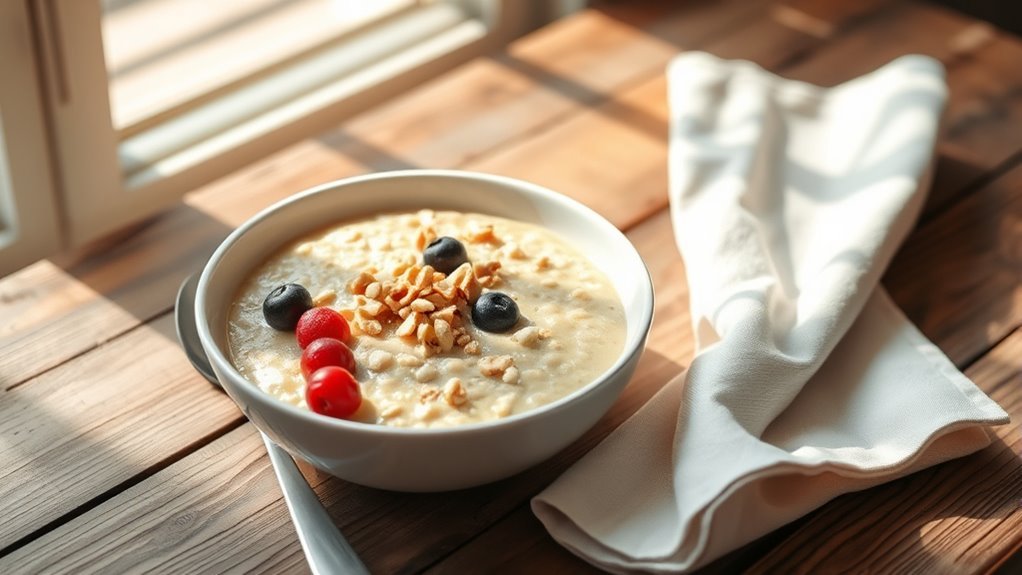

Oatmeal isn’t ideal for a keto diet due to its high carbohydrate content, which can kick you out of ketosis. With about 27 grams of carbs per serving, oatmeal might disrupt your goal of burning fat for energy. While oats have nutritional benefits, such as fiber and vitamins, there are low-carb alternatives like chia seeds or flaxseed meal. If you want to explore more options to stay on track with your keto lifestyle, there are plenty of alternatives and tips available.
Understanding the Keto Diet
When you explore the Keto diet, it is essential to understand its fundamental principles, especially how it alters your body’s energy utilization. Essentially, you shift your metabolism from burning carbohydrates to utilizing fat for fuel. This change can debunk many keto misconceptions, particularly the idea that all fats are unhealthy. In fact, incorporating healthy fats—like avocados, nuts, and olive oil—can enhance your energy levels and promote overall wellness. The focus is on maintaining a low-carb intake, which helps your body enter ketosis, a state where it efficiently burns fat. Balancing your diet with nutrient-dense foods while embracing healthy fats can empower you to achieve your health goals, granting you the freedom to enjoy a varied and satisfying lifestyle. Additionally, understanding metabolic adaptation is crucial as it allows the body to switch from glucose to ketones for energy.
Nutritional Profile of Oatmeal
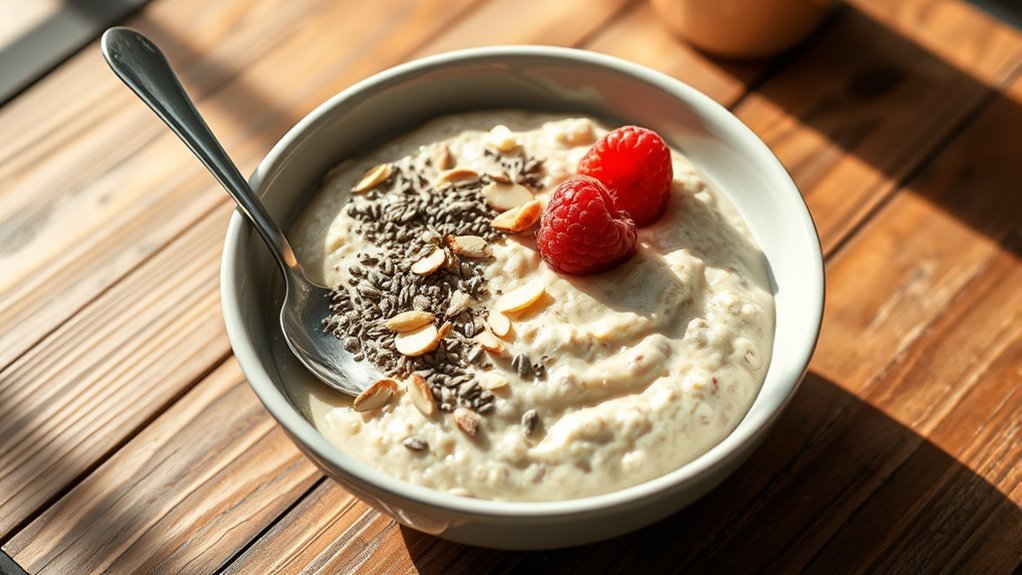
When considering oatmeal’s nutritional profile, it’s crucial to look at its carbohydrate content, which can impact your keto goals. You’ll also want to examine the fiber and nutrients it provides, as well as its glycemic index, which influences blood sugar levels. Understanding these factors will help you make an informed decision about including oatmeal in your diet.
Carbohydrate Content Analysis
Although oatmeal is often celebrated for its health benefits, its carbohydrate content raises questions for those following a ketogenic diet. A typical serving of oatmeal contains about 27 grams of carbohydrates, which can considerably impact your daily carb limit on keto. If you’re seeking alternatives, consider these oatmeal substitutes:
- Chia seeds – Packed with fiber and low in carbs, they can create a pudding-like texture.
- Flaxseed meal – A great source of omega-3s, it’s low in carbs and can be used in baking.
- Coconut flour – A versatile option that’s low in carbs and can be used in various recipes.
While oatmeal is nutritious, exploring these keto-friendly grains can help you stay within your carb limits and still enjoy satisfying meals. Moreover, understanding quinoa’s carbohydrate content is essential for making informed dietary choices, especially for those aiming for a low-carb diet.
Fiber and Nutrients
While oatmeal may be high in carbohydrates, it also boasts a rich nutritional profile that includes essential nutrients and dietary fiber. One of the standout features of oatmeal is its fiber content, which offers numerous fiber benefits, such as improved digestion and enhanced satiety. This fiber helps slow down digestion, promoting better nutrient absorption and keeping you feeling full longer. Oatmeal is also packed with vitamins and minerals, including magnesium, iron, and B vitamins, vital for overall well-being. If you’re considering oatmeal on a keto diet, it’s important to weigh these nutritional benefits against your carb limits. Ultimately, oatmeal can be a nourishing option, providing valuable nutrients while offering a satisfying meal experience.
Glycemic Index Consideration
Understanding the glycemic index (GI) of oatmeal is essential for anyone following a keto diet, as it affects blood sugar levels and overall carbohydrate management. Oatmeal typically has a moderate GI, which means it can provoke a notable glycemic response. Here are some considerations to keep in mind:
- Portion Size: Even small servings can impact your blood sugar.
- Type of Oatmeal: Steel-cut oats have a lower GI compared to instant oats, affecting your overall carb intake.
- Additives: Ingredients like fruits or sweeteners can raise the glycemic response considerably.
Carbohydrate Content in Oatmeal
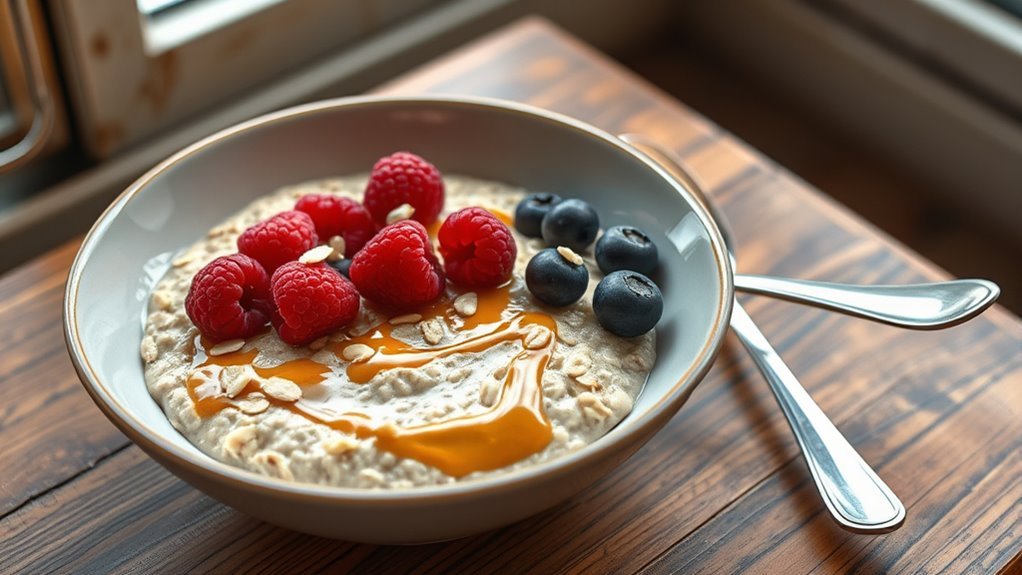
When considering the carbohydrate content in oatmeal, it’s essential to recognize that this popular grain can pose challenges for those following a ketogenic diet. A typical serving of oats contains around 27 grams of carbs, which can greatly impact your daily limit on keto. While oatmeal offers nutrients and fiber, it’s often too high in carbohydrates for those aiming to maintain ketosis. If you’re looking for oatmeal substitutes, consider options like chia seeds, flaxseeds, or coconut flour, which are more aligned with keto-friendly grains. These alternatives provide essential nutrients without the carb load, allowing you to enjoy a satisfying breakfast while staying within your dietary goals. Portion control is crucial for maintaining ketosis when considering any food options. Balancing your nutritional needs with your keto lifestyle is key to achieving lasting success.
Effects of Oatmeal on Ketosis
When you consider including oatmeal in your keto diet, it’s essential to analyze its carbohydrate content. Oatmeal can greatly impact your state of ketosis, as consuming too many carbs may hinder your body’s ability to burn fat for fuel. Understanding this balance will help you make informed choices about your meals while on a ketogenic plan. Additionally, it’s important to note that portion control can help mitigate the effects of oatmeal on your carb intake.
Carb Content Analysis
Oatmeal, often celebrated for its health benefits, poses a significant challenge for those following a keto diet due to its carbohydrate content. One cup of cooked oatmeal can contain around 27 grams of carbs, making it difficult to stay within the typical keto limit of 20-50 grams per day. If you’re looking to maintain ketosis while enjoying breakfast, consider these oatmeal substitutes:
- Chia Seeds: High in fiber and low in carbs, they can create a satisfying pudding-like texture.
- Flaxseed Meal: Packed with omega-3s and fiber, it’s a great addition to smoothies or baked goods.
- Almond Flour: A versatile option for pancakes or muffins, it’s low in carbs and high in healthy fats.
Incorporating lower-carb alternatives can help you stay on track without sacrificing flavor.
Impact on Ketosis
The high carbohydrate content of oatmeal can greatly disrupt ketosis, the metabolic state where your body burns fat for fuel instead of carbohydrates. When you consume oatmeal, the surge in carbs can kick you out of ketosis, leading to potential cravings and energy dips. This is especially important if you’re aiming for sustained fat loss and mental clarity. To maintain ketosis, you might want to explore oatmeal alternatives like chia seeds, flaxseeds, or almond flour, which offer similar textures and flavors without the carb overload. These options can help you stay compliant with your keto goals, allowing you to enjoy your meals without sacrificing your metabolic state. Always consider how food choices impact your body’s ketosis effects. Additionally, evaluating carbohydrate sources is vital for maintaining ketosis.
Alternatives to Oatmeal on Keto
While traditional oatmeal may be off the table for those following a keto diet, there are several delicious and low-carb alternatives that can keep your breakfast satisfying and nutritious. Here are three keto-friendly grains that can replace oatmeal in your morning routine:
- Chia Seed Pudding: Packed with fiber and healthy fats, chia seeds absorb liquid to create a creamy texture that mimics oatmeal. Their high fiber content aids digestion and promotes gut health, making them an excellent choice for breakfast.
- Flaxseed Meal: Rich in omega-3s and low in carbs, flaxseed meal can be mixed with water or almond milk for a quick, porridge-like dish.
- Coconut Flour: This low-carb alternative can be cooked with cream or milk to create a thick, satisfying meal that’s perfect for a keto breakfast.
These options not only fit into your keto lifestyle but also provide essential nutrients.
Low-Carb Oatmeal Recipes
For those looking to enjoy a warm, comforting bowl reminiscent of oatmeal while adhering to a keto diet, low-carb oatmeal recipes can be a game-changer. You can use oatmeal substitutes like chia seeds, flaxseed meal, or shredded coconut to create a satisfying base. These options are low in carbs and high in fiber, keeping you full and energized. To enhance your bowl, consider adding keto-friendly toppings like unsweetened almond butter, berries, or a sprinkle of cinnamon. You can even mix in some nuts or seeds for added texture and healthy fats. With these delicious alternatives, you won’t feel deprived, and you’ll stay on track with your keto lifestyle while enjoying a cozy breakfast option.
Nutritional Benefits of Oats
Oats are packed with essential nutrients that offer a range of health benefits. They’re high in fiber, which can support digestion and help regulate blood sugar levels. Additionally, oats contain vitamins, minerals, and antioxidants that contribute to overall wellness.
Fiber Content and Benefits
When you consider the nutritional benefits of oats, the fiber content stands out as a key feature that can support a healthy diet, even on a keto plan. Oats are one of the best fiber sources, and their soluble fiber can promote digestive health. Here are three key benefits of incorporating oats into your diet:
- Improved Digestion: The soluble fiber in oats helps regulate bowel movements and can prevent constipation.
- Satiety: High fiber content can promote feelings of fullness, which may help manage cravings and support weight management.
- Heart Health: Oats can help lower cholesterol levels, contributing to better cardiovascular health.
Balancing your keto diet with fiber-rich options like oats may enhance your overall well-being while still enjoying the freedom of varied nutrition.
Vitamins and Minerals Present
Nutrient-dense foods play an essential role in any diet, including a keto plan, and oats are no exception. While oats aren’t typically considered keto-friendly, they offer valuable vitamins and minerals that can enhance your overall health. Oats contain B vitamins, which support energy metabolism, and minerals like magnesium and iron, vital for muscle and blood function. When you include oats in moderation, you can experience oatmeal benefits such as improved nutrient absorption, especially when paired with other nutrient-rich foods. These vitamins and minerals can help bridge nutritional gaps in your diet. Just remember to balance your intake to align with your keto goals, allowing you the freedom to enjoy these wholesome grains without compromising your dietary aspirations.
Antioxidant Properties of Oats
Beyond their vitamins and minerals, oats boast significant antioxidant properties that can contribute to your health. These antioxidant benefits can help protect your body from oxidative stress and inflammation, promoting overall well-being. Here are three key health effects of oats:
- Avenanthramides: Unique antioxidants found in oats that may reduce inflammation and improve blood flow.
- Polyphenols: Compounds that can combat oxidative damage and support heart health by enhancing cholesterol levels.
- Vitamin E: This antioxidant helps protect cells from damage and supports skin health.
Incorporating oats into your diet can provide these valuable compounds, offering a range of protective health effects. While considering a keto diet, balance is essential to maintain these benefits while aligning with your dietary goals.
Tips for Incorporating Oatmeal
While incorporating oatmeal into a keto diet may seem challenging, there are effective strategies to enjoy this wholesome grain without derailing your low-carb goals. Start by opting for oatmeal substitutes like chia seeds or flaxseed meal, which provide a similar texture while being low in carbs. If you choose to include oatmeal, keep portion sizes small and balance with keto-friendly toppings such as unsweetened almond milk, butter, or berries. You can also add nuts for healthy fats and a satisfying crunch. Experimenting with spices like cinnamon can enhance flavor without adding carbs. By being mindful of your choices and servings, you can savor oatmeal in a way that aligns with your keto lifestyle, giving you the freedom to enjoy your meals.
The Role of Fiber in Keto
Although many people associate low-carb diets with a lack of fiber, understanding its role in a keto lifestyle is important for overall health. Fiber is essential for digestive health, helping to maintain a healthy gut and prevent constipation. You can easily incorporate fiber sources into your keto diet while enjoying its benefits. Consider these key points:
- Promotes Satiety: Fiber helps you feel fuller longer, reducing cravings and aiding weight management.
- Supports Blood Sugar Control: It can help stabilize blood sugar levels, which is critical when following a low-carb diet.
- Encourages Healthy Digestion: Adequate fiber intake supports a balanced gut microbiome, contributing to better overall health. Additionally, incorporating low-carb vegetables into your meals can significantly enhance your fiber intake.
Balancing Diet With Oatmeal Options
When you’re maneuvering a keto diet, finding a balance with oatmeal options can be challenging yet rewarding. Traditional oatmeal is high in carbs, but you can explore oatmeal substitutions like chia seeds or flaxseed meal, which provide a similar texture with far fewer carbs. These options are packed with fiber, keeping you full longer while fitting into your macros. To enhance your meal, don’t forget keto-friendly toppings like unsweetened almond butter, berries in moderation, or a sprinkle of cinnamon. These additions not only elevate the flavor but also align with your dietary goals. By creatively substituting and topping, you can enjoy a satisfying breakfast without straying from your keto lifestyle, giving you the freedom to indulge responsibly. Additionally, it’s important to monitor your overall daily carb allowance to stay compliant with keto guidelines.
Frequently Asked Questions
Can I Have Oatmeal Occasionally on a Keto Diet?
You can have oatmeal occasionally on a keto diet, but it’s best to be cautious. Traditional oatmeal is high in carbs, which can disrupt your goals. Instead, consider oatmeal alternatives like chia seeds or flaxseed meal for a similar texture with fewer carbs. When keto meal planning, focus on low-carb options to stay on track while still enjoying your meals. Balance is key, so choose wisely and listen to your body’s needs.
What Are the Best Toppings for Keto-Friendly Oatmeal?
The best keto-friendly oatmeal toppings include almond butter, chia seeds, and unsweetened coconut flakes. You can also add fresh berries like raspberries or strawberries for a low-carb option, balancing flavor and nutrition. A sprinkle of cinnamon or a few drops of vanilla extract can enhance taste without adding carbs. These keto toppings not only keep your meal satisfying but also align with a low-carb lifestyle, giving you the freedom to enjoy your meals.
How Does Oatmeal Affect Weight Loss on Keto?
Oatmeal can feel like a comforting blanket, but its impact on weight loss while on keto isn’t straightforward. It’s high in carbs, which can stall your keto metabolism if you’re not careful. Consuming oatmeal might lead to weight gain, as it can push you over your daily carb limit. However, if you choose low-carb alternatives or small portions, it could fit into your routine without sacrificing your freedom to enjoy breakfast.
Are There Any Keto-Friendly Instant Oatmeal Options?
Yes, there are keto-friendly instant oatmeal options available. You can look for keto oatmeal brands that offer low-carb, high-fiber mixes, often made from almond flour or flaxseed. For a quick meal, consider instant oatmeal recipes that incorporate unsweetened cocoa powder or cinnamon for flavor, and use a low-carb sweetener if you like. These alternatives can help you stay within your macros while enjoying the convenience of instant oats.
Can I Combine Oatmeal With Other Keto Foods?
You can certainly combine oatmeal alternatives with other keto foods! For instance, consider using chia seeds or flaxseed meal as a base, which provides fiber and healthy fats. Pair them with avocado or coconut oil for a satisfying meal. When meal prepping, mixing in low-carb fruits like berries can add flavor without kicking you out of ketosis. Just keep track of your carb intake, and enjoy the flexibility your keto journey offers!
References
- https://www.healthline.com/nutrition/can-you-eat-oatmeal-on-keto
- https://www.webmd.com/diet/obesity/ss/slideshow-keto-diet-foods
- https://www.dietdoctor.com/low-carb/keto/what-to-eat
- https://www.ncbi.nlm.nih.gov/pmc/articles/PMC6520680/
- https://www.mayoclinic.org/healthy-lifestyle/nutrition-and-healthy-eating/in-depth/keto-diet/art-20459813
- https://www.washingtonpost.com/food/2021/06/14/keto-oatmeal/
- https://www.verywellfit.com/what-is-the-keto-diet-5189347