

While beans are generally healthy and packed with nutrients, they are not typically considered keto-friendly due to their high carbohydrate content. In this article, we will explore the compatibility of beans with a ketogenic diet, examining the types of beans, their carb counts, and alternatives that fit better within keto guidelines. Understanding how to incorporate or avoid beans can help you maintain your desired macronutrient ratios while still enjoying a diverse diet.
The Keto Diet Basics
The ketogenic diet, commonly known as keto, emphasizes a significant reduction in carbohydrate intake while increasing the consumption of healthy fats. The primary goal of this dietary approach is to induce a state of ketosis, where the body shifts from burning glucose for energy to burning fat. For most individuals, this involves following a macronutrient ratio of approximately 70-75% fat, 20-25% protein, and only about 5-10% carbohydrates. Understanding these ratios is essential for achieving success on keto, as exceeding your carb limits can disrupt ketosis and hinder weight loss and metabolic benefits. Consequently, it is crucial to be mindful of the carbohydrate sources you choose to include in your meals, as not all foods are created equal when it comes to maintaining your keto lifestyle.
Carb Content of Common Beans
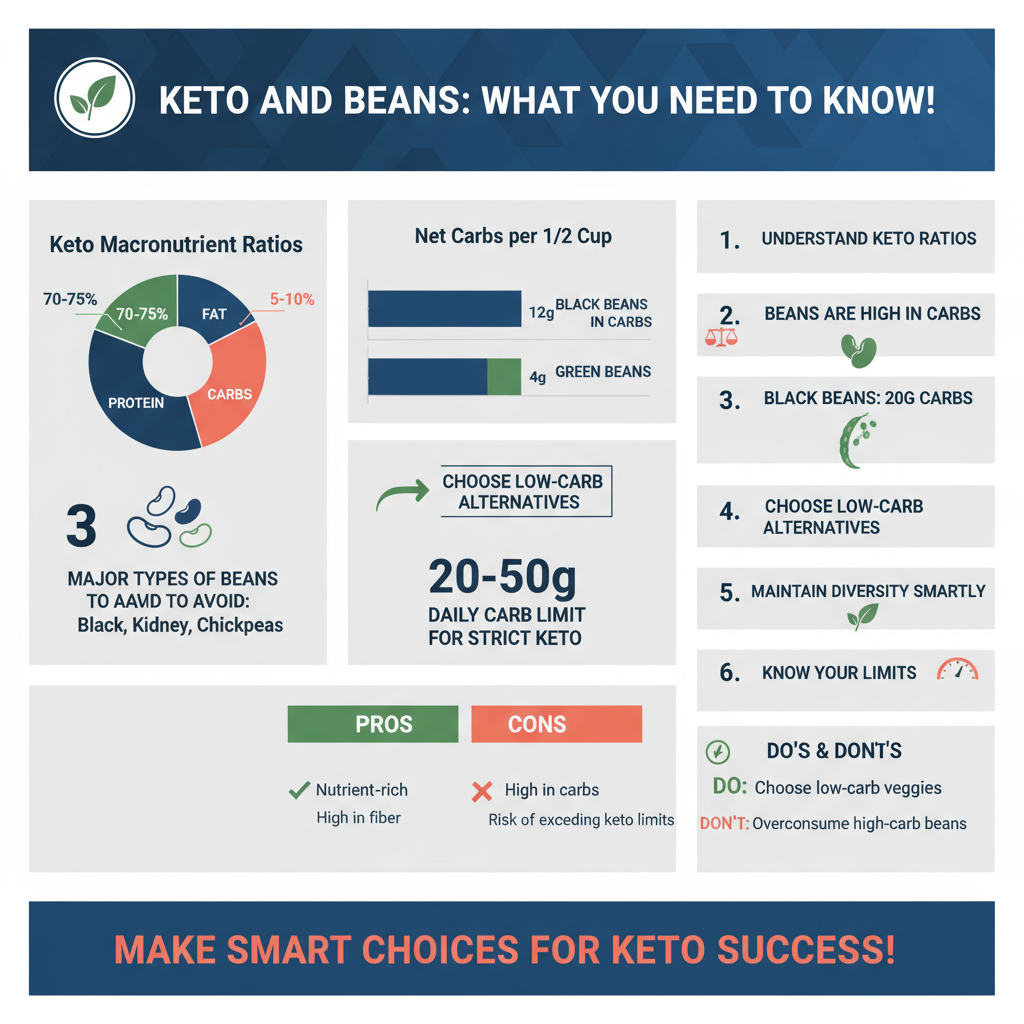
When assessing the compatibility of beans with a ketogenic diet, the carbohydrate content is a primary concern. Major varieties like black beans, kidney beans, and chickpeas are known for their nutritional benefits, including high protein and fiber content; however, they are also notoriously high in carbohydrates. For instance, a standard serving of black beans, which is about half a cup, contains approximately 20 grams of carbohydrates, with around 8 grams of fiber, resulting in a net carb count of approximately 12 grams. This amount can easily exceed the daily carb limit for those on a strict keto regimen, which typically ranges from 20 to 50 grams of net carbs. Kidney beans and chickpeas exhibit similar profiles, often contributing significantly to overall carbohydrate intake. Therefore, while beans may provide health benefits, their carbohydrate load can pose challenges for individuals adhering to a ketogenic diet.
Low-Carb Bean Alternatives
Fortunately, there are several low-carb alternatives to traditional beans that can satisfy your cravings while keeping your carbohydrate intake in check. Green beans, for example, contain only about 4 grams of net carbs per half-cup serving, making them a fantastic vegetable option that can be incorporated into a variety of dishes. Another excellent alternative is black soybeans, which boast around 1 gram of net carbs per half-cup serving. These alternatives not only provide fiber, which is vital for digestive health, but they also allow you to enjoy the textural qualities of beans without compromising your ketogenic goals. Additionally, incorporating legumes such as edamame can be beneficial, as they are lower in carbs compared to many traditional beans, with around 4 grams of net carbs per half-cup serving. By choosing these low-carb options, you can maintain a diverse and satisfying diet while adhering to keto principles.
Nutritional Benefits of Beans
Despite their higher carbohydrate content, beans offer a wealth of nutritional benefits that make them a valuable food source for those not strictly adhering to a low-carb diet. They are an excellent source of plant-based protein, fiber, vitamins, and minerals, including iron, magnesium, and folate. Protein is essential for muscle maintenance and repair, while fiber aids in digestion and promotes a feeling of fullness, which can be beneficial for weight management. Additionally, beans contain antioxidants that can help reduce inflammation and support overall health. For individuals who may occasionally include beans in their diet, understanding the nutritional profile and benefits can assist in making informed choices. Consuming beans in moderation, particularly when paired with healthy fats and proteins, can provide a balanced approach to nutrition while still aligning with broader dietary goals.
When to Consider Beans on Keto
While beans may not be the best fit for a strict ketogenic diet, there are circumstances where their inclusion could be feasible. Occasional consumption of small amounts of low-carb beans might be an option for individuals who are more flexible with their carb intake or those who are transitioning into a ketogenic lifestyle. For instance, if you are following a cyclical ketogenic diet or incorporating a targeted approach to keto, where you consume additional carbs around workouts, small servings of low-carb beans could be beneficial. However, it’s imperative to monitor your overall carb intake when including beans, ensuring that they do not push you over your limit. Keeping a food journal or utilizing tracking apps can help you maintain awareness of your macronutrient consumption, guiding you in making responsible dietary choices.
Tips for a Successful Keto Diet
To thrive on a ketogenic diet, it’s essential to focus on whole foods and healthy fats while ensuring that your macronutrient ratios align with your goals. Prioritize nutrient-dense foods such as leafy greens, avocados, nuts, and seeds, which provide essential vitamins and minerals without excessive carbohydrates. Tracking your macronutrients with apps like MyFitnessPal or Cronometer can provide greater accuracy in your dietary plan, allowing you to make adjustments as needed. Additionally, meal prepping can be an effective strategy to stay on track, as it enables you to plan and portion meals that fit within your keto guidelines. Staying hydrated and incorporating regular exercise can also support your overall health and enhance the effectiveness of your ketogenic journey.
While beans are not the best fit for a strict ketogenic diet, understanding their nutritional profile can help you make informed choices. If you choose to include beans, opt for low-carb varieties and keep your portions small. For the best results, aim to focus on keto-friendly foods that align more closely with your dietary goals. By being proactive in your dietary choices and mindful of your macronutrient intake, you can enjoy a successful and satisfying ketogenic lifestyle.
Frequently Asked Questions
Can I have beans on a keto diet?
While beans are a nutritious source of protein and fiber, they are generally considered too high in carbohydrates for a strict keto diet. Most beans, such as black beans and kidney beans, contain around 20 grams of carbs per cup, which can quickly exceed the daily carb limit for keto. If you’re craving beans, consider smaller portions or opt for lower-carb options like green beans or black soybeans, which can fit more comfortably into a keto meal plan.
What are the best low-carb alternatives to beans for keto?
If you’re looking for low-carb alternatives to beans on a keto diet, consider options such as cauliflower, mushrooms, or zucchini. These vegetables can provide a similar texture in dishes like stews or salads without the high carb content associated with beans. Another great option is to use legumes like black soybeans, which are significantly lower in carbohydrates and can be a good substitute in recipes.
How many carbs are in different types of beans?
The carbohydrate content in beans varies widely among different types. For instance, a cup of cooked black beans contains about 40 grams of carbs, while chickpeas have around 45 grams. In contrast, black soybeans have only about 8 grams of carbs per cup, making them a more suitable choice for those on a keto diet. Always check nutritional labels and track your carb intake to stay within your keto goals.
Why do beans have so many carbs, and how does that affect a keto diet?
Beans are rich in complex carbohydrates, which provide energy and fiber but can hinder ketosis, the metabolic state sought in a keto diet. The high carb content means that consuming beans can easily push you over your daily carb limit, which is typically around 20-50 grams for keto dieters. To maintain ketosis, it’s important to prioritize low-carb vegetables and proteins while limiting high-carb foods like traditional beans.
Can I include a small amount of beans in my keto diet?
Yes, you can include a small amount of beans in your keto diet if you carefully track your carbohydrate intake. Using beans as a garnish or in small quantities within a larger keto-friendly meal can allow you to enjoy their flavor and texture without exceeding your carb limits. Just be sure to account for their carb content and adjust the rest of your meals accordingly to stay within your daily allowances.
References
- https://www.healthline.com/nutrition/keto-diet-foods
- Genital herpes: Symptoms, causes, and treatment
- Keto Diet Foods: What to Eat and Avoid – Diet Doctor
- https://www.ncbi.nlm.nih.gov/pmc/articles/PMC7073616/
- https://www.webmd.com/diet/what-to-eat-on-keto-diet
- https://www.clevelandclinic.org/health/articles/what-is-the-keto-diet
- https://www.mayoclinic.org/healthy-lifestyle/nutrition-and-healthy-eating/expert-answers/keto-diet/faq-20428177