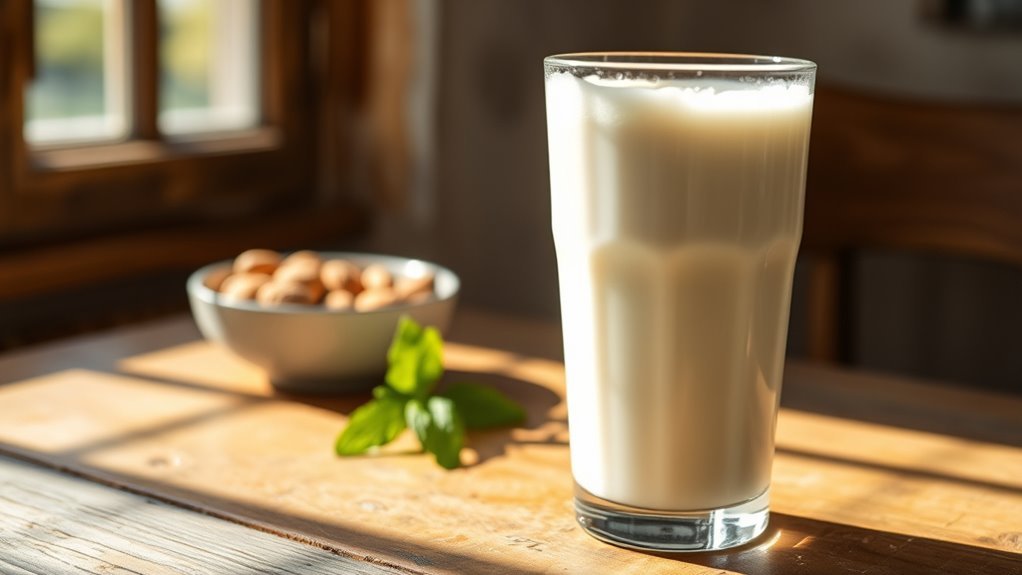

Yes, you can drink milk on a keto diet, but it’s important to choose wisely. Whole milk has higher carbs, which can disrupt ketosis. Instead, opt for low-carb alternatives like unsweetened almond milk or heavy cream, both of which fit better within your carb limits. Be mindful of portion sizes to stay in ketosis. There are various options and tips available to help you enjoy your favorite milk while sticking to your keto goals.
Understanding the Keto Diet and Its Nutritional Goals
When you commence the keto diet, it is vital to understand its core principles and nutritional goals. The keto diet focuses on drastically reducing carbohydrate intake while increasing healthy fats, which shifts your body into a state of ketosis. This process helps your body burn fat for fuel instead of carbs. Understanding macros is essential; you’ll typically aim for about 70-75% of your daily calories from fats, 20-25% from protein, and only 5-10% from carbohydrates. By grasping these keto principles, you gain the freedom to choose foods that align with your goals. Prioritizing whole, nutrient-dense foods will make your keto journey more effective and enjoyable while keeping you on track toward achieving your desired results. Additionally, embracing healthy fats is crucial for maintaining energy levels and satiety throughout your day.
Types of Milk and Their Carb Content
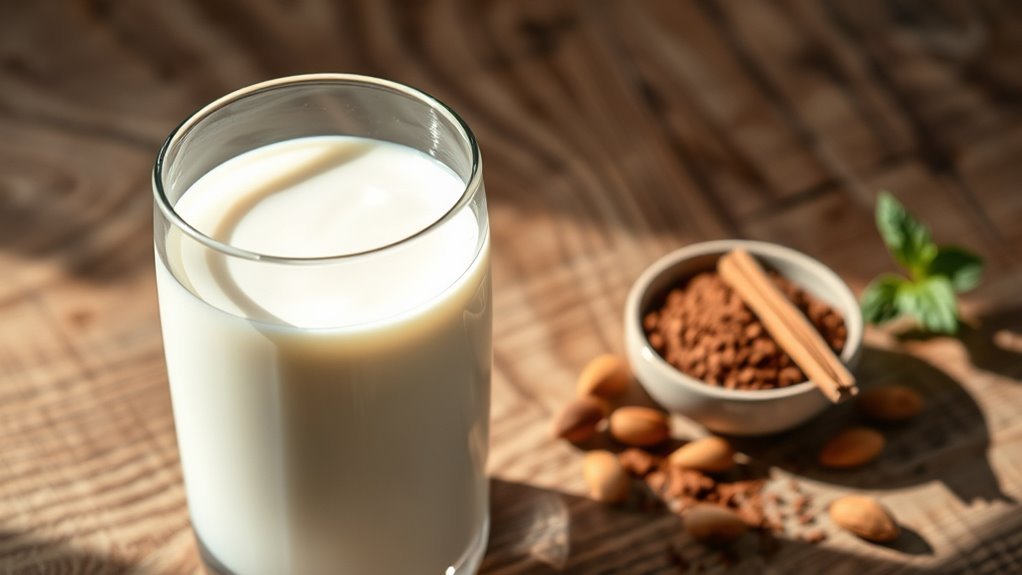
While you might crave a glass of milk on a keto diet, it’s essential to take into account the carbohydrate content of various types of milk. Whole milk contains about 12 grams of carbs per cup, which can disrupt your ketosis. If you’re looking for lower-carb options, unsweetened almond milk offers just 1-2 grams per cup and has added nutritional benefits like vitamin E. Coconut milk is another great alternative, with around 2-6 grams of carbs, depending on the brand. If you’re lactose intolerant, consider lactose-free options, which still provide essential nutrients but can have similar carb counts as regular milk. Exploring these choices can help you stay within your carb limits while enjoying a creamy beverage, especially since the role of milk in a keto diet can be nuanced and requires careful consideration.
Impact of Milk on Ketosis
Although you might enjoy the taste of milk, its impact on ketosis can be significant, especially if you’re not mindful of your choices. Milk composition typically includes lactose, a sugar that can kick you out of ketosis if consumed in excess. For those following a strict ketogenic diet, even small amounts might hinder your body’s ability to burn fat for fuel. The ketosis effects can vary based on the type of milk you choose; whole milk has more fat but also more carbs compared to unsweetened almond or coconut milk. If you’re aiming to maintain ketosis, keep an eye on portion sizes and consider how milk fits into your overall carb limit. Additionally, focusing on low-carb dairy options can help you enjoy dairy while staying within your nutritional goals. Enjoying dairy in moderation can still be possible on your keto journey!
Alternative Milk Options for Keto
If you’re looking to maintain ketosis while still enjoying a creamy beverage, there are several alternative milk options that fit the bill. Nut milk, like almond or macadamia, is low in carbs and offers a delightful taste. Coconut milk is another excellent choice; it’s rich and creamy with minimal carbs, making it a go-to for many on a keto diet. If you prefer dairy alternatives, consider unsweetened soy milk or hemp milk, both of which provide protein without spiking your carb intake. Just be sure to check labels for added sugars. These alternatives not only keep your diet on track but also offer a variety of flavors to satisfy your cravings while you enjoy your keto journey. Additionally, understanding carb content is essential for making informed dietary decisions.
Tips for Incorporating Milk Into a Keto Diet
When you’re looking to incorporate milk into your keto diet, it’s essential to choose wisely to maintain your carb limits. Opt for high-fat, low-carb options like heavy cream or unsweetened almond milk. If you’re using milk substitutes, check labels for added sugars.
Here’s a quick comparison of some popular options:
| Milk Type | Carbs (per cup) | Fat (per cup) |
|---|---|---|
| Heavy Cream | 6g | 49g |
| Unsweetened Almond Milk | 2g | 3g |
| Coconut Milk | 6g | 5g |
Experiment with dairy alternatives in coffee, smoothies, or recipes. By being mindful of your choices, you can enjoy the creamy goodness of milk while staying on track with your keto lifestyle. Additionally, choosing unsweetened versions of milk alternatives is crucial to avoid added sugars that can disrupt ketosis.
Frequently Asked Questions
Can I Drink Heavy Cream on a Keto Diet?
Yes, you can drink heavy cream on a keto diet! Imagine Sarah, who added heavy cream to her coffee and enjoyed the rich flavor while reaping keto benefits. It’s low in carbs and high in fat, making it perfect for ketosis. Just a tablespoon can elevate your dishes without derailing your diet. Keep in mind to monitor your overall intake, but heavy cream can definitely fit into your keto lifestyle. Enjoy that creamy goodness!
What Are the Best Milk Substitutes for Coffee?
For coffee, almond milk and coconut milk are excellent substitutes. They’re low in carbs and can add a delightful flavor to your brew. Almond milk’s nutty taste complements coffee well, while coconut milk adds a creamy richness. Both options are versatile and can be found unsweetened to keep your carb count low. Experiment with different brands to find your favorite, and enjoy the freedom to customize your coffee without compromising your dietary goals!
Is Lactose-Free Milk Keto-Friendly?
Yes, lactose-free milk can be keto-friendly, but you’ll need to check its carb content. While it offers lactose-free benefits for those with intolerance, it usually contains similar carbohydrates as regular milk, typically around 12 grams per cup. If you’re following a strict keto diet, you might want to limit your intake or choose lower-carb alternatives. Always prioritize options that help you maintain your desired freedom in your dietary choices!
How Does Milk Affect Keto Weight Loss?
Milk can affect your keto weight loss by introducing carbs, which may hinder your progress. If you’re looking for alternatives, consider unsweetened almond or coconut milk, as they’re lower in carbs and can fit better into your diet. These milk alternatives not only help maintain ketosis but also provide versatility in recipes, so you can enjoy your meals without sacrificing your weight loss goals. It’s all about finding what works best for you!
Can I Use Milk in Keto Smoothies?
You can absolutely use milk in keto smoothies, but it’s like dancing on a fine line! Traditional milk can be higher in carbs, so consider milk alternatives like almond or coconut milk for a lower-carb option. When crafting your keto smoothie recipes, these alternatives can give you that creamy texture without derailing your diet. Just remember to check the labels and choose unsweetened varieties to keep your smoothie delicious and keto-friendly!
References
- https://www.ncbi.nlm.nih.gov/pmc/articles/PMC6831500/
- https://www.healthline.com/nutrition/keto-diet-foods
- https://www.medicalnewstoday.com/articles/321267
- https://www.webmd.com/diet/obesity/keto-diet
- https://www.dietdoctor.com/low-carb/keto
- https://www.mayoclinic.org/healthy-lifestyle/nutrition-and-healthy-eating/expert-answers/keto-diet/faq-20452304
- https://www.nutrition.org.uk/healthyliving/healthyeating/keto-diet.html