

Sugar snap peas can be included in a ketogenic diet but should be consumed in moderation due to their carbohydrate content. These delightful legumes hold a unique place in the realm of low-carb eating, offering not only a satisfying crunch but also vital nutrients. In this article, we will explore the nutritional profile of sugar snap peas, their impact on a keto diet, and how to incorporate them effectively into your meal plans, ensuring you stay within your carb limits while enjoying a variety of flavors.
Nutritional Profile of Sugar Snap Peas

Sugar snap peas are relatively low in calories, with approximately 41 calories per 100 grams. This makes them a guilt-free addition to meals, especially for those watching their caloric intake. When it comes to carbohydrates, sugar snap peas contain about 7 grams per 100 grams, which includes roughly 2.5 grams of fiber. This fiber content is crucial as it can aid digestion and help maintain a feeling of fullness, making it easier to control overall food intake.
In addition to fiber, sugar snap peas offer a plethora of vitamins and minerals. They are particularly rich in vitamins A, C, and K, which contribute to various health benefits. Vitamin A supports vision and immune function, while vitamin C is vital for collagen production and skin health. Vitamin K plays a substantial role in bone health and blood clotting. Furthermore, sugar snap peas are a good source of essential minerals like iron and potassium, which can help support overall health.
Carbohydrate Count and Keto Compatibility
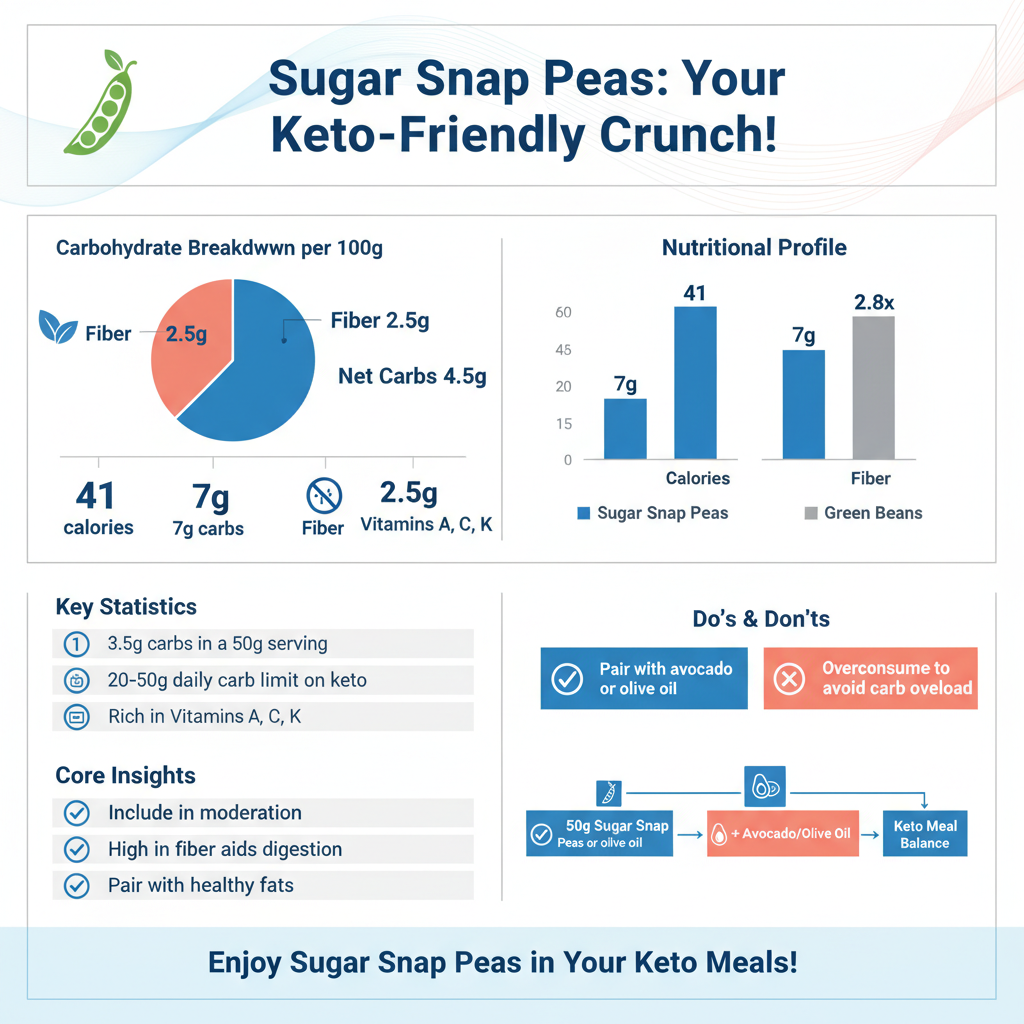
The ketogenic diet typically limits daily carbohydrate intake to around 20-50 grams, depending on individual goals and metabolic responses. Given that sugar snap peas contain about 7 grams of carbohydrates per serving (approximately 100 grams), it is evident that they can fit into a keto meal plan if consumed mindfully.
To maintain ketosis, it’s essential to practice moderation when incorporating sugar snap peas into your meals. A reasonable serving size would be around 50 grams, which would provide about 3.5 grams of carbohydrates. This allows for flexibility within your daily carb limit while still enjoying the benefits of these crunchy legumes. Pairing sugar snap peas with higher-fat foods, such as avocado or olive oil-based dressings, can also create a satisfying and keto-friendly dish.
Health Benefits of Sugar Snap Peas
Beyond their low-calorie and carb content, sugar snap peas boast numerous health benefits that align well with a ketogenic lifestyle. They are rich in antioxidants, which help combat oxidative stress in the body. Antioxidants play a pivotal role in reducing inflammation and may lower the risk of chronic diseases such as heart disease and cancer.
Additionally, the vitamins found in sugar snap peas can bolster the immune system, improve skin health, and enhance overall well-being. The presence of vitamin C, in particular, aids in iron absorption, which is important for energy levels—something many people on a keto diet may need to monitor closely.
Moreover, the fiber content in sugar snap peas supports gut health by promoting regular bowel movements and feeding beneficial gut bacteria. A healthy gut microbiome is essential for optimal overall health and can also help in weight management, a common goal for those following keto diets.
Ways to Incorporate Sugar Snap Peas into Keto Meals
Incorporating sugar snap peas into your ketogenic meal plan can be both creative and delicious. One of the simplest methods is to include them in salads. Their natural sweetness and crunch can enhance the texture and flavor profile of any salad. Toss them with leafy greens, avocado, feta cheese, and a light olive oil dressing for a refreshing dish.
Another popular way to enjoy sugar snap peas is through stir-frying. Combine them with other low-carb vegetables like bell peppers, broccoli, and zucchini, along with a protein source such as chicken, shrimp, or tofu. This quick and nutritious meal can be prepared in under 30 minutes, making it ideal for busy weeknights.
Additionally, sugar snap peas can be steamed or blanched and served as a side dish. Pair them with a rich, high-fat sauce, such as a creamy garlic butter, to complement the natural sweetness of the peas while keeping the dish keto-friendly.
Alternatives to Sugar Snap Peas on Keto
While sugar snap peas can be a delightful addition to your keto meal plan, there are several alternative vegetables that are even lower in carbs. Spinach, for example, is exceptionally low in carbohydrates and can be used in a multitude of dishes, from salads to smoothies. Zucchini is another versatile option, which can be spiralized into noodles or roasted as a side.
Broccoli, cauliflower, and asparagus are also excellent substitutes, offering similar textures and health benefits while keeping carb counts low. If you’re looking for legumes, consider edamame, which is lower in carbohydrates compared to sugar snap peas and rich in protein, making it a great addition to a ketogenic diet.
Potential Drawbacks of Sugar Snap Peas on Keto
Despite their many benefits, sugar snap peas do have some potential drawbacks when it comes to a ketogenic diet. Overconsumption can easily lead to exceeding the daily carbohydrate limit, which is counterproductive to maintaining ketosis. This makes portion control vital, especially for those who may be more sensitive to carbohydrates.
Moreover, some individuals may experience digestive discomfort or increased blood sugar levels from the natural sugars present in peas. Personal tolerance can vary widely, making it important for each individual to monitor their body’s response when incorporating sugar snap peas into their diet.
In summary, while sugar snap peas can be enjoyed on a ketogenic diet, it’s essential to monitor portion sizes and overall carb intake. Incorporate them wisely into your meals to reap health benefits while staying on track with your keto goals. For more tips on keto-friendly foods, explore our other articles or consult with a nutritionist for personalized advice. By making informed choices and understanding the nutritional value of foods like sugar snap peas, you can create a diverse and enjoyable keto meal plan that supports your health objectives.
Frequently Asked Questions
Are sugar snap peas keto-friendly?
Sugar snap peas can be considered keto-friendly in moderation. They contain approximately 4 grams of carbohydrates per 100 grams, which means they can fit into a low-carb or ketogenic diet if consumed in small portions. However, it’s essential to monitor your overall carbohydrate intake for the day, as including too many peas can potentially exceed your carb limits.
How many carbs are in sugar snap peas?
Sugar snap peas contain about 4 grams of carbohydrates per 100 grams (about 3.5 ounces). This also includes around 2 grams of fiber, which can be subtracted from the total carbs for net carb calculations, making them a relatively low-carb option. For those on a keto diet, this means they can be enjoyed in moderation without significantly impacting ketosis.
Why are sugar snap peas a good option for a low-carb diet?
Sugar snap peas are a good option for a low-carb diet because they are low in calories and carbohydrates while being rich in vitamins, minerals, and antioxidants. They provide essential nutrients such as vitamin C, vitamin K, and dietary fiber, making them a nutritious addition to meals. Their natural sweetness and crunch can also help satisfy cravings for more carb-heavy snacks.
What is the best way to prepare sugar snap peas for a keto diet?
The best way to prepare sugar snap peas for a keto diet is to steam or lightly sauté them with healthy fats like olive oil or butter, which can enhance their flavor while keeping the dish low in carbs. You can also incorporate them into stir-fries, salads, or serve them raw with dips for a nutritious snack. Avoid adding high-carb sauces or dressings to maintain their keto-friendly status.
Which vegetables are better alternatives to sugar snap peas on a keto diet?
While sugar snap peas can be included in moderation, some better low-carb vegetable alternatives for a keto diet include spinach, zucchini, broccoli, and cauliflower. These options typically have lower carbohydrate counts and can be used in a variety of dishes, from salads to casseroles. Incorporating a variety of low-carb vegetables can help ensure you receive a wide range of nutrients while maintaining a state of ketosis.