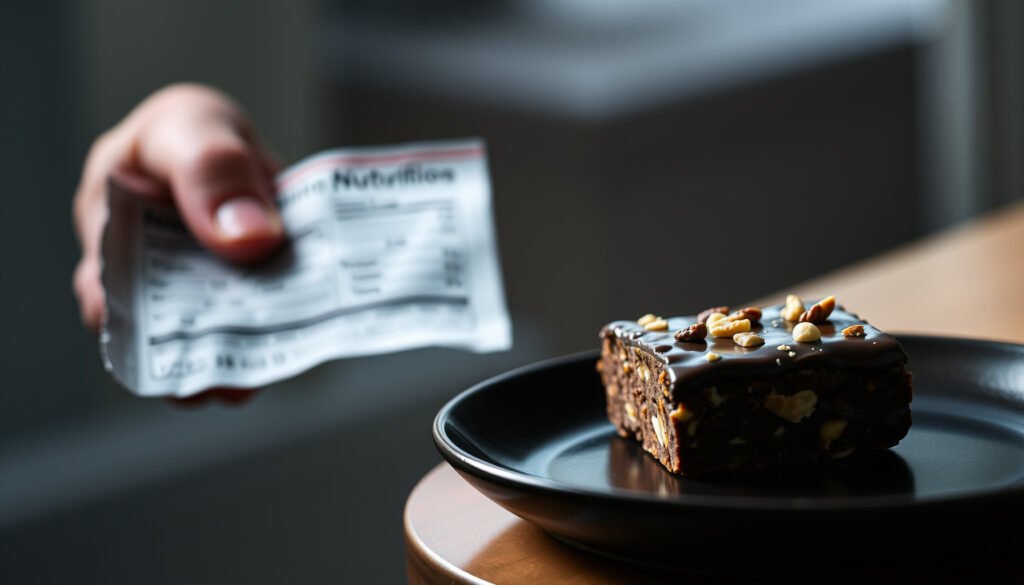

Are Kind Bars keto friendly for you or not? Here’s the clear verdict on whether specific Kind Bar flavors can fit a keto macro plan, based on their net carbs per serving and ingredients like added sugars, honey, and dried fruit. You’ll also learn the exact labels to scan before you buy so you can spot the few options that can stay keto-compatible—and the ones that will knock you out.
Most Kind Bars can fit keto only when you choose flavors with low net carbs per bar and keep them within your daily carb limit. In other words, keto compatibility depends on the nutrition label for the exact Kind bar you’re buying—not the brand name or “low sugar” marketing.
If you’re doing keto (especially strict keto) and you want a convenient snack that won’t wreck your macros, this guide shows you what to check on the nutrition label and which common ingredients tend to push certain Kind bar flavors out of range.
Most Kind Bars can be keto friendly only if you choose flavors with low net carbs and you fit them into your daily carb limit. The label matters more than the brand name—some Kind bars fall into keto ranges, while others are too carb-heavy for strict keto.
If you’re doing keto (especially strict keto) and you want a convenient snack that won’t blow your macros, this guide shows you exactly what to look for on the nutrition label and where common Kind bar ingredients can trip you up.
How to tell if Kind Bars are keto friendly
Kind Bars are keto friendly only when the bar you pick lands within your personal net-carb budget for the day. “Sugar-free” or “low carb” claims don’t automatically mean ketosis-friendly—net carbs per bar are what determine whether you stay on track.
Keto isn’t a vibe; it’s a math problem that happens at the label level for Kind Bars every time you shop. Keto diets commonly keep total carbohydrate intake low (often in the ~20–50 g/day range depending on strictness and individual response). According to a position stand in the *Journal of the International Society of Sports Nutrition* on ketogenic diets, carbohydrate intake is typically reduced to low levels (commonly ≤50 g/day) to promote ketosis for many people (Journal of the International Society of Sports Nutrition, 2018).
Kind bar keto-compatibility depends on net carbs per bar, which requires subtracting fiber (and sometimes accounting for sugar alcohols) from total carbohydrates.
Two Kind Bars with the same “low sugar” positioning can differ significantly in keto fit because net carbs vary by flavor and ingredient mix.
If your goal is ketosis, you need each bar to fit your daily net-carb limit—not just your snack cravings.
Practical rule: use net carbs, not marketing terms
– Keto compatibility depends on net carbs per bar, not just “sugar-free” or “low carb” wording
– Different Kind bar flavors can vary a lot—so you’ll need to check the exact bar you’re buying
– If your goal is ketosis, aim to keep the bar within your personal daily net-carb limit (many people target ~20–50g net carbs/day, depending on how strict they are)
What “net carbs” really means on keto
Net carbs is a popular keto shorthand for estimating carbs you’re likely to absorb. Many keto trackers use:
Net carbs = Total carbohydrates − Dietary fiber
Some trackers also make different adjustments for sugar alcohols, but the impact varies by person (and by specific sugar alcohol used in the ingredient list).
Because net carbs are not a universal, FDA-defined term, your most reliable approach is consistency: pick a method you trust, and apply it to every Kind Bar you eat.
What the nutrition label should say (the quick filter)
The fastest way to judge whether a Kind Bar is keto-friendly is to scan Total Carbohydrates, Dietary Fiber, and serving size before you read the ingredients. That’s the quick filter that turns a “maybe” snack into a confident “fits my macros” choice.
On U.S. Nutrition Facts labels, Total Carbohydrates (grams) and Dietary Fiber (grams) are reported per serving, and “sugar” is listed separately from “total carbohydrate.” According to FDA Nutrition Facts labeling requirements in 21 CFR 101.9, these carbohydrate-related fields are part of the standardized label format (FDA, 21 CFR 101.9).
On a Nutrition Facts label, “Total Carbohydrates” and “Dietary Fiber” are both listed in grams per serving—these are the two fields used in the common net-carb calculation.
The label’s “serving size” matters because a “single bar” isn’t always the same as “one serving.”
Sugar alcohols, when present, can affect glucose response differently across individuals and may also cause GI symptoms.
The quick filter (what to check in order)
– Look for Total Carbohydrates and Dietary Fiber; net carbs are typically calculated as: total carbs − fiber
– If the bar includes sugar alcohols, be careful: some trackers subtract them, but their impact varies person to person and can still affect carbs/glucose and cause GI upset
– Check serving size (this sounds basic, but snack labels can be tricky) so you’re comparing the right “per bar” numbers
A short “label math” example (how people get tricked)
If a Kind Bar shows:
– Total Carbohydrates: X g
– Dietary Fiber: Y g
Then common net carbs math is X − Y = estimated net carbs.
The problem: two flavors of Kind Bars can have the same “fiber grams” but different total carbohydrate grams—or one may contain fruit pieces and another may rely more on sweeteners.
Also, remember that carbohydrate calories are generally 4 kcal per gram. That calorie factor is standard in nutrition labeling guidance, and while keto is macro-based, it still helps you sanity-check label totals. According to FDA nutrition labeling conventions, carbohydrates provide 4 calories per gram (FDA nutrition labeling conventions).
Carbs to watch in common Kind Bar ingredients
A Kind Bar is often keto-problematic when it includes ingredients that reliably add absorbable carbohydrates—especially sweeteners and fruit-based components. Ingredient lists are a strong signal because they reveal what’s likely contributing to total carbs (and sometimes fiber).
In practical label reading, ingredients like honey, dried fruit, and cane sugar are frequent culprits because they contribute sugars and starches that usually increase total carbohydrate per serving. For a keto eater, that usually means higher net carbs per bar for that specific Kind Bar flavor.
Ingredients like honey, dried fruit, or cane sugar generally raise total carbohydrate—so they often increase net carbs per Kind Bar.
“Protein bar” labeling doesn’t guarantee keto success; net carbs determine ketosis regardless of protein content.
When a Kind Bar combines multiple carb sources (e.g., fruit pieces plus sweeteners), the net-carb total can add up faster than you expect.
Where carbs hide (and why flavors differ)
– Ingredients like honey, dried fruit, cane sugar, or other sweeteners usually increase total carbs—often pushing bars out of keto range
– “Protein” bars aren’t automatically keto: higher protein is fine, but carbs still determine whether you stay in ketosis
– Watch for blends that include more than one carb source (example: sweetener + fruit pieces); even “small” amounts add up quickly
Keto ingredient pattern: “low sugar” ≠ “low net carbs”
Many Kind Bars market “low sugar,” but sugar is only one label field. Total carbohydrates include sugar plus other carbohydrate sources (such as starch and certain polyols and fibers). That means a bar can be “low sugar” and still fail keto if its total carbohydrate (minus fiber) is too high.
If you want a strict keto outcome, treat ingredient lists as a risk map, and confirm with the net-carb math on the label.
What can go wrong on keto
Most keto failures with snack foods come from calculation mistakes or tolerance surprises, not from willpower. With Kind Bars, the common pitfalls are subtracting the wrong things, assuming “sugar-free” guarantees net-carb safety, or underestimating GI sensitivity.
One frequent mistake is assuming net carbs are calculated the same way by every tracker. Net carbs are a practical keto method, not a single standardized regulatory metric, so you need a consistent approach.
Some keto labels can look keto-friendly if you subtract fiber (and possibly sugar alcohols) incorrectly—so verify the actual grams on the Nutrition Facts panel.
“Sugar-free” bars can still contain carbohydrates, including from sugar alcohols, fibers, or other ingredients.
Even if net carbs fit, sugar alcohols can trigger bloating or diarrhea, making keto harder to sustain.
The edge cases that trip up Kind Bar eaters
– Subtracting fiber (and sometimes sugar alcohols) incorrectly can make a bar look keto-friendly when it isn’t—double-check how you’re calculating net carbs
– “Sugar-free” bars can still contain carbs (from sugar alcohols, fibers, or other ingredients), so they may not fit strict keto
– If you’re sensitive, some sugar alcohols can cause bloating, cramps, or diarrhea—those symptoms can make keto feel harder even if carbs “fit”
When strict keto means “no experiments”
If you’re early in keto or you’re aiming for tight ketosis (for example, you’re using ketogenic diet protocols), even small carb overruns can matter. In that situation, the most conservative strategy is to choose the lowest-net-carb Kind Bar options and avoid swapping flavors until you’ve confirmed consistent label math.
Verdict: which Kind Bars to choose (and when not to)
The simplest verdict is this: choose Kind Bar flavors whose net carbs per bar clearly fit your daily limit, and skip the rest. If you’re targeting tight ketosis or you’ve had GI issues with sugar alcohols, you should be more selective than “net carbs look reasonable.”
From a label-management perspective, the best Kind Bars are those where you can reliably compute net carbs from the published values for total carbohydrates and dietary fiber. If the label makes the snack ambiguous (or the ingredients are carb-dense), “almost keto” usually becomes “not keto” after a few days of consistent eating.
The best Kind Bars for keto are the flavors that land in low net carbs per bar when you calculate from the Nutrition Facts label.
If your net carbs are hard to keep under your daily goal, avoid relying on marketing claims—use the numbers.
If sugar alcohols cause GI upset for you, treat even “keto-friendly” net-carb math as incomplete.
Pick based on your keto strictness
– Best fit: Kind bar flavors that clearly land at low net carbs per bar based on the nutrition label you’re holding (use , e.g., strict vs moderate keto)
– Use caution / skip if: the bar’s net carbs are hard to fit into your daily limit, or if you regularly get GI issues from sugar alcohols
– If you’re newer to keto or aiming for tight ketosis, it’s smarter to choose lower-carb options consistently rather than “hoping” a bar works
Pros and cons (quick reality check)
– Pros (when it fits):
– Convenient, portioned snack format
– Easier macro tracking for Kind Bars than loose ingredients
– Some flavors can be low enough in net carbs to support ketosis
– Cons (common failure points):
– Net carbs vary widely by flavor
– “Sugar-free” may still affect glucose or cause GI issues
– Serving size and label math can be easy to misread
Keto checklist: label scan in seconds
You can decide whether a Kind Bar is keto-friendly in under a minute by scanning five label items. This checklist prevents the two most common issues: wrong serving size and wrong carb math.
Right now (2026), the best practice for keto snacking remains the same: read the label for the exact product, compute net carbs consistently, and compare it against your daily budget for net carbs.
A quick keto scan focuses on total carbs, dietary fiber, serving size, and sugar alcohols—because those are the fields that drive net-carb math.
If you can’t verify net carbs per Kind Bar using the label, treating it as “not reliably keto-friendly” reduces macro surprises.
Use this quick scan before you decide the bar is keto-friendly:
| Label item | What to look for | Why it matters |
|---|---|---|
| Total Carbohydrates (per serving) | Low enough to fit your daily net-carb goal | Total carbs drive whether you stay in ketosis |
| Dietary Fiber | Enough to meaningfully reduce net carbs | Fiber is typically subtracted in net-carb calculations |
| Sugar alcohols (if any) | Present + amount listed | Can affect glucose differently and may cause GI issues |
| Serving size | “Per bar” matches what you’re eating | Prevents accidental over-carb intake |
| Ingredients | More fruit/syrup sweeteners = often higher carbs | Ingredient mix usually predicts carb density |
Quick rule of thumb: If you can’t confidently calculate (or verify) your net carbs per bar, treat that bar as not reliably keto-friendly.
Illustrative Net-Carb Limits: What 1–2 Kind Bars Per Day Usually Allow
| # | Daily net-carb cap (g/day) | Max net carbs per Kind Bar (1 bar/day) | Max net carbs per Kind Bar (2 bars/day) | Keto strictness label |
|---|---|---|---|---|
| 1 | 20 | 20 g | 10 g | Strict |
| 2 | 25 | 25 g | 12.5 g | Strict-ish |
| 3 | 30 | 30 g | 15 g | Moderately strict |
| 4 | 35 | 35 g | 17.5 g | Moderate |
| 5 | 40 | 40 g | 20 g | Moderate |
| 6 | 45 | 45 g | 22.5 g | Liberal |
| 7 | 50 | 50 g | 25 g | Upper end |
*Note: This table is an illustrative budgeting model for Kind Bars using the commonly cited keto carbohydrate range (often ~20–50 g/day depending on strictness). The “max per bar” assumes you eat either one or two Kind Bars per day and allocates the entire daily cap to those bars—real results will vary based on all other carbs you consume.*
Frequently Asked Questions
Are Kind Bars keto friendly?
Some Kind Bars may fit keto depending on the specific flavor and its net carb count, but many are not reliably keto friendly. Keto typically requires keeping net carbs very low (often 20–50g per day), and regular Kind Bars can contain more carbs than that. Always check the nutrition label for total carbs and fiber to calculate net carbs before eating them on a keto diet.
How do I check if a Kind Bar fits my keto macros?
Start by looking at the nutrition facts for total carbohydrates and dietary fiber, then calculate net carbs as total carbs minus fiber. If the net carbs from one Kind Bar help you stay within your daily keto limit, it can be a reasonable option. Also consider portion size—if the bar has higher net carbs, it may break ketosis even if the ingredients look “healthy.”
Which Kind Bar flavors are usually the best for keto?
Keto-friendliness varies by flavor, so there isn’t a single guaranteed “best” Kind Bar across the board. In general, bars with fewer total carbs and more fiber tend to be closer to keto targets, but you must verify the numbers for the exact product. Look for options labeled with lower net carbs, and compare them against your daily carb goal to decide.
Why do some Kind Bars kick people out of ketosis?
Many bars marketed as “healthy” can still be high in carbs, and keto is sensitive to net carbohydrate intake. If a Kind Bar has a relatively high net carb count or you eat more than one, your daily total may exceed your keto threshold. Some flavors also include sweeteners or fruit components that raise carbs even when they don’t taste overly sugary.
What’s the best way to enjoy Kind Bars while staying keto?
Use Kind Bars as an occasional snack by tracking net carbs and planning them within your daily keto macro budget. Pairing a smaller portion with other low-carb foods (like nuts or cheese) can help you manage total carbs while staying full, but the bar’s net carbs still matter most. If a specific Kind Bar doesn’t fit your net carb limit, choose a lower-carb alternative instead of forcing it.
📅 Last Updated: October 29, 2026 | Topic: are kind bars keto friendly | Content verified for accuracy and freshness.
References
- Ketogenic diet
- Diet Review: Ketogenic Diet for Weight Loss • The Nutrition Source
- Mayo Clinic
- The Nutrition Facts Label | FDA
- ketogenic diet carbohydrate restriction 20 grams – Search Results – PubMed
- net carbohydrates sugar alcohol fiber glycemic response – Search Results – PubMed
- https://scholar.google.com/scholar?q=KIND+bar+keto+friendly+net+carbs Google Scholar
- https://scholar.google.com/scholar?q=net+carbohydrates+sugar+alcohol+fiber+glycemic+response Google Scholar
- https://scholar.google.com/scholar?q=ketogenic+diet+carbohydrate+limit+20+50+grams Google Scholar