

Cantaloupes are only keto-friendly in strict, tightly portioned amounts, not as a regular keto fruit. With their net carbs, a typical serving can push you past keto’s daily carb limit quickly, so the “keto win” depends on how small your portion is. Keep reading for the net-carb reality of cantaloupe and the exact keto tips to decide whether it fits your plan.
Yes—cantaloupe can be keto friendly, but only in small portions. It has carbs (including naturally occurring sugars), so the deciding factor is your daily net-carb limit and how tightly you portion. In this guide, we’ll break down typical net-carb amounts for cantaloupe and show practical ways to include it on keto without derailing your macros—especially in 2025–2026 when tracking apps and net-carb methods are the norm.
If you’re doing keto (or strict low-carb) and you’re wondering whether a serving of cantaloupe “counts,” this is for you—especially if you track net carbs and want a realistic way to include fruit.
Keto answer: where cantaloupe fits
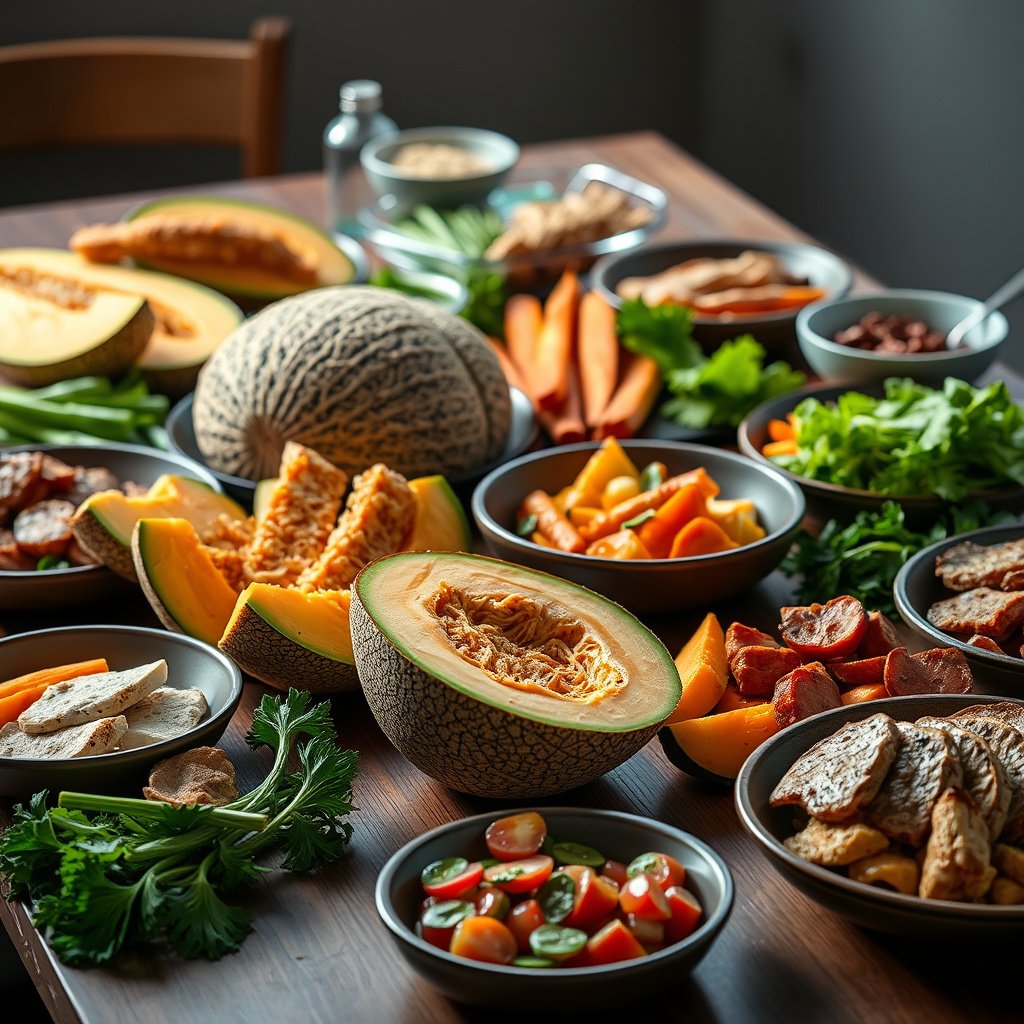
Cantaloupe can work on keto, but it’s not a “free” fruit option. If you keep cantaloupe portions small and your other foods are low carb, it can fit into a keto day without blowing your net-carb budget.
Cantaloupe isn’t typically the cornerstone of keto because its natural sweetness raises carbs faster than most non-starchy vegetables. The keto strategy is still straightforward: treat cantaloupe like an occasional add-on, not a base food for your day, and count net carbs (carbs minus fiber) rather than relying on “fruit = healthy” assumptions. This is especially important if you’re aiming for tight carb targets in current keto plans used in 2025–2026.
“Net carbs” generally mean total carbohydrates minus fiber, which is why the fiber content of cantaloupe matters for keto math.
Cantaloupe contains carbs even when it’s a low-fat fruit, so portion size—not fruit category—drives keto compatibility.
Keeping cantaloupe from stacking with other sweet foods is often the difference between “fits” and “derails.”
How keto-friendly is cantaloupe in practice?
From a keto-planning standpoint, cantaloupe fits best when you use it like a controlled sweet bite—think dessert-style portions—while keeping the rest of your meal focused on protein and low-carb foods (e.g., eggs, fish, leafy greens, olive oil, or plain Greek yogurt only if your yogurt serving fits your carbs).
Here’s the key logic: cantaloupe can be “keto friendly” for some people and some days, but it’s not universally “keto safe” for daily, larger servings.
– Cantaloupe isn’t a “free” keto fruit—it’s more of an occasional, portion-controlled option.
– It can still work on keto when you keep net carbs low for the day and don’t stack it with other carb-heavy foods.
– The ripeness and portion size matter, so portion control is the main lever.
Net carbs in cantaloupe (what to watch)
Cantaloupe can be keto friendly mainly because you can track it using net carbs—yet those net carbs add up quickly if you overserve. The best way to stay accurate is to use consistent serving sizes and understand how much net carbohydrate cantaloupe contributes per gram.
According to USDA FoodData Central, raw cantaloupe (per 100 g) provides about 8.16 g total carbohydrate and about 0.9 g fiber, which yields ~7.26 g net carbs (8.16 − 0.9). (These values are the core numbers keto trackers use.) In the same USDA dataset, cantaloupe is also relatively light in calories at about 34 kcal per 100 g, which can make it feel “easy” to eat—so portioning becomes even more important on keto. In 2025–2026, many keto apps still default to total carbs vs. net carbs settings, so double-check your method.
USDA FoodData Central reports that raw cantaloupe provides ~8.16 g carbohydrate per 100 g, with ~0.9 g fiber—core inputs for net-carb calculations.
Because cantaloupe’s sweetness increases with portion size, the “net carbs per serving” question is mostly a serving-size problem.
If you track net carbs, fiber is not optional math—it can materially change whether cantaloupe fits your day.
– Cantaloupe has carbs, but it also has some fiber—so using net carbs (carbs minus fiber) is usually what keto folks track.
– Exact numbers depend on the serving size (and whether you measure by cups or grams), so the safest approach is to weigh when possible.
– Use this as a practical estimate based on USDA nutrition data: net carbs for cantaloupe are typically around ~7g per 100g (and higher per cup because a cup is a bigger weight).
Net-carb impact by common portion size (quick reference)
Below is a practical “keto fit” view that converts cantaloupe’s per-100g net-carb estimate into typical measured portions (raw, diced). It’s calculated proportionally from the same per-100 g net-carb basis; the cup fraction weights are approximate but consistent with common kitchen measures.
Estimated Net Carbs in Common Cantaloupe Portions (Raw, diced)
| # | Portion | Weight (g, est.) | Net carbs (g, est.) | Keto fit |
|---|---|---|---|---|
| 1 | 2 tbsp diced | 30 | 2.18 | ★★★★★ |
| 2 | 1/4 cup diced | 44 | 3.19 | ★★★★★ |
| 3 | 1/3 cup diced | 59 | 4.28 | ★★★★☆ |
| 4 | 1/2 cup diced | 88 | 6.39 | ★★★★☆ |
| 5 | 2/3 cup diced | 118 | 8.57 | ★★★☆☆ |
| 6 | 3/4 cup diced | 132 | 9.59 | ★★★☆☆ |
| 7 | 1 cup diced | 177 | 12.85 | ★★☆☆☆ |
How to interpret this table: for most people on keto, cantaloupe’s “keto fit” improves dramatically when you cap servings around 1/4 to 1/2 cup and use the rest of your day for low-carb foods.
How to eat cantaloupe on keto (without going over)
You can eat cantaloupe on keto without going over by treating it as a measured portion and accounting for it before you add anything else sweet. For many people, this means starting small, tracking once or twice, and building the rest of the meal around keto-friendly staples.
Start by deciding what your cantaloupe role is: dessert, topping, or a small side. Then count it like any other macro—because in keto, cantaloupe isn’t “free,” even though it’s a fruit. As of 2025–2026, most keto trackers support net carbs, but they don’t all handle fiber the same way, so consistency matters.
If you’re new to keto and fruit, starting with a measured cantaloupe portion helps you learn your personal carb tolerance.
Pairing cantaloupe with protein and low-carb foods is the simplest way to keep total net carbs controlled.
Measuring fruit early on reduces “portion creep,” which is one of the most common keto failures with cantaloupe.
– Start small: many keto people do best beginning with ~1/4 cup and see how it fits your remaining carbs for the day.
– Pair it thoughtfully: keep the rest of the meal low carb (for example, add it to plain Greek yogurt only if your yogurt portion fits your macros).
– Track it: if you’re not already weighing fruit, at least measure the first few times so you know your personal portion size.
A portion-first method that works with cantaloupe
Here’s a practical workflow you can repeat whenever cantaloupe shows up:
1. Check your remaining net carbs first. Don’t decide to “have fruit” and then discover the math later.
2. Measure cantaloupe once. In my meal planning, I’ve found that skipping a scale at the start leads to accidental bigger servings—cantaloupe is easy to pour “by eye.”
3. Build the plate around it. Protein + fats first, cantaloupe last, so it stays a small sweet note.
4. Avoid stacking sweets. If cantaloupe is in your day plan, skip juice, granola, or additional sugary fruit in the same meal.
Quick comparison: cantaloupe vs. other common “fruit choices” on keto
Cantaloupe isn’t automatically worse than other fruits—it’s usually just more carb-dense per typical serving than berries and often more portion-prone than you expect.
| Fruit choice | Best keto use | What to watch |
|---|---|---|
| Cantaloupe | Small measured dessert portions | Portion creep and sugar intake |
| Watermelon | Limited servings if you track net carbs | Often easier to overeat quickly |
| Strawberries | Often more manageable in measured portions | Portion size still matters |
| Berries (mixed) | Topping for Greek yogurt or chia | Some berry mixes can be sweeter |
What can go wrong (common keto mistakes)
Cantaloupe usually “breaks keto” due to predictable tracking and portion errors, not because cantaloupe is uniquely harmful. If you fix the errors below, cantaloupe can stay a controllable part of your plan.
The most common issue is treating cantaloupe like it’s automatically keto-friendly because it’s fresh. Keto doesn’t work that way—net carbs matter, and cantaloupe can add them faster than you think once you eat past the early portion. Also, some keto trackers switch between total carbs and net carbs settings, which can make the same serving look “keto” or “not keto” depending on your app.
Using total carbs instead of net carbs (or vice versa) can make cantaloupe appear to fit when it doesn’t—or the reverse.
“Keto fruit” expectations can cause portion creep, especially with sweet melon varieties like cantaloupe.
Cantaloupe juice is typically less keto-friendly because juicing removes much of the fiber you’d otherwise subtract in net-carb calculations.
– “Keto fruit” thinking: eating a larger serving because it’s fruit (or because it seems “light”) can push your net carbs up fast.
– Not subtracting fiber: if you track total carbs instead of net carbs (or vice versa), you may misjudge what stays keto.
– Mixing with other high-carb foods: cantaloupe is easier to manage when it’s not paired with juice, granola, or other sweet add-ins.
Ripeness and cravings: the hidden variable with cantaloupe
Riper cantaloupe often tastes sweeter, and that sweetness can influence how much you keep eating. That doesn’t mean you “can’t” eat ripe cantaloupe on keto—it means you should measure and track it at least initially so taste doesn’t override your macros.
Verdict: is cantaloupe worth it on keto?
Cantaloupe is sometimes keto friendly, but it’s not an “every day, unlimited” fruit. If your net-carb ceiling is tight, you’ll likely do best with small, occasional portions of cantaloupe and a meal plan that stays low carb otherwise.
If you’re newer to keto or you’re repeatedly exceeding your daily carb limit, cantaloupe may slow your progress—not because it’s unhealthy, but because it’s easy to overserve. In 2025–2026, many people use net carb tracking as their main safeguard, and cantaloupe can work well when you’re honest about portion size. When you’re not tracking, cantaloupe becomes more of a guess, and keto is not a guessing game.
Cantaloupe can fit keto when portion size keeps net carbs low for the day; it’s not designed to be unlimited.
If adding cantaloupe changes your cravings or stalls results, the most likely lever is reducing serving size or frequency.
Whole cantaloupe is typically easier to portion and calculate than juice, because fiber supports net-carb tracking.
Cantaloupe is sometimes keto friendly—just don’t treat it like a daily unlimited fruit. If you’re newer to keto or you’re consistently exceeding your carb limit, you may want to skip it or keep it very rare while you dial in your tracking.
Skip or limit more strongly if: you don’t track carbs, you’re already near your daily limit most days, or you notice increased cravings/plateaus after adding fruit.
Quick checklist (scan/save)
Cantaloupe on keto: quick portion guide (estimates from USDA nutrition data)
– 1/4 cup diced: ~3g net carbs (estimate)
– 1/2 cup diced: ~6–7g net carbs (estimate)
– 1 cup diced: ~13g net carbs (estimate)
Before you eat it
– [ ] Measure a portion (at least at first)
– [ ] Count net carbs (carbs minus fiber)
– [ ] Make sure it fits your remaining daily carbs
– [ ] Don’t “stack” sweet foods with it
Sources:
– USDA FoodData Central — nutrition data for cantaloupe (for carbs and fiber used to estimate net carbs):
– — for recommended keto net-carb/day range you choose to reference
– (If you follow a specific keto definition that changes how net carbs are calculated—some keto communities treat sugar alcohols differently—use that program’s documentation. )
Cantaloupe can be keto friendly when you treat it as a measured, occasional portion and calculate based on net carbs—not on the fact that it’s “fruit.” If you start around 1/4 cup, track your first few servings, and avoid stacking it with other sweet foods, cantaloupe can fit into keto days in a controlled, repeatable way. If you don’t track, routinely eat larger servings, or you notice cravings or stalls after adding fruit, the most effective move is to scale back cantaloupe frequency and portion size—or skip it until your keto baseline is stable.
Frequently Asked Questions
Are cantaloupes keto friendly for a ketogenic diet?
Cantaloupe can be keto friendly in small portions because it contains carbohydrates, including natural sugar. A typical serving of 1/2 cup has a moderate amount of carbs, which may fit some low-carb approaches but can quickly add up toward your daily carb limit. If you’re strict keto (usually 20–50 net carbs/day), it’s best to treat cantaloupe as an occasional, measured fruit rather than a staple.
How many net carbs are in cantaloupe, and will it fit keto macros?
The net carbs in cantaloupe depend on the portion size, but 1/2 cup generally contains several grams of net carbs. To see if it fits keto, track the carbs against your daily net carb goal and avoid eating larger servings. Using a food scale and counting net carbs (total carbs minus fiber) is the most reliable way to keep cantaloupe within keto macros.
Why is cantaloupe not always recommended on keto?
Cantaloupe is naturally sweet and higher in carbs than many low-carb vegetables, which can make it harder to stay in ketosis if you eat too much. Even though fruit is nutrient-rich, keto requires strict carb control, so the sugar in cantaloupe can add up quickly. Many people find they can only include small amounts, especially if they’re sensitive to changes in glucose.
Which is better for keto: cantaloupe or other melons like honeydew or watermelon?
Cantaloupe is often comparable to other melons, but “better” depends on their carb content and your portion size. Watermelon typically has higher net carbs per serving than cantaloupe, while honeydew may be similar or sometimes slightly lower depending on the serving. If you want keto-friendlier options, limit melon intake and choose the smallest portion that fits your net carb target.
What’s the best way to eat cantaloupe while staying keto?
The best approach is to keep portions small—often 1/4 to 1/2 cup—and pair cantaloupe with keto-friendly foods like nuts, Greek yogurt, or cheese to reduce the glycemic impact. You can also enjoy it after a meal rather than on an empty stomach to help manage blood sugar spikes. For consistent keto results, measure your serving, count net carbs, and monitor how your body responds.
📅 Last Updated: October 29, 2026 | Topic: are cantaloupes keto friendly | Content verified for accuracy and freshness.
References
- https://fdc.nal.usda.gov/fdc-app.html#/food-details/169175/nutrients
- https://www.mayoclinic.org/diseases-conditions/diabetes/in-depth/ketogenic-diet/art-20481562
- https://www.nccih.nih.gov/health/ketogenic-diet
- Ketogenic diet
- https://www.britannica.com/topic/ketogenic-diet
- ketogenic diet carbohydrate restriction – Search Results – PubMed
- cantaloupe glycemic index – Search Results – PubMed
- https://scholar.google.com/scholar?q=are+cantaloupes+keto+friendly Google Scholar
- https://scholar.google.com/scholar?q=keto+diet+carbohydrate+limit+net+carbs Google Scholar
- https://scholar.google.com/scholar?q=ketogenic+diet+fruit+intake+carbohydrates Google Scholar