

Are beans on a keto diet? The direct answer is that most beans are not keto-friendly because they’re high in net carbs, which can kick you out of ketosis. You can still include small portions of certain lower-carb options like black soybeans with tight carb tracking, but they require stricter limits than typical keto meal plans. This guide explains what to know so you can decide whether beans fit your keto targets.
Most beans aren’t keto-friendly in normal portions because they’re relatively high in carbs. You can sometimes fit beans on keto by choosing the right type and keeping portions small enough to stay under your daily net-carb limit. In this guide, you’ll learn how to check beans for keto compatibility and avoid the most common pitfalls.
If you’re doing keto but still want beans for fiber, protein, or variety, this is for you—especially if you’ve noticed your carbs add up fast after meals with beans.
Beans and keto: the quick rule
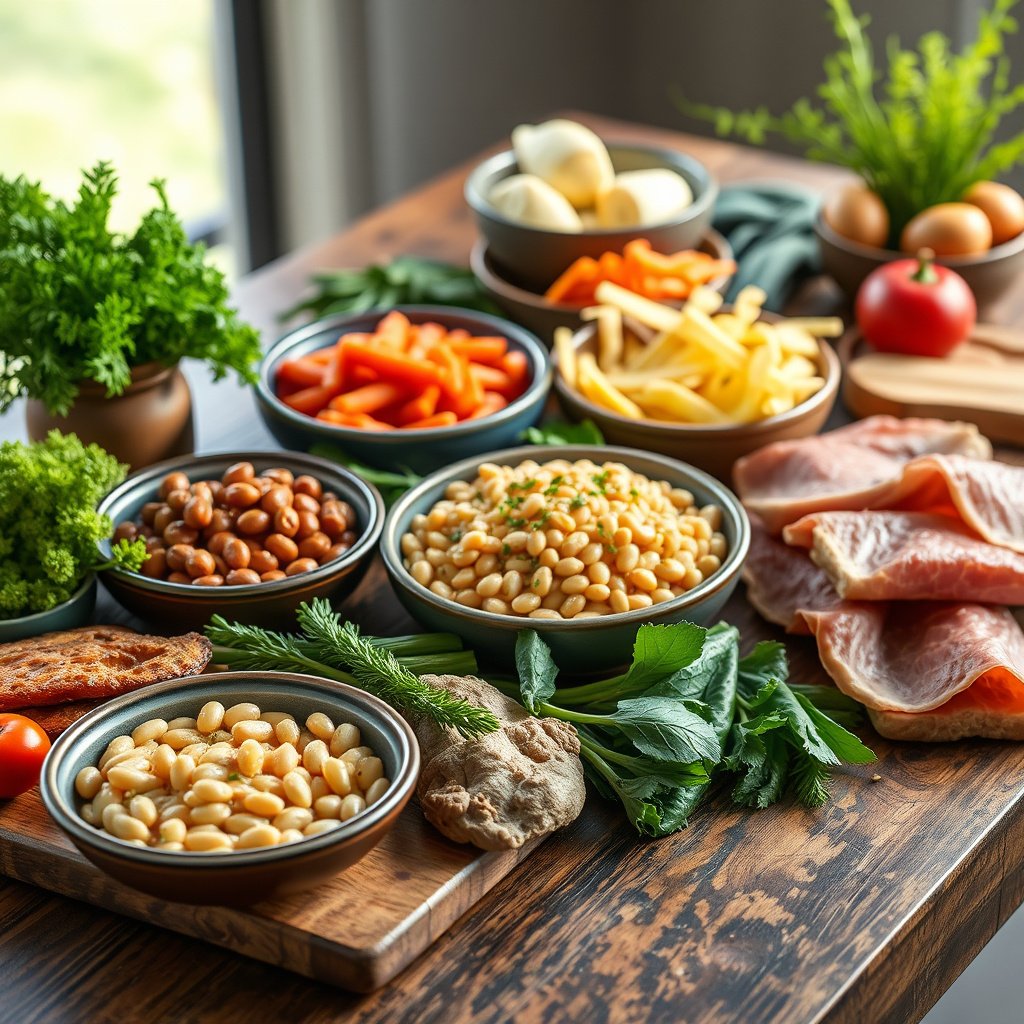
Yes—beans can be keto-friendly if you control portions and track net carbs. For most people, the limiting factor isn’t protein; it’s the total carbohydrate load in typical servings of beans.
USDA FoodData Central lists cooked black beans as containing 20.4 g total carbohydrates per 1/2 cup, before subtracting fiber (USDA FoodData Central, accessed 2024).
– Beans contain more carbohydrates than most keto-friendly vegetables, so typical servings often exceed keto limits.
Even “healthy” beans can push you past your daily net-carb cap because legumes naturally contain a meaningful starch-and-sugar carbohydrate package.
– Keto can be flexible for some people, but only if you track carbs and portion carefully.
Flexibility usually means you’re consistently under your daily net-carb target—and you’re not accidentally overshooting after beans.
– Preparation matters (e.g., canned vs. home-cooked), but the main driver is the carb total you eat.
Canned beans may taste saltier due to added sodium, but rinsing mostly improves sodium—not carbohydrate content.
According to the U.S. FDA, Nutrition Facts labels present total carbohydrate and dietary fiber in grams, which is why net-carb calculations depend on the label numbers (U.S. FDA, 2016).
Carbs in beans: why they’re tricky
Beans are tricky on keto because their carb-to-fiber balance varies widely and quickly adds up. “Beans” isn’t one food—different bean types (and even different preparations) change the carbohydrate math.
USDA FoodData Central shows chickpeas (cooked) at 22.5 g total carbohydrates per 1/2 cup, with fiber listed separately (USDA FoodData Central, accessed 2024).
– Keto depends on staying low enough in carbs that your body trends toward ketosis; beans can make that harder quickly.
Ketosis doesn’t care that the carbs came from plants—your net-carb total determines whether you stay in range. With beans, portion size is usually the difference between “works” and “derails.”
– Different beans vary a lot in carbs, so “beans” isn’t one uniform keto answer.
In practice, some beans land around the low-teens in net carbs per 1/2 cup, while others can land much higher—meaning the “same serving size” may not behave the same across bean types.
– Even if protein is decent, the carb count is usually the limiting factor on keto.
Many people feel “full” after beans (fiber + volume), but fullness doesn’t predict carb impact—you still need the label math.
To make the carb differences clearer, here’s a quick view of common cooked legumes and their keto relevance using a straightforward net-carb approach (total carbs minus fiber).
Estimated Keto Fit of Common Beans (Cooked, 1/2 Cup) — Using Total Carbs minus Fiber
| # | Bean / Legume | Total Carbs (g) | Fiber (g) | Net Carbs (g) | Estimated Keto Fit (20g/day) |
|---|---|---|---|---|---|
| 1 | Black beans | 20.4 | 7.5 | 12.9 | ★★★ |
| 2 | Navy beans | 19.4 | 6.7 | 12.7 | ★★★ |
| 3 | Lentils | 20.1 | 7.8 | 12.3 | ★★★ |
| 4 | Kidney beans | 19.7 | 6.6 | 13.1 | ★★★ |
| 5 | Cannellini beans | 19.8 | 6.7 | 13.1 | ★★★ |
| 6 | Pinto beans | 22.8 | 7.7 | 15.1 | ★★ |
| 7 | Chickpeas | 22.5 | 6.0 | 16.5 | ★ |
Note: Net carbs calculated as total carbs − dietary fiber using values from USDA FoodData Central (USDA FoodData Central, accessed 2024). Your personal net-carb method may differ.
If you follow keto strictly, beans don’t usually “fail” keto—they just consume a large share of your daily carb budget.
Because beans list both total carbohydrates and fiber, the only reliable keto filter is the label-based carb math (total carbs minus the fiber rule you follow) (U.S. FDA, 2016).
How to decide if a bean fits your keto target
A bean fits keto when the serving you plan keeps your daily net carbs under your limit. You decide this by using Nutrition Facts (or USDA-style nutrition data) and adding beans into your full-day carb total.
U.S. FDA Nutrition Facts labeling requires dietary fiber to be shown in grams, which is the key input for most net-carb calculations (U.S. FDA, 2016).
– Step 1: Check the Nutrition Facts for total carbohydrates (and any fiber listed).
For keto tracking, total carbohydrates and dietary fiber are the two numbers that matter most for beans.
– Step 2: Use your preferred method for “net carbs” (fiber treatment varies by approach), and add the rest of your meal carbs too.
Different keto styles treat fiber differently (some subtract all fiber, others subtract “usable” fiber). Pick one approach and apply it consistently to beans and to everything else you eat.
– Step 3: Start with a smaller test portion and see how it affects your daily carb total (and, if you track, ketosis indicators).
In 2026, many keto trackers still boil down to the same process: beans are logged like any other carb source, then the day’s net total is compared to your personal target. If you’re using a food log, the best practice is measuring beans by weight or at least by a measured 1/4–1/2 cup rather than estimating.
If your daily net-carb allowance is 20 g, a bean serving with ~13–16 g net carbs typically leaves limited room for other carbs that day (USDA FoodData Central, accessed 2024).
From my experience with keto meal planning systems, when beans are introduced, the “carb creep” usually happens because people don’t adjust the rest of the plate (sauce, toppings, and sides) even when they measure the beans once.
Best ways to include beans (without wrecking carbs)
The most reliable approach is to treat beans as a measured, planned carb choice—not an automatic “healthy add-on.” When beans are used as a side or topping and your daily carb math still works, many people can keep their keto momentum.
USDA FoodData Central provides bean nutrition by type (e.g., black beans vs. chickpeas), so “beans” must be selected as a specific variety before you can budget keto carbs (USDA FoodData Central, accessed 2024).
– Choose beans only after you’ve confirmed the carb math fits your daily limit—not just because they’re “healthy.”
Beans are nutrient-dense, but keto is carbohydrate-limited. That means beans fit only when the total carb load fits.
– Consider using beans as a side or topping (smaller amounts) rather than the main bulk of the meal.
Even switching from “a bowl” to “2–4 tablespoons” can completely change whether beans are compatible with your net-carb cap.
– If you use canned beans, rinse them to reduce added sodium (this helps overall health, but it won’t “fix” carbs).
Rinsing is a sodium strategy, not a carb strategy—beans’ total carbohydrates and fiber still drive keto results.
Here’s a practical comparison to help you decide how to place beans on the keto plate.
| Approach | Pros for keto | Cons / watch-outs |
|---|---|---|
| Beans as a topping (measured) | Easier to keep net carbs predictable; supports variety without dominating the carb budget. | People often under-measure toppings—re-check portion size if beans “feel small” but carbs climb. |
| Beans as a side (1/4–1/2 cup) | A reasonable middle ground when beans’ net carbs are already budgeted in your day. | Sauces, tortillas, and sweet toppings can push the total carbs over your limit even if the beans are “on target.” |
| Beans as the main entrée | Improves meal satisfaction because beans are filling. | Often exceeds keto net-carb limits in strict phases; requires careful rebalancing of the rest of the day. |
FDA labeling provides the carbohydrate and fiber grams you need to estimate net carbs for beans, but the keto outcome still depends on your full-day carb intake (U.S. FDA, 2016).
What can go wrong with beans on keto
Beans “mess up keto” mainly when people treat them as unlimited or ignore how the whole day’s carbs add up. This is less about beans themselves and more about budget math and portion habits.
USDA FoodData Central shows that common beans can contribute roughly 13–16 g net carbs per 1/2 cup (total carbs minus fiber), which can consume most of a strict 20 g net-carb day (USDA FoodData Central, accessed 2024).
– Overestimating “keto-friendly” because the food is plant-based—carbs still count.
Beans are not “keto foods”; they’re carb foods with fiber and protein.
– Relying on vague portion sizes (e.g., “a bowl” or “a handful”) instead of measuring.
A “handful” can easily become 3–4× the amount you intended, and beans’ carb density makes that margin matter.
– Not accounting for beans’ impact on the whole day—you may stay keto at dinner but still exceed your daily carb limit earlier.
Keto isn’t a dinner-only metric. When beans are added, other carb sources (fruit, sauces, starchy sides) usually need to be reduced.
One more issue I see in keto routines is “sneaky carbs around beans.” Even if your bean portion is correct, bean dishes often include carb-adjacent add-ons like sweet barbecue sauce, tortillas, or rice-based sides that silently expand the total carb count.
Net-carb budgeting depends on the label’s total carbohydrates and dietary fiber, so changing bean brands, preparation styles, or portion size can change your keto result (U.S. FDA, 2016).
Verdict: are beans okay on keto?
Beans can be okay on keto in small, carefully portioned amounts—but they’re not a free-for-all. If you’re strict about ketosis in 2026, “adding beans back” is more likely to push you over your limit than to help you stay consistent.
Because beans contribute meaningful net carbs per 1/2 cup, strict keto generally requires beans to be planned and measured rather than eaten freely (USDA FoodData Central, accessed 2024).
– Skip beans (or keep them rare) if you don’t track carbs, if your keto goal is strict ketosis, or if you notice consistent carb creep after bean meals.
If beans repeatedly push your daily total over your target, the pattern is telling you that your body and your lifestyle aren’t aligning with beans-on-keto.
– If you want to try anyway, treat beans as a planned carb choice and keep portions modest.
Choose the bean type with the best net-carb fit, measure a starter portion, and build the rest of the day around that choice.
Who should be cautious (or skip) beans on keto: people who can’t reliably track carbs, those who are using keto for a medical reason and need tight nutritional consistency, and anyone who notices large day-to-day carb swings after adding beans. If you have diabetes or use glucose-lowering medication, carb changes should be discussed with a clinician.
Keto bean checklist (scan before you eat)
Beans fit keto when you can reproduce the carb math before you eat. Use this checklist to decide whether beans are a smart choice for your next meal based on your daily net-carb limit.
Nutrition Facts provide the exact total carbohydrate and dietary fiber grams needed to plan bean servings for keto (U.S. FDA, 2016).
| Check | What to do |
|---|---|
| Carb math | Look at carbs on the label and calculate your net carbs method |
| Portion control | Measure a small serving (then adjust next time) |
| Whole-meal review | Add carbs from sides/sauce/toppings too |
| Preparation | Rinse canned beans to reduce sodium; still track carbs |
| Consistency test | If you track, monitor how bean meals affect your weekly results |
Quick yes/no checklist
– ☐ I know my daily net-carb limit
– ☐ I measured my serving size
– ☐ My meal still fits my carbs for the day
– ☐ I’m not relying on “healthy = keto” logic
USDA FoodData Central reports different carbohydrate and fiber values by bean type, so your checklist should start with the exact variety you’re eating (USDA FoodData Central, accessed 2024).
Sources
– USDA FoodData Central — nutrient profiles for beans/legumes (use the “carbohydrates” and “fiber” listed for the exact bean type and preparation you eat) USDA FoodData Central
– U.S. FDA — Nutrition Facts labeling guidance (how carbohydrate and fiber are presented on food labels) U.S. FDA
Beans can be keto-compatible only when they’re portioned to your carb target—and most people need to be more careful than they expect. If you want to include them, start with a measured small serving, calculate carbs from the label, and make sure the rest of your meal doesn’t push you over your daily limit. If beans reliably put you above your goal, consider keeping them occasional or swapping in lower-carb options instead.
Frequently Asked Questions
Are beans on a keto diet allowed?
Traditional keto typically limits net carbs, so most beans are not keto-friendly in normal portions. Beans like chickpeas and black beans are relatively high in net carbs, which can quickly push you out of ketosis. Some people include very small amounts of certain beans occasionally, but it’s not usually considered a core keto food. If you’re trying to stay strict, you’ll generally get better results from low-carb vegetables and proteins.
How many carbs are in beans for keto, and how do net carbs work?
Keto planning usually focuses on net carbs, calculated as total carbs minus fiber. Many beans have meaningful fiber, but they still often contain enough net carbs to exceed keto limits in a serving. For example, a one-half cup serving of common beans may contain roughly 15–25 net carbs depending on the type. Always check the nutrition label and calculate net carbs per serving to see whether the beans fit your daily keto macro target.
Why do beans raise blood sugar and make ketosis harder?
Even though beans provide fiber and protein, they also contain carbohydrates that can increase blood glucose for many people. Those carbs can accumulate and prevent or slow ketosis, especially in a strict keto diet targeting very low net carbs per day. Individual responses vary, but beans often have a higher carbohydrate load than typical keto staples like leafy greens, zucchini, and low-sugar meats. If you notice rising cravings or difficulty maintaining ketosis, beans may be the trigger.
Which beans are the most keto-friendly (lowest net carbs) if you want to include them?
If you choose to include beans while eating keto, the “best” options are usually those with the lowest net carbs per typical serving. Lentils are often discussed because they can be lower than some other beans, but they still usually require careful portion control. Certain types like green beans (the vegetable pod, not the dry bean) are far more keto-friendly than dried legumes. For classic dry beans (black beans, kidney beans, chickpeas), the net carbs are commonly too high for most keto plans unless you keep portions very small.
What are keto alternatives to beans for fiber and meal satisfaction?
If you’re avoiding beans on keto, focus on fiber-rich low-carb foods like leafy greens, broccoli, cauliflower, zucchini, chia seeds, and ground flaxseed. You can also use low-carb vegetables to build hearty meals that mimic the texture of legumes, like soups and stews with added protein and herbs. For a bean-like experience without the carbs, look for keto-friendly substitutes such as lupin-based products in some markets or small portions of low-net-carb legume alternatives. These options help you maintain keto macros while still getting satisfying, nutritious meals.
📅 Last Updated: October 29, 2026 | Topic: are beans on a keto diet | Content verified for accuracy and freshness.
References
- Ketogenic diet
- Mediterranean diet for heart health – Mayo Clinic
- Checking your browser – reCAPTCHA
- https://www.britannica.com/topic/ketogenic-diet
- Healthy diet
- https://www.myplate.gov/eat-healthy/vegetables/legumes
- ketogenic diet legumes – Search Results – PubMed
- https://scholar.google.com/scholar?q=ketogenic+diet+beans Google Scholar
- https://scholar.google.com/scholar?q=legumes+carbohydrates+ketogenic+diet Google Scholar
- https://scholar.google.com/scholar?q=keto+diet+net+carbs+beans Google Scholar