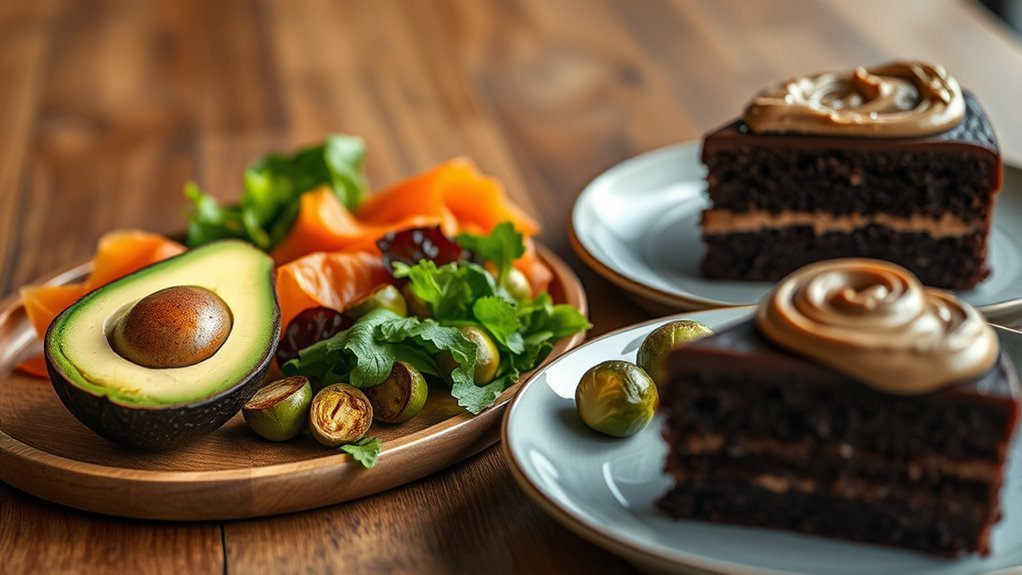

On a keto diet, you can enjoy high-fat foods like avocados, olive oil, and fatty fish, while incorporating moderate protein sources such as grass-fed meats and eggs. You’ll want to steer clear of grains, sugars, and starchy vegetables, which includes hidden sugars found in processed foods and condiments. Focus on whole, unprocessed foods for the best results. Curious about meal prep tips or dining out choices? There’s more to explore on your keto journey.
Understanding Macronutrients: Carbs, Fats, and Proteins
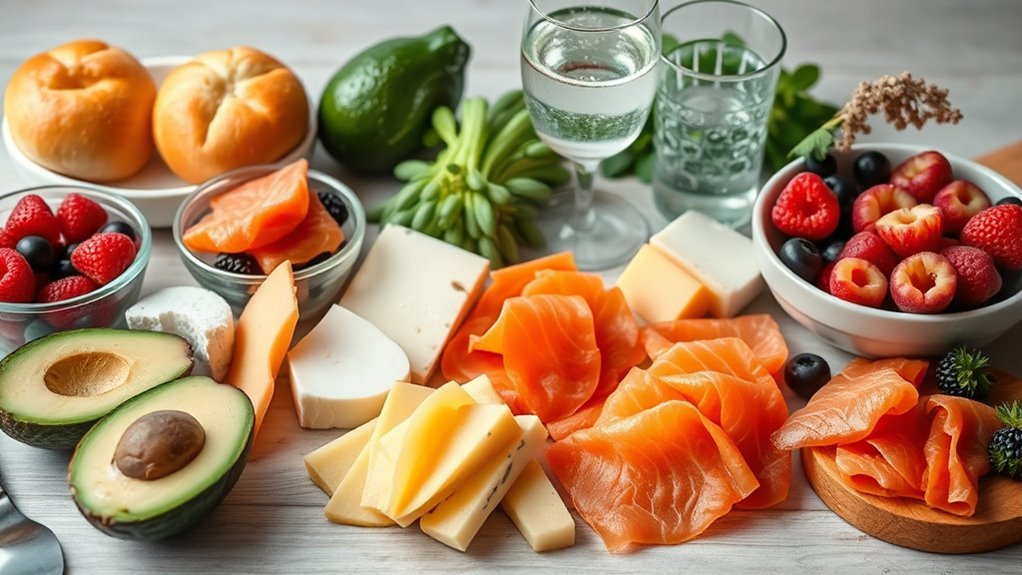
When you immerse yourself in the keto diet, understanding macronutrients—carbohydrates, fats, and proteins—is essential for achieving your goals. Maintaining a proper macronutrient balance is vital; typically, your intake should consist of about 70-75% fats, 20-25% proteins, and only 5-10% carbohydrates. This shift helps your body enter ketosis, where it burns fat for energy instead of carbs. Tracking your intake can be incredibly helpful, ensuring you stay within these percentages. Use apps or food diaries to monitor what you eat, making adjustments when necessary. Remember, the freedom of the keto diet comes from knowing how to fuel your body effectively. By understanding these macronutrients, you’ll feel empowered to make informed choices that align with your health goals.
Keto-Friendly Foods: What to Stock Up On
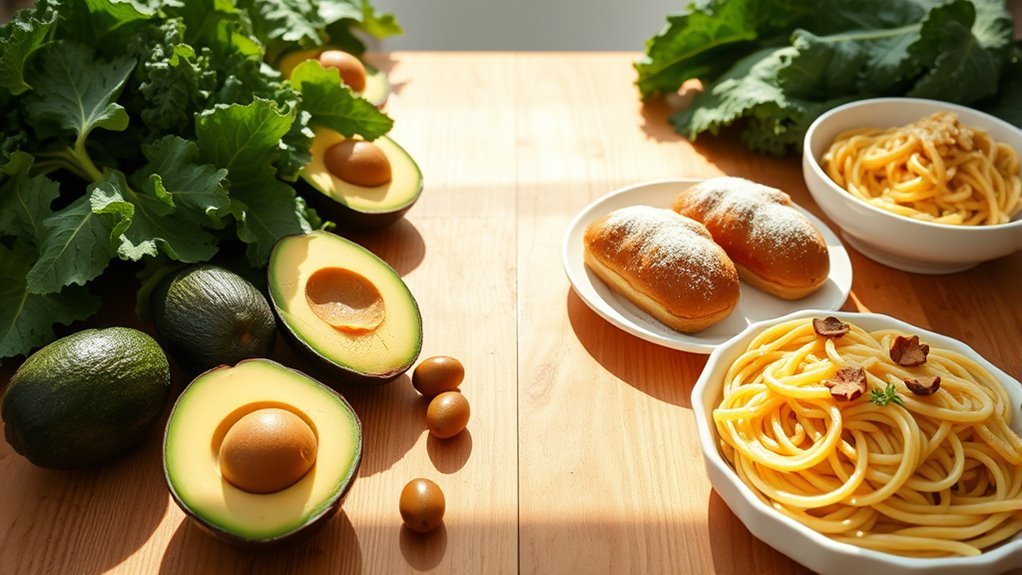
To successfully navigate the keto diet, knowing which foods to stock up on is essential for maintaining your macronutrient balance. Start with healthy fats like avocados, olive oil, and coconut oil, as they’ll become your primary fuel source. Stocking up on keto snacks such as nuts, seeds, and cheese can help curb cravings while keeping your carb intake low. Don’t forget non-starchy vegetables like spinach, zucchini, and broccoli—they’re packed with nutrients and fiber. Protein sources like fatty fish, grass-fed meats, and eggs are also vital. By having a variety of these keto-friendly foods on hand, you’ll enjoy freedom and flexibility in your meal planning while staying aligned with your dietary goals.
Foods to Avoid: Hidden Carbs and Sugars
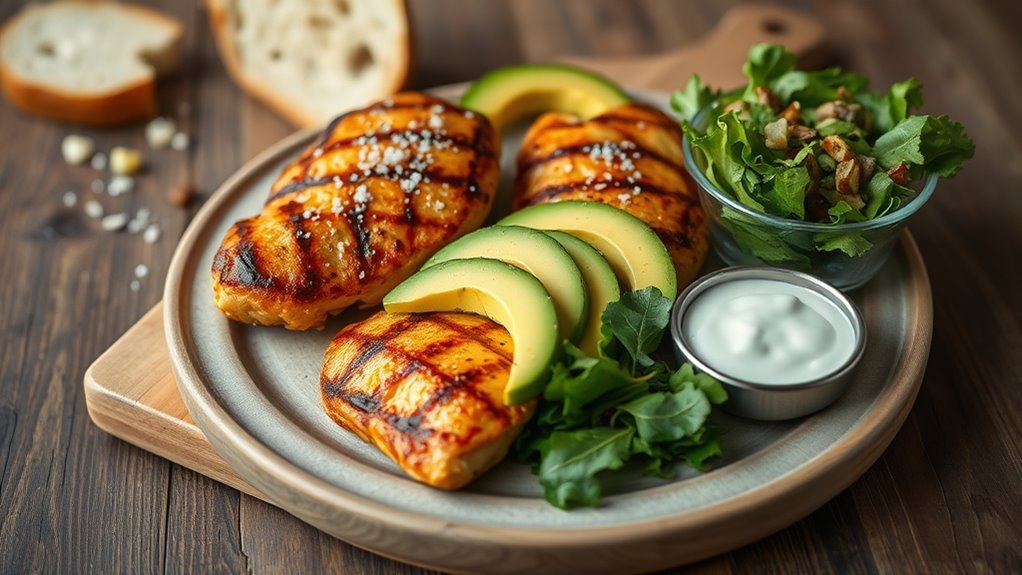
While stocking up on keto-friendly foods is important, being aware of what to avoid is equally essential for staying on track. Hidden sugars and unexpected carb sources can sabotage your efforts. For instance, many condiments like ketchup and barbecue sauce contain significant amounts of sugar. Even seemingly healthy options, such as certain salad dressings, might be loaded with hidden carbs. Processed foods often disguise their carb content, so always read labels carefully. Remember that some fruits, like bananas and grapes, are higher in sugars and should be limited. By steering clear of these hidden carbs and sugars, you can embrace the freedom of a successful keto lifestyle without derailing your progress. Stay vigilant and prioritize whole, unprocessed foods.
Meal Prep Tips for a Successful Keto Journey
Effective meal prep can be a game changer for your keto journey, as it helps you stay organized and committed to your dietary goals. Start by planning your meals for the week, focusing on low-carb ingredients like meats, vegetables, and healthy fats. Batch-cooking proteins and prepping veggies can save time and make cooking easier. Using clear storage containers can keep your meals fresh and visible, reducing the chance of unhealthy snacking. Incorporate time management by setting aside a specific day for meal prep, ensuring you stick to your routine. Remember, flexibility is key; if a recipe doesn’t work, feel free to adjust. With proper meal prep, you’ll enjoy freedom in your food choices while staying on track with your keto lifestyle.
Dining Out on Keto: Making Smart Choices
Dining out on a keto diet can be a rewarding experience if you know how to navigate menus and make smart choices. By using effective restaurant strategies, you can enjoy your meal while sticking to your goals. Here are some tips for making menu modifications:
Dining out on a keto diet is enjoyable when you know how to make smart menu choices.
- Opt for grilled or baked proteins instead of fried.
- Substitute starchy sides with leafy greens or non-starchy vegetables.
- Request sauces and dressings on the side to control portions.
- Choose dishes with healthy fats, like avocado or olive oil.
- Always ask about hidden sugars in sauces or marinades.
With these strategies, you can confidently enjoy dining out while adhering to your keto lifestyle, maintaining both enjoyment and health.
What foods are allowed on a keto diet?
On a keto diet, you can eat a variety of foods that are low in carbohydrates and high in healthy fats. This includes meats (such as beef, pork, chicken, and fish), eggs, full-fat dairy products (like cheese, butter, and cream), non-starchy vegetables (such as spinach, broccoli, and zucchini), nuts and seeds, and healthy oils (like olive oil and coconut oil). These foods help you maintain a state of ketosis, where your body burns fat for fuel instead of carbohydrates.
What should I avoid while on a keto diet?
While following a keto diet, you should avoid foods that are high in carbohydrates. This includes sugary foods (like candy, cakes, and pastries), grains (such as bread, pasta, and rice), starchy vegetables (like potatoes and corn), legumes (beans and lentils), and most fruits (especially those high in sugar like bananas and grapes). These foods can hinder your ability to enter or maintain ketosis.
Can I eat fruit on a keto diet?
Most fruits are high in carbohydrates due to their natural sugars, making them generally unsuitable for a strict keto diet. However, some low-carb fruits can be consumed in moderation, such as berries (strawberries, raspberries, and blackberries) and avocados. These fruits are lower in sugar and provide essential nutrients and fiber, making them a better choice for those on a keto diet.
Is dairy allowed on a keto diet?
Yes, dairy can be included in a keto diet, but it’s important to choose full-fat options. Foods like cheese, heavy cream, and butter are excellent sources of fat and can fit well into your meal plan. However, you should be cautious with certain dairy products that might contain added sugars, such as flavored yogurts and sweetened milk. Always check labels to ensure they align with your keto goals.
Can I eat snacks on a keto diet?
Absolutely! There are many keto-friendly snacks you can enjoy without breaking your carb limit. Good options include nuts and seeds, cheese sticks, hard-boiled eggs, pork rinds, and low-carb protein bars. You can also make your own snacks, like guacamole with celery sticks or whipped cream with berries. The key is to ensure that your snacks are low in carbs and high in fats to help maintain ketosis.
References
- https://www.healthline.com/nutrition/ketogenic-diet-101
- https://www.ncbi.nlm.nih.gov/pmc/articles/PMC6469285/
- https://www.mayoclinic.org/healthy-lifestyle/nutrition-and-healthy-eating/expert-answers/keto-diet/faq-20472783
- https://www.webmd.com/diet/what-is-the-keto-diet
- https://www.cdc.gov/healthyweight/assessing/bmi/adult_bmi/index.html
- https://www.nutrition.org.uk/healthyliving/healthyeating/keto-diet.html
- https://www.jamanetwork.com/journals/jama/fullarticle/2738783
- https://www.sciencedirect.com/science/article/pii/S0022103117301106
- https://www.hsph.harvard.edu/nutritionsource/healthy-weight/diet-reviews/keto-diet/
- https://www.eatright.org/health/wellness/preventing-illness/the-keto-diet-what-you-need-to-know