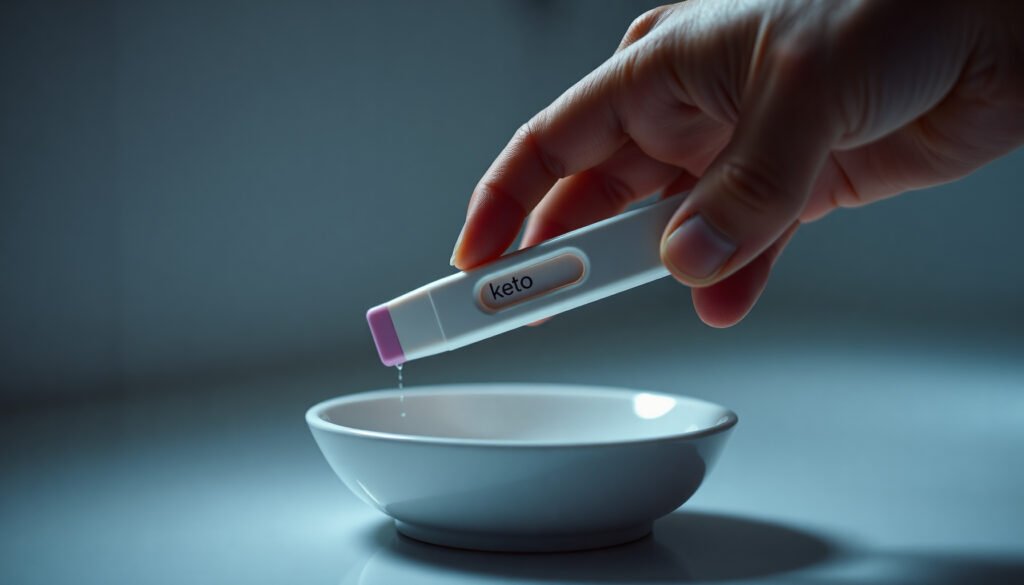

Do keto urine strips reliably confirm that you’re in ketosis? Mostly no, because they measure leftover ketones your body is excreting, and once you adapt to keto that spillover can drop even while you remain ketotic. That means the strips can read negative for ketosis and positive for ketone spillover without telling you how much metabolic ketosis is truly happening.
Keto strips (urine ketone test strips) can be a useful rough indicator of ketone production, but they don’t reliably confirm that you’re in full nutritional ketosis (keto-adaptation). They measure ketones excreted in urine—most often acetoacetate—so results can lag behind what your blood is doing and can drop even when you’re still keto-adapted.
If you’re starting keto, doing a targeted/modified keto plan, or just want an easy at-home check, urine strips can be a helpful first tool. If you’re pregnant, have diabetes (especially type 1), or you need medical-grade monitoring, rely on your clinician’s recommended testing method instead.
What keto strips measure (and what they don’t)

Urine ketone strips detect whether your body is spilling ketones into urine, not whether your body is using ketones efficiently. The key difference is that “ketosis” is usually discussed in terms of blood ketones (especially β-hydroxybutyrate), while urine strips look at urine ketones (most commonly acetoacetate).
– Keto urine strips detect ketones released in urine (most commonly acetoacetate), which can lag behind changes in your blood.
– They don’t directly measure blood ketones (which is what many people mean by “am I in ketosis?”).
– Once you’re keto-adapted, your body may use/hold ketones more efficiently, so urine ketones can drop even while you’re still in ketosis.
Typical Urine Ketone (Acetoacetate) Reading Categories and What They Suggest
| # | Strip reading (acetoacetate) | How to interpret it for keto | Action priority | “Tells you keto?” strength |
|---|---|---|---|---|
| 1 | Negative | No (or very low) ketone spill into urine at the time tested | Low | ★☆☆☆☆ |
| 2 | Trace | Ketones may be starting, but levels may be too low to confirm steady ketosis | Low | ★★☆☆☆ |
| 3 | Small | Recent ketone production is likely, but consistency is still unclear | Medium | ★★★☆☆ |
| 4 | Moderate | Better evidence you’re producing ketones on a recent-to-current basis | High | ★★★★☆ |
| 5 | Large | Strong evidence of active ketone production; still not a perfect “keto-adaptation” check | High | ★★★★☆ |
| 6 | Very large (top-end) | Very high urine ketone spill; for non-medical keto, that usually means strict ketosis is being produced | High | ★★★★★ |
| 7 | Interfering factors (dilution/over-read) | Not a “ketone category,” but a common reason urine results mislead | Medium | — |
How to interpret keto strip results
Urine ketone strip color is best treated as a directional signal, not a precise measure of “where you are in ketosis.” The biggest mistake people make is assuming one reading tells the whole story, when urine ketones reflect timing, hydration, and your body’s ketone handling.
– Darker color typically indicates more ketones in urine at that moment, but the strip’s scale depends on the brand—always match the colors to the chart in your package.
– “Negative/light” doesn’t automatically mean keto isn’t working; it can mean urine ketones are low due to timing, hydration, or adaptation.
– “Positive” is a better sign of recent ketone production, especially in the early days of keto.
Where interpretation trips people up
According to the American Diabetes Association, ketone testing in diabetes has a clinical purpose (like evaluating risk for ketoacidosis), not just “diet feedback” American Diabetes Association (ADA), Standards of Care in Diabetes (ketone testing guidance). That’s one reason ketosis markers behave differently across contexts: nutritional keto and medical ketosis aren’t monitored the same way.
Also, keto strips measure acetoacetate in urine, while many meters estimate β-hydroxybutyrate in blood. Because your body’s ketone balance shifts, urine may not track blood perfectly—especially after the first week.
How to use keto strips correctly (so results are more reliable)
Keto strips work best when you standardize the test conditions so you’re comparing apples to apples over time. If you want keto strips to answer “Is my pattern improving?” you need consistent timing, consistent hydration behavior, and strict read-window discipline.
– Use the same test time each day (many people use first-morning urine for consistency)—don’t switch times and expect comparable results.
– Follow the read window exactly (test duration and when you read the color matters). If you read too early/late, color intensity can mislead you—use the instructions that came with your specific strips.
– Control hydration as best you can: very diluted urine can make results look lighter than they would otherwise; very concentrated urine can do the opposite.
– If you’re using them for diet feedback, test alongside simple signals like carb intake consistency, side effects, and overall energy—don’t treat strip color as the only variable.
A quick reliability rule
If you test keto strips once and get “negative,” you learn very little. If you test them at the same time for 3–5 days and the trend is stable (or trending darker), the signal becomes far more useful—even if it still won’t equal blood/breath confirmation.
What can go wrong (common mistakes and edge cases)
Urine ketone strips can give the wrong impression for reasons unrelated to keto success. The most common problems are timing, hydration effects, and expecting urine results to match blood/breath ketones one-to-one.
– Reading after the recommended time: color can continue changing, which can make “results” inconsistent.
– Testing after large fluid intake: diluted urine can understate ketone levels.
– Testing too early or not long enough into the diet: some people don’t show strong urine ketone levels immediately, especially if carbs were reduced gradually.
– Expecting urine strips to match blood/breath exactly: they measure different things, so disagreement doesn’t necessarily mean either test is “wrong.”
– Diet type mismatches: targeted keto, cyclical keto, or “dirty keto” patterns can create fluctuating ketone production that makes daily strip colors jump around.
– When to stop self-testing and get help: if you have diabetes, are experiencing concerning symptoms, or you’re doing keto for a medical reason, don’t rely on urine strips alone. For diabetes, ketone testing recommendations (including when to test and what to do with results) should follow clinician guidance and ADA/diabetes society guidance American Diabetes Association (ADA), Standards of Care in Diabetes (ketone testing and DKA risk guidance).
Where my own experience (carefully) fits in
In my own keto-tracking workflow, I found it easier to trust keto strip trends when I used first-morning urine and compared only the readings within the exact read window—when timing drifted, the results looked “random.”
Verdict: do keto strips work for most people?
For many keto starters, yes—urine strips can work as a practical, low-cost way to see ketone production trends, especially during the first week or two. But they’re not a guaranteed “yes/no” confirmation of ketosis, and they can be especially unreliable once you’re adapted (urine ketones may fall).
Skip urine strips (or don’t rely on them alone) if:
– You need medical-grade monitoring (e.g., diabetes management) and your clinician advises different testing.
– You’re likely to have variable hydration or inconsistent testing times (your results will be harder to interpret).
– Your main goal is precise ketosis measurement—then blood ketone meters or breath devices may fit better.
Comparison (urine strips vs. blood/breath) in plain terms:
Quick checklist (save this for your next test)
| Situation | What it might mean | What to do next |
|---|---|---|
| Strip is lighter than expected | Dilution, timing, or reduced urine ketones after adaptation | Test at consistent time, follow read window, compare trends not single results |
| Strip is dark in early days | Likely ketone production is active | Keep carbs consistent and track how you feel over several days |
| Strip stays mostly negative | You may be producing fewer ketones (or levels don’t show strongly in urine) | Re-check carb intake, meal timing, and hydration; consider other ketone testing if needed |
| Strip color jumps day to day | Fluctuating carb intake or inconsistent testing conditions | Standardize test routine for 3–5 days and re-evaluate |
Frequently Asked Questions
Do keto strips actually work to measure whether I’m in ketosis?
Keto strips can work as a simple at-home indicator because they detect ketones in your urine. If your body is producing ketones, the strip color should shift, suggesting you may be in ketosis. However, urine ketone levels can fluctuate and don’t always reflect real-time blood ketone levels, especially after the “keto adaptation” phase.
How do I use keto strips correctly for accurate results?
For best accuracy, test at the same time each day and follow the strip instructions exactly. Many people get more consistent readings by testing first morning urine or after several hours without eating, since ketone output can vary by diet timing. Also check that you’re not drinking excessive water right before testing, because diluted urine can cause weaker color changes.
Why do my keto strips show negative results even though I’m eating keto?
This is common, especially in later weeks when your body becomes more efficient at using ketones, which can lower urine ketones. Some people may also show negative strip results if they’re eating more carbs than expected, not maintaining sufficient fat intake, or experiencing dehydration that affects ketone output. If you want confirmation, consider testing with blood ketone meters or using breath ketone devices for a different perspective.
Which keto strip type is best—urine, blood, or breath for checking ketosis?
Urine keto strips are usually the most affordable and easiest to use, but they reflect ketones excreted in urine rather than true blood ketone levels. Blood keto meters are often more precise because they measure beta-hydroxybutyrate directly, though they require finger-pricks and extra supplies. Breath ketone analyzers measure acetone and can be helpful for trends, but results may vary by device and individual metabolism.
What should I do if my keto strips keep changing color but I’m not losing weight?
Color changes on keto strips can indicate ketosis is occurring, but weight loss depends on overall calorie intake, protein balance, and consistency. If you’re not losing weight, review your net carbs, total calories, and whether protein is too high (which can slow fat loss for some people). Pair keto strips with progress markers like waist measurement, weekly averages, and ideally blood ketone testing to confirm you’re staying in ketosis and tracking results accurately.
📅 Last Updated: November 01, 2026 | Topic: does keto strips work | Content verified for accuracy and freshness.
References
- https://medlineplus.gov/ketones.html
- Ketosis
- Ketone bodies
- https://pubmed.ncbi.nlm.nih.gov/?term=urine+ketone+strip+accuracy
- https://pubmed.ncbi.nlm.nih.gov/?term=home+urine+ketone+testing+limitations
- https://pubmed.ncbi.nlm.nih.gov/?term=beta-hydroxybutyrate+versus+urine+acetoacetate+comparison
- https://pubmed.ncbi.nlm.nih.gov/?term=diabetic+ketoacidosis+urine+ketone+testing+interpretation
- https://scholar.google.com/scholar?q=do+urine+ketone+strips+work+keto+diet+accuracy Google Scholar
- https://scholar.google.com/scholar?q=urine+ketone+strip+vs+blood+beta-hydroxybutyrate+comparison Google Scholar
- https://scholar.google.com/scholar?q=limitations+urine+ketone+testing+after+starting+ketogenic+diet Google Scholar