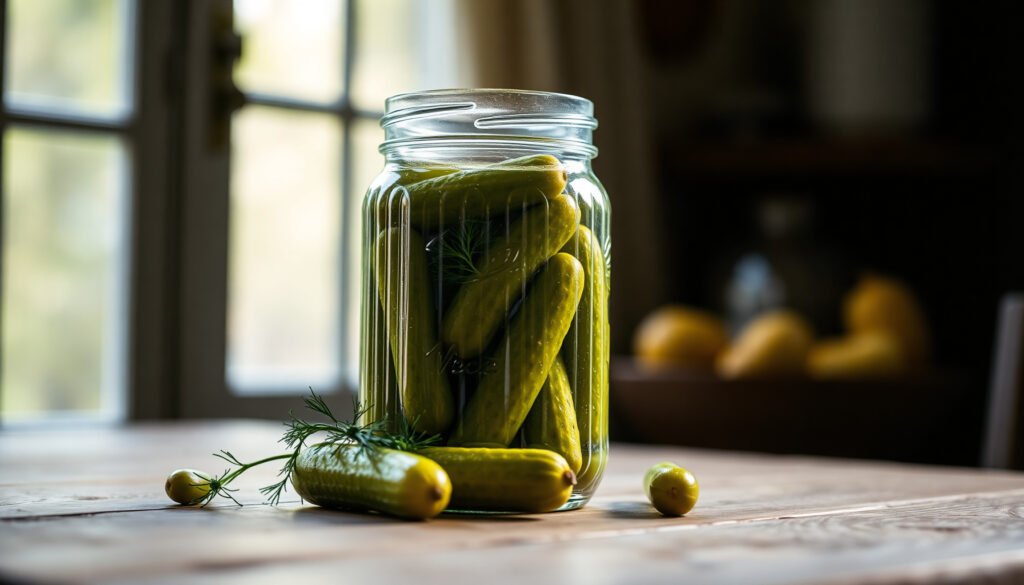

Can you have pickles on the keto diet? Yes—most dill pickles can fit your macros. The key is net carbs: regular dill is low, while sweet or bread-and-butter pickles often contain added sugar that can raise your daily carb total enough to disrupt ketosis.
Yes—pickles can fit on a keto diet, as long as they’re low in net carbs. Stick to pickles made mostly from cucumbers (and vinegar/spices) and check the nutrition label for sugar and carbs; if the carbs fit your daily keto target, pickles can be a satisfying crunchy add-on rather than a “treat that derails everything.”
If you’re early in keto or you’re noticing your weight loss/ketones stall, pickles are a common “small food” that can still add carbs. This is also for anyone who loves tangy, crunchy snacks but wants a practical way to include them without breaking their carb limit.
Pickles on keto: what matters most (net carbs + sugar)
Pickles are keto-friendly when their net carbs stay within your daily limit and their sugar doesn’t quietly inflate the carb count. The tricky part is that “keto” isn’t about calories—it’s about carbohydrates, especially sugar and starch-based ingredients that show up on the label.
A practical way to think about pickles on keto is: vinegar + cucumbers + spices are usually the base, while “sweet,” “bread and butter,” and relish-style products often bring added sugar or thicker formulations.
– Choose pickles with low net carbs by checking “Total Carbohydrate” and “Fiber” (net carbs = carbs minus fiber, if fiber is listed).
– Look for lower sugar ingredients—many “sweet” or “bread and butter” styles can creep up in carbs.
A useful labeling reality check: the U.S. FDA requires nutrition labels to list Total Carbohydrate, dietary fiber, and sugars (and sometimes added sugars), which makes it possible to compare jars. According to FDA nutrition labeling guidance (Daily Values and label components), the Daily Value (DV) for sodium is 2,300 mg, dietary fiber is 28 g, and added sugars is 50 g—numbers that help you interpret how “small” snack foods like pickles can still add up.
How to read a pickle label fast
You don’t need a nutrition degree to decide if pickles fit keto—you just need a quick, repeatable label scan. In my own keto meal planning, I’ve found that having the same “three checks” habit (serving size, total carbs, sugar) prevents most mistakes because pickle jars vary a lot.
– Check the nutrition label per serving for: total carbs, sugar, and whether fiber is included.
– Confirm the serving size—some jars list “1 spear” or a small amount that makes carbs look lower than they are.
Here’s what to do in under a minute:
1. Start with the serving size. If the label says carbs are based on “1 spear,” but you usually eat 3, you need to multiply.
2. Look at total carbohydrates first, then subtract fiber only if dietary fiber is actually listed.
3. Use sugar as a “risk signal.” Even if total carbs look modest, higher sugar often means higher net carbs and faster carb creep—especially with sweet varieties.
Tip: if a pickle label lists added sugar, treat it as the key “keto friction” number. Sweet pickles frequently include enough added sugar to push carbs beyond what feels “reasonable.”
Keto-friendly pickle choices (and common types to watch)
Most dill-style pickles and lightly flavored cucumber pickles are the easiest keto fits, provided you confirm the carb math on the label. The main exception is “sweet” or mixed products where sugar (or sometimes fillers) turns a low-carb snack into a carb-adding habit.
– Often easier to fit: dill pickles or “unsweetened” pickles where added sugar is minimal.
– Use extra caution with: sweet pickles, relish-style pickle products, and flavored varieties that may include more sugar or starch-based fillers.
To make this easier, here’s a simple comparison of the pickle types that tend to behave differently on keto:
| Pickle type | Why it can work on keto | Why it can break keto |
|---|---|---|
| Dill pickles | Often lower in added sugar; typically cucumber + vinegar + spices | Not always “carb-free”—servings can be small, so portion math matters |
| “No/low sugar” pickles | If labeled low in sugar, net carbs are usually easier to keep under control | Flavor boosters may still add carbs; check fiber and total carbs |
| Sweet or bread-and-butter pickles | Can be tolerable only if the label shows very low net carbs per serving | Added sugar commonly raises net carbs, even when the jar seems “small” |
| Relish-style or mixed pickles | Some jars may still be low-carb if ingredients are mostly cucumber and vinegar | Often includes more added ingredients that increase total carbs and sugar |
In short: if you like pickles for their tang and crunch, prioritize plain dill or unsweetened options—and treat sweet varieties as “label-dependent,” not automatically keto.
━━━━━━━━━━━━━━━━━━━━━━━━━━━━━━━━━━━━━━━━━━━━━━━━━━
━━━━━━━━━━━━━━━━━━━━━━━━━━━━━━━━━━━━━━━━━━━━━━━━━━
FDA Daily Values you can use when interpreting pickle nutrition labels
| # | Nutrition Facts field | Unit (label) | Keto priority | FDA Daily Value (DV) |
|---|---|---|---|---|
| 1 | Dietary fiber | g | ★★★★★ | 28 g |
| 2 | Added sugars (if listed) | g | ★★★★★ | 50 g |
| 3 | Sodium | mg | ★★★★☆ | 2,300 mg |
| 4 | Potassium | mg | ★★★☆☆ | 4,700 mg |
| 5 | Total fat | g | ★☆☆☆☆ | 78 g |
| 6 | Saturated fat | g | ★☆☆☆☆ | 20 g |
| 7 | Cholesterol | mg | ★☆☆☆☆ | 300 mg |
━━━━━━━━━━━━━━━━━━━━━━━━━━━━━━━━━━━━━━━━━━━━━━━━━━
What can go wrong: hidden carbs and portion creep
Pickles don’t usually have “mystery ingredients,” but carbs do get sneaky through added sugar, serving size mismatches, and snack frequency. If your keto progress slows, the culprit is often cumulative carb intake—pickles are just one easy-to-overeat item.
– “Natural” doesn’t automatically mean low-carb—ingredients like added sugar or honey can raise carbs.
– Portion creep is real: keto-friendly pickles can add up quickly if you treat the jar like an all-day snack.
– If you’re sensitive to high sodium, more pickles may worsen water retention or make you feel off—
Three common “keto pickle” failure modes:
1. You compare one jar, then you stop checking. Brands vary in serving size and formulations, even within the same “dill” category.
2. You don’t multiply the carbs. If the label uses “1 spear,” and you eat 4, your net carbs are roughly 4x—before you even consider what you ate with it.
3. You choose for taste first. Sweet-tasting pickles can be delicious but often mean higher sugar, and sugar usually means higher net carbs.
If you’re managing electrolytes on keto, sodium can be both helpful and problematic. That’s why label literacy matters: sodium on the Nutrition Facts panel tells you what you’re actually adding, regardless of whether you “feel fine” that day.
Verdict / tip: how to include pickles without sabotaging keto
Pickles are usually a yes on keto when you pick low-net-carb options and stick to a reasonable serving size. The downside: some popular pickle varieties (especially sweet styles) can be higher in sugar/carbs, so you may need to switch types or reduce portions. If you have a medical reason to manage sodium or are not yet comfortable tracking carbs, consider skipping or speaking with your clinician first.
A realistic keto approach is to treat pickles as a measured add-on, not a “grab-and-go unlimited snack.” In practice, that can look like pre-portioning a few spears into a small bowl before you start eating—so you’re not adjusting your daily carb count halfway through the day.
Quick scan checklist (save this)
– [ ] Serving size matches what you’ll actually eat
– [ ] Net carbs are low (use carbs minus fiber if fiber is listed)
– [ ] Sugar is minimal (especially if the label lists added sugar)
– [ ] It’s mostly cucumber + vinegar + spices (fewer sweeteners)
– [ ] You’re not exceeding your daily carb limit with “small extras”
If you want one rule of thumb: dill (not sweet), label-checked (not assumed), portioned (not poured from the jar).
Sources
– USDA FoodData Central: “Pickles, dill, canned” and “Pickles, sweet, canned” (nutrition label baselines)
– U.S. FDA: Nutrition Facts label guidance for how “Total Carbohydrate,” “Dietary Fiber,” and “Sugars” (and “added sugars,” when declared) are listed on packaged foods
– FDA Daily Values (DV) updates used on Nutrition Facts labels for sodium, dietary fiber, added sugars, and other nutrients
Frequently Asked Questions
Can you eat pickles on a keto diet?
Yes, you can usually eat pickles on a keto diet because many pickles are very low in carbs. Most classic dill pickles contain minimal net carbs per serving, making them a common keto-friendly condiment. Just check the nutrition label for total carbs and especially net carbs, since some sweet or bread-and-butter varieties can be higher in sugar.
How many carbs are in pickles, and do they fit keto macros?
Carbs in pickles vary by brand and type, but standard dill pickles are typically low enough to fit within keto macro limits. Look for the net carb count (carbs minus fiber) per serving and keep your portion size in mind. If you’re aiming for strict keto, even small carb differences can matter, so measuring a serving can help you stay on track.
Which pickles are best for keto—dill, kosher, or sweet?
Dill pickles and kosher dill pickles are generally the best options for keto because they’re usually fermented and unsweetened. Sweet pickles, bread-and-butter pickles, and “sweet-hot” varieties often contain added sugar, which can raise carbs. For keto, prioritize ingredients like cucumbers, vinegar, salt, garlic, and spices, and avoid those with added sugars unless the carb count is still very low.
What should you check on the label to choose keto-friendly pickles?
Start by reviewing the nutrition facts for total carbs and net carbs per serving, not just “sugar” grams. Ingredient lists matter too—pickles labeled “sweet” or containing added sugar or high-fructose corn syrup are often less keto-friendly. Also consider serving size, because some jars provide nutrition per 1 pickle while others list smaller portions.
Why do some pickles seem to affect ketosis, even though they’re “pickles”?
Some pickles can impact ketosis due to higher sugar content, larger serving sizes, or hidden carbs from sweeteners. Even if a pickle is low-carb overall, overeating can push your daily net carbs over your keto limit. To stay keto, stick to unsweetened dill pickles, watch portions, and choose brands with clearly low net carbs per serving.
📅 Last Updated: November 01, 2026 | Topic: can you have pickles on the keto diet | Content verified for accuracy and freshness.
References
- Ketogenic diet
- https://www.mayoclinic.org/diseases-conditions/diabetes/in-depth/ketogenic-diet/art-20489402
- https://www.britannica.com/topic/keto-diet
- Food Search | USDA FoodData Central
- Food Search | USDA FoodData Central
- https://pubmed.ncbi.nlm.nih.gov/?term=ketogenic+diet+carbohydrate+intake+20+50+grams
- https://pubmed.ncbi.nlm.nih.gov/?term=pickles+nutrition+carbohydrate
- https://scholar.google.com/scholar?q=ketogenic+diet+pickles Google Scholar
- https://scholar.google.com/scholar?q=dill+pickle+carbohydrates Google Scholar
- https://scholar.google.com/scholar?q=keto+diet+net+carbs+carbohydrate+limit Google Scholar