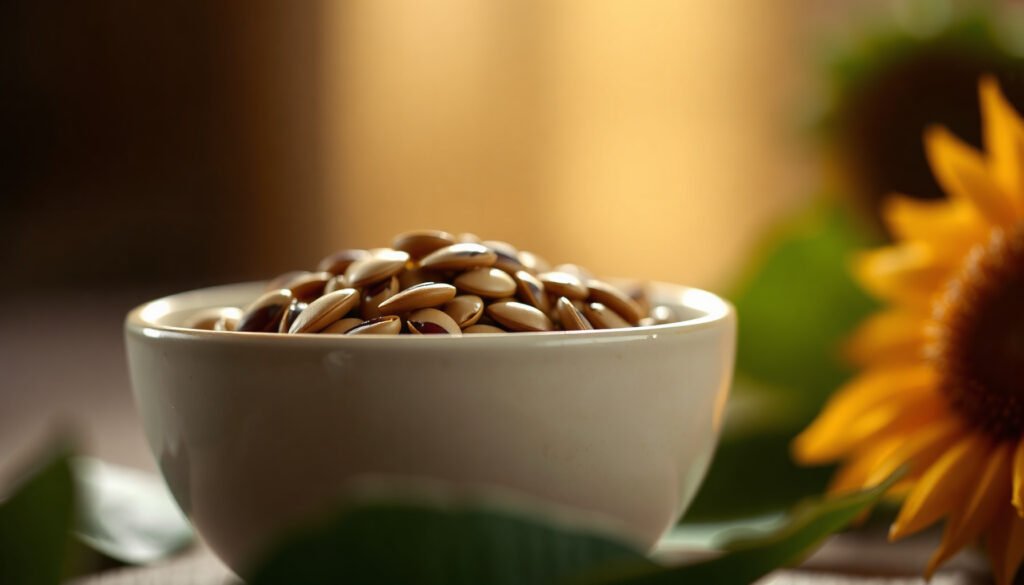

Can you eat sunflower seeds on keto without breaking ketosis? Yes, you can—because sunflower seeds are low in net carbs and fit well into keto’s fat-forward, carb-limited approach. The one thing to watch is portion size, since even keto-friendly seeds can add up quickly and nudge your daily carb limit.
Yes—you can eat sunflower seeds on keto, as long as you keep net carbs low and portions consistent. Sunflower seeds are mostly fat and protein with some fiber, which can keep them compatible with keto when you track the net carbs (net carbs = total carbs − fiber) and choose simpler options like plain/unsalted seeds. In practice, the biggest keto risk is usually not the seed itself—it’s overeating (often straight from the bag).
If you’re doing keto to manage blood sugar, reduce cravings, or maintain ketosis for weight loss, sunflower seeds can be a convenient crunchy snack. This article is for you if you’re already familiar with keto tracking (net carbs) and want a clear way to decide whether sunflower seeds belong in your routine—without guessing.
Are Sunflower Seeds Keto-Friendly?
Sunflower seeds can be keto-friendly because they deliver mostly fat and protein, plus fiber that reduces their effective (net) carb impact. The keto question is not “Are sunflower seeds carb-free?”—it’s whether the carbs you eat from them stay within your daily net-carb target and whether the type of seed keeps sugar and added ingredients low.
A key detail: sunflower seeds vary a lot by brand and flavor. Plain roasted or unsalted kernels are typically easier to fit, while sweetened or honey-roasted versions often include added sugars that raise total carbs. Also, sunflower seeds are energy-dense, so portions can grow faster than your tracking system.
According to USDA FoodData Central, sunflower seed kernels (roasted) provide about 584 kcal per 100 g and contain meaningful fiber, which is why net carb math can matter so much (2024 database release). USDA FoodData Central also reports carbohydrate content on a per-100 g basis, allowing you to convert to your portion size. In 2026, that “label-to-math” approach is still the most reliable way to stay consistent on keto.
How to Check If They Fit Your Keto Macros
Sunflower seeds fit your keto macros when you calculate net carbs from the exact label of the product you buy and then measure a realistic serving. Since keto tracking is usually net-carb-based, the two numbers you need are total carbs and fiber.
Here’s the process I recommend (and use in my own planning when I’m trying to be strict):
1) Find total carbs and fiber on the nutrition label for your specific sunflower seeds.
2) Calculate net carbs = total carbs − fiber.
3) Multiply by your portion size (or use the label’s serving size if it matches what you actually eat).
4) Add those net carbs to the rest of your day’s intake, then decide whether sunflower seeds make sense.
If you’re tracking keto for metabolic reasons (including blood sugar management), consistency is everything. Even if a snack is “low-carb,” your ketosis can become unstable if you repeatedly exceed your net-carb limit—especially when the snack is calorie-dense and easy to overeat.
Reference macro math (USDA-based)
According to USDA FoodData Central, roasted sunflower seed kernels provide carbohydrate and fiber values that allow net carb estimates after subtracting fiber (table values computed from those nutrient figures).
Estimated Net Carbs by Portion Size (Roasted Sunflower Seed Kernels)
| # | Portion (g) | Total Carbs (g) | Fiber (g) | Net Carbs (g) | Strict Keto Fit (≤5g net) |
|---|---|---|---|---|---|
| 1 | 10 g | 2.00 | 0.86 | 1.14 | ★★★★★ |
| 2 | 20 g | 4.00 | 1.72 | 2.28 | ★★★★ |
| 3 | 28 g (≈1 oz) | 5.60 | 2.41 | 3.19 | ★★★★ |
| 4 | 30 g | 6.00 | 2.58 | 3.42 | ★★★★ |
| 5 | 40 g | 8.00 | 3.44 | 4.56 | ★★★ |
| 6 | 50 g | 10.00 | 4.30 | 5.70 | ★ |
| 7 | 80 g | 16.00 | 6.88 | 9.12 | ★ |
Notes: Net carbs shown are calculated using the keto convention net carbs = total carbs − fiber, using nutrient values for roasted sunflower seed kernels from USDA FoodData Central.
Because brands vary, always confirm total carbs and fiber on your specific nutrition label.
Best Ways to Eat Sunflower Seeds on Keto
The best way to eat sunflower seeds on keto is to keep them plain, measure your portion, and combine them with other keto-friendly foods so you don’t drift into “mindless snacking.” Sunflower seeds can work as a crunchy snack, but only if the carbs you track are the carbs you actually consume.
Start with plain roasted or unsalted kernels. From a keto-tracking standpoint, fewer ingredients usually means fewer surprises in the carbohydrate total—especially fewer added sugars. Then, pair them with foods that increase satiety without adding carbs (for example: olives, cheese, or other nuts/seeds you also track).
Here’s a quick comparison that helps you decide what to buy.
| Feature | Plain/Unsalted Roasted | Honey-Roasted / “Sweet” |
|---|---|---|
| Added sugar risk | Low (check label) | Higher (often listed as sugar/honey) |
| Net-carb predictability | Generally higher | Can vary more by recipe |
| Tracking simplicity | Easier | More likely to require careful label reading |
| Sodium considerations | Lower (unsalted) or moderate | Often higher (seasoning mix) |
| Portion “drift” risk | Moderate | Often higher due to flavor intensity |
| Carb impact per handful | Lower when measured | Higher if you eat more than planned |
| Ingredient list complexity | Short | Longer (sweeteners, coatings) |
| Likelihood of ketosis disruption | Lower when tracked | Higher if portion control slips |
| Best pairing options | Cheese, olives, other tracked nuts/seeds | If used, pair minimally and still track net carbs |
| Keto “default choice” | Yes | Usually no |
| Best for | Staying in ketosis with predictable carbs | Occasional use when you can track the label precisely |
In my own keto planning (without claiming a medical outcome), I’ve noticed that portioning sunflower seeds into a small bowl—then measuring—reduces “extra bites.” If you want a similar method,
What Can Go Go Wrong (Common Keto Mistakes)
Sunflower seeds most often knock people out of ketosis due to portion creep, not because they’re inherently incompatible with keto. When seeds are eaten straight from the bag, it’s easy to double or triple the serving size before you realize it.
Common pitfalls include:
– Overeating from the bag: sunflower seeds create a “continuous snack” effect, and extra grams quickly add net carbs.
– Ignoring flavored varieties: honey-roasted and sweet coatings can add sugar, increasing total carbs.
– Counting errors: labels can differ by brand and serving size. Always confirm fiber and total carbs on the exact product you buy.
There’s also a process risk: some people skip net-carb math and only look at “total carbs.” That can mislead because fiber changes the picture for keto tracking.
Label nuance to watch
In the US, nutrition facts report total carbohydrate and list dietary fiber separately. Fiber is part of total carbohydrate but is typically treated differently in keto “net carb” calculations (net carbs are a practical convention, not a universal regulatory category). According to FDA, the Nutrition Facts panel includes dietary fiber as a component of total carbohydrate reporting (2024 documentation). FDA definitions matter because they explain why keto users subtract fiber in their own tracking method.
Finally, in 2026, it’s still worth remembering that keto is not “one-size-fits-all.” If you’re using keto for blood sugar management, work with your clinician—especially if you use insulin or sulfonylureas—because carb changes can affect medication needs.
Verdict: Should You Eat Sunflower Seeds on Keto?
Sunflower seeds are a reasonable keto snack when they’re plain and your portions are measured and tracked. The downside is that sunflower seeds are easy to overeat, and flavored varieties can add enough sugar to make your net carbs climb faster than you expect.
From a practical standpoint, the “best” choice depends on your self-control system and your goals. If you’re new to keto or you’re trying to regain ketosis after a slip, start smaller and track net carbs closely. You may want to skip or limit them if you consistently lose portion control, you’re sensitive to salty/processed snacks, or your specific brand has higher net carbs than you assumed.
| Criteria | Plain & Measured | Flavored & Untracked |
|---|---|---|
| Net-carb calculation | Clearer (label-based) | Unclear (extra sugars possible) |
| Added sugar risk | Lower | Higher |
| Portion control | Measurable | Prone to drift |
| Tracking friction | Medium | High |
| Sodium load | Usually easier to manage | Often higher in seasoned blends |
| Compliance for cravings | Better fit | Can increase intake |
| Keto stability likelihood | Higher when tracked | Lower if portions overshoot |
| Fiber benefit use | Used correctly (subtract fiber) | May be ignored |
| Overall snack value | Predictable | Variable by brand |
| Best keto strategy | Measure + track | Avoid “grab-and-go” |
| Verdict | Yes—keto-appropriate snack | Only if label-tracked and portioned |
Quick Keto Checklist (Scan & Save)
– ☐ Use the nutrition label to calculate net carbs (total carbs − fiber)
– ☐ Start with a measured portion (don’t estimate)
– ☐ Choose plain/unsalted varieties
– ☐ Check serving size—don’t eat the whole bag mindlessly
– ☐ Re-check your day’s totals to stay within your keto carb limit ()
Sources
– USDA FoodData Central: Sunflower seeds nutrition profile (kernels; roasted/raw—use the specific entry that matches your product) —
– FDA (Nutrition Facts panel guidance): dietary fiber and total carbohydrate reporting methodology —
Sunflower seeds can absolutely fit into keto—especially when they’re plain, tracked, and portioned. If you want a keto-friendly crunchy snack in 2026, the practical rule is simple: measure first, calculate net carbs from the label, and treat “seeds from the bag” as the main place portion control breaks down.
Frequently Asked Questions
Can you eat sunflower seeds on keto?
Yes, you can eat sunflower seeds on keto because they’re relatively low in carbs compared with many other snacks. However, the key is portion size and tracking net carbs, since sunflower seeds still contain some carbohydrate. Choose plain or unsalted sunflower seeds (not flavored sugar-coated varieties) to keep keto macros in check.
How many sunflower seeds can I eat on keto without going over my carbs?
A typical serving is about 1 ounce (roughly 2 tablespoons), but your “safe” amount depends on the total carbs in your day. For keto, many people aim to keep net carbs low (often 20–50g total net carbs depending on their plan). Measure your portion and calculate net carbs from the nutrition label to avoid accidentally pushing yourself out of ketosis.
What are the best sunflower seeds for keto—raw, roasted, or salted?
For keto, plain raw or dry-roasted sunflower seeds are usually the best choice because they have no added sugars. Salted seeds are fine for most people on keto, but heavily seasoned blends can contain added carbs or sugar, so always read the ingredient list. If you’re watching sodium or electrolytes, pick an option that fits your needs.
Why can sunflower seeds affect ketosis if they’re “keto-friendly”?
Sunflower seeds are keto-friendly in moderation, but they can affect ketosis if you eat too many, because carbs add up quickly. Additionally, flavored sunflower seeds may include added sweeteners, which increases net carbs. Sticking to a measured serving and choosing unsweetened seeds helps keep your keto diet on track.
Which nutrition facts should I check for sunflower seeds on a ketogenic diet?
Check the total carbs, fiber, and net carbs per serving—net carbs are especially important for keto. Also look for added sugars in the ingredients list, since “seasoned” or “snack” varieties can include carbs you wouldn’t expect. Finally, verify serving size (cups/ounces) so you can accurately portion sunflower seeds to maintain ketosis.
📅 Last Updated: November 01, 2026 | Topic: can you eat sunflower seeds on keto | Content verified for accuracy and freshness.
References
- https://www.mayoclinic.org/healthy-lifestyle/weight-loss/in-depth/keto-diet/art-20047894
- https://www.ninds.nih.gov/health-information/patient-caregiver-education/ketogenic-diet
- Ketogenic diet
- Sunflower seed
- https://www.britannica.com/topic/keto-diet
- https://pubmed.ncbi.nlm.nih.gov/?term=ketogenic+diet+carbohydrate+intake+study
- https://pubmed.ncbi.nlm.nih.gov/?term=sunflower+seeds+nutritional+composition+carbohydrate+fiber
- https://scholar.google.com/scholar?q=can+you+eat+sunflower+seeds+on+keto Google Scholar
- https://scholar.google.com/scholar?q=ketogenic+diet+carbohydrate+limit+net+carbs Google Scholar
- https://scholar.google.com/scholar?q=sunflower+seeds+nutrition+carbohydrate+fiber Google Scholar

Pingback: Can You Eat Tortillas on Keto? What to Know - Keto Model