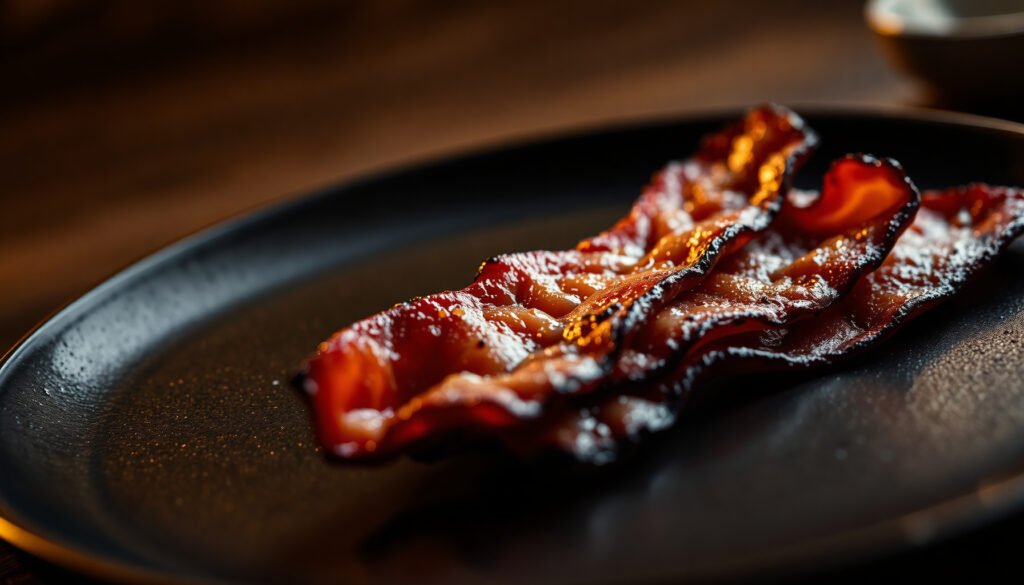

Most people worry that bacon is “too processed” for ketosis, but you can eat bacon on the keto diet. The key reason is that bacon is generally low in carbs and high in fat, so it fits keto’s macronutrient target. The main caveat is to choose varieties without added sugar and check the label for net carbs to stay in your daily limit.
Yes—most people can eat bacon on the keto diet, as long as it’s low enough in carbs for your daily limit. Since bacon is usually made from pork (a near-zero carb food), the main thing to watch is added sugars or thick marinades in the curing process. In this guide, you’ll learn how to check labels, choose better options, and avoid common keto mistakes with bacon.
If you’re doing keto to stay under a strict carb target, bacon can work as a convenient, high-satiety protein. This is especially relevant if you buy pre-packaged bacon often (because ingredients can vary a lot by brand and flavor).
If you’re new to keto, it helps to know the “why” behind the rules: most keto plans don’t care about whether something is “naturally keto,” they care about total carbs (or net carbs) staying within a tight daily range. As of 2026, that label-reading step is still the single most reliable way to keep bacon keto-friendly—because bacon formulas vary by brand and “flavor” (smoked, peppered, brown sugar glazed, etc.).
When bacon fits the keto diet
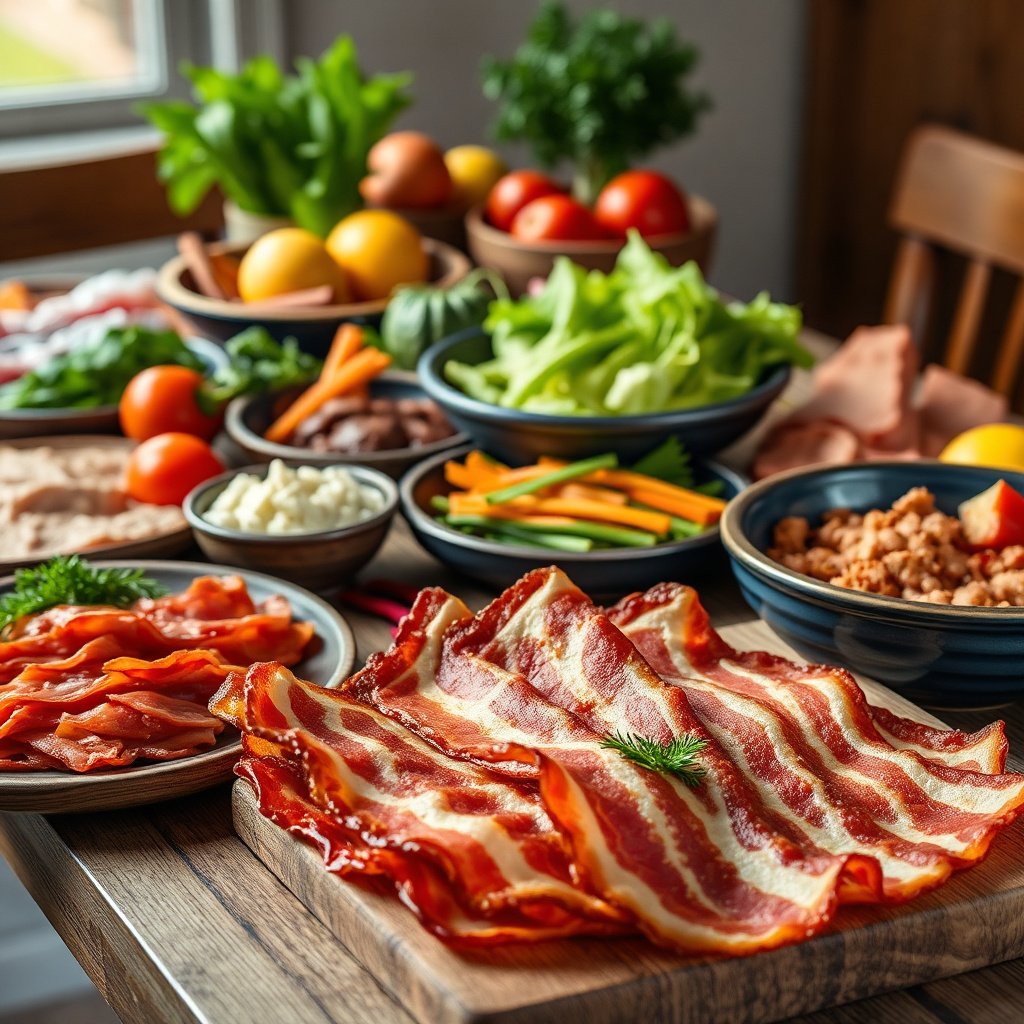
Bacon fits keto when the nutrition label shows a carb amount that keeps you under your daily net-carb target. The ingredient list matters, but the nutrition panel is what ultimately determines whether your bacon days up carbs or stays out of the way.
Here’s the practical breakdown:
– Bacon is typically very low in net carbs because it comes from meat, not grains.
– Your keto “yes/no” mostly depends on the nutrition label (net carbs per serving) rather than the word “bacon.”
– Many flavors like plain, classic, or “hickory smoked” tend to be easier to keep keto than sweetened varieties.
In my own grocery routine, I’ve noticed that the “carb surprise” usually isn’t in traditional pork bacon—it’s in flavored styles that use sugar-based cures, “brown sugar” notes, or glaze-like seasoning. That’s why the fastest check is: confirm the nutrition panel first, then scan the ingredients second.
Also, keto isn’t a single universal rule. Clinically, ketogenic diets generally aim to restrict carbohydrates to a narrow range—often about 20–50 grams per day depending on context and individual goals [NIH]. Many plans also emphasize fat as the dominant macro (roughly 70–80% of calories in typical ketogenic patterns) [NIH]. When your fat and protein are naturally satisfied by bacon, staying in the carb band is usually the main bottleneck—not satiety.
How to choose bacon that stays low-carb
Choosing keto-friendly bacon is less about hunting “keto” on the package and more about controlling two variables: added sugars and your actual serving. If those are aligned, bacon is usually an easy win.
Use this decision sequence:
– Check the ingredient list for added sugars (for example: sugar, brown sugar, honey, maple syrup) and sugar-containing “glazes.”
– Use the Nutrition Facts panel to confirm carbs—aim for net carbs that fit your daily keto target (many people target very low daily totals).
– Watch portion size: the serving on the package may not match what you’d eat (e.g., 2 slices vs. 4).
Bacon labels: what to look for (net carbs vs total carbs)
“Keto” marketing can obscure what actually matters. Some labels emphasize “net carbs,” while others show “total carbs” plus fiber. Net carbs are often calculated as total carbs minus fiber, but the product-specific label format is the reality you should follow. If the label doesn’t clearly define net carbs, don’t guess—use the numbers exactly as printed.
A simple approach that works in 2026: pick the bacon you can eat without mental math. If a brand lists net carbs per serving, use that directly. If it lists total carbs and fiber separately, calculate only from the label—then compare against your daily limit.
Quick comparison: plain vs sweetened bacon
If you want a fast way to predict carbs, think in categories: “plain cured” tends to stay low-carb, while “glazed” tends to climb.
| Bacon style | Typical keto outcome | Why |
|---|---|---|
| Plain / classic (no glaze) | Often easier to stay keto | Less likely to include added sugars beyond curing salts |
| Hickory-smoked / peppered | Usually manageable | Flavoring is typically spice-based, not sugar-based (verify label) |
| Maple-glazed / brown sugar | More likely to blow past carbs | Added sugars are baked into the cure or glaze |
| “Caramelized” / “sweet” cured | High risk for carb creep | Sweet curing agents increase carbs per serving |
Portion tips and keto serving ideas
Portion size is where keto bacon becomes either effortless or risky. The difference is often just “how many slices” you treat as a serving.
Start with the label serving as your baseline, then adjust:
– Start with a normal serving size on the label, then adjust based on how it fits your daily carbs (and your hunger).
– Pair bacon with non-starchy, keto-friendly sides like leafy greens, avocado, sautéed zucchini, or cauliflower mash.
– If you’re building meals, think “protein + fat + low-carb veg” rather than bacon alone (bacon can be salty and easy to overeat).
A practical serving method (no complicated math)
1. Choose a bacon that lists carbs clearly (preferably net carbs per serving).
2. Decide your target for the day (for many ketogenic approaches, that carb cap is often in the ~20–50 g/day neighborhood [NIH]).
3. Allocate a “bacon allotment” early—then build your plate around it.
This method matters because keto is cumulative: a few extra slices add up quickly, especially if you’re eating other low-carb ingredients that still contain measurable carbs.
Serving ideas that reduce “accidental over-eating”
From an everyday-kitchen perspective, bacon is highly rewarding and salty, so it’s easy to eat more than planned. Pairing bacon with high-volume low-carb foods (greens, zucchini, cauliflower) helps you keep portioning anchored. For example:
– Bacon + scrambled eggs + spinach sautéed in olive oil
– Bacon + chopped romaine + avocado + olive oil vinaigrette
– Bacon + chicken salad using mayo and celery (watch celery’s carb content in large portions)
What can go wrong
Bacon on keto usually fails for predictable reasons: hidden sugars, misread carb labels, and sodium/digestion issues. If you watch for those, the “keto derailment” risk drops substantially.
Key pitfalls:
– Hidden carbs from “sweet” bacon: maple-glazed, brown sugar, or “caramelized” styles can raise carbs quickly.
– Over-relying on net carbs wording: if the label uses terms like “total carbs” vs. “fiber,” confirm what “net” means for that product.
– Too much sodium for your situation: keto already increases water/sodium needs for many people; high-salt foods like bacon may not suit everyone.
– Digestive upset: some people find fatty cured meats trigger reflux or stomach discomfort, especially when eaten on an empty stomach.
Sodium is the “second label” you shouldn’t ignore
Even though bacon can be low in carbs, it’s often high in sodium due to curing. The FDA’s Daily Value for sodium is 2,300 mg per day for adults [FDA]. That doesn’t mean everyone must stop at that number—but it’s a useful reference when you’re combining bacon with other salty keto staples (cheese, broth, cured meats).
Pros/cons at a glance
If you’re deciding whether bacon belongs in your keto routine, use this balanced view:
– Pros
– Typically very low in carbs when it’s not sugar-glazed
– High satiety from protein and fat
– Easy to portion and cook quickly
– Cons
– Can contain added sugars in “sweet” or glazed versions
– Processed meat is often high in sodium
– Some people experience reflux or GI discomfort from fatty, cured foods
Verdict: can you eat bacon on keto?
– Verdict: yes, bacon can fit keto if you choose a low-carb variety and keep your portions aligned with your carb limit.
– Downsides to consider: processed meats are often high in sodium, and some “seasoned” or “sweet” bacon options can add carbs.
– Who should skip or be cautious: if you’re managing conditions affected by sodium, or if you know cured/processed meats don’t agree with your digestion, consider limiting bacon or swapping to less sugary, lower-sodium alternatives.
The honest “businesslike” takeaway: bacon isn’t automatically keto-friendly; it’s conditionally keto-friendly. As of 2026, the most reliable compliance step is label verification (carbs first), followed by ingredient screening (added sugars second), and then practical portion control.
For many people, bacon is best treated as an ingredient—not the whole plan. When it’s paired with low-carb vegetables and balanced protein/fat, it fits well. When it becomes the default “everything add-on,” sodium and portion creep start driving outcomes.
Keto bacon checklist
Here’s a quick scan tool you can save for your next grocery run.
Carb ceilings in common ketogenic approaches (2026)
| # | Keto approach | Typical net carbs ceiling (g/day) |
Fat share target (% of calories) |
Bacon-friendly fit |
|---|---|---|---|---|
| 1 | Standard ketogenic diet (SKD) | 20–50 | 70–80 | ★★★★☆ |
| 2 | Classic ketogenic diet (CKD) | ~20–30 | 70–80 | ★★★☆☆ |
| 3 | Modified Atkins (MAD) | 10–20 | Varies (often higher fat intake) | ★★☆☆☆ |
| 4 | Low glycemic index treatment (LGIT) | Typically ~40–60 | Varies | ★★★★★ |
| 5 | Nutritional ketosis (general adult practice) | ≤50 | Often ~60–75 | ★★★★☆ |
| 6 | Very strict keto (practical “low-carb” target) | 20–30 | 70–80 | ★★★☆☆ |
| 7 | “Relaxed” low-carb keto (carb creep control) | 50–75 | Varies | ★★★★★ |
|
Frequently Asked Questions
Can you eat bacon on the keto diet?
Yes, bacon can fit a keto diet because it’s typically very low in carbohydrates and high in fat. Most plain bacon contains close to zero net carbs, making it a common keto-friendly breakfast or meal add-on. Just check the nutrition label for added sugar or curing ingredients that could increase carbs.
How many carbs are in bacon for keto?
The number of carbs in bacon is usually very low, often around 0–1 gram net carbs per serving, depending on the brand and whether it’s uncured or sugar-cured. To stay within keto macros, verify both total carbs and net carbs (total carbs minus fiber) on the package. If you eat bacon frequently, choose the lowest-carb options to avoid hidden sugar.
Why is bacon considered a keto-friendly meat?
Bacon is considered keto-friendly because it’s a high-fat, low-carb processed meat that helps you maintain ketosis while boosting satiety. Keto prioritizes low carbohydrate intake and adequate fat, and bacon naturally supports that macro balance. To keep it keto-leaning, focus on plain bacon without sweet glazes, maple flavoring, or “brown sugar” curing blends.
What’s the best way to include bacon in a keto meal?
A simple approach is to pair bacon with non-starchy, high-fiber sides like eggs, avocado, leafy greens, or sautéed mushrooms. You can also use bacon to add flavor to keto-friendly wraps or salads while keeping carbs low. For example, bacon with eggs and spinach is a classic keto breakfast that stays balanced and satisfying.
Which bacon varieties should you choose (and which should you avoid) on keto?
Choose plain pork bacon labeled low carb or sugar-free whenever possible, and look for products with minimal or no added sugars. Avoid bacon that’s “maple,” “brown sugar,” “honey cured,” or has sweet marinades, since these can raise carb counts and disrupt keto. If you’re unsure, check the carbs per serving and choose the option with the lowest net carbs.
📅 Last Updated: November 01, 2026 | Topic: can you eat bacon on the keto diet | Content verified for accuracy and freshness.
References
- Relaxation techniques: Try these steps to lower stress – Mayo Clinic
- USDA FoodData Central
- https://www.cancer.gov/about-cancer/causes-prevention/risk/diet/processed-meats-fact-sheet
- https://www.who.int/news-room/questions-and-answers/item/carcinogenicity-of-the-consumption-of-red-meat-and-processed-meat
- Colorectal Cancer Risk Factors | Colorectal Cancer | CDC
- https://pubmed.ncbi.nlm.nih.gov/?term=ketogenic+diet+systematic+review
- ketogenic diet review | Nature Search Results
- https://scholar.google.com/scholar?q=ketogenic+diet+net+carbohydrates+guidelines Google Scholar
- https://scholar.google.com/scholar?q=processed+meat+carcinogenicity+IARC+systematic+review Google Scholar
- https://scholar.google.com/scholar?q=bacon+nutrition+carbohydrates+ketogenic+diet Google Scholar

Pingback: Can You Eat Beef Jerky on Keto? What to Check - Keto Model