
Learn how to get enough fat on keto without feeling overstuffed—so you can hit your targets without stuffing yourself at every meal. This guide lays out the clearest wins: which fat types and portions to prioritize, how to structure meals for satiety, and the simple adjustments that prevent keto “overfat” discomfort while keeping you in range. If you’ve struggled to eat enough fat, the steps below will tell you exactly what to do next.
To get enough fat on keto without feeling overstuffed, set a specific fat target based on your remaining calories and then close the gap with measured fat add-ons—not extra “whatever’s left.” If you’re not hitting fat on keto, increase fat by using the remaining calories for fat after you set your protein and keep net carbs low. Practically, that means building meals around fats you can measure (like olive oil, butter/ghee, cream, avocado) instead of relying on “whatever protein doesn’t cover.” This guide will show you how to set a fat target and consistently reach it with real meal add-ons.
This is for you if you’re tracking keto but your fat grams are coming up short, you feel hungry soon after meals, or your diet is mostly “protein + low-carb veggies” without enough calories from fat.
Set your fat target (so you know what “enough” means)
If you want enough fat on keto, you first need a definition of “enough” in grams—not a vague goal. Once your protein and net carbs are set, the remaining calories are simply allocated to fat, which makes the whole plan easier to execute (and easier to repeat) as of 2026.
Calculate your fat grams from remaining calories
The most reliable method is the keto “macro framework” used across clinical and nutrition settings: lock protein, keep net carbs within your limit, then let fat absorb the remaining calories. Fat provides more than double the calories per gram compared with carbs or protein, so small measurement errors can cause big differences in your daily fat total.
Fat calories come from the Atwater energy factors: fat provides about 9 kcal per gram (carbs and protein provide about 4 kcal per gram).
For keto, carb limits are typically stated in a range (for example, ~20–50 g/day), so your “remaining calories” will vary day-to-day depending on your chosen net-carb number.
According to USDA FoodData Central (Atwater energy conversion factors documentation), fat supplies 9 kcal/g—this is the key conversion behind the “remaining calories ÷ 9” method. According to Mayo Clinic (keto diet overview), ketogenic diets often limit carbs to roughly 20–50 grams per day.
Use this formula, then track for 3–7 days
Your daily math looks like this:
– Start by choosing (or confirming) your daily protein target and your net-carb limit.
– Calculate remaining calories after protein and carbs.
– Convert remaining calories to fat grams: fat grams = (remaining calories ÷ 9).
In my experience , the “3–7 day” window is where people stop guessing and start seeing patterns.
If your fat grams are consistently low after logging, the fix is to adjust fat add-ons while keeping your net carbs controlled.
As of 2026, most tracking apps can export a 7-day average—use that average, not your first day, because water weight and meal timing can blur the first couple of logs.
Fat shortfall → calories to close the gap (using 9 kcal/g)
| # | Logged fat shortfall (g/day) | Missing calories (kcal/day) | Fat add-on to close gap (g) | How strongly to prioritize measurement |
|---|---|---|---|---|
| 1 | 5 g | 45 kcal | 5 g | ★★★☆☆ |
| 2 | 10 g | 90 kcal | 10 g | ★★★★☆ |
| 3 | 15 g | 135 kcal | 15 g | ★★★★☆ |
| 4 | 20 g | 180 kcal | 20 g | ★★★★★ |
| 5 | 25 g | 225 kcal | 25 g | ★★★★★ |
| 6 | 30 g | 270 kcal | 30 g | ★★★★★ |
| 7 | 40 g | 360 kcal | 40 g | ★★★★★ |
Choose fat sources that are easy to measure
If you’re not hitting fat on keto, choose fats that you can measure accurately—otherwise your “fat target” becomes guesswork. When you can measure once and repeat, you can raise fat grams without increasing meal size dramatically.
Prefer fats with straightforward labels and portions
A practical keto strategy is to build your plan around fats you can log consistently, including:
– olive oil
– butter/ghee
– cream
– full-fat mayo (check the label)
– cheese
– fatty cuts of meat
This matters because the “fat grams” in your tracking app only work if the food items are represented consistently.
If you use fats with clear nutrition facts (or weighable components), you reduce variation in your keto fat grams more than you would by simply adding more protein.
Mix in whole-food fats (without losing your carb control)
You can add variety with whole foods that also tend to fit keto:
– avocado
– olives
– nuts/seeds (watch carbs if you’re sensitive)
As of 2026, the most common failure mode isn’t “bad keto,” it’s untracked carbs from fat add-ons. Nuts and seed mixes can be especially sneaky when servings are larger than the label.
Don’t ignore hidden carb creep
Some foods are “keto-ish” but still contain enough carbs to affect your net-carb limit, which then reduces remaining calories for fat.
Even if a product is marketed as low sugar, you still need to verify carbs per serving because the remaining calories you allocate to fat depend on staying within your net-carb limit.
According to USDA FoodData Central (food label nutrient definitions and serving-size-based nutrition reporting), nutrition facts are always reported per serving—so portion drift will change your fat grams and carbs.
If you don’t have a scale, start by measuring fats you control (oil, butter, cream) and keep “wild card” foods like restaurant sauces for less frequent meals.
Build meals around fat, not just protein
If your meals are mostly protein and low-carb veggies, keto fat grams will often fall short automatically. The fix is structural: design meals so fat is the planned component, not what you add only if you’re still short.
Use a repeatable plate formula
A simple approach that improves consistency is:
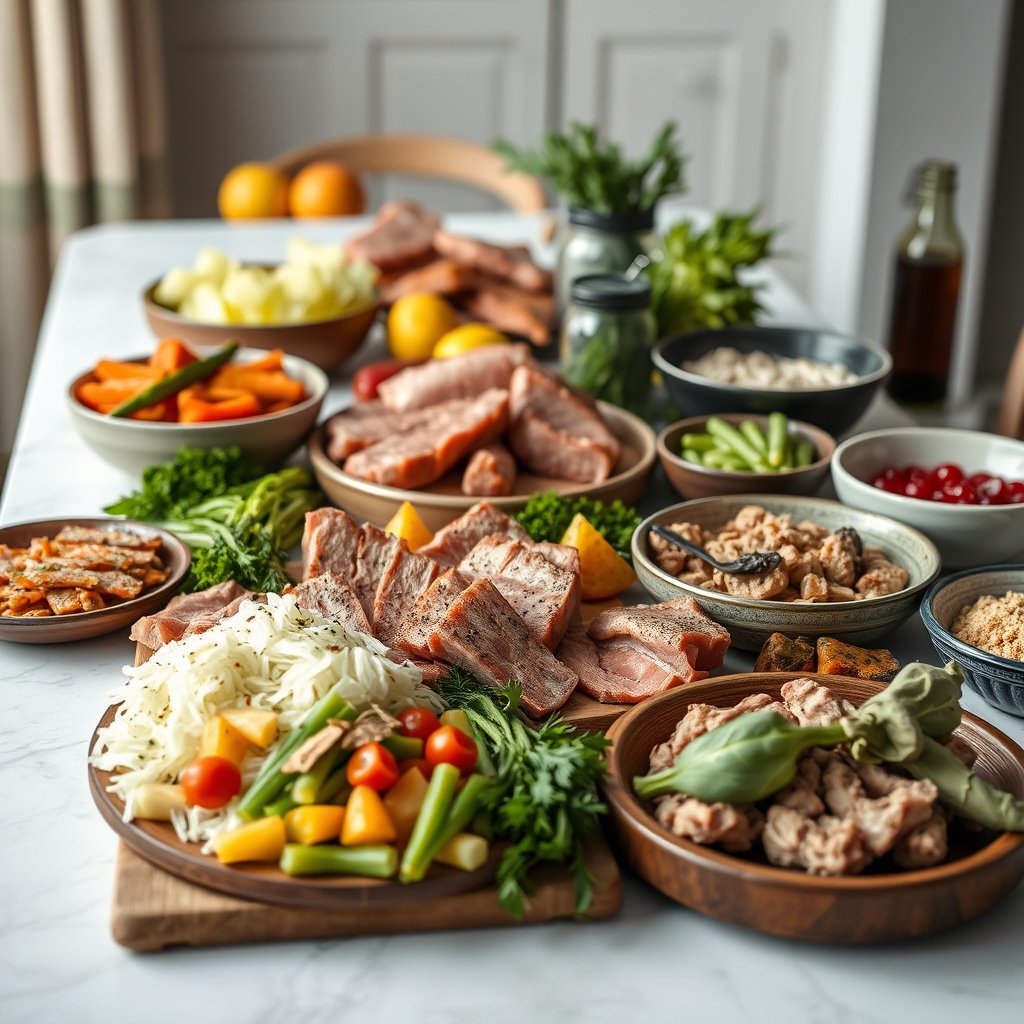
protein + low-carb veggies + a planned fat portion (oil/butter/cream/cheese/avocado)
Then, add fat in predictable steps:
– Cook with oil or butter (measure once, then repeat)
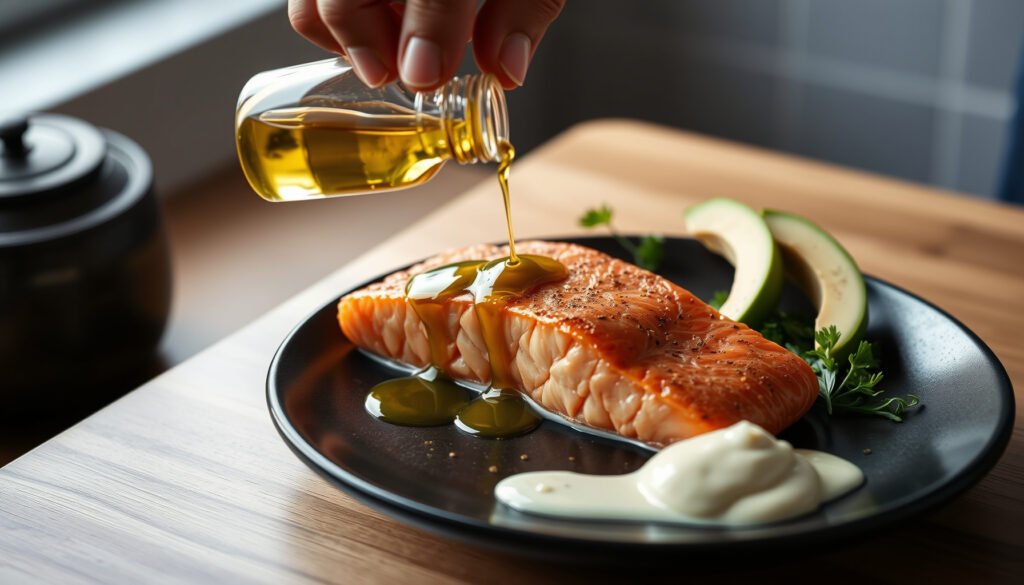
– Finish with a fat (cream sauce, cheese, avocado slices)
This is one of the fastest ways to increase enough fat on keto without overstuffing—because you’re shifting where calories come from, not just increasing overall food volume.
Calories from fat are denser than calories from protein or carbs, so adding a measured fat portion can raise total calories without proportionally increasing meal volume.
Watch for “protein crowding”
Another reason enough fat on keto can be hard is that protein can expand to fill the plate, leaving less room—physically and calorie-wise—for fat.
If your protein target changes upward, your remaining calories for fat can also change, meaning your fat add-ons may need to adjust too. If your calorie target is fixed, you may simply be over-consuming protein relative to your keto macro plan.
When protein increases but carbs stay capped, the “remaining calories” available for fat decreases, so fat grams can drop even while you remain keto-carb compliant.
As of 2026, this is why many people “feel keto” (carbs are low) but still feel hungry—they’re under-fattened relative to their own targets.
Add fat quickly with “swap-ins” (low effort, high impact)
If you need more fat on keto today (not next week), swap-ins work better than trying to rebuild every meal. Aim for small, measured additions that close the fat gap steadily while keeping digestion comfortable.
Replace one missing fat step with a measured one
Practical swap-ins include:
– Swap lean cooking for butter/ghee/olive oil
– Add heavy cream or full-fat Greek yogurt (verify carbs before you assume it’s keto-friendly)
– Use keto-friendly condiments carefully—check the nutrition label for carbs, not just “keto” marketing
Swap-ins are effective because they increase fat grams at the meal moment when the calorie deficit is most obvious, rather than relying on later compensating snacks.
If you’re not hungry, distribute fat instead of forcing it
Overstuffing usually happens when people add “catch-up fat” all at once. A better pattern is smaller, more frequent add-ons:
– a measured fat portion with a snack
– a planned finishing fat at the end of lunch
– a measured fat addition into coffee or a quick sauce
From a practical counseling standpoint , this distribution tends to work better than a single large “fat bomb” for most people.
Quick comparison: measured swap-ins vs guessing
Here’s a simple contrast that keeps the “enough fat on keto” goal grounded.
| Approach | Pros | Cons | Best for |
|---|---|---|---|
| **Measured swap-ins** (log fat grams) | Predictable fat targeting; easier to troubleshoot hunger | Requires logging/portions | People consistently short on fat grams |
| **Unmeasured add-on guessing** (“add more butter” without weighing) | Less effort day-to-day | Often overshoots/undershoots; harder to debug carbs/calories | Short-term experiments only |
Keep net carbs steady while adding fat
Even if you add fat correctly, sauces and spreads can push net carbs unexpectedly. As of 2026, the simplest rule is: every time you increase a fat source, verify its carbs per serving and keep your net-carb limit unchanged.
To maintain keto, adding fat must not break the net-carb limit; therefore, verify carbs per serving for sauces, creams, and “keto” packaged items.
What can go wrong (and how to fix it)
If you’re hitting keto carbs but not enough fat, several symptoms can show up: hunger, slow progress, or fatigue. The good news is that each problem has a pattern—and you can fix it by checking the right variable first.
You’re keto-carb compliant but calorie-starved from fat
Common signs:
– scale may not move (especially if you expected a calorie gap effect)
– hunger stays high
– you feel worn down
Fix:
– re-check your fat grams, not just your carbs
– confirm that your “remaining calories” are actually being allocated to fat
Staying within net carbs does not guarantee adequate calories from fat; if fat grams are consistently below target, hunger and energy may not match what your plan intended.
Fat sources sabotage your carbs
Condiments, flavored dairy, and “sugar-free” products can still carry meaningful carbs. Fix:
– verify serving sizes and carbs per serving
– log sauces you’d normally eyeball
Because nutrition facts are reported per serving, a half-serving error in sauces can shift both net carbs and the calories you can allocate to fat.
Digestive discomfort after boosting fat
If you jump too fast, you may get digestive discomfort. Fix:
– increase fat gradually
– spread fat across the day
Confusing “low-carb” with “high-fat automatically”
Many people default to leaner proteins and low-carb veggies, which keeps carbs low but makes enough fat on keto difficult. The correction is structural: plan fat portions and measure them.
Electrolytes get overlooked
If you feel sluggish, headachy, or crampy after diet changes, electrolytes and hydration may be the real driver. Fix:
– evaluate salt, potassium, and magnesium intake (as appropriate for your situation)
– don’t assume every symptom is caused by fat grams
On ketogenic diets, some symptoms commonly blamed on “fat” can also relate to electrolyte and hydration changes, so troubleshooting should include salt and fluid intake.
Verdict / tip (honest recommendation)
If your goal is “enough fat on keto,” the most reliable approach is math + measured add-ons: calculate your fat target, then use trackable fats to close the gap. The downside is it takes a bit of effort at first—if you don’t measure/log for a few days, you’ll guess and likely overshoot or undershoot.
Consider skipping the “target-first” approach if tracking makes you anxious; instead, use repeatable meals with planned fat portions and re-check averages after about a week (especially as of 2026 when many people are juggling work schedules and inconsistent meal timing).
The “fat = remaining calories ÷ 9” method directly follows Atwater energy factors and gives you an explicit target for enough fat on keto.
Measured portions reduce the most common failure mode—portion drift—so you can increase calories from fat without increasing meal size.
If you have a medical condition that requires specific dietary management, or if you feel persistent symptoms after diet changes, talk with a qualified clinician before making large macro adjustments.
Quick checklist to get enough fat on keto
| Check | What to do | Common slip |
|---|---|---|
| Fat target set | Calculate fat grams from remaining calories after protein + carbs | Estimating without tracking |
| Net carbs controlled | Keep net carbs within your chosen keto limit | Relying on “keto label” alone—checking carbs per serving |
| Fat added to every meal | Include a measured fat portion (oil/butter/cream/cheese/avocado) | Adding fats only at dinner |
| Track for 3–7 days | Log meals to confirm your average fat grams | Changing everything at once |
| Adjust gradually | Increase/decrease fat add-ons based on results | Jumping to large fat increases suddenly |
Sources
– USDA FoodData Central — Atwater energy conversion factors (general nutrient energy calculations)
– Mayo Clinic — Ketogenic diet overview and typical carbohydrate range
To wrap it up: getting enough fat on keto without feeling overstuffed comes down to defining a fat target, then using measured, repeatable fat add-ons to close the gap while keeping net carbs controlled—so your hunger, energy, and tracking data all move in the same direction.
Frequently Asked Questions
How do I get enough fat on keto if I’m not feeling hungry?
On keto, you can use fat as your primary calorie source even when appetite is low. Try adding calorie-dense options like olive oil, avocado, butter, heavy cream, or full-fat yogurt to meals rather than relying on larger portions. Consider “fat-first” meals (start with a keto fat/protein combo) and add a small fat snack, such as cheese or macadamia nuts, to reach your daily fat targets. If you’re consistently under-eating fat, use a simple tracker for a few days to identify where your calories are dropping.
What are the best keto fat sources to help you hit your daily macros?
The best keto fat sources are those you can easily incorporate into meals and snacks, such as olive oil, avocado, coconut oil, butter/ghee, and fatty fish like salmon and sardines. Nuts and nut butters (walnuts, almonds, macadamia) and seeds (chia, flax) can boost fat while keeping net carbs low. If dairy agrees with you, cheese and full-fat Greek yogurt are also reliable. Aim for minimally processed fats when possible, and remember that “keto fat” still needs to fit your total carbs and calories.
How do I calculate the right fat target for getting enough fat on keto?
A common keto approach is to set fat as the remainder of your calories after protein and net carbs, often aiming for 70–80% of calories from fat depending on your goal and tolerance. Start by choosing a protein target (usually around a moderate amount based on body size and activity) and keeping net carbs low (often 20–50 g/day). Then calculate fat grams by dividing your remaining calories by 9 (since fat has 9 calories per gram). Tracking for a week can confirm whether you’re actually hitting your keto macros or just “feeling” like you are.
Which foods make it easiest to increase fat without raising carbs on keto?
The easiest keto foods for increasing fat without adding carbs include butter, ghee, olive oil, mayonnaise (choose sugar-free), olives, and avocado. Fatty meats like ribeye, pork belly, and chicken thighs can help you raise fat while keeping carbs minimal—just avoid breaded or sweetened sauces. You can also use keto-friendly snack options like cheese, pork rinds (if tolerated), and full-fat cream-based dips. Reading labels helps because some “healthy” products can hide carbs even when they seem fat-forward.
Why am I struggling to get enough fat on keto, and how can I fix it?
Many people struggle because they’re unintentionally eating too much protein or low-fat “keto snacks” that don’t provide enough calories. Another common issue is relying on lean proteins or vegetables without adding extra cooking fats, so your total daily fat stays low even if carbs are controlled. Fix it by increasing cooking fats (olive oil, butter), choosing higher-fat cuts of meat, and adding keto-friendly fats to existing meals rather than replacing everything. If fat digestion is uncomfortable, scale up gradually and consider using fats like olive oil or MCT/coconut oil in smaller doses.
📅 Last Updated: October 30, 2026 | Topic: how to get enough fat on keto | Content verified for accuracy and freshness.
References
- https://www.mayoclinic.org/healthy-lifestyle/weight-loss/in-depth/keto-diet/art-20048265
- https://en.wikipedia.org/wiki/Ketogenic_diet
- https://www.hsph.harvard.edu/nutritionsource/healthy-weight/diet-reviews/ketogenic-diet/
- https://www.epilepsy.com/treatment/dietary-therapies/ketogenic-diet
- https://www.britannica.com/topic/keto-diet
- https://www.hopkinsmedicine.org/health/conditions-and-diseases/epilepsy/ketogenic-diet
- https://scholar.google.com/scholar?q=ketogenic+diet+macronutrient+distribution+fat+percentage Google Scholar
- https://scholar.google.com/scholar?q=how+to+get+enough+fat+on+keto+diet Google Scholar
- https://scholar.google.com/scholar?q=keto+diet+fat+intake+adherence+low+carbohydrate+high+fat Google Scholar