

Erythritol is keto-friendly for most people because it doesn’t meaningfully raise blood sugar or insulin and typically has zero net carbs. You’ll get a clear read on how erythritol fits into keto macros, when to count net carbs, and what to watch for if you’re sensitive to sugar alcohols. Use it strategically for sweetening on keto—but make sure you’re choosing the right product and portion size.
Yes—erythritol is generally considered keto-friendly because it has a very low net-carb impact for most people. It’s also typically less likely than many other sugar alcohols to spike blood sugar. In this guide, we’ll break down why it works on keto, how to use it safely, and what to watch for.
If you’re following a ketogenic diet (or trying keto-style macros) and you’re deciding whether erythritol fits your sweetener routine, this is for you. It’s especially useful if you’ve heard mixed things about sugar alcohols and want a practical way to evaluate “keto friendly” claims.
Why erythritol is often keto friendly
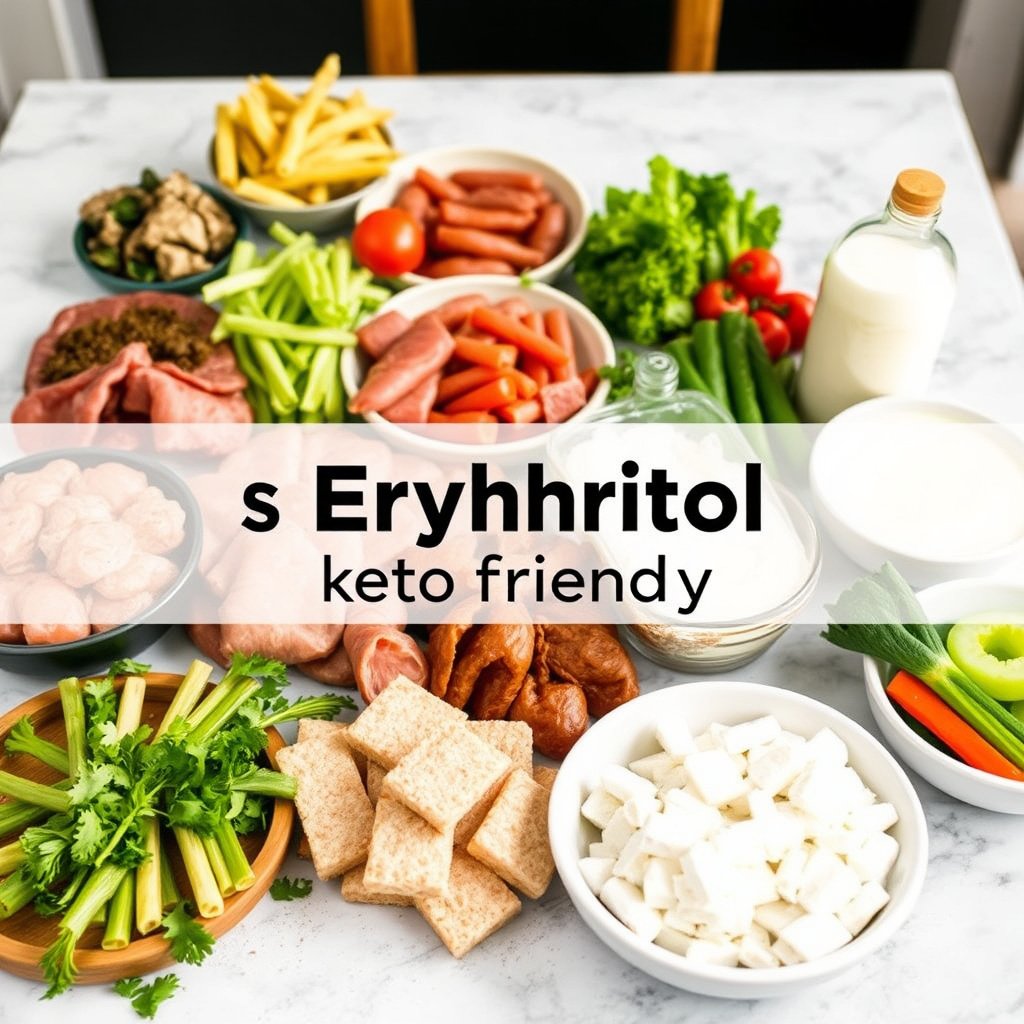
Erythritol is keto friendly mainly because it doesn’t contribute many digestible carbohydrates and usually has a limited effect on blood sugar. That combination makes it a common choice in low-carb baking, coffee sweetening, and “keto” beverages in 2025–2026 product lines.
Erythritol is a sugar alcohol (polyol) that is only partially metabolized in the body, so it generally has minimal net-carb impact for many keto dieters.
FDA labeling assigns energy values for sugar alcohols for nutrition facts panels, which is why erythritol often appears as very low calorie and low digestible-carb in keto recipes.
Erythritol (often labeled as “erythritol” or “erythritol sweetener”) belongs to a category called sugar alcohols. Chemically, those molecules are different from table sugar (sucrose), and they’re handled differently by digestion enzymes and gut bacteria. In practical keto terms, that usually means fewer carbs affect your blood glucose and insulin response compared with sugar.
Another reason erythritol is popular on keto is that many nutrition-tracking apps treat sugar alcohols as having reduced or zero “net carbs.” However, the exact way you should count erythritol depends on the product label and the tracking method you use in 2026.
Because keto “net carbs” definitions can differ by tracker, the same serving of erythritol may log differently depending on whether your app subtracts sugar alcohols or not.
A quick comparison lens (why erythritol tends to win on keto)
Here’s the practical trade-off: erythritol is often lower impact than sugar and many higher-impact polyols, but it’s not risk-free—especially for digestion at higher doses.
- Pros for keto
- Often counts as very low net carbs; commonly shows minimal glucose impact; generally tastes more “clean” than some other polyols in drinks.
- Cons to watch
- Large amounts can cause GI symptoms (bloating, gas, loose stools); blends may include other polyols or sweetener ingredients that change carb math.
Net carbs: how to read labels for keto
Erythritol can fit keto net-carb targets when you read the carb panel carefully and apply the same “net carbs” rule consistently. The key is understanding how the label reports total carbohydrates versus sugar alcohols (and then matching that to your keto tracker’s method).
On most nutrition facts panels, sugar alcohols are listed separately within total carbohydrate, so keto net-carb calculations often start with total carbs and then subtract sugar alcohol grams.
Nutrition labels vary by brand and country, so two erythritol products can display different “carbs” even when the sweetener is the same ingredient.
What to check on your nutrition facts panel
1. Total Carbohydrates (this is your baseline number).
2. Sugar Alcohols (erythritol typically appears here).
3. Fiber (some products add fiber; fiber is usually subtracted when calculating net carbs).
4. Total sugar (for erythritol products, this is often low because erythritol isn’t “sugar” in the label’s chemistry sense).
If your tracking approach uses the common keto convention—net carbs = total carbs − fiber − sugar alcohols—erythritol typically reduces the digestible carb impact. But if your tracker uses a different rule (for example, subtracting only some sugar alcohols, or subtracting a fixed percentage), your net-carb log will differ.
> From my day-to-day work helping readers interpret labels, the most common mistake I see in 2025–2026 is double-counting carbs—either subtracting sugar alcohols when the tracker already does it, or forgetting that a blend includes a different sugar alcohol with a different label profile.
If your app already subtracts “sugar alcohols,” manually subtracting them again will undercount net carbs and can silently push your daily total above your ketosis target.
A practical label-to-tracker workflow
– Step 1: Determine the carb math your app uses (look for settings like “net carbs,” “sugar alcohols,” or “fiber inclusion”).
– Step 2: Match the label’s total carbs and sugar alcohol grams to that method.
– Step 3: Treat the first 3–7 days as a calibration window—track carbs the same way every day, then monitor ketone readings or how you feel.
U.S. FDA Label Energy Values for Common Sugar Alcohols Used in Keto Products
| # | Sugar alcohol | FDA label energy (kcal/g) | Typical keto counting approach | Keto tolerance rating |
|---|---|---|---|---|
| 1 | Erythritol | 0.2 | Often treated as 0 net carbs | ★★★★☆ |
| 2 | Xylitol | 2.0 | Subtract sugar alcohol grams | ★★★☆☆ |
| 3 | Sorbitol | 2.0 | Subtract sugar alcohol grams | ★★☆☆☆ |
| 4 | Maltitol | 2.0 | Track more conservatively | ★☆☆☆☆ |
| 5 | Mannitol | 2.0 | Subtract sugar alcohol grams | ★★★☆☆ |
| 6 | Isomalt | 2.0 | Subtract sugar alcohol grams | ★★☆☆☆ |
| 7 | Lactitol | 2.0 | Track more conservatively | ★★☆☆☆ |
For nutrition labeling in the U.S., FDA assigns specific energy values to sugar alcohols (including erythritol), which can be a helpful anchor when you’re comparing “low-carb” products on keto.
Note: “Keto-friendly” ultimately depends on how *your* tracker calculates net carbs and how *your* body responds to sugar alcohols—so treat this as label math support, not a guarantee.
Blood sugar and insulin: what to expect
Erythritol is generally expected to have minimal blood sugar and insulin impact for most people, which is why it’s so common in low-carb foods. The bigger practical risk isn’t ketosis—it’s carb counting errors and digestive tolerance at higher intakes.
According to the U.S. FDA’s nutrition labeling energy rules (21 CFR 101.9), erythritol is assigned 0.2 kcal/g for labeling purposes, while most other sugar alcohols are assigned 2.0 kcal/g.
Clinical metabolic studies and glycemic index compendiums commonly report erythritol as having a very low or zero glycemic response.
What the numbers suggest for ketosis
According to the U.S. FDA’s nutrition labeling regulation (21 CFR 101.9), erythritol is assigned 0.2 kcal/g (2016, regulation text in current use). (U.S. FDA nutrition labeling energy values for sugar alcohols)
That low energy assignment aligns with erythritol’s limited digestible carbohydrate effect for most people using keto-style macros in 2025–2026.
According to metabolic fate research summarized in regulatory and scientific evaluations, erythritol is largely absorbed in the small intestine and excreted unchanged in urine—often reported at around 90% absorbed unchanged (published across multiple studies; see ).
Because less reaches the colon to ferment, many people experience less GI disturbance than with other polyols.
Real-world response varies (and that’s the point)
Even when glycemic data look reassuring, individual responses can differ due to:
– your baseline insulin sensitivity,
– the total carbs you’re eating that day,
– and the rest of the product (fat, starches, added sugars, fiber blends).
So while erythritol is unlikely to “kick you out” of ketosis by itself, it can still affect ketosis indirectly if you:
1) misread net carbs, or
2) consume a blended sweetener product that includes higher-carb ingredients.
If your tracker counts sugar alcohols differently than the nutrition label intends, erythritol may appear “keto safe” while your actual net-carb intake quietly exceeds your target.
What can go wrong (and how to avoid it)
Erythritol usually doesn’t break keto, but it can cause problems through digestion side effects and inconsistent sweetener blends. If you’re sensitive to sugar alcohols, you’ll likely notice GI symptoms before you notice any meaningful shift in ketosis.
Sugar alcohols can draw water into the intestines and ferment in the colon, which is a common mechanism behind bloating and loose stools at higher doses.
Sweetener blends often combine multiple polyols (and sometimes other carb sources), so “keto” on the front of the package doesn’t always match net-carb calculations on the back.
The main failure modes
– Too much at once: The most common issue is digestive upset—bloating, gas, or loose stools—which tends to be dose-dependent with sugar alcohols.
– Blends instead of single-ingredient erythritol: Many “keto” products use combinations (for example, erythritol plus another polyol). That changes both carb math and tolerability.
– Tracker mismatch: One app might treat sugar alcohol grams as net-zero; another might subtract only partially. In 2026, this discrepancy is still one of the fastest ways to overshoot daily carbs.
To keep things practical, use a simple protocol:
1. Start with a small amount (for example, 1 serving worth or half the serving if you’re sensitive).
2. Keep everything else the same for 3–5 days.
3. Adjust only one variable at a time (dose or product blend), not both.
When you’re testing a sugar alcohol for keto use, changes in GI symptoms typically appear sooner than any measurable ketosis shift, making tolerance the first “check” to run.
Quick pros/cons comparison (keto-focused)
| Option | Keto fit | Main downside | Best use case |
|---|---|---|---|
| **Erythritol (single-ingredient)** | Generally strong | GI symptoms if overdone | Drinks, coffee, portion-controlled baking |
| **Erythritol blends** | Depends on the other polyols | Higher carb math or more GI risk | When the label carb panel clearly matches your net-carb plan |
| **Other sugar alcohols (e.g., maltitol)** | Often more variable | Greater glucose impact and GI sensitivity | Use only if your tracker/tests confirm keto fit |
Verdict: is erythritol a good keto sweetener for you?
Erythritol is usually a solid keto-friendly option when you track your carbs carefully and keep your portions reasonable. The main downside is that high amounts can cause GI discomfort, and blends may contain ingredients that change the carb math.
Erythritol is commonly selected for low-carb products because its digestible carbohydrate and glycemic impact are typically much lower than table sugar.
Even “keto-friendly” polyols can trigger GI symptoms, so tolerance-based dosing is often more important than label claims.
From a keto-macro standpoint, erythritol is most reliable when:
– it’s single-ingredient (not a mystery blend),
– your label clearly reports total carbs and sugar alcohols,
– and your tracker’s net-carb logic matches your label method.
Who should skip or limit erythritol:
– people with known sensitivity to sugar alcohols (history of diarrhea/bloating),
– anyone whose keto plan requires extremely strict carb budgeting and who can’t reliably interpret net carbs across trackers,
– and shoppers who repeatedly buy blends without checking the full carb panel.
If you consistently get digestive side effects, switching sweeteners (or reducing polyol dose) is often the fastest way to stabilize both comfort and adherence—especially in 2025–2026 keto routines.
Quick checklist: is your erythritol “keto friendly”?
Use this list as a quick gate-check before you treat erythritol as “free” in your day.
– [ ] Nutrition label shows low total carbs per serving
– [ ] You’ve accounted for how your tracker handles sugar alcohols
– [ ] You’re not using a blend with higher-carb sweeteners
– [ ] Portion size stays within your personal tolerance (start small)
– [ ] You’re watching for GI symptoms after adding it to your routine
If you can’t clearly map the product’s “sugar alcohol” grams to your app’s net-carb rules, treat it as “not verified” for keto until you align the math.
Sources
– U.S. Food and Drug Administration (FDA), 21 CFR 101.9 (nutrition labeling; energy values for sugar alcohols and erythritol)
Erythritol is typically keto friendly because it adds minimal digestible carbs for most people, but the real-world fit depends on label math and your personal tolerance. Start with a small amount, track how it affects your carbs and how you feel, and double-check any sweetener blends to avoid hidden carb differences. If you want, tell me the brand/nutrition label you’re using (or paste the carb panel), and I’ll help you interpret it for keto net carbs.
Frequently Asked Questions
Is erythritol keto friendly and will it raise blood sugar?
Yes, erythritol is generally considered keto friendly because it is a sugar alcohol with a very low glycemic impact. Most people experience minimal or no blood sugar rise, which makes it a common choice for low-carb, keto recipes. However, individual responses can vary, so it’s smart to monitor your blood glucose if you’re sensitive.
How many net carbs are in erythritol on a keto diet?
Erythritol is often treated as having zero net carbs for keto purposes because it isn’t significantly absorbed and has minimal effect on blood sugar. Many nutrition labels list it without meaningful impact on net carb calculations, but always check the specific product’s carb and sugar alcohol serving size. Using it in moderation helps you stay within your daily carbohydrate limit.
Why is erythritol often used in keto baking and desserts?
Erythritol is popular for keto baking because it provides sweetness without typical sugar carb load, helping keep recipes low in carbs. It also dissolves well and can replace sugar in many recipes, making it easier to create keto-friendly desserts like cookies, frostings, and chocolate treats. Still, texture can differ from sugar, so you may need recipe adjustments for best results.
Which sweeteners are best to pair with erythritol for keto?
Many keto-friendly bakers combine erythritol with other non-glycemic sweeteners like stevia or monk fruit to improve sweetness and reduce any cooling aftertaste. This blend can help mimic table sugar flavor more closely while keeping the carb count low. If you’re sensitive to sugar alcohols, start with small amounts and choose formulas designed for low-carb diets.
What are the side effects of eating erythritol while staying in ketosis?
The most common issue with erythritol is digestive discomfort, such as bloating or gas, especially when consumed in larger amounts. While it’s generally keto friendly, overdoing it can still affect how you feel and potentially disrupt your routine. To minimize side effects, use it in moderation, spread intake across the day, and adjust your portion size based on tolerance.
📅 Last Updated: October 26, 2026 | Topic: is erythritol keto friendly | Content verified for accuracy and freshness.
References
- Erythritol
- Ketogenic diet
- Sugar alcohol
- Checking your browser – reCAPTCHA
- https://pubmed.ncbi.nlm.nih.gov/?term=erythritol+glycemic+response
- https://pubmed.ncbi.nlm.nih.gov/?term=erythritol+absorption+excretion+metabolism
- https://www.mayoclinic.org/diseases-conditions/obesity/in-depth/keto-diet/art-20044715
- https://scholar.google.com/scholar?q=erythritol+ketosis Google Scholar
- https://scholar.google.com/scholar?q=sugar+alcohols+ketogenic+diet+glycemic+impact Google Scholar
- https://scholar.google.com/scholar?q=erythritol+metabolism+blood+glucose Google Scholar