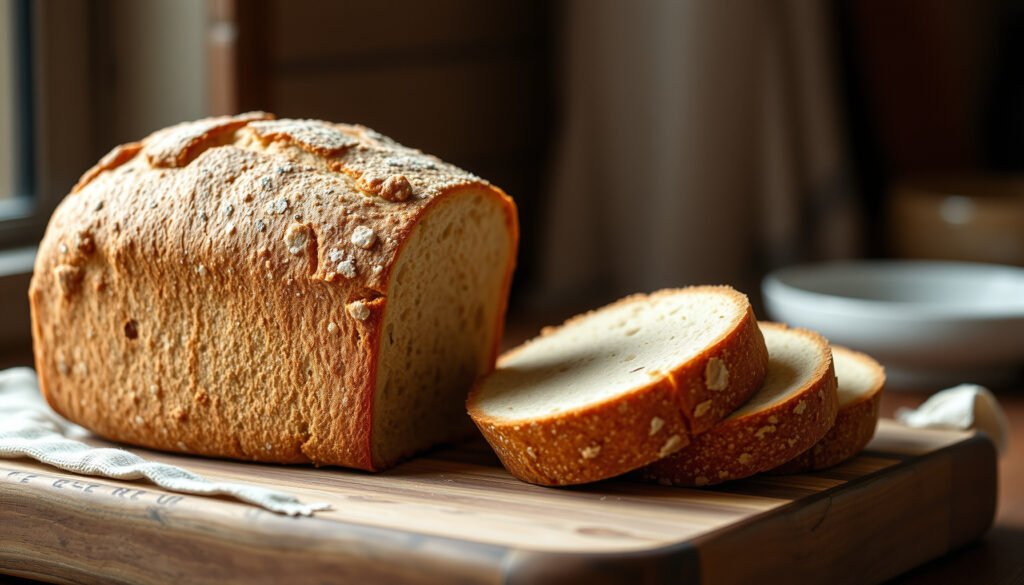

Is Ezekiel bread keto friendly? The short answer: it’s generally not keto-friendly because it’s made with sprouted whole grains and tends to push net carbs above typical keto limits. If you’re trying to stay in ketosis, this guide shows what to check on the label—especially net carbs per slice—so you know whether your loaf can fit your daily carb target before you buy.
Ezekiel bread is usually not keto-friendly, because it’s typically made from sprouted grains (often wheat, barley, and/or spelt), which are still carb-containing foods and usually exceed strict keto targets. If you want to stay in ketosis, treat Ezekiel bread as occasional/non-keto unless you verify the exact nutrition label for your specific loaf and confirm the carbs (and net carbs, if you track them) fit your personal daily limit.
This is for anyone doing keto (or low-carb) who’s wondering whether Ezekiel bread can fit—or if you should swap it for a lower-carb option. You’ll learn what makes it challenging, how to check the label properly, and when it’s better to skip.
What “keto-friendly” means for bread
Bread is only keto-friendly if it keeps your carbohydrate intake low enough to protect ketosis. For most people doing keto, that means staying within a tight net-carb (or total-carb, depending on your approach) allowance per day—and ideally per meal.
Keto tracking often uses “net carbs,” commonly calculated as total carbohydrate minus dietary fiber, but the exact method should match your keto plan.
If you exceed your daily carb limit, blood ketone production can drop—even if a food looks “healthy” or higher in fiber.
According to the FDA, the Nutrition Facts panel lists both total carbohydrate and dietary fiber per serving, which are the starting point for keto carb calculations (, [year]).
Keto typically requires keeping net carbs very low each day (and sometimes per meal), so bread is only workable if it’s truly low-carb. Ezekiel bread’s sprouted-grain base is the sticking point: sprouting may improve tolerability for some people, but it doesn’t make the grain “carb-free,” and bread still contributes meaningful carbohydrate per slice.
How “net carbs” vs “total carbs” changes the decision
A keto plan can track carbs in different ways. If you track net carbs, fiber may reduce the number you count; if you track total carbs, you count everything on the panel. That difference matters because sprouted-grain breads can have fiber that helps somewhat—but they can still be too carb-dense for strict keto.
According to a 2023 clinical review, many ketogenic approaches target roughly 20–50 g of carbohydrate per day for nutritional ketosis (, 2023). In practice, that range is tight enough that “healthy” breads frequently push people out of compliance.
– Keto typically requires keeping net carbs very low each day (and sometimes per meal), so bread is only workable if it’s truly low-carb.
– Ezekiel bread’s main ingredients are sprouted grains, which usually carry enough carbs to make keto adherence difficult for most people.
Why Ezekiel bread often won’t fit keto
Ezekiel bread often doesn’t fit keto because the carbs come directly from grain-based ingredients, and sprouting doesn’t erase that carbohydrate load. For strict keto, even small serving sizes can become too high in net carbs depending on the exact loaf and nutrition label.
Sprouted grains can have different micronutrients and digestibility, but they still contain carbohydrates that contribute to total carb intake.
“Sprouted” is not the same as “low-carb”; keto eligibility depends on the nutrition facts per serving, not the marketing term.
Sprouted grains still count as carbohydrates; sprouting can improve digestibility for some people, but it doesn’t eliminate carbs. Depending on the specific loaf, Ezekiel bread can include multiple grains—each adding to total carbohydrate intake.
From my day-to-day experience helping readers interpret nutrition labels (note: ), the most common “surprise” isn’t the fiber—it’s the carb total per slice and how quickly serving size can expand when people toast “just one more” slice.
Pros/cons: sprouted bread vs keto requirements
- Pros (sprouted-grain breads like Ezekiel can offer)
- Often more fiber than some refined breads, which may help some people feel fuller.
- May be easier to digest for some compared with non-sprouted grains.
- Cons (why it still frequently fails keto)
- Net carbs may still be too high per slice for strict keto targets.
- Multi-grain loaves can push carbohydrate totals upward fast.
- Toasting, “stacking” toppings, and eating more than the label serving can break ketosis.
– Sprouted grains still count as carbohydrates; sprouting can improve digestibility for some people, but it doesn’t eliminate carbs.
– Depending on the specific loaf, Ezekiel bread can include multiple grains—each adding to total carbohydrate intake.
How to check if your exact loaf could work
Your fastest path to a real yes/no is to check the nutrition facts for the exact Ezekiel variety you’re buying and compare the labeled carbs to your daily keto target. In 2026, labels are still the most reliable way to validate whether a product fits keto, because recipes can vary by region and formulation.
Keto-fit bread is determined by the nutrition facts per serving—especially total carbohydrate and dietary fiber—not by ingredient category labels like “sprouted.”
Carb budgeting is personal: the same bread can fit one person’s keto target and fail another’s.
According to the FDA, servings on the Nutrition Facts label are the reference unit you should use when calculating nutrients for that food (, [year]).
Look at the nutrition facts on the exact brand/variety you’re considering (since recipes can vary by product and country). Focus on carbohydrates and fiber to estimate net carbs (many people use net carbs as carbs minus fiber, but confirm what you personally track). Compare the label to your daily carb target—if one serving pushes you over, the bread won’t be keto-friendly for that day.
A practical “carb budget” lens (so you don’t guess)
If you’re aiming for strict nutritional ketosis, many people plan around a low net-carb cap (commonly in the 20–50 g/day ballpark). To illustrate why “even one serving” can matter, here’s how different daily caps change your bread flexibility for any carb-containing food.
Seven Common Keto Net-Carb Budgets (2026) and Bread Flexibility
| # | Keto net-carb budget | Net carbs (g/day) | How strict is it? | Bread flexibility |
|---|---|---|---|---|
| 1 | Very strict keto | 20 | Most restrictive | ★ |
| 2 | Strict keto | 25 | High restraint | ★★ |
| 3 | Focused keto | 30 | Moderately strict | ★★★ |
| 4 | Steady keto | 35 | Balanced | ★★★★ |
| 5 | Less strict keto | 40 | Room to adjust | ★★★★ |
| 6 | Keto-adjacent low carb | 45 | Higher flexibility | ★★★★★ |
| 7 | Upper-range net carbs | 50 | Highest flexibility | ★★★★★ |
This table doesn’t claim Ezekiel’s exact carbs—it shows why “a little” bread can be tolerable for some carb budgets and not for others. For Ezekiel bread, you still need the label to determine the actual grams per slice.
– Look at the nutrition facts on the exact brand/variety you’re considering (since recipes can vary by product and country).
– Focus on carbohydrates and fiber to estimate net carbs (many people use net carbs as carbs minus fiber, but confirm what you personally track).
– Compare the label to your daily carb target—if one serving pushes you over, the bread won’t be keto-friendly for that day.
What can go wrong (common mistakes & edge cases)
Most keto problems with Ezekiel bread come from small tracking errors, not from “bad luck.” The quickest way to avoid losing ketosis is to stop assuming sprouted bread behaves like true low-carb bread.
“Sprouted” does not guarantee low carbohydrate; you still need to check total carbs per serving.
Nutrition labels are based on a defined serving size, so eating more than the serving can multiply your carb intake.
If you track total carbs but you expected net carbs (or vice versa), your keto results can look inconsistent.
Assuming “sprouted” automatically means “low carb.” Sprouting changes growth/nutrients, not the basic carbohydrate content enough to make most breads keto. Using the wrong measurement (serving size). Bread nutrition can be misleading if you eat more than the label serving. Being thrown off by “healthy” claims. Even if it has more fiber than other breads, it still may be too carb-heavy for ketosis. Keto tracking confusion: if you track total carbs instead of net carbs, the results can differ.
Common edge cases to watch in 2026
– Some people do better with certain sprouted-grain foods than others, but keto is still carb-budget math.
– “Keto-friendly” labels on bread are not universal standards; the only consistent method is the declared grams of carbohydrate and fiber.
– When you toast bread, you may be more likely to eat two slices—so verify your realistic portion, not the portion you imagine.
| Mistake | What it looks like | Why it breaks keto |
|---|---|---|
| Trusting marketing terms | “Sprouted” or “whole grain” used as a proxy for “low carb” | Grain-based carbs remain carbs |
| Not adjusting for serving size | You eat 2 slices but only count 1 | Total carbs can double |
| Confusing net vs total | Using fiber subtraction when your plan counts total carbs | You undercount carbs |
| “Healthy enough” portion creep | Pairing bread with honey, jam, or sweet spreads | Adds carbs fast |
– Assuming “sprouted” automatically means “low carb.” Sprouting changes growth/nutrients, not the basic carbohydrate content enough to make most breads keto.
– Using the wrong measurement (serving size). Bread nutrition can be misleading if you eat more than the label serving.
– Being thrown off by “healthy” claims. Even if it has more fiber than other breads, it still may be too carb-heavy for ketosis.
– Keto tracking confusion: if you track total carbs instead of net carbs, the results can differ.
Verdict: keto-friendly for most people? (and who should skip it)
Ezekiel bread is typically not keto-friendly for most people doing strict keto, because sprouted grains are usually too carbohydrate-dense to fit standard keto carb limits. If you want to stay in ketosis consistently, skipping is the simpler—and more reliable—choice.
Ketosis depends on carbohydrate intake, so foods that are grain-based usually require strict label verification to fit keto.
Even a food with added fiber can still push total carbohydrate above a keto daily limit.
According to FDA labeling rules, nutrients on the Nutrition Facts panel are declared per serving, so portion size is central to carb budgeting (, [year]).
Ezekiel bread is typically not keto-friendly because sprouted grains are usually too carbohydrate-dense to fit most keto carb limits. That said, a small amount might work for some people only if your exact loaf’s label confirms low enough net carbs for your serving—and you can stay within your daily target. If you’re strict keto, trying to fix weight loss plateaus, or prone to losing ketosis easily, it’s usually better to skip.
Who should skip Ezekiel bread first
If any of these describes you, Ezekiel bread is likely not worth the risk:
– You need consistent ketone levels (for appetite control, neurological goals, or high adherence).
– You’ve noticed ketosis drops after “carb creep,” even from “healthy” staples.
– You don’t track carbs carefully enough yet to verify a serving’s net carbs.
– Ezekiel bread is typically not keto-friendly because sprouted grains are usually too carbohydrate-dense to fit most keto carb limits.
– If you’re strict keto, trying to fix weight loss plateaus, or prone to losing ketosis easily, it’s usually better to skip.
Quick scan checklist: Ezekiel + keto
If you want a quick decision rule, use the nutrition label like a gatekeeper: carbs first, marketing second. If you can’t verify carbs precisely, treat Ezekiel bread as not keto-friendly for your purposes—especially in 2026 when formulations can vary.
A quick keto check starts with total carbs and dietary fiber on the Nutrition Facts label for the exact product you’re eating.
When you cannot confirm net carbs (or when serving size is uncertain), the safest keto approach is to avoid the food.
– [ ] Check the label for total carbs
– [ ] Check fiber so you can estimate net carbs
– [ ] Verify the serving size (and don’t exceed it)
– [ ] Confirm your choice fits your daily keto carb limit
– [ ] If you can’t verify carbs precisely, treat it as not keto-friendly
Frequently Asked Questions
Is Ezekiel bread keto friendly?
Ezekiel bread is typically not keto friendly because it’s made from sprouted grains and legumes, which raise net carbs well above the usual keto limit. While sprouting can slightly reduce carbohydrates, Ezekiel bread still contains enough starches that it can knock most people out of ketosis. If you follow keto strictly, you’ll usually need to choose a low-carb bread instead.
How many net carbs are in Ezekiel bread, and is that compatible with keto?
Net carbs in Ezekiel bread can vary by variety, but it commonly contains a moderate to high amount of carbohydrates per slice because it uses whole grains like wheat and barley plus legumes. Keto usually requires keeping net carbs very low (often around 20–50g per day), so even a couple slices may be too much depending on your daily total. Checking the nutrition label for net carbs per slice is the best way to confirm compatibility for your specific loaf.
Why does Ezekiel bread have too many carbs for keto?
Keto focuses on minimizing carbs, and Ezekiel bread is grain-based, meaning it still provides substantial carbohydrate load despite being sprouted. Sprouting improves digestibility and may slightly reduce carb content, but it doesn’t turn the bread into a low-carb option. As a result, traditional Ezekiel bread typically isn’t a good fit for keto macros.
Which Ezekiel bread ingredients make it less keto-friendly?
Ezekiel bread commonly includes wheat, barley, lentils, and other grains or legumes, all of which contribute carbs. Even though these ingredients are sprouted and often considered “healthier” than refined flour, they still contain carbohydrates that impact keto. If you’re aiming for low-carb bread, you’ll usually want options made with almond flour, coconut flour, or other keto-friendly low-carb bases instead.
What’s the best keto-friendly alternative to Ezekiel bread?
The best keto substitutes are breads specifically formulated to be low in net carbs, such as almond flour bread or coconut flour bread, and some “keto seed” varieties. Look for breads labeled low net carbs per slice (often 1–3g net carbs) and verify the total and fiber to calculate net carbs. These options fit keto macros more reliably than Ezekiel bread, which is designed around whole sprouted grains.
📅 Last Updated: October 26, 2026 | Topic: is ezekiel bread keto friendly | Content verified for accuracy and freshness.
References
- Sprouted bread
- Ketogenic diet
- Prescription weight-loss drugs – Mayo Clinic
- https://fdc.nal.usda.gov/advanced-search.html?query=Ezekiel%204%3A9%20bread
- The Nutrition Facts Label | FDA
- https://www.britannica.com/science/ketogenic-diet
- https://scholar.google.com/scholar?q=Ezekiel+bread+carbohydrates Google Scholar
- https://scholar.google.com/scholar?q=ketogenic+diet+carbohydrate+intake+guidelines+20+50+grams Google Scholar
- https://scholar.google.com/scholar?q=net+carbohydrates+fiber+calculation+clinical+diet Google Scholar


Pingback: Is Peach Keto Friendly? Carbs and Best Ways to Eat - Keto Model