

Yes, you can have carrots on a keto diet, but moderation is essential due to their carbohydrate content. While carrots are nutritious and offer various health benefits, their relatively higher carb count compared to other vegetables means that careful planning is necessary to ensure they fit within your daily carbohydrate allowance. In this article, we will explore the suitability of carrots in your keto meal plan, examine their glycemic index, and provide practical tips on incorporating them without exceeding your carb limits.
Understanding the Keto Diet
The ketogenic, or keto, diet is a high-fat, moderate-protein, and very low-carbohydrate diet designed to shift the body into a state of ketosis. In ketosis, the body becomes highly efficient at burning fat for fuel instead of carbohydrates, leading to weight loss and potential health benefits. Typically, individuals on a keto diet aim to consume around 20-50 grams of net carbohydrates per day, which consists of total carbohydrates minus fiber. This drastic reduction in carbohydrate intake forces the body to adapt and relies heavily on fats as its primary energy source, resulting in metabolic shifts that can enhance fat loss and improve overall health.
Carbohydrate Content of Carrots
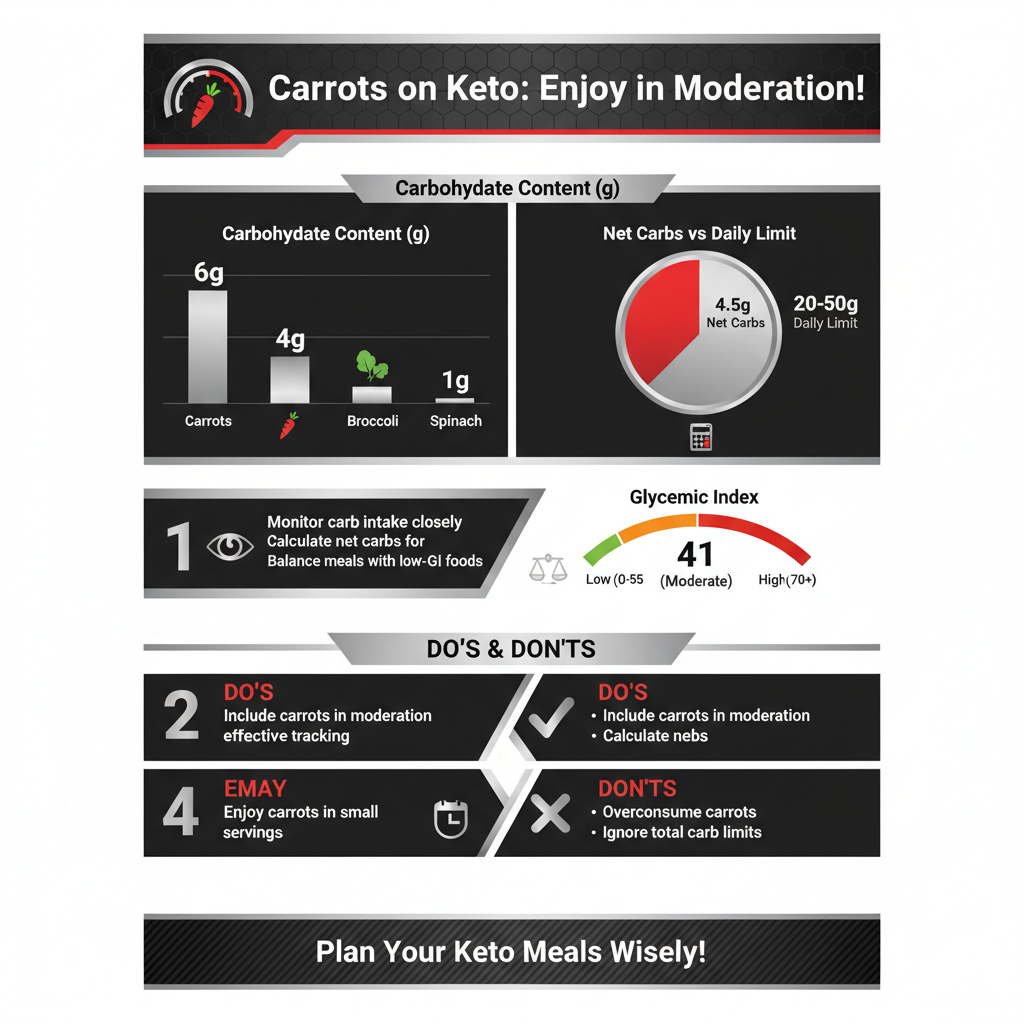
A medium-sized carrot, approximately 61 grams, contains around 6 grams of carbohydrates. However, when considering the keto diet, it is crucial to focus on net carbs, which means subtracting the dietary fiber from the total carbohydrates. Carrots provide about 1.5 grams of fiber per medium-sized carrot, resulting in roughly 4.5 grams of net carbs. While this amount can fit into a keto meal plan, it is important to account for these carbs, especially if you are consuming multiple servings or other carbohydrate-containing foods throughout the day. For effective carb management, understanding the carbohydrate content of all foods, including carrots, is a fundamental principle of maintaining a successful keto diet.
Glycemic Index of Carrots
Carrots have a moderate glycemic index (GI), which measures how quickly a food causes blood sugar levels to rise. The GI of carrots is approximately 41, which is considered low to moderate. This means that while they can increase blood sugar levels, the effect is not as pronounced as with high-GI foods like white bread or sugary snacks. Eating carrots in moderation is essential to maintaining stable blood sugar levels while adhering to a keto diet. By being mindful of portion sizes and balancing carrot intake with other low-GI foods, you can enjoy the benefits of this vegetable without significantly impacting your blood sugar or knocking yourself out of ketosis.
Alternative Low-Carb Vegetables
If you find that the carbohydrate content of carrots is too high for your daily allowance, there are several low-carb alternatives that can provide similar nutritional benefits. Zucchini, for example, is extremely versatile and contains only about 3 grams of net carbs per 100 grams. Cauliflower is another excellent option, often used as a substitute for grains and starches in dishes like cauliflower rice or pizza crust, containing roughly 2 grams of net carbs per 100 grams. Spinach is also a nutrient-dense choice, with about 1 gram of net carbs per 100 grams. Incorporating these vegetables into your diet can help you maintain a low carb intake while still enjoying a variety of flavors and textures.
Tips for Including Carrots in Your Keto Meal Plan
If you decide to include carrots in your keto meal plan, consider the following tips to ensure you stay within your carbohydrate limits. Firstly, pair carrots with high-fat dips such as guacamole, homemade ranch dressing, or cream cheese to balance your macronutrient ratios. This not only enhances the flavor but also helps keep your overall carb intake in check. Additionally, consider using carrots in small quantities, such as adding shredded carrots to salads or stir-fries, where the overall serving size can be controlled. Roasting carrots with a drizzle of olive oil and herbs can also bring out their natural sweetness while keeping the total carb count manageable. By being strategic with your portions and pairings, you can enjoy the health benefits of carrots without compromising your keto goals.
Monitoring Your Carb Intake
To successfully navigate the challenges of a keto diet, it is essential to monitor your daily carbohydrate intake carefully. Keeping track of your carb allowance can help prevent unintentional overconsumption and ensure you remain in ketosis. Utilizing apps such as MyFitnessPal or Cronometer can simplify this process by allowing you to log your meals and track your macronutrient intake in real-time. Alternatively, maintaining a food diary can provide insight into your eating habits and help identify areas where you might be exceeding your carb limits. Regularly reviewing your intake can empower you to make informed choices about which foods to include in your diet, ensuring that you adhere to your keto dietary guidelines.
Recipes Featuring Carrots on Keto
Incorporating carrots into your keto meal plan can be both enjoyable and beneficial. One simple and delicious recipe is roasted carrots tossed in olive oil, seasoned with salt, pepper, and fresh herbs such as rosemary or thyme. This dish can serve as a delightful side to your main courses while providing a satisfying crunch. Additionally, shredded carrots can be included in keto-friendly salads or coleslaw, combined with low-carb ingredients like cabbage and a creamy dressing. Another option is to create a carrot and zucchini stir-fry, where the natural sweetness of the carrots complements the savory flavors of other low-carb vegetables. By experimenting with these recipes, you can discover creative ways to enjoy carrots while adhering to your keto lifestyle.
In summary, while carrots can fit into a keto diet, it is important to consume them in moderation and balance them with other low-carb foods. Understanding their carbohydrate content and glycemic index allows for informed choices, while alternative vegetables provide additional options. By monitoring your overall carb intake and incorporating carrots thoughtfully into your meals, you can enjoy their health benefits without jeopardizing your keto goals. Consider experimenting with various recipes to find the best ways to include carrots in your diet while staying on track with your ketogenic lifestyle.
Frequently Asked Questions
Can I eat carrots on a keto diet?
Yes, you can eat carrots on a keto diet, but in moderation. Carrots are higher in carbohydrates compared to many other non-starchy vegetables, with about 9 grams of net carbs per 100 grams. If you are following a strict ketogenic plan, it’s best to limit your intake and consider pairing them with lower-carb veggies like spinach or zucchini to maintain your carb limits.
How many carbs are in a serving of carrots?
A standard serving of raw carrots, which is typically around 1 medium carrot (about 61 grams), contains approximately 4 grams of net carbs. When incorporating carrots into your keto meals, be mindful of your overall daily carb allowance, which usually ranges from 20 to 50 grams on a keto diet, to ensure you stay in ketosis.
What are the best low-carb alternatives to carrots for a keto diet?
If you’re looking for low-carb alternatives to carrots, consider options like celery, cucumbers, bell peppers, and radishes. These vegetables not only provide crunch and flavor but also have significantly lower carbohydrate content, making them ideal for maintaining ketosis while still enjoying fresh veggies in your meals and snacks.
Why should I limit carrots on a ketogenic diet?
Limiting carrots on a ketogenic diet is important because their higher carbohydrate content can hinder your ability to stay in ketosis, which is the metabolic state that the keto diet aims to achieve. Consuming too many carbs can lead to an increase in blood sugar levels, thus potentially disrupting fat-burning processes that are crucial for weight loss and energy on a keto regimen.
How can I include carrots in my keto meal plan without exceeding my carb limit?
To include carrots in your keto meal plan without exceeding your carb limit, consider using them as a garnish or in small amounts within dishes. For instance, you could shred a small quantity of carrots into salads or stir-fries, combining them with low-carb vegetables and healthy fats. This way, you can enjoy the flavor and nutrients of carrots while keeping your overall carb intake in check.
References
- https://www.healthline.com/nutrition/carbs-in-carrots
- https://www.webmd.com/diet/obesity/news/20200515/keto-diet-what-you-need-to-know
- https://www.ncbi.nlm.nih.gov/pmc/articles/PMC7074580/
- Keto Vegetables – The Visual Guide to the Best and Worst – Diet Doctor
- Lion’s Mane mushrooms: Uses, benefits, and side effects
- https://www.mayoclinic.org/healthy-lifestyle/nutrition-and-healthy-eating/expert-answers/keto-diet/faq-20454775