Maintaining proper electrolyte levels on a keto diet is essential to prevent the symptoms commonly referred to as the “keto flu,” which can include fatigue, headaches, and muscle cramps. By strategically incorporating food sources rich in electrolytes, utilizing effective supplements, and ensuring adequate hydration, you can maintain optimal electrolyte balance while adhering to a low-carb lifestyle. This article will guide you through the essential strategies for replenishing electrolytes on keto.
Understanding Electrolytes and Their Importance

Electrolytes, which include sodium, potassium, magnesium, and calcium, are crucial for various physiological functions, including muscle contraction, hydration, and nerve signaling. They help regulate fluid balance, blood pressure, and pH levels in the body. On a ketogenic diet, the body undergoes several changes, including reduced insulin levels and increased excretion of water and electrolytes through urine. This diuretic effect can lead to a significant loss of electrolytes, making it vital to replenish them to avoid adverse health effects. Failing to maintain adequate electrolyte levels can lead to symptoms such as dizziness, fatigue, muscle cramps, and even heart arrhythmias in extreme cases.
Top Food Sources of Electrolytes on Keto
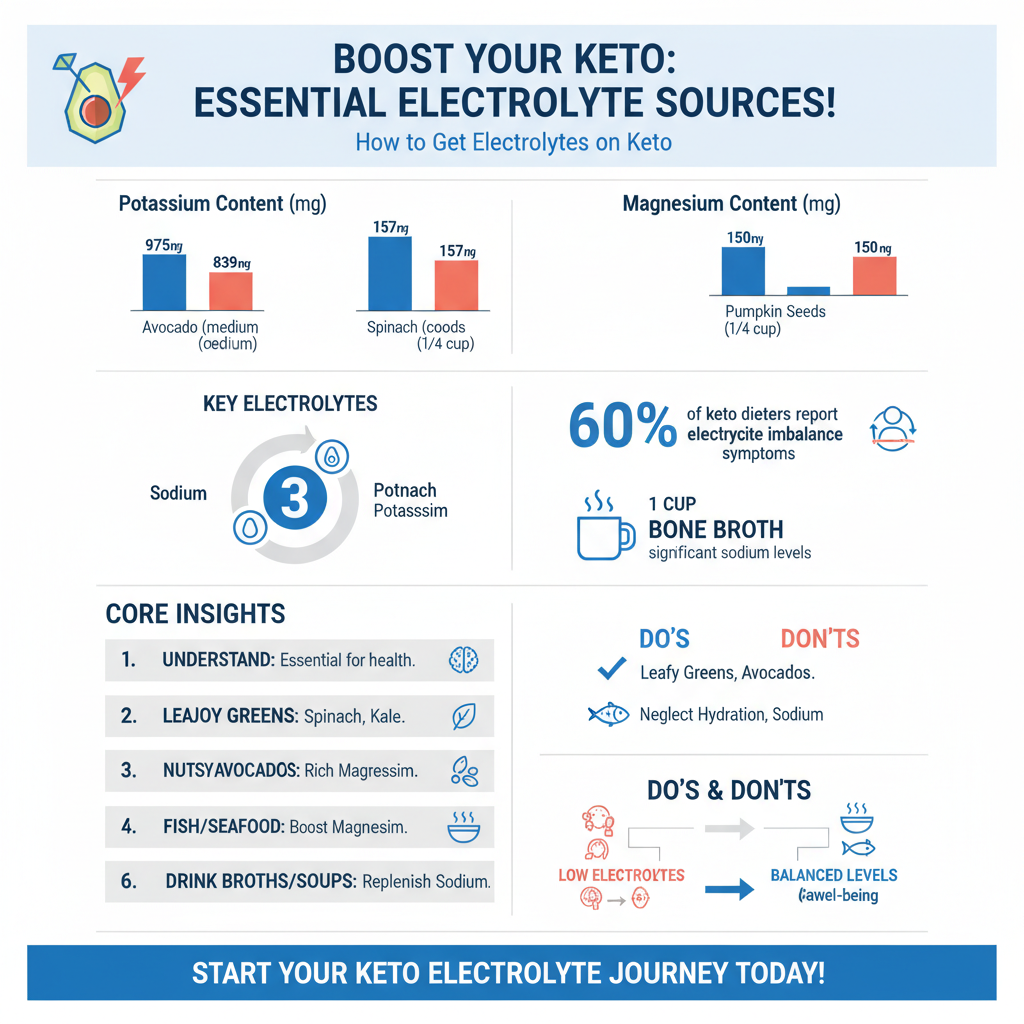

Incorporating a variety of food sources into your diet is one of the most effective ways to maintain electrolyte balance. Here are some top keto-friendly foods that are rich in essential electrolytes:
– Leafy Greens: Spinach, kale, and Swiss chard are excellent sources of magnesium and potassium. A serving of cooked spinach contains about 157 mg of magnesium and 839 mg of potassium, making it a powerhouse for electrolyte replenishment.
– Avocados: This creamy fruit is not only delicious but also packed with potassium—one medium avocado contains around 975 mg of potassium. Moreover, it is low in carbs and high in healthy fats, making it a perfect fit for a ketogenic diet.
– Nuts and Seeds: Almonds, pumpkin seeds, and sunflower seeds are rich in magnesium. For instance, just a quarter-cup of pumpkin seeds can provide over 150 mg of magnesium.
– Fish and Seafood: Fatty fish like salmon and mackerel are good sources of potassium and omega-3 fatty acids. These nutrients are essential not only for heart health but also for maintaining electrolyte balance.
– Broths and Soups: Bone broth is an excellent source of sodium and other electrolytes, making it a great option for hydration and replenishment. It is particularly beneficial during the initial stages of the keto diet when electrolyte loss is most pronounced.
By integrating these foods into your daily meals, you can significantly enhance your intake of essential electrolytes while enjoying a variety of flavors and textures.
Supplementing Electrolytes Effectively
While dietary sources are the best way to maintain electrolyte levels, some individuals may find it necessary to supplement. This is particularly true during the early stages of a ketogenic diet or for those who engage in intense physical activity. Here are some key points to consider when choosing electrolyte supplements:
– Comprehensive Formulas: Look for supplements that contain a balanced mix of sodium, potassium, and magnesium. Many brands offer sugar-free electrolyte powders or tablets that can easily be mixed with water, providing a convenient way to replenish lost electrolytes.
– Dosage Awareness: Be mindful of the recommended dosages on the supplement packaging. Over-supplementing, especially with sodium, can lead to imbalances and should be approached with caution.
– Quality Matters: Choose high-quality supplements that are free from additives and sugars. Reading labels and researching brands can help you find products that align with your health goals.
Incorporating supplements into your regimen can be an effective strategy for maintaining electrolyte levels, particularly when food sources are not sufficient.
Hydration Tips for Electrolyte Balance
Staying hydrated is essential for overall health, but when following a ketogenic diet, it becomes even more critical to focus on fluid intake that includes electrolytes. Here are some hydration strategies to consider:
– Water Intake: Aim to drink at least 2-3 liters of water daily. Proper hydration helps support metabolic functions and reduces the risk of dehydration, especially during the initial phase of the keto diet.
– Electrolyte-Infused Beverages: In addition to plain water, consider incorporating electrolyte-infused beverages or homemade electrolyte drinks. A simple recipe includes mixing water with a pinch of salt, lemon juice, and a sugar-free sweetener for flavor.
– Bone Broth: Regularly consuming bone broth can significantly contribute to your hydration and electrolyte intake. It not only replenishes sodium but also provides collagen and other minerals essential for joint and gut health.
– Post-Exercise Hydration: After workouts, especially if they are intense, it’s crucial to replenish lost fluids and electrolytes. Coconut water, while slightly higher in carbs, can be a tasty option as it contains potassium and sodium.
By prioritizing hydration and including electrolytes in your fluids, you can better manage your electrolyte balance and support your overall health on a keto diet.
Monitoring Your Electrolyte Levels
Awareness of your body’s signals is key to maintaining electrolyte balance on a ketogenic diet. Here are some effective ways to monitor your levels:
– Symptom Awareness: Pay attention to common symptoms of electrolyte imbalances, such as muscle cramps, headaches, dizziness, and fatigue. If you experience these symptoms, it may indicate a need for increased electrolyte intake.
– Regular Testing: Consider periodic blood tests to check your electrolyte levels. This is particularly important if you have underlying health conditions or are on medications that affect electrolyte balance. Consulting with a healthcare professional can provide personalized insights based on your individual needs.
– Adjustment of Intake: Use the information from your symptom monitoring and blood tests to adjust your diet and supplementation as needed. If you find yourself frequently experiencing symptoms, you may need to increase your intake of electrolyte-rich foods or supplements.
By proactively monitoring your electrolyte levels, you can take steps to ensure they remain within an optimal range, supporting your health and well-being on a ketogenic diet.
Practical Tips for Daily Intake
To successfully maintain electrolyte balance while on a ketogenic diet, consider implementing the following practical tips:
– Meal Planning: Plan your meals to include a variety of low-carb vegetables and foods rich in electrolytes. This not only helps maximize your intake but also ensures you enjoy a balanced and nutritious diet.
– Hydration Schedule: Create a hydration schedule that incorporates electrolyte-rich drinks at strategic times, such as before and after workouts, and throughout the day. This can help reinforce your hydration efforts and maintain electrolyte balance.
– Experiment with Recipes: Explore new recipes that incorporate high-electrolyte ingredients. For example, try a spinach salad topped with avocado and nuts or a hearty vegetable soup made with bone broth.
– Stay Informed: Keep yourself educated about the foods and supplements that can contribute to your electrolyte intake. By being informed, you can make better dietary choices that support your keto lifestyle.
By implementing these practical strategies into your daily routine, you can effectively manage your electrolyte levels while enjoying the benefits of a ketogenic diet.
Maintaining electrolyte balance is vital for success on the keto diet. By focusing on food sources, considering supplements, and ensuring proper hydration, you can effectively manage your electrolyte levels. Start incorporating these strategies today to enhance your keto journey and overall well-being. Prioritizing your electrolyte intake will not only help you avoid the dreaded keto flu but also support your energy levels and overall health as you embrace a low-carb lifestyle.
Frequently Asked Questions
What are the best food sources of electrolytes for a keto diet?
On a keto diet, focusing on low-carb foods rich in electrolytes is crucial for maintaining balance. Some of the best sources include avocados for potassium, spinach and kale for magnesium, and nuts such as almonds for calcium. Bone broth is also an excellent option, as it provides sodium and other essential minerals while being low in carbs.
How can I tell if I am low in electrolytes on keto?
Symptoms of low electrolytes on a keto diet can include headaches, fatigue, muscle cramps, and dizziness, commonly referred to as “keto flu.” Additionally, if you experience irregular heartbeat or persistent weakness, it may indicate an electrolyte imbalance. Monitoring your intake of sodium, potassium, and magnesium can help you stay aware of your levels.
Why is it important to maintain electrolyte balance on a keto diet?
Maintaining electrolyte balance on a keto diet is essential due to the reduction of carbohydrates, which can lead to lower insulin levels and increased excretion of sodium and water. This can result in an imbalance of critical electrolytes like sodium, potassium, and magnesium, leading to symptoms such as fatigue and muscle cramps. Ensuring adequate electrolyte intake helps support overall health, energy levels, and muscle function while on a keto diet.
Which electrolyte supplements are recommended for those following a keto diet?
For those on a keto diet, electrolyte supplements that contain sodium, potassium, and magnesium are highly recommended. Products like electrolyte powders or electrolyte tablets can provide a convenient way to replenish these essential minerals. Look for supplements that are low in carbs and free from added sugars to fit seamlessly into your keto lifestyle.
How can I increase my electrolyte intake without consuming too many carbs?
To increase your electrolyte intake on a ketogenic diet while keeping carbs low, focus on high-electrolyte, low-carb foods such as leafy greens, seeds, nuts, and avocados. Incorporating bone broth into your meals is also an effective way to boost sodium and potassium levels. Additionally, consider using electrolyte supplements or adding a pinch of sea salt to your meals to enhance your mineral intake without compromising your carb limits.
References
- https://www.healthline.com/nutrition/electrolytes-keto
- https://www.ncbi.nlm.nih.gov/pmc/articles/PMC6520741/
- https://www.medicalnewstoday.com/articles/electrolytes-keto-diet
- https://www.cdc.gov/nutrition/healthy-eating/electrolytes.html
- https://www.hopkinsmedicine.org/health/wellness-and-prevention/what-are-electrolytes-and-why-are-they-important
- Ketogenic.com | Start, Succeed & Sustain a Keto Diet