To successfully determine your macros for a ketogenic diet, you need to calculate your daily caloric needs and establish specific ratios for fats, proteins, and carbohydrates. This balance is essential for entering and maintaining ketosis, which enables your body to efficiently burn fat for energy, maximizing the numerous benefits associated with the keto lifestyle. Understanding how to navigate these macronutrient ratios will empower you to tailor your eating habits for optimal results in weight loss, energy levels, and overall health.
Understanding Macros in the Keto Diet

Macros, short for macronutrients, are the nutrients that provide us with energy: fats, proteins, and carbohydrates. Each of these macronutrients plays a critical role in our diet, but the ketogenic diet emphasizes a specific balance to promote ketosis—the metabolic state where the body burns fat for fuel instead of carbohydrates. The typical keto ratio comprises approximately 70-75% fats, 20-25% proteins, and 5-10% carbohydrates.
Fats are the cornerstone of the ketogenic diet, providing the majority of your caloric intake. They should primarily come from healthy sources, such as avocados, nuts, seeds, and olive oil, which not only supply energy but also support overall health. Proteins are essential for maintaining muscle mass and supporting various bodily functions; however, on a ketogenic diet, it’s crucial to remain within the specified range to avoid gluconeogenesis, where excess protein is converted to glucose, potentially disrupting ketosis. Finally, carbohydrates are significantly restricted, focusing on non-starchy vegetables and low-carb fruits to meet the body’s micronutrient needs without disrupting ketosis.
Calculating Your Daily Caloric Needs
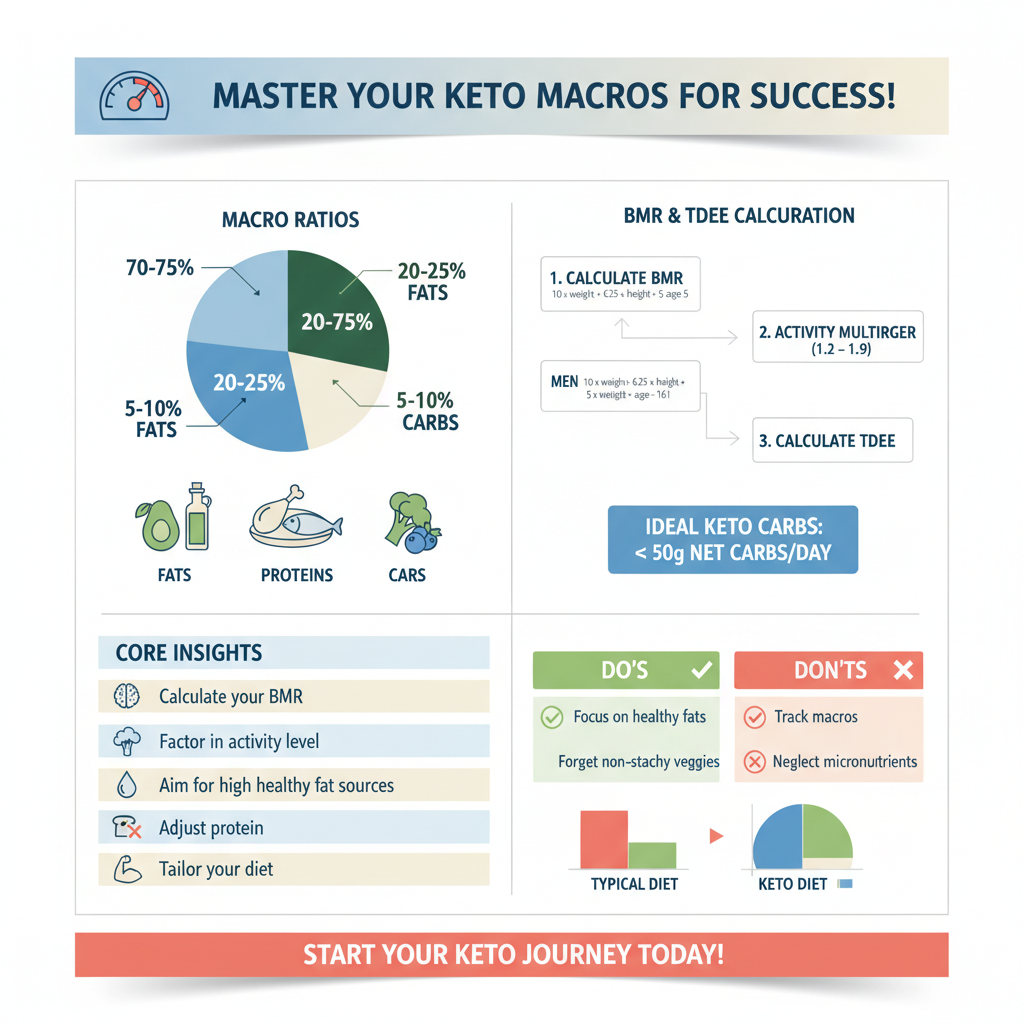

To determine your macronutrient goals, you first need to calculate your daily caloric needs. A reliable method to estimate your Basal Metabolic Rate (BMR) is the Mifflin-St Jeor equation, which factors in your gender, age, height, and weight. For men, the equation is:
\[ BMR = 10 \times \text{weight (kg)} + 6.25 \times \text{height (cm)} – 5 \times \text{age (y)} + 5 \]
For women, it is:
\[ BMR = 10 \times \text{weight (kg)} + 6.25 \times \text{height (cm)} – 5 \times \text{age (y)} – 161 \]
Once you have your BMR, the next step is to factor in your activity level to calculate your Total Daily Energy Expenditure (TDEE). Multiply your BMR by an activity factor that corresponds to your lifestyle:
– Sedentary (little or no exercise): BMR × 1.2
– Lightly active (light exercise/sports 1-3 days a week): BMR × 1.375
– Moderately active (moderate exercise/sports 3-5 days a week): BMR × 1.55
– Very active (hard exercise/sports 6-7 days a week): BMR × 1.725
– Super active (very hard exercise/sports, physical job, or training twice a day): BMR × 1.9
This TDEE gives you the total number of calories you need to maintain your current weight. For weight loss, you will typically want to create a caloric deficit by consuming fewer calories than your TDEE.
Setting Your Macro Ratios
With your caloric needs established, you can now set your macro ratios. The standard ketogenic macronutrient distribution may need to be adjusted based on individual goals, such as weight loss, muscle gain, or maintenance. For example, if you are looking to build muscle while on keto, you might increase your protein intake to 25-30%, while decreasing fats accordingly.
Additionally, individual factors such as age, sex, metabolic health, and activity level should be considered when determining your ideal macro distribution. For example, older adults may require a higher protein intake to preserve muscle mass, whereas those with certain metabolic conditions may need to adjust their carbohydrate intake even further to achieve ketosis.
To calculate your macros in grams, use the following formula:
1. Calculate your total daily calories (TDEE).
2. Multiply your caloric intake by the macro ratios:
– For fats (70% of calories): Total calories × 0.7 ÷ 9 = grams of fat
– For proteins (25% of calories): Total calories × 0.25 ÷ 4 = grams of protein
– For carbohydrates (5% of calories): Total calories × 0.05 ÷ 4 = grams of carbs
This approach provides a clear framework to personalize your keto diet based on specific health goals, ensuring that you remain in ketosis while meeting your nutritional needs.
Tracking Your Intake
To effectively manage your macronutrient intake, employing tracking tools is essential. Applications like MyFitnessPal and Cronometer allow you to log your food consumption and monitor your daily macro intake. These tools provide a user-friendly interface to ensure you consistently meet your target macros, making adjustments as necessary.
When tracking, it’s important to be diligent and consistent. Aim to record every meal and snack, as even small deviations from your planned macros can impact your ability to stay in ketosis. Moreover, these apps often provide additional insights, such as micronutrient breakdowns, which can help you maintain a balanced diet while adhering to your keto goals.
Adjusting Macros Over Time
As you progress on your keto journey, it’s vital to regularly reassess your macros and adjust them as needed. This may involve recalculating your caloric needs based on changes in weight, activity level, or specific health goals. If you find that you are not achieving the desired results, it may be time to tweak your macro ratios or caloric intake.
Focus on the quality of food sources as well. Prioritizing whole, unprocessed foods rich in nutrients will not only help you stay within your macro limits but also support overall health. Incorporating high-fiber foods, such as leafy greens and seeds, can improve digestion and provide essential vitamins and minerals without adding significant carbohydrates.
Common Mistakes to Avoid
When embarking on a ketogenic diet, it’s easy to make common pitfalls that can hinder your success. One major mistake is excessive protein intake. While protein is vital for muscle maintenance, consuming too much can lead to gluconeogenesis, where your body converts the surplus protein into glucose, which could kick you out of ketosis.
Another common error is neglecting fiber and micronutrients. While focusing solely on macros, many overlook the importance of getting enough fiber, which supports digestive health. Include a variety of non-starchy vegetables and consider supplementing with electrolytes to ensure you are meeting your micronutrient needs while on the keto diet.
Resources for Further Learning
For those looking to dive deeper into the ketogenic lifestyle, a wealth of resources is available. Keto-specific cookbooks can provide delicious and compliant recipes, while online forums and social media groups offer community support and shared experiences. Engaging with others on similar journeys can provide motivation and accountability.
Additionally, consider consulting with a nutritionist or dietitian familiar with the ketogenic diet. They can help you create a personalized plan that considers your unique health profile, ensuring you are not only meeting your macro goals but also optimizing your overall wellness.
Summarizing, understanding how to calculate and adjust your macros is essential for success on the ketogenic diet. By following these steps—calculating caloric needs, setting macro ratios, tracking intake, and making adjustments—you can create a personalized plan that aligns with your health goals. Start tracking your macros today and take control of your keto journey to reap the numerous benefits this lifestyle has to offer!
Frequently Asked Questions
What are macros and why are they important for a keto diet?
Macros, short for macronutrients, consist of three main components: carbohydrates, proteins, and fats. On a keto diet, understanding macros is crucial because it helps maintain a state of ketosis, where the body burns fat for energy instead of carbohydrates. Typically, a standard keto macro ratio is about 70-75% fats, 20-25% proteins, and only 5-10% carbohydrates. This balance is essential for optimizing weight loss and improving overall health while following a ketogenic lifestyle.
How do I calculate my daily macro needs for a keto diet?
To calculate your daily macro needs for a keto diet, start by determining your total daily energy expenditure (TDEE) using an online calculator that factors in your age, gender, weight, height, and activity level. Once you have your TDEE, establish a caloric deficit for weight loss if desired. From there, apply the keto macro ratios: multiply your total caloric intake by the percentage of each macro (fats, proteins, carbohydrates) to find the grams needed for each. This method ensures you are getting the right nutrients while staying in ketosis.
Which foods should I focus on to meet my keto macro goals?
To meet your keto macro goals, focus on high-fat, low-carb foods such as avocados, nuts, seeds, olive oil, and fatty fish like salmon. For protein, opt for grass-fed meats, eggs, and low-carb dairy products like cheese and Greek yogurt. Additionally, incorporate non-starchy vegetables such as spinach, kale, and broccoli, which are low in carbs but high in nutrients. These choices will help you achieve your macro ratios while enjoying a diverse and satisfying diet.
Why do I struggle with hitting my macro targets on a keto diet?
Struggling to hit macro targets on a keto diet can stem from a lack of meal planning, insufficient knowledge of food labels, or not tracking your intake accurately. Many people underestimate their carbohydrate intake or overestimate their protein consumption, which can lead to imbalances. To overcome this, consider using a food tracking app to log everything you eat, plan meals in advance, and familiarize yourself with keto-friendly foods. This approach will help you stay on track and make adjustments as needed.
What is the best way to adjust my macros if I’m not seeing results on keto?
If you’re not seeing results on your keto diet, it may be time to adjust your macros. Start by reviewing your current intake—if you’re consuming too many carbs or not enough fats, you may need to realign your ratios. Additionally, consider reducing portion sizes or increasing physical activity to create a greater caloric deficit. It’s also helpful to experiment with different keto macro ratios, as individual needs can vary; some may thrive on a higher fat intake while others require more protein to achieve their goals.
References
- Ketogenic diet
- https://www.ncbi.nlm.nih.gov/pmc/articles/PMC6279800/
- https://www.health.harvard.edu/staying-healthy/the-ketogenic-diet
- https://www.cdc.gov/healthyweight/healthy_eating/index.html
- https://www.verywellfit.com/how-to-calculate-your-macronutrients-5193084
- https://www.diabetes.org/nutrition/healthy-foods/what-are-macronutrients
- Client Challenge
- https://www.mayoclinic.org/healthy-lifestyle/nutrition-and-healthy-eating/in-depth/keto-diet/art-20458629