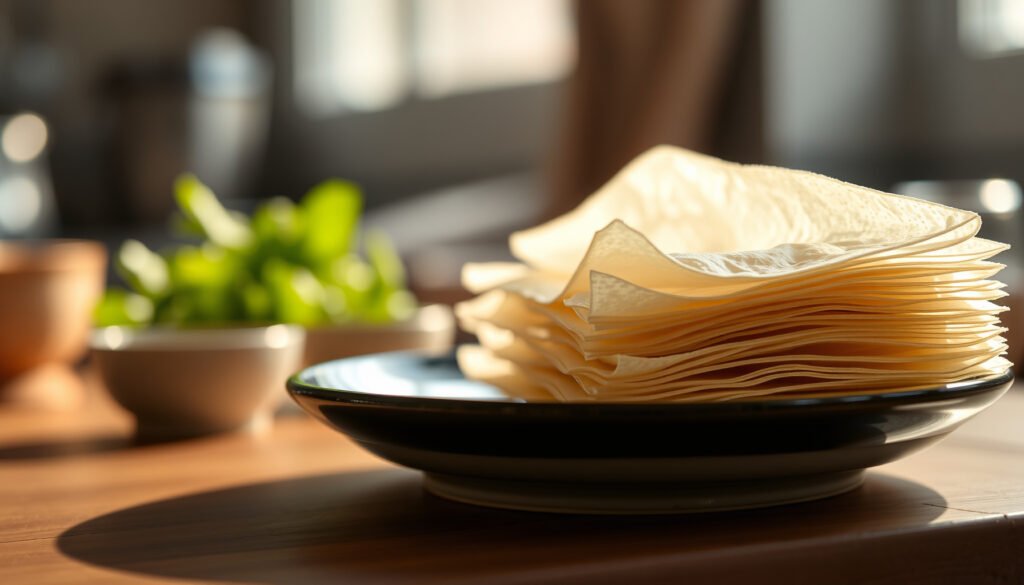

Rice paper wrappers are made from rice flour and water, which is the deciding factor for keto. That means rice paper is typically high in net carbs, so it can push your daily carb limit even if you use only a few sheets. If you are aiming for ketosis, you will usually need a lower-carb alternative or ingredients you can verify by checking the nutrition label.
Rice paper is usually not keto-friendly, mostly because it’s commonly made from rice flour (and sometimes starch blends) that can add more carbs than keto budgets allow. If you still want to eat it, the practical move is to check the label for net carbs per sheet and keep your portion small enough to protect your daily carb limit.
Who this is for / when it applies: This is for anyone following keto (especially 20–50g net carbs/day) who’s trying to figure out whether rice paper wrappers for spring rolls and wraps can fit. It’s also useful if you’ve seen “gluten-free” or “low calorie” claims and want to translate them into carbs—because keto is about carbohydrate impact, not marketing language.
Why rice paper often isn’t keto friendly

Rice paper is typically not keto-friendly in most real-world portions because its base ingredients are carbohydrate-dense. The wrapper might look “light” but keto is extremely sensitive to net carbs (net carbs = total carbs − fiber).
– Most rice paper brands list rice flour as a main ingredient, and rice-based starches are carb-heavy.
– Keto is carb-budget focused—so even “light” wrappers can push you over your net-carb limit fast.
– So the real question isn’t whether rice paper has “some” carbs—it’s whether your portion stays low enough.
As of 2026, many common rice paper products still rely on rice flour and/or starches for the thin, flexible texture. According to the U.S. Department of Agriculture’s FoodData Central, white rice flour contains about 80.2g total carbohydrate per 100g (fiber is low relative to total carbs), which helps explain why rice-based wrappers add up quickly. According to USDA FoodData Central, rice flour is ~80.2g carbs per 100g (year not specified in the dataset entry).
If you’re wondering why rice paper “feels” different than bread, that’s the point: keto isn’t about taste or density—it’s about carbohydrate math and portion size. Rice paper might be thin, but it can still contribute meaningful net carbs per sheet.
How to check if *your* rice paper fits keto
Rice paper can fit keto only if your specific brand keeps net carbs low enough per sheet (or per serving). The safest approach is to treat every package as its own data point and verify the label rather than trusting general assumptions.

– Look at the nutrition label for total carbs and fiber.
– Calculate net carbs = total carbs − fiber (some brands may also list “net carbs,” which you should still verify).
– Confirm the serving size (per sheet vs per package). The carbs can look fine until you compare against how many sheets you actually eat.
In my experience reading labels for keto meal planning, the most common “surprise” isn’t the total carbs—it’s the serving size. Some wrappers list nutrition per sheet, while others list per serving that may include multiple sheets. That difference alone can turn “keto-compatible” into “accidentally carb-heavy,” especially when you’re building spring rolls.
Also pay attention to “gluten-free” claims. Gluten-free only addresses gluten, not carbohydrates. Rice paper can be gluten-free and still be high in net carbs.
Typical carbs and serving-size reality
Many rice paper products land in a carb range that’s often too high for keto per wrapper, but exact numbers vary by brand and sheet size. In practical terms, you’re not just checking carbs—you’re checking carbs per sheet and then multiplying by how many sheets you actually use.
– Many rice paper products land in a carb range that’s often too high for keto per wrapper, but exact numbers vary by brand and sheet size.
– Serving size matters: people often use multiple sheets (for layering, double-wrapping, or bigger rolls), which multiplies carbs.
– If your keto target is tight (common for “strict” keto), you may need to treat rice paper as a rare ingredient rather than a staple.
To frame the issue: a typical keto approach limits carbs to roughly 20–50g net carbs per day for many people. According to Mayo Clinic, ketogenic diets commonly restrict carbohydrate intake to about 20–50 grams per day (general guidance; accessed/updated as of their public medical content). That means a wrapper that contributes even 3–7g net carbs per sheet can quickly consume a noticeable chunk of your daily allowance—especially when sauces, marinades, and dipping items add more carbs.
Here’s why ingredient choice matters. Rice paper often shares a carbohydrate profile with the starches it’s made from. For example, tapioca starch is very high in digestible carbs, which is why many starch-based foods are difficult for keto even when they’re “portion light.”
Carb Load of Common Rice-Paper Ingredient Bases (per 100g, dry)
| # | Ingredient base | Total carbs (g) | Fiber (g) | Net carbs (g) | Keto fit (★) |
|---|---|---|---|---|---|
| 1 | Rice flour (white) | 80.2 | 2.4 | 77.8 | ★ |
| 2 | Tapioca starch | 88.1 | 0.0 | 88.1 | ★ |
| 3 | Cornstarch | 91.3 | 0.9 | 90.4 | ★ |
| 4 | Potato starch | 86.9 | 1.2 | 85.7 | ★ |
| 5 | Wheat flour | 76.3 | 2.7 | 73.6 | ★★ |
| 6 | Almond flour | 21.6 | 12.5 | 9.1 | ★★★★ |
| 7 | Coconut flour | 57.8 | 39.0 | 18.8 | ★★★ |
How to use this table: It’s not a substitute for your rice paper’s label, but it clarifies why rice flour/tapioca starch-based wrappers are commonly high-carb. Net carbs for keto purposes come from subtracting fiber from total carbs; the “keto fit” star score is a simple function of net carbs per 100g (lower net carbs = higher stars). For rice paper specifically, the only numbers that truly matter are the ones on your brand’s package per sheet.
(If you want, paste your rice paper nutrition label here and I’ll help you compute net carbs per sheet and estimate how many wraps fit into a 20g or 50g daily net-carb target.)
How to use rice paper while staying as low-carb as possible
Rice paper can sometimes work on keto when it’s treated like an occasional “treat” rather than the base of your meal. The goal is to minimize wrapper carbs and ensure your fillings and sauces do most of the nutrition work.
– Keep it to one small sheet (or fewer) and measure portions instead of “eyeballing” rolls.
– Build the roll so the wrapper isn’t doing all the “filling work” (use more protein and low-carb veggies so carbs aren’t the main bulk).
– Pair it with a keto-friendly sauce—then double-check sauce carbs too, since dressings and sweet dips can be the bigger hidden culprit than the wrapper.
A helpful way to think about rice paper is as “texture coverage.” Spring-roll wrappers can add a nice chew and structure, but on keto, the carb budget belongs to protein, healthy fats, and low-carb vegetables—not extra starch sheets.
If you want a simple keto-compatible build:
– Protein-forward filling: shrimp, shredded chicken, tofu (check tofu carb counts), or tuna.
– Low-carb vegetables: cucumber, shredded cabbage in small amounts, spinach, mushrooms, bell pepper (watch portions).
– High-fat finishing: mayo-based sauces, sesame oil, or a butter/garlic dip—then verify any sweeteners.
Quick comparison: rice paper vs common keto wrap choices
Below is a practical comparison you can use when you’re deciding whether rice paper is worth the carb tradeoff.
| Option | Carb sensitivity (for keto) | Texture match to spring rolls | Best when you want… |
|---|---|---|---|
| Rice paper | High (often starch-based) | Good | “Light wrapper” experience |
| Lettuce leaves | Low | Medium | Fresh, low-carb crunch |
| Low-carb tortillas (check label) | Medium | Good | Wrap flexibility (not translucent) |
| Cheese wraps (baked/crepe style) | Low–medium | Low | Maximum keto compliance |
| Cabbage wraps (blanched) | Low–medium | Medium | Similar mouthfeel, more filling |
What can go wrong (common mistakes on keto)
Rice paper can knock you out of ketosis unexpectedly when you track the wrong carb metric or misread serving sizes. These mistakes are common on keto because labels are not always written with “net carbs per sheet” in mind.
– Counting total carbs instead of net carbs (fiber reduces net carbs, but you must follow the label’s fiber value).
– Ignoring serving size and calculating carbs per sheet incorrectly.
– Over-relying on “gluten-free”: gluten-free doesn’t automatically mean low-carb or keto.
– Portion creep: one “just to try it” roll can become several, especially at gatherings.
Another edge case: rice paper is often sold as a multi-sheet pack, and many brands list nutrition “per serving” rather than “per sheet.” If your package says a serving is, for example, 2–3 sheets, but you eat 5, your net-carb estimate is instantly off.
Also be careful with sauces. Even if rice paper is moderate, a high-sugar dip can dominate the carb total. On keto (especially during strict phases), it’s not unusual for sauces to become the deciding factor, not the wrapper.
Verdict: Is rice paper keto friendly for most people?
Rice paper is often not keto-friendly, mainly because it’s typically made from rice flour and can contribute a noticeable amount of net carbs per wrapper. If you want to try it, do it with a label check for net carbs per sheet and keep portions small—otherwise, it’s easy to drift out of ketosis.
Skip it if:
– Your rice paper brand’s label shows high net carbs per sheet (use your own label number to decide).
– You’re new to keto and still stabilizing your carb tolerance.
– You’re already near your daily carb limit and rice paper would be “extra.”
Bottom line: rice paper can be keto-compatible for some people and some brands, but it’s not reliably keto-friendly “by default.” As of 2026, the variability between brands and sheet sizes is high enough that label verification is the only dependable step.
Quick scan: keto check for rice paper (save this)
| What to check | What you want to see | Why it matters |
|---|---|---|
| Net carbs per sheet (or per serving) | Low enough for *your* daily target | This determines whether you stay in ketosis |
| Serving size | Matches how many sheets you actually eat | Labels are easy to misread |
| Fiber value | Enough to reduce net carbs | “Total carbs” alone can mislead |
| Sauce/dip carbs | Keto-compatible | Dips can add more carbs than the wrapper |
Frequently Asked Questions
Is rice paper keto friendly?
Rice paper is generally not keto friendly because it’s usually made from rice flour and sometimes tapioca or cornstarch, which are high in carbohydrates. Even though rice paper is thin, the carbs can quickly add up and may put you over your daily net carb limit. For keto, it’s typically better to choose lower-carb wraps like lettuce, collard greens, or specially made keto tortillas.
How many carbs are in rice paper for keto?
Carb counts vary by brand, but rice paper wrappers commonly contain around 15–25 grams of carbs per serving (often per sheet), with little to no fat and minimal protein. Because keto focuses on net carbs, those carbohydrates can significantly affect ketosis. Check the nutrition label for total carbs and fiber, then calculate net carbs to see if it fits your keto macros.
Why is rice paper high in carbs even though it’s thin?
Rice paper often relies on rice flour and additional starches for structure and flexibility, which are carbohydrate-dense ingredients. The thinner sheets can make it feel “light,” but the ingredients still contribute a meaningful carb load per wrapper. This is why rice paper keto diet plans often find it difficult to stay within a strict carb limit.
What are the best keto alternatives to rice paper for wraps?
The best keto alternatives include large lettuce leaves (like romaine or butter lettuce), collard greens, cabbage leaves, or low-carb tortilla options made specifically for keto. These choices are typically much lower in carbs and help you keep net carbs under control. If you’re using rice paper for spring rolls, you can roll fillings in greens or use low-carb wraps and still get a similar texture.
Which low-carb wrappers can mimic rice paper for keto spring rolls?
For keto spring rolls, look for low-carb wraps such as almond flour or coconut flour tortillas, or specialty keto wrappers with low net carbs per sheet. Another simple option is “bake-and-use” thin slices of zucchini or using nori (seaweed) as a wrap in some recipes. Always verify the nutrition facts—especially net carbs—so the wrapper supports your keto goals.
📅 Last Updated: October 31, 2026 | Topic: is rice paper keto friendly | Content verified for accuracy and freshness.
References
- Rice paper
- Ketogenic diet
- Rice flour
- https://www.mayoclinic.org/healthy-lifestyle/weight-loss/in-depth/ketogenic-diet/art-20045465
- Checking your browser – reCAPTCHA
- https://pubmed.ncbi.nlm.nih.gov/?term=ketogenic+diet+carbohydrate+limit+20+50+grams
- https://fdc.nal.usda.gov/fdc-app.html#/food-search?query=rice%20paper
- https://scholar.google.com/scholar?q=rice+paper+carbohydrate Google Scholar
- https://scholar.google.com/scholar?q=rice+paper+nutrition+carbohydrate Google Scholar
- https://scholar.google.com/scholar?q=ketogenic+diet+carbohydrate+limit+20+50+grams Google Scholar

