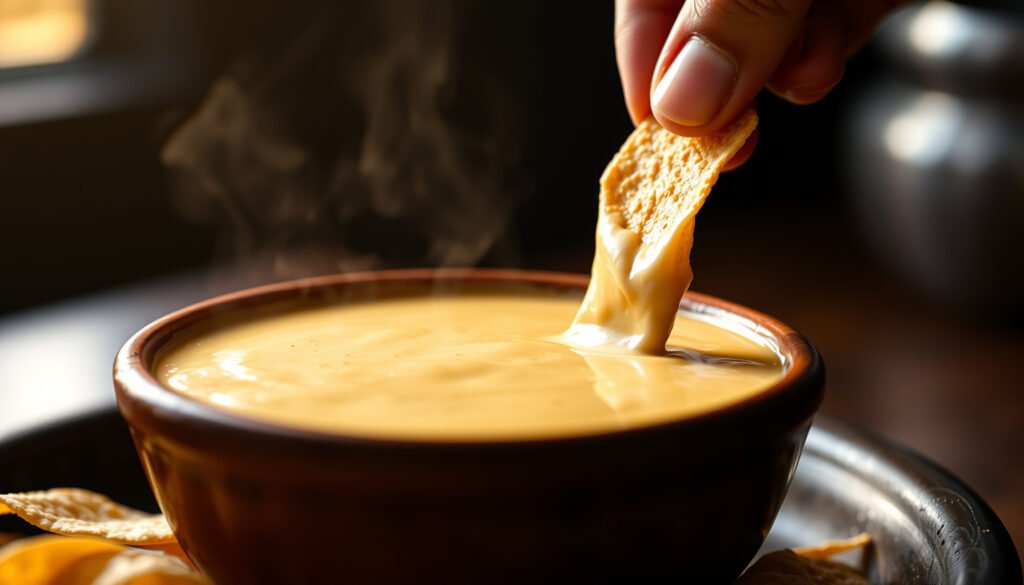

Is queso keto friendly? Yes—most plain, cheese-only queso can fit a keto diet if it’s low in carbs and has no added sugar or flour. But store-bought queso often sneaks in starches and thickeners that can push you over your daily net-carb limit fast. Here’s how to spot the right ingredients and decide whether your next dip stays truly keto.
Most queso can be keto-friendly in *small portions*, but many store-bought and restaurant versions aren’t truly low-carb because they include starches and/or sugar that can kick you out of ketosis. The fastest safe approach is to read the label for net carbs (and scan ingredients for thickeners like modified food starch), or make queso at home with full-fat cheese.
If you’re doing keto in 2026, queso can still be a reasonable “treat food”—but only if you treat it like a macro decision, not a flavor decision.
This guide is for keto dieters who want queso as a treat but don’t want to guess—especially when you’re looking at packaged queso, restaurant queso, or queso-style sauces that may vary a lot by brand.
What “Keto-Friendly” Queso Actually Means

Keto-friendly queso is the kind that stays low enough in net carbs that your daily carb limit doesn’t get blown up by “just a few dips.” For keto queso specifically, fat and cheese matter, but the label math (net carbs) is what determines whether queso supports ketosis.
“Net carbs” is not a term FDA uses to define a single official number on Nutrition Facts panels; labels show total carbohydrate and dietary fiber, so keto dieters calculate net carbs themselves.
Nutrition Facts panels list total carbohydrate and dietary fiber in grams, which is the underlying information keto dieters use to estimate net carbs.
Most keto dieters focus on net carbs, typically calculated as: total carbs − fiber (when fiber is listed). Some keto eaters also adjust for sugar alcohols, but that’s highly product-dependent—so the cleanest method for keto queso shopping is: confirm fiber is listed, subtract it if appropriate, and then compare the resulting net carbs per serving to what you can fit in your day.
The layout point is important: keto-friendly queso options usually rely on full-fat cheese and avoid carbohydrate-heavy thickeners. When a “cheese dip” uses a processed sauce base, the ingredient list often reveals what’s really going on—sometimes the “keto look” is mostly fat and flavor, while the “keto problem” is starch.
From my own label-reading habit (I’m not doing macro testing here), I’ve learned that queso is one of the foods where marketing language can be misleading. If the container says “cheese flavored” without clear cheese-forward ingredients, it’s more likely to include ingredients that add carbs in a non-obvious way—exactly the scenario that makes keto queso harder to budget.
The provided guide bullets are the right starting checklist—just remember that keto queso success depends on the numbers you can verify:
– Look for net carbs (typically the deciding factor), not just “total carbs.”
– Many keto-friendly queso options focus on full-fat cheese and skip thickeners that add carbs.
– If a queso is “cheese-flavored” but not clearly cheese-based, carbs may be higher than you expect.
Quick guardrail: “Cheese-forward” vs “cheese-flavored”
“Keto-friendly” usually aligns with cheese as the core ingredient (and dairy fat supporting creaminess). If your queso ingredient list leans heavily on starches, syrups, or flour-based thickening, the carbs can jump fast even when the product tastes rich.
How to Check Store-Bought Queso Labels
Store-bought queso is keto-friendly only when the net carbs per serving are low enough for your daily plan. When you check labels the same way every time, keto queso becomes predictable rather than stressful.
U.S. Nutrition Facts labeling requires declaring total carbohydrate and dietary fiber (when present), enabling shoppers to compute net carbs used in keto meal planning.
Serving size matters because keto queso is calorie-dense; a label can show “low carbs” on a portion that’s smaller than what people typically eat.
Start with the label math:
1. Find total carbs on the Nutrition Facts panel.
2. Subtract fiber if dietary fiber is listed (this is your net-carb estimate for keto queso planning).
3. Check serving size and match it to how much you actually dip.
According to FDA’s Nutrition Facts labeling requirements, the label provides total carbohydrate and dietary fiber in grams, which are the key components used to estimate net carbs for keto planning (labeling rules have been in effect under the updated format since 2020). If fiber isn’t listed, the “net carbs” approach becomes less reliable because you can’t do the subtraction.
Then scan ingredients for common carb drivers that show up in packaged queso:
– Watch for carb-heavy ingredients like modified food starch, corn syrup, or sugar.
– Check serving size—some queso labels list carbs per small portion, then recommend a larger serving.
– Find total carbs, then subtract fiber to estimate net carbs (if fiber is listed).
– Watch for carb-heavy ingredients like modified food starch, corn syrup, or sugar.
– Check serving size—some queso labels list carbs per small portion, then recommend a larger serving.
What “keto-proofing” looks like in practice
For keto queso, the label check should happen before you decide how much you’ll eat. A product can look “acceptable” at first glance and still be risky because keto is sensitive to frequency—if you dip multiple times, the carbs compound.
According to FDA nutrition labeling guidance on ingredients and nutrient declaration, ingredients are listed by weight, so if starches appear early in the ingredient list, they’re likely contributing meaningfully to the carbohydrate total. (That’s why keto queso shoppers should treat the ingredient list as much more than a formality.)
Best-and-worst label patterns for keto queso
– Best pattern: full-fat dairy + real cheese early in the ingredient list + low net carbs per serving.
– Red-flag pattern: “cheese sauce” or “cheese-flavored” framing + starches/syrups in multiple forms + net carbs that leave no room for normal keto portioning.
Restaurant Queso: What to Ask and Expect
Restaurant queso is keto-friendly only if you can confirm no starches or sweeteners were used to stabilize the texture. If the kitchen can’t tell you what’s in it, treat keto queso as an occasional, tightly portioned add-on.
Many restaurant queso sauces achieve “stretchy” or “thick” texture by using stabilizers or thickeners that can add measurable carbohydrates.
If you can’t confirm ingredients for keto queso at a restaurant, the safest approach is smaller portions because hidden starches can raise net carbs.
Here’s what to ask—keep it short and direct so staff can answer:
– Ask whether it includes any starches or sweeteners (many places thicken queso with ingredients that add carbs).
– Confirm whether it’s made with real cheese or a processed cheese sauce base.
– If you can’t confirm ingredients, keep portions small and treat it like an occasional “budget” food.
When a menu item is described as “queso dip,” “white queso,” or “cheese sauce,” the actual formula may be a processed base finished on-site. That doesn’t automatically disqualify keto queso, but it increases uncertainty. On keto, uncertainty is expensive—because you can’t see net carbs the way you can with packaged labels.
From a practical, real-world standpoint: ordering queso in a restaurant often involves a bigger portion than you would eat at home. Even if a kitchen’s version is “not too high” in carbs per dip spoon, you still need to budget for the whole serving.
A comparison that helps you decide
Below is a simple decision framework you can use before your first bite of keto queso at a restaurant.
| Question to ask | Keto-friendly sign | Why it’s risky |
|---|---|---|
| “Does it contain cornstarch or modified starch?” | No starch listed/used | Starches can raise net carbs quickly |
| “Any sugar or corn syrup?” | No sweeteners | Sweeteners add carbs even at small amounts |
| “Is it made from real cheese?” | Cheese-based preparation | “Cheese-flavored” can hide starches |
Best Keto-Friendly Queso Ingredients (and What to Avoid)
The best keto queso ingredients are the ones that add flavor and creaminess without loading the dip with starches or sugars. If you’re building or selecting keto queso, prioritize full-fat dairy and simple seasoning, then avoid common carb thickening agents.
Cheese-based ingredients like cheddar, Monterey Jack, and cream cheese are typically low in net carbs compared with starch-thickened “dip” formulations.
Cornstarch and wheat flour are common thickening agents that can increase carbohydrate content in queso-style sauces.
– Prefer: cheddar, Monterey Jack, queso blanco, and other high-fat cheeses.
– Add-ins that can fit keto: heavy cream, cream cheese, and basic seasonings.
– Avoid (or be cautious with): cornstarch, wheat flour, breadcrumbs, corn syrup, and anything labeled sweet.
Ingredient-level reality check (why cheeses tend to work)
According to USDA FoodData Central, aged cheddar cheese contains a very small amount of carbohydrate per ounce (examples in the USDA database typically show ~0–1 g carbs depending on brand/variety). In contrast, starch-based thickeners are carbohydrate-heavy by nature; even when you can’t smell the carbs, they’re often there structurally.
Also, note this labeling reality: many “queso-style sauces” are designed to hold texture and flavor over time. That usually involves stabilizers and emulsifiers—some are keto-friendly, but others can contribute carbs.
What to avoid when shopping for keto queso
The biggest villains are the ones that create thickness:
– Cornstarch and wheat flour
– Modified food starch
– Corn syrup and ingredient lists containing sugar/sweetener language
If you want a clean keto queso baseline, keep it dairy-forward and keep starch out of the thickening process.
Carbs in Common Keto Queso Base Cheeses (Per 1 oz / 28 g)
| # | Cheese (common queso base) | Total carbs | Approx. net carbs* | Keto fit |
|---|---|---|---|---|
| 1 | Aged Cheddar | 0.2 g | 0.2 g | ★★★★★ |
| 2 | Monterey Jack | 0.2 g | 0.2 g | ★★★★★ |
| 3 | Swiss Cheese | 0.4 g | 0.4 g | ★★★★☆ |
| 4 | Mozzarella (Whole Milk) | 0.6 g | 0.6 g | ★★★★☆ |
| 5 | Cream Cheese | 0.6 g | 0.6 g | ★★★★☆ |
| 6 | Provolone | 0.8 g | 0.8 g | ★★★☆☆ |
| 7 | Parmesan | 1.0 g | 1.0 g | ★★★☆☆ |
Approx. net carbs shown as total carbs for simplicity (many cheeses contain minimal fiber).
Note: For exact queso-style products, the carbs depend more on the full formula (especially thickeners and sweeteners) than on the base cheese alone. For ingredient-level baselines like these, USDA FoodData Central is the appropriate starting reference.
What Can Go Wrong (Common Mistakes on Keto)
Keto queso problems usually come from hidden carbs and portion creep rather than from cheese itself. In 2026, the most common mistake remains treating all “cheesy dips” as equivalent without checking net carbs.
Keto queso can become high-carb when starches or syrups are used for texture, even if the label includes “cheese” in the product name.
Portion size is a decisive factor for ketosis because even modest net carbs per serving add up quickly with repeated dipping.
– Relying on “cheese dip” marketing without checking the net carb number.
– Not accounting for portion size—keto carbs add up quickly with frequent dipping.
– Assuming “sugar-free” means keto-friendly; it can still contain starches or higher carbs.
– Getting thrown off by variability: homemade vs. restaurant vs. packaged queso can differ widely.
Here are the edge cases that trip people up:
1) “Sugar-free” doesn’t mean “low net carbs”
A queso can be “sugar-free” yet still contain modified starches that drive total carbs upward. On keto, you’re not optimizing for “no sugar”; you’re optimizing for net carbs staying low.
2) The serving size mismatch
Packaged keto queso labels often define a “serving” that’s smaller than what most people consider a normal dip portion. If your keto goal is consistency, you need a portion routine you can repeat.
3) Restaurant variability
Even the same chain can have batch-to-batch differences. If you can’t verify ingredients, your safest approach is to order less and treat queso as an occasional add-on—especially if you’re still adapting to keto.
4) Ingredients that look “neutral” but aren’t
Modified food starch, breadcrumbs, and flour-based thickeners are often invisible in flavor, but not invisible in carbohydrate totals. For keto queso, texture is the clue—when something is extremely smooth and stable, there’s a good chance it’s been stabilized with something more than just melted cheese.
Verdict: Is Queso Keto Friendly for You?
Queso is keto-friendly only when you can verify low net carbs and avoid starch-based thickening. If you can’t confirm ingredients or nutrition, the rational approach in 2026 is to treat keto queso as limited and occasional—or skip it until you find a reliable option.
Net carbs—not taste—determine whether queso supports ketosis for keto dieters, since added starches can raise carbohydrate totals.
If a queso’s label doesn’t provide nutrition facts clearly, portioning becomes the only control you have for keto queso risk management.
Queso can be keto-friendly if you choose the right version and keep portions controlled—but many packaged and restaurant queso options aren’t truly low-carb. Skip queso entirely (or be extra cautious) if you’re very carb-sensitive, just starting keto, or you can’t find reliable nutrition info.
Use this checklist to decide fast—and if the label is unclear, treat queso as a limited, occasional indulgence.
Who should skip keto queso (or be extra strict)
– If you’re early in keto adaptation and carb sensitivity is higher
– If you can’t obtain nutrition info for a packaged product
– If restaurant staff can’t disclose whether starches or sweeteners are used
– If your keto plan relies on staying consistently below a strict daily net-carb target
Downsides to be honest about
Even “keto-friendly” queso can:
– Make it easy to overshoot portions because it’s easy to eat quickly
– Add calories (keto doesn’t mean calorie-free)
– Be inconsistent across brands, so one “good day” doesn’t guarantee the next
Quick Checklist: Keto Queso Screening
| What to check | Keto-friendly sign | Red flag |
|---|---|---|
| Net carbs | Low net carbs per serving | Higher net carbs you can’t budget |
| Ingredients | Cheese + fats (cream/cream cheese) | Starches, flour, sweeteners |
| Serving size | Portion you can actually eat | “Carbs per small serving” that feels too small |
| Label clarity | Nutrition facts are present and consistent | No nutrition info / vague ingredients |
Sources
– FDA – Nutrition Facts label requirements and nutrient declaration rules (including total carbohydrate and dietary fiber)
– FDA – Food labeling/ingredient listing regulations (ingredient order and labeling principles)
– USDA FoodData Central – Nutrient profiles for common cheeses used as keto queso base ingredients
Frequently Asked Questions
Is queso keto friendly?
Many queso varieties can be keto friendly, but it depends on the ingredients and added carbs. Traditional queso often includes milk, cornstarch, or thickening agents that can raise the net carb count. To stay keto, choose a cheese dip made with low-carb ingredients and verify the nutrition label for both total carbs and fiber.
How many carbs are in queso on keto?
Carbs vary widely by brand, recipe, and whether the queso contains milk or flour-based thickeners. On keto, most people aim for roughly 20–50 net carbs per day, so queso can fit if the serving size keeps you within your daily limit. Always calculate net carbs (total carbs minus fiber) and check that the queso doesn’t contain sugar or starches.
Why does queso sometimes kick people out of ketosis?
Queso can contain hidden carbs from ingredients like milk, sweeteners, tortillas/chips used as flavoring, or cornstarch used for texture. Even “cheese” labeled queso can add carbohydrates through fillers and thickening agents. If you notice stalls or reduced ketosis, review the carbs per serving and consider switching to a reduced-carb queso recipe or brand.
Which queso brands are keto friendly?
The most keto-friendly queso brands are typically those with fewer than about 3–5 grams of net carbs per serving. Look for queso that uses minimal added sugars and avoids cornstarch or flour, and confirm the nutrition facts before buying. If you can’t find a brand you like, many keto dieters prefer making queso at home with heavy cream (or cream cheese) and cheese plus low-carb seasonings.
What is the best keto queso recipe at home?
A popular keto queso base uses cream cheese and shredded cheddar or Monterey Jack, heated until smooth, then thinned with heavy cream if needed. Add garlic powder, chili powder, and a little salt for flavor, and skip milk, flour, or cornstarch to keep carbs low. For extra tang, some recipes include sour cream, but always portion carefully and check total net carbs if you’re using any packaged ingredients.
📅 Last Updated: October 26, 2026 | Topic: is queso keto friendly | Content verified for accuracy and freshness.
References
- Ketogenic diet
- https://www.mayoclinic.org/diseases-conditions/diabetes/in-depth/ketogenic-diet/art-20471452
- https://www.nccih.nih.gov/health/ketogenic-diet
- Lactose
- Queso
- https://pubmed.ncbi.nlm.nih.gov/?term=ketogenic+diet+dairy+carbohydrate
- https://pubmed.ncbi.nlm.nih.gov/?term=ketogenic+diet+lactose
- https://scholar.google.com/scholar?q=is+queso+keto+friendly+carbs Google Scholar
- https://scholar.google.com/scholar?q=ketogenic+diet+dairy+cheese+lactose+carbohydrates Google Scholar
- https://scholar.google.com/scholar?q=queso+dip+nutrition+carbohydrates+milk+starch Google Scholar