

Yes, nutritional yeast is keto-friendly! It’s low in carbs, with about 5 grams per two tablespoons, making it a great addition to your meal plan. This deactivated yeast is rich in B vitamins, especially B12, and protein without added sugars. It adds a cheesy, nutty flavor to dishes like roasted vegetables or soups, fitting well within your dietary goals. If you’re curious about how to incorporate it into your meals, there’s more to explore!
What Is Nutritional Yeast?

Nutritional yeast is a deactivated form of yeast, often sold in flake or powder form, that’s popular among vegans and health enthusiasts. This ingredient packs a flavorful punch, offering a cheesy, nutty taste without dairy. You can sprinkle it on popcorn, mix it into sauces, or use it as a seasoning for various dishes. The nutritional yeast benefits go beyond flavor; it’s rich in B vitamins, including B12, which is particularly important for those following plant-based diets. Additionally, it contains protein and fiber, supporting your overall health. By incorporating nutritional yeast into your meals, you can enhance both the taste and nutritional profile, making it a versatile addition to your kitchen arsenal.
Nutritional Profile of Nutritional Yeast

When considering the nutritional profile of this unique ingredient, you’ll find that it offers an impressive array of vitamins and minerals. Nutritional yeast is particularly rich in B vitamins, including B12, which is essential for energy metabolism and neurological function. It also contains significant amounts of protein, making it a great addition to plant-based diets. The health benefits extend beyond nutrition; it acts as a natural flavor enhancer, adding a cheesy, savory taste to dishes without extra calories. Additionally, it’s low in fat and sodium, making it suitable for various dietary preferences. Incorporating nutritional yeast into your meals can elevate both taste and nutrition, promoting a balanced approach to healthy eating.
Carbohydrate Content and Keto Compatibility
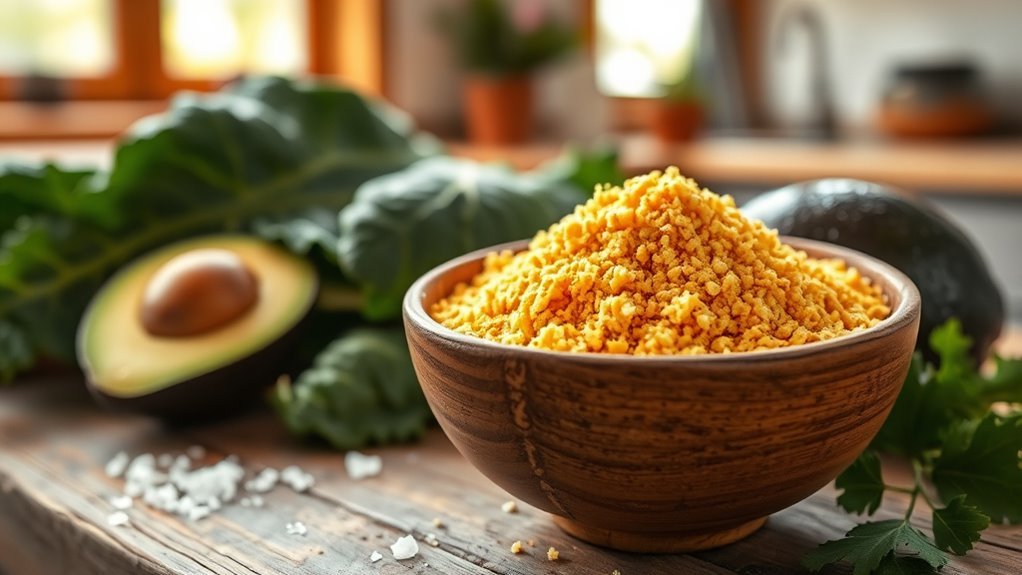
When considering nutritional yeast on a keto diet, it’s essential to examine its carbohydrate content. Typically, nutritional yeast contains about 5 grams of carbohydrates per two tablespoons, which can fit within the daily carb limit for many keto followers. Understanding how this fits into your overall dietary guidelines will help you determine its compatibility with your keto lifestyle.
Nutritional Yeast Carbs
While many people following a ketogenic diet are cautious about their carbohydrate intake, understanding the carb content of nutritional yeast can help you determine its compatibility with your meal plan. Nutritional yeast typically contains about 5 grams of carbohydrates per two tablespoons, which is quite low and can fit into a keto-friendly diet. Additionally, it offers numerous nutritional yeast benefits, including high protein content and essential vitamins. You can easily incorporate it into various nutritional yeast recipes, like cheese alternatives or savory snacks, without greatly impacting your carb limit. Just be mindful of portion sizes, as those carbs can add up. Enjoy its cheesy flavor guilt-free while staying aligned with your keto goals!
Keto Diet Guidelines
Understanding the guidelines of a ketogenic diet is essential for anyone looking to maintain ketosis and optimize their health. The cornerstone of this diet is limiting carbohydrate intake to about 20-50 grams per day, which encourages your body to burn fat for fuel instead of carbs. When you’re engaging in keto meal planning, always prioritize high-fat, moderate-protein foods while strictly monitoring your carb sources. Incorporating keto cooking tips, like using healthy fats and avoiding sugars, can further enhance your meals. Nutritional yeast, with its low carb content, can be a flavorful addition to your dishes, supporting your healthy lifestyle. Remember, consistency is key to enjoying the freedom that comes with successfully adhering to a ketogenic diet.
Benefits of Nutritional Yeast on a Keto Diet
Nutritional yeast is an excellent addition to your keto diet due to its low-carb nutritional profile. It’s packed with essential nutrients like B vitamins, protein, and minerals, which can support your overall health while you maintain ketosis. Incorporating it into your meals can enhance flavor and nutrition without compromising your carb limits.
Low-Carb Nutritional Profile
If you’re following a keto diet and looking for a flavorful way to enhance your meals, you’ll be pleased to know that nutritional yeast offers a low-carb nutritional profile that aligns well with your dietary goals. With just 2 grams of carbohydrates per tablespoon, it provides significant low carb benefits without sacrificing taste. This makes it a versatile ingredient for sprinkling on salads, soups, or even popcorn. Additionally, nutritional yeast contains no added sugars, making it an excellent choice for maintaining ketosis. Plus, it’s a perfect substitute for cheese in vegan dishes, adding a savory, umami flavor. By incorporating nutritional yeast into your meals, you can enjoy delicious flavors while staying committed to your low-carb lifestyle.
Rich in Essential Nutrients
While you might be focused on keeping your carb intake low, it’s essential not to overlook the nutritional benefits of the foods you include in your keto diet. Nutritional yeast is a powerhouse of essential nutrients, providing a rich source of B vitamins, including B12, which is vital for energy metabolism and nutrient absorption. It also delivers a complete profile of vegan protein, making it an excellent choice for those looking to enhance their protein intake without sacrificing their dietary goals. Incorporating nutritional yeast can help you feel more balanced and satisfied, supporting your overall health while still enjoying the freedom of a low-carb lifestyle. This versatile seasoning not only enhances flavor but also boosts your nutrient intake effectively.
How to Incorporate Nutritional Yeast Into Keto Meals
Incorporating nutritional yeast into your keto meals can enhance flavor and boost nutrient content without adding unnecessary carbs. This versatile ingredient can easily fit into various dishes, making meal prep exciting and healthful. Here are some keto meal ideas to get you started:
- Sprinkle on roasted vegetables for a cheesy flavor.
- Mix into cauliflower mash for a creamy texture.
- Add to salad dressings for a zesty kick.
- Stir into soups or stews for added depth.
- Use as a topping for keto pizza instead of cheese.
With these nutritional yeast recipes, you’ll not only enjoy the taste but also gain the benefits of essential vitamins and minerals, all while staying true to your keto lifestyle.
Alternatives to Nutritional Yeast for Keto Dieters
For those looking for alternatives to nutritional yeast while maintaining a keto diet, several options can provide similar flavor profiles and nutritional benefits. Consider using grated Parmesan or Pecorino Romano as cheese alternatives; they’re low in carbs and rich in flavor, enhancing your dishes. Another option is hemp seeds, which offer a nutty taste and a good source of protein and healthy fats. Additionally, sunflower seed flour can serve as a nutritional yeast substitute, adding a unique flavor while keeping your carb count low. Finally, if you enjoy the umami taste, try mushroom powder; it’s not only keto-friendly but also packed with antioxidants. These substitutes can help you enjoy your meals without compromising your dietary goals.
Final Thoughts on Nutritional Yeast and Keto
When considering nutritional yeast in the context of a keto diet, it’s essential to weigh its benefits against your overall dietary goals. While it can be a tasty addition, understanding its health benefits and dietary considerations is key:
- Nutritional yeast is low in carbohydrates, fitting well within keto parameters.
- It’s packed with essential vitamins, especially B12, vital for energy metabolism.
- The protein content supports muscle maintenance, especially important on a low-carb diet.
- It can help satisfy your cheese cravings without the carbs.
- Remember to monitor your overall macronutrient intake to maintain ketosis.
Ultimately, if you enjoy the flavor and reap the health benefits, nutritional yeast can be a valuable part of your keto journey without compromising your goals.
Frequently Asked Questions
Can Nutritional Yeast Cause Weight Gain on a Keto Diet?
Nutritional yeast itself isn’t likely to cause weight gain on a keto diet when used in moderation. It’s low in carbohydrates and high in protein, making it a suitable option for those seeking flavor without derailing their macros. However, if you overconsume it or pair it with high-calorie foods, you might see unwanted weight gain. Balance is key, so enjoy nutritional yeast, but keep track of your overall intake on the keto diet.
Is Nutritional Yeast Gluten-Free and Safe for Celiac Patients?
Yes, nutritional yeast is gluten-free and generally safe for those with celiac disease. It offers numerous benefits, including being a rich source of B vitamins and protein, which can support your overall health. When choosing a brand, make sure it’s labeled gluten-free to avoid cross-contamination. Incorporating it into your diet can enhance flavor and nutrition without compromising your dietary restrictions, giving you the freedom to enjoy tasty meals while staying healthy.
Can I Use Nutritional Yeast as a Seasoning in Keto Snacks?
Absolutely, you can use nutritional yeast as a keto seasoning in your snacks! It adds a cheesy, savory flavor while providing numerous nutritional benefits, including B vitamins and protein. Just be mindful of the portion sizes, as it does contain some carbohydrates. Incorporating it into your keto-friendly recipes can enhance taste without compromising your diet, allowing you the freedom to enjoy flavorful snacks while sticking to your nutritional goals.
Does Nutritional Yeast Contain Any Allergens to Watch For?
When considering nutritional yeast, you should be aware of potential allergens. While it’s generally safe, some individuals may experience nutritional yeast allergies or sensitivities, especially if they’re sensitive to yeast or mold. Symptoms can include digestive discomfort or skin reactions. Always check labels for cross-contamination, particularly if you have other food allergies. If you’re unsure, it’s best to consult with a healthcare professional before incorporating it into your diet.
How Long Does Nutritional Yeast Last Once Opened?
Once opened, nutritional yeast typically has a shelf life of about 1 to 2 years if stored properly. To maximize its longevity, keep it in a cool, dark place, ideally in an airtight container. Exposure to heat, moisture, and light can reduce its freshness and flavor. So, if you want to enjoy its nutty taste and nutritional benefits, make sure you’re mindful of those storage conditions after opening the package.
1. Is nutritional yeast keto-friendly?
Yes, nutritional yeast is generally considered keto-friendly. It is low in carbohydrates, with about 5 grams of carbs per 1-ounce serving, which makes it suitable for a ketogenic diet. Nutritional yeast is also rich in protein and contains essential vitamins and minerals, making it a nutritious addition to keto meals.
2. How many carbs are in nutritional yeast?
In a typical serving of nutritional yeast (about 1 ounce or 28 grams), there are approximately 5 grams of carbohydrates. Out of these, 4 grams are dietary fiber, which means the net carbs are very low, making it suitable for those following a ketogenic diet.
3. What are the health benefits of nutritional yeast?
Nutritional yeast offers several health benefits, especially for those on a keto diet. It is a complete protein, containing all nine essential amino acids, and is also a rich source of B vitamins, including B12, which is crucial for energy production and nervous system health. Additionally, it is high in antioxidants and can support immune function.
4. How can I use nutritional yeast on a keto diet?
Nutritional yeast can be used in various ways on a keto diet. It can be sprinkled on salads, popcorn, or vegetables for a cheesy flavor. It can also be incorporated into sauces, soups, and casseroles to enhance taste and nutrition. Additionally, it can be used as a seasoning for keto-friendly snacks or dishes, making it a versatile ingredient.
5. Are there any potential downsides to consuming nutritional yeast?
While nutritional yeast is generally safe for most people, some may experience sensitivity or allergic reactions. It is also high in purines, which can be a concern for individuals prone to gout. Additionally, those with certain medical conditions should consult a healthcare provider before adding it to their diet, especially if they are on a restricted diet or have specific dietary needs.
References
- https://www.healthline.com/nutrition/nutritional-yeast-keto
- https://www.ncbi.nlm.nih.gov/pmc/articles/PMC6470867/
- https://www.verywellfit.com/nutritional-yeast-5180133
- https://www.medicalnewstoday.com/articles/323623
- https://www.nutrition.gov/topics/nutrition-basics/what-nutritional-yeast
- https://www.ncbi.nlm.nih.gov/pmc/articles/PMC6520795/