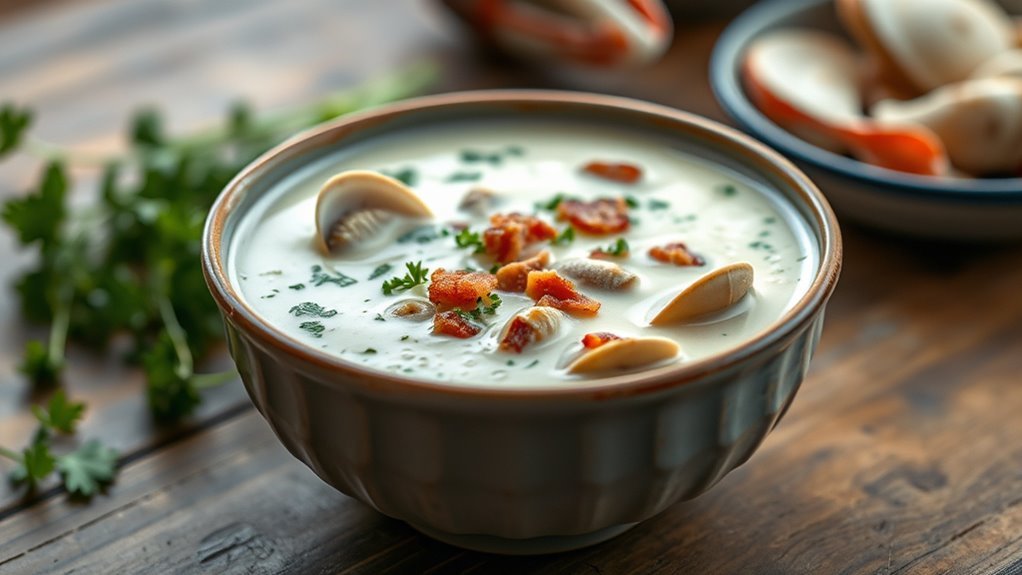

New England clam chowder isn’t keto-friendly due to its high carb content, primarily from potatoes and onions, which can add around 20 grams of carbs per cup. If you’re on a keto diet, you can still enjoy clam chowder by making some smart substitutions, like using cauliflower instead of potatoes and heavy cream instead of milk. These adjustments can satisfy your cravings while keeping your carb intake low. Discover more ways to enjoy this classic dish on a keto diet.
Understanding the Ingredients of New England Clam Chowder
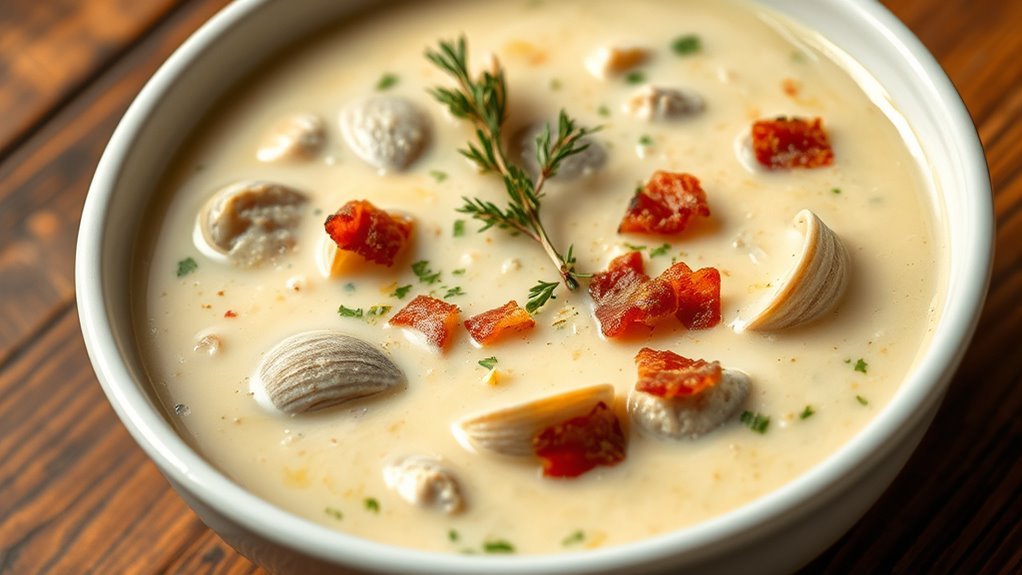
When you plunge into a bowl of New England clam chowder, you’ll find a rich blend of ingredients that create its signature creamy texture and flavor. This dish, with roots tracing back to the 18th century, reflects its clam chowder history, highlighting the early settlers’ reliance on local resources. The main components include clams, potatoes, onions, and cream, resulting in a hearty chowder that’s both comforting and satisfying. Regional variations exist, like the Manhattan version, which incorporates tomatoes, deviating from the creamy base that defines New England style. Understanding these ingredients is essential for appreciating the dish’s complexity and the cultural influences that shaped it, allowing you to savor every spoonful while knowing its culinary background.
The Carb Content of Traditional Clam Chowder
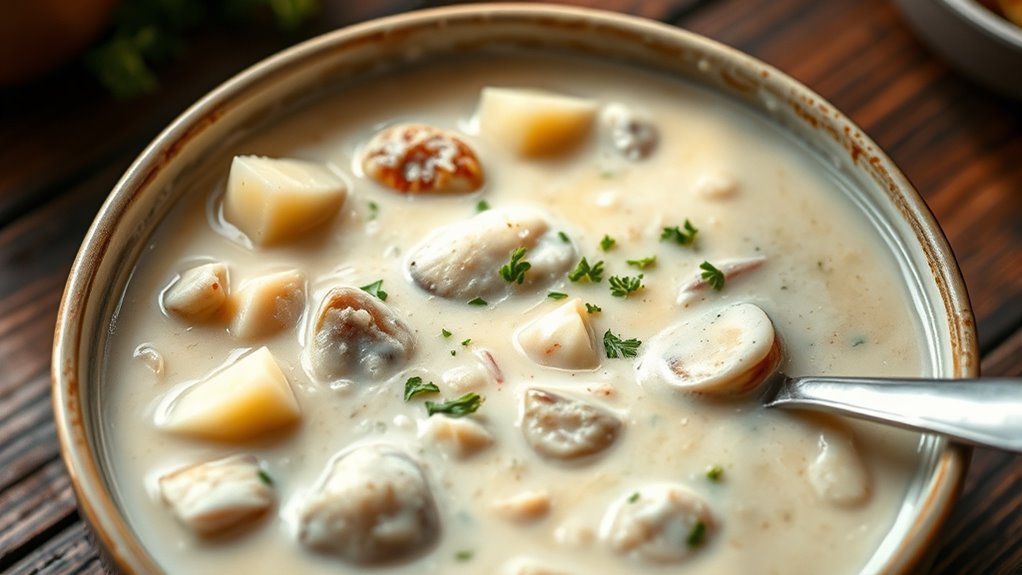
When considering the carb content of traditional clam chowder, you’ll want to look closely at its key ingredients. Typically, chowder includes potatoes, cream, and various seasonings, all of which contribute to its overall carbohydrate count. By analyzing these components, you can better understand how this dish fits into a low-carb diet.
Ingredients Breakdown
Although many people enjoy the creamy goodness of traditional New England clam chowder, its ingredients can notably impact its carb content. Commonly used ingredients include potatoes, onions, and cream, which contribute to the overall carbohydrate levels. Understanding the clam types and chowder variations can help you make informed choices.
| Ingredient | Carb Content (per serving) |
|---|---|
| Potatoes | 15g |
| Onions | 6g |
| Clams | 4g |
| Cream | 1g |
While clams themselves are low in carbs, the addition of potatoes greatly raises the total. This breakdown highlights why it’s crucial to evaluate each ingredient when determining if clam chowder fits into your dietary preferences.
Carb Count Analysis
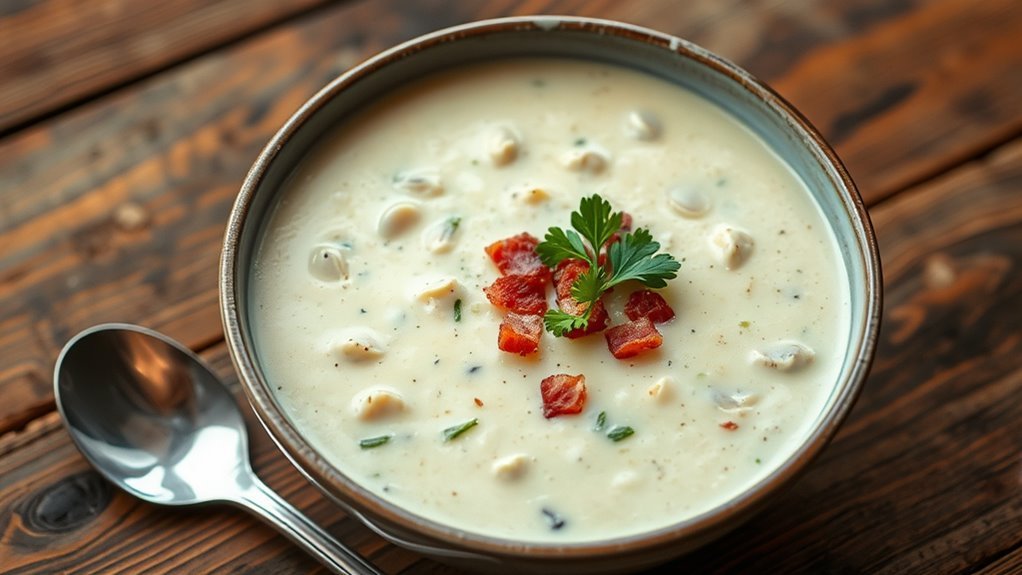
How does the carb count of traditional New England clam chowder stack up? Typically, a cup of this creamy soup contains about 20 grams of carbohydrates, largely from the potatoes and flour used as thickening agents. While delicious, this carb content can be a concern for those following a keto diet. However, you can explore clam chowder variations that reduce these numbers, such as using cauliflower instead of potatoes or thickening the soup with cream. If you’re craving a low-carb version, consider adding keto friendly toppings like crispy bacon or fresh herbs, which not only enhance flavor but also help keep your carb count in check. Enjoying clam chowder on keto is possible with a bit of creativity!
Keto Diet Basics and Carb Limits
Understanding the basics of the keto diet is essential for anyone looking to reduce carbohydrate intake effectively. The keto diet primarily focuses on high fat, moderate protein, and very low carbs. Generally, limiting your carb intake to about 20-50 grams per day is vital for entering ketosis, where your body burns fat for fuel.
| Macronutrient | Recommended Intake | Purpose |
|---|---|---|
| Carbohydrates | 20-50 grams/day | Induce ketosis |
| Protein | Moderate | Preserve muscle mass |
| Fats | High | Primary energy source |
Substitutions for a Keto-Friendly Clam Chowder
When crafting a keto-friendly version of New England clam chowder, it’s important to swap out high-carb ingredients for those that align with keto principles. Instead of traditional flour for thickening, consider using keto-friendly thickeners like xanthan gum or almond flour. These options provide the desired consistency without the carb load.
For the vegetables, replace potatoes with low carb vegetables such as cauliflower or zucchini. Cauliflower, in particular, mimics the texture of potatoes well and absorbs flavors beautifully. You can also add celery and spinach for extra nutrition while keeping the dish low in carbs. By making these substitutions, you can enjoy a creamy, satisfying chowder that fits perfectly into your keto lifestyle.
Popular Keto Clam Chowder Recipes
When you’re looking for delicious keto clam chowder recipes, creamy variations can really elevate your meal. By making simple ingredient swaps, you can maintain the rich flavor while keeping it low in carbs. Let’s explore some popular recipes that fit perfectly into your keto lifestyle.
Creamy Keto Variations
While traditional New England clam chowder often relies on high-carb ingredients like potatoes, creamy keto variations offer a delicious way to enjoy this classic dish without compromising your low-carb lifestyle. You can easily make keto adaptations by incorporating alternatives such as cauliflower, which mimics the texture of potatoes while keeping carbs low. Coconut milk or heavy cream can be used to maintain that rich, creamy consistency. Adding spices like thyme or paprika can enhance flavors without adding extra carbs. You’ll find that these creamy variations don’t just satisfy your cravings; they also keep you aligned with your dietary goals. With a few tweaks, you can indulge in a comforting bowl of chowder that fits perfectly into your keto journey.
Ingredient Swaps for Keto
To create a keto-friendly version of New England clam chowder, you’ll want to make strategic ingredient swaps that reduce carbs without sacrificing flavor. Here are some ingredient alternatives to contemplate:
- Cauliflower: Swap out potatoes for cauliflower for a low carb option that still provides a creamy texture.
- Coconut Milk: Use unsweetened coconut milk instead of traditional cream to keep it rich while staying within keto guidelines.
- Xanthan Gum: Thicken your chowder with xanthan gum instead of flour, offering a low carb thickening agent.
- Bacon: Add crispy bacon for smoky flavor instead of using higher-carb meats.
These swaps will help you enjoy a delicious chowder while maintaining your keto lifestyle!
Nutritional Benefits of Clams
Although you might think of clams primarily as a delicious seafood option, they also pack a significant nutritional punch. Clams are low in calories but rich in essential nutrients, making them a smart choice for your diet. They provide high-quality protein, which supports muscle health and keeps you feeling full. Their nutritional value includes vitamins such as B12 and minerals like iron and selenium, vital for energy production and immune function. Additionally, clams are a great source of omega-3 fatty acids, known for their heart health benefits. By incorporating clams into your meals, you not only enjoy a savory dish but also enhance your overall well-being with their myriad health benefits.
Tips for Enjoying Clam Chowder on a Keto Diet
If you’re following a keto diet but craving the creamy goodness of clam chowder, there are several tips to enjoy this dish without derailing your dietary goals. Here’s how to adapt clam chowder for your keto lifestyle:
- Replace Potatoes: Use cauliflower instead of potatoes for a low-carb alternative.
- Choose Cream Wisely: Opt for heavy cream or coconut milk to maintain creaminess while keeping carbs low.
- Skip the Flour: Thicken your chowder with xanthan gum instead of flour for a keto-friendly option.
- Add Extra Protein: Incorporate bacon or extra clams for added flavor and to boost protein content.
Final Thoughts on Clam Chowder and Keto Living
While many may think that enjoying clam chowder is off-limits on a keto diet, there are ways to savor this classic dish without compromising your low-carb lifestyle. By substituting heavy cream for traditional thickeners like flour and using cauliflower instead of potatoes, you can create a delicious, keto-friendly version of clam chowder. This approach not only maintains the dish’s rich flavor but also aligns with your dietary goals. Incorporating fresh clams and low-carb vegetables guarantees you’re getting essential nutrients while staying within your carb limits. Embracing a keto lifestyle doesn’t mean giving up comfort foods; it’s about making smarter choices. So go ahead and enjoy clam chowder, knowing you’re nourishing your body without sacrificing taste.
Frequently Asked Questions
Can I Freeze Keto-Friendly Clam Chowder?
Yes, you can freeze keto-friendly clam chowder, but there are some freezing tips to keep in mind. First, let it cool completely before transferring it to airtight containers or freezer bags. Leave some space for expansion. When you’re ready to enjoy it, thaw it in the fridge overnight and reheat gently. For ideal chowder storage, consider consuming it within three months for the best flavor and texture. Enjoy your meal without worry!
What Seafood Can I Substitute in Clam Chowder?
Imagine crafting a treasure chest of flavors with your clam chowder. If you’re looking for a seafood substitution, shrimp can add a sweet, tender bite, making your dish delightful. For a richer experience, consider a crab variation; it brings a luxurious texture and unique taste. Both options not only elevate your chowder but also provide a satisfying twist, allowing your culinary creativity to flourish while enjoying the freedom to explore new tastes.
How Long Does Homemade Chowder Last in the Fridge?
Homemade chowder typically lasts about 3 to 4 days in the fridge, but you’ll want to make sure it’s stored properly for maximum freshness. Use airtight containers to minimize exposure to air, which can affect its taste and quality. Always check for signs of spoilage before consuming. If you can’t finish it in time, consider freezing portions for longer storage. This way, you can enjoy your chowder later without sacrificing flavor!
Is There a Vegetarian Version of Clam Chowder?
You might think clam chowder is a seafood lover’s paradise, but there are vegetarian alternatives that’ll blow your mind! With plant-based options like creamy coconut milk or cashew cream, you can achieve that rich texture without any clams. Adding ingredients like potatoes, corn, and herbs can create a delicious, hearty dish that satisfies your cravings. So, if you’re looking to enjoy chowder without the seafood, you’ve got plenty of tasty choices!
Can I Use Coconut Milk for a Dairy-Free Version?
Absolutely, you can use coconut milk for a dairy-free version of clam chowder! Coconut milk benefits include being rich in healthy fats and providing a creamy texture without the dairy. It’s a great alternative if you’re looking for dairy-free options. Plus, it adds a subtle sweetness that complements the flavors of the chowder. Just make sure to choose unsweetened coconut milk to keep the dish savory and enjoyable!
Frequently Asked Questions about New England Clam Chowder and Keto Diet
1. Is New England Clam Chowder suitable for a keto diet?
New England Clam Chowder is not typically considered keto-friendly due to its high carbohydrate content, primarily from the inclusion of potatoes and flour used as thickening agents. Traditional recipes might also contain cream, which is keto-friendly, but the other ingredients can elevate the carb count significantly. However, you can modify the recipe by omitting the potatoes or using low-carb alternatives to make it more suitable for a keto lifestyle.
2. What are the main ingredients in New England Clam Chowder?
Traditional New England Clam Chowder typically includes clams, potatoes, onions, celery, cream, and sometimes flour for thickening. The combination of these ingredients provides a rich and creamy texture, but the presence of potatoes is what contributes most to its carbohydrate content, making it less ideal for those following a keto diet.
3. How can I make a keto-friendly version of New England Clam Chowder?
To create a keto-friendly version of New England Clam Chowder, you can replace the potatoes with low-carb vegetables such as cauliflower or zucchini. Additionally, consider using xanthan gum or cream cheese as a thickening agent instead of flour. Maintaining the creamy texture can be achieved by using heavy cream or coconut cream. This way, you can enjoy a delicious chowder that aligns with keto dietary restrictions.
4. What is the nutritional breakdown of a typical serving of New England Clam Chowder?
A typical serving of New England Clam Chowder (about 1 cup) can contain approximately 200-300 calories, with around 20-30 grams of carbohydrates, 10-15 grams of fat, and 5-10 grams of protein. The exact nutritional content can vary widely based on the specific recipe and serving size. For keto diets, it is essential to keep the carb count low, which is why modifications may be necessary to meet daily carb limits.
5. Are there any store-bought keto-friendly versions of New England Clam Chowder?
While there are various brands that offer chowders, finding a store-bought New England Clam Chowder that is specifically labeled as keto-friendly may be challenging. Always check the nutritional labels for carbohydrate content. Some specialty food brands may provide low-carb alternatives, but your best bet for a truly keto-friendly option is often to prepare it at home where you can control the ingredients and their proportions.
References
- https://en.wikipedia.org/wiki/New_England_clam_chowder
- https://www.healthline.com/nutrition/keto-diet-foods
- https://www.ncbi.nlm.nih.gov/pmc/articles/PMC7539710/
- https://www.cdc.gov/healthyweight/healthy_eating/index.html
- https://www.verywellfit.com/what-is-keto-5112101
- https://www.mayoclinic.org/healthy-lifestyle/nutrition-and-healthy-eating/expert-answers/keto-diet/faq-20458857